This Sapa trekking tour covers three days and two nights of guided trekking through ethnic minority villages in northern Vietnam.
You trek from Hanoi to Sapa, visiting H’mong, Dao and Giay families while walking 4-12 kilometers daily through rice terraces and mountain villages including Cat Cat, Lao Chai, Ta Van and Giang Ta Chai.
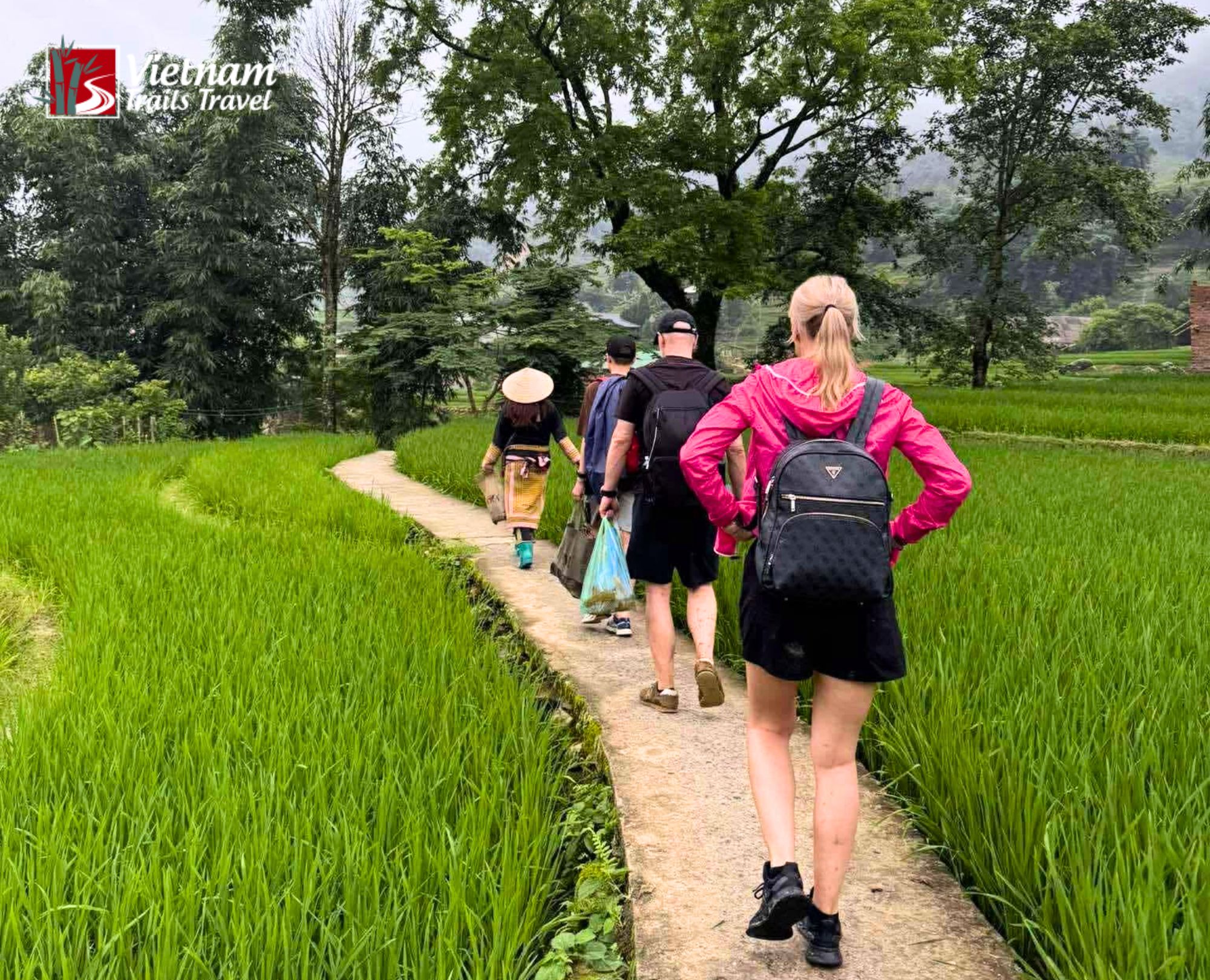
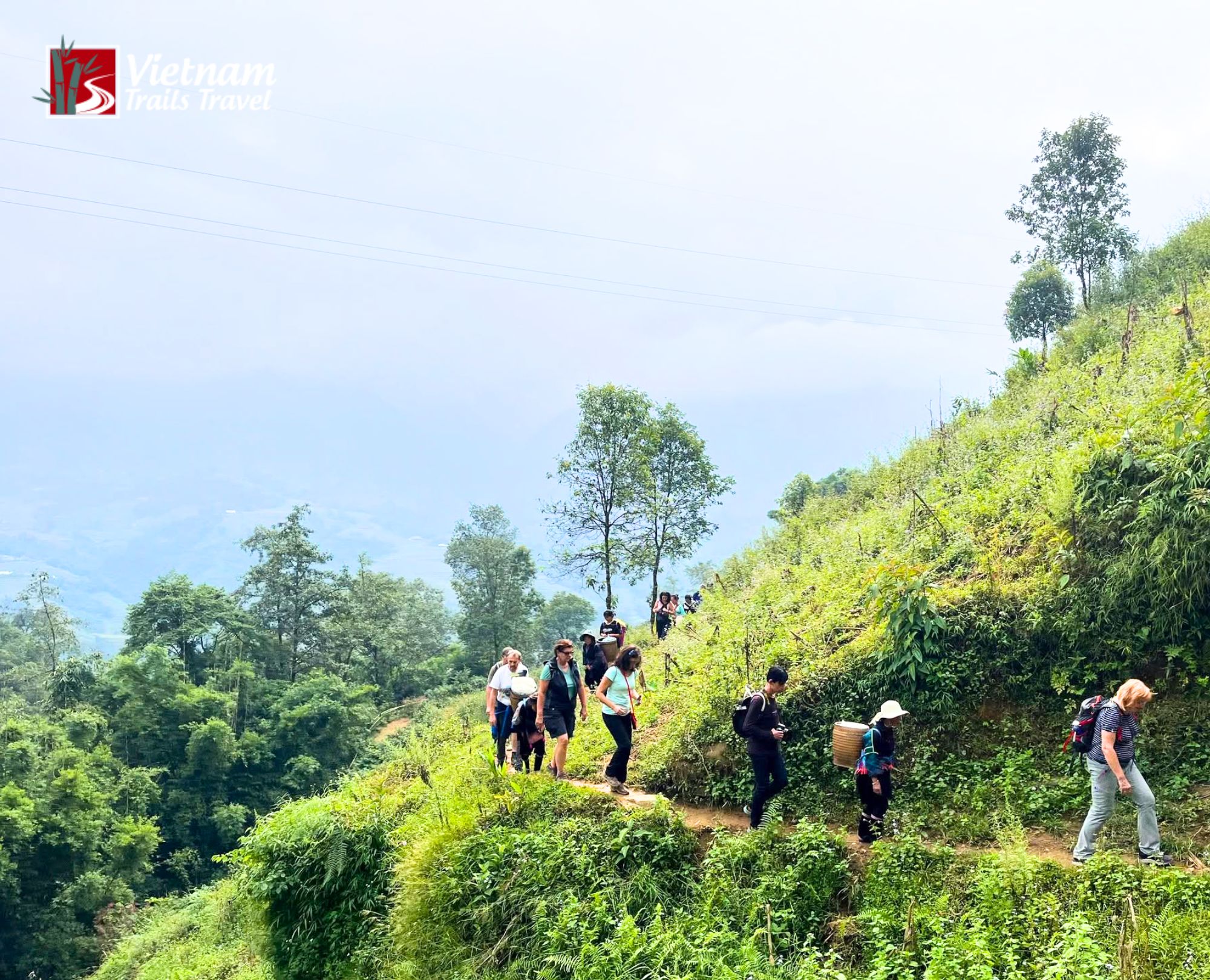
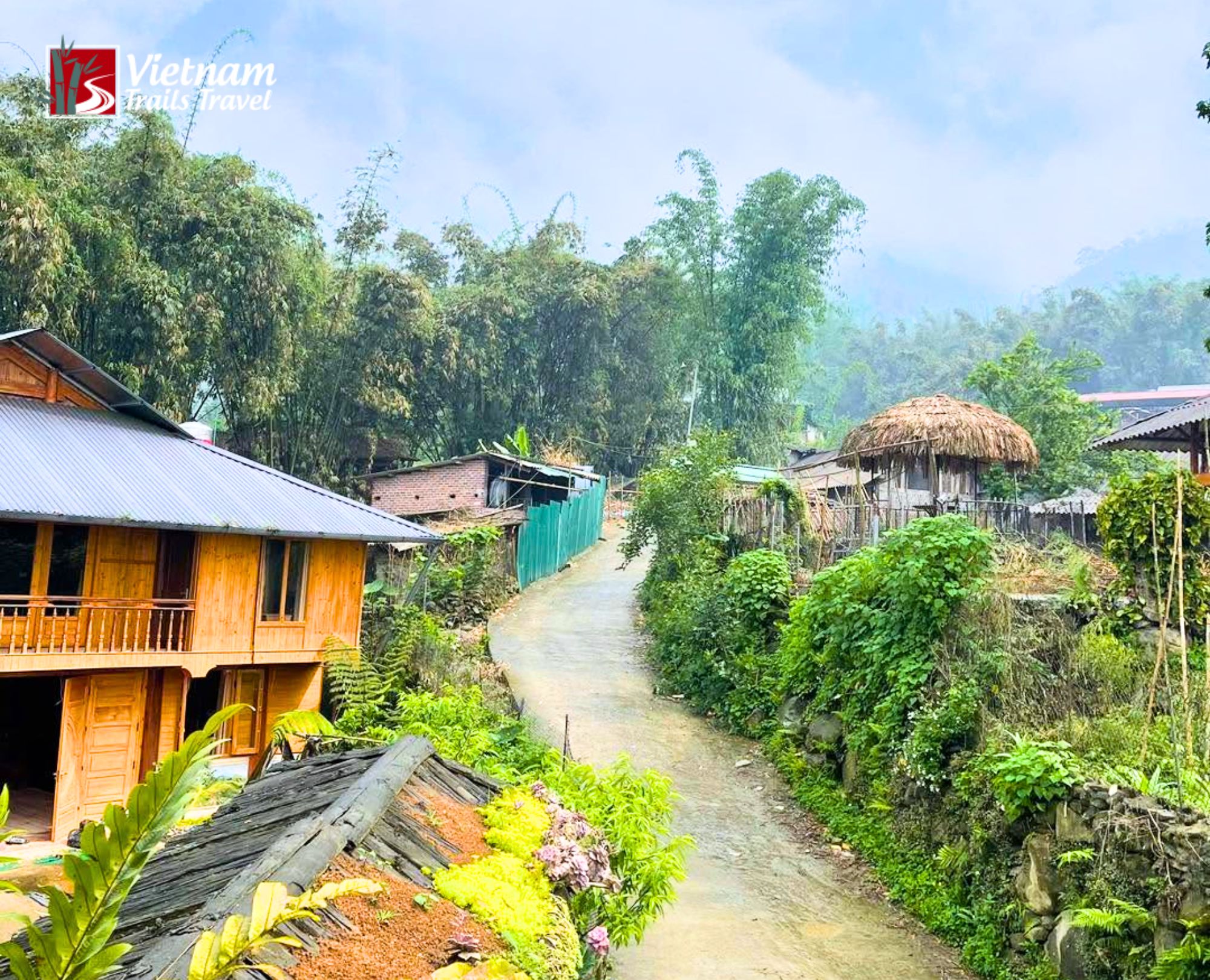
Hikers following the curving dirt path through mist covered hills during their immersive Sapa Trekking Tour experience
A homestay overnight lets you experience how local families live, eat and farm.
A professional local guide explains the villages, crops and ethnic culture as you trek.
This Sapa trekking adventure suits travelers with moderate fitness who want authentic contact with mountain communities.
Your Vietnam Trails Travels guide meets you at your hotel or Noi Bai Airport, Hanoi. The driver and car depart for your trek to Sapa.
The private car journey from Hanoi follows Noi Bai to the Lao Cai highway, taking you toward Sapa town in the mountains of northern Vietnam.
Private transfer vehicle outside a bright hotel entrance in Hanoi, preparing to shuttle travellers for their Sapa Trekking Tour departure
This 5.5-hour bus ride transports you from Hanoi’s urban setting to Sapa’s rural mountain landscape.
Along the journey: You observe rice terraces and rice fields lining both sides of the road, they transform with changing light throughout the morning.
The landscape shows how farming shapes northern Vietnam: paddy fields on flat areas, corn plantations on hillsides and cassava growing where rice cannot.
The driver stops for a 30-minute rest break allowing trekkers to stretch, use facilities, and purchase water or snacks.
12:30 PM: Arrive in Sapa
Your arrival in Sapa town marks the start of your Sapa trekking experience.
After checking into your hotel, lunch is served at a local restaurant. This meal introduces you to the regional food style of Sapa and northern Vietnam.
2:00 PM: Rest and prepare
Free time to walk around Sapa town. You can buy trekking supplies, water or proper hiking shoes if needed.
Some travelers rest at the hotel to prepare for the afternoon trek ahead.
4:00 PM: Trekking at Cat Cat Village
Your afternoon trek begins from the southwest side of Sapa, about 4 kilometers from Sapa town.
You trek downhill on a gentle mountain path toward Cat Cat village. This trek takes approximately 1.5 hours.
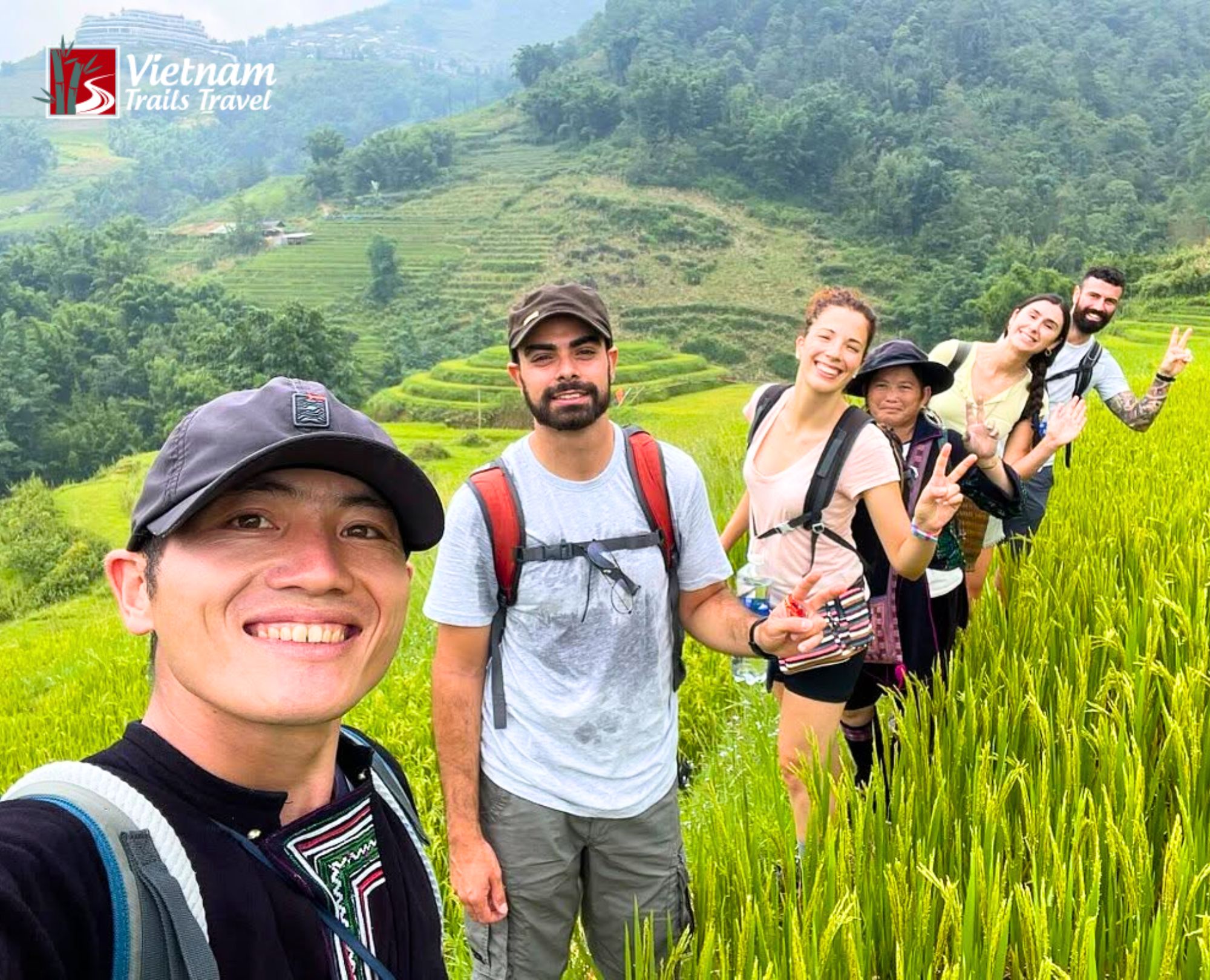
Selfie moment as a smiling hiker captures the group trekking through vibrant green rice terraces near a hillside Cat Cat Village
As you trek in Sapa toward Cat Cat village, you see the Cau May Waterfall dropping into a natural pool and the stone ruins of a French hydroelectric station built during colonial times (1890s-1950s).
The old structures tell the history of when colonial power shaped northern Vietnam’s infrastructure development.
5:30 PM: H’mong ethnic community
Your arrival at Cat Cat village marks entry into an H’mong ethnic community.
Cat Cat is home to Black H’mong families who have lived in this mountain area for generations.
The village consists of several wooden houses built on hillsides using Ammed Earth House.
You trek through the village, observing H’mong families engaged in daily activities: women weaving traditional textiles on wooden looms, children playing near homes, men maintaining farming equipment.
A local villager often a family member from the community will guide you through Cat Cat and explains H’mong farming practices.
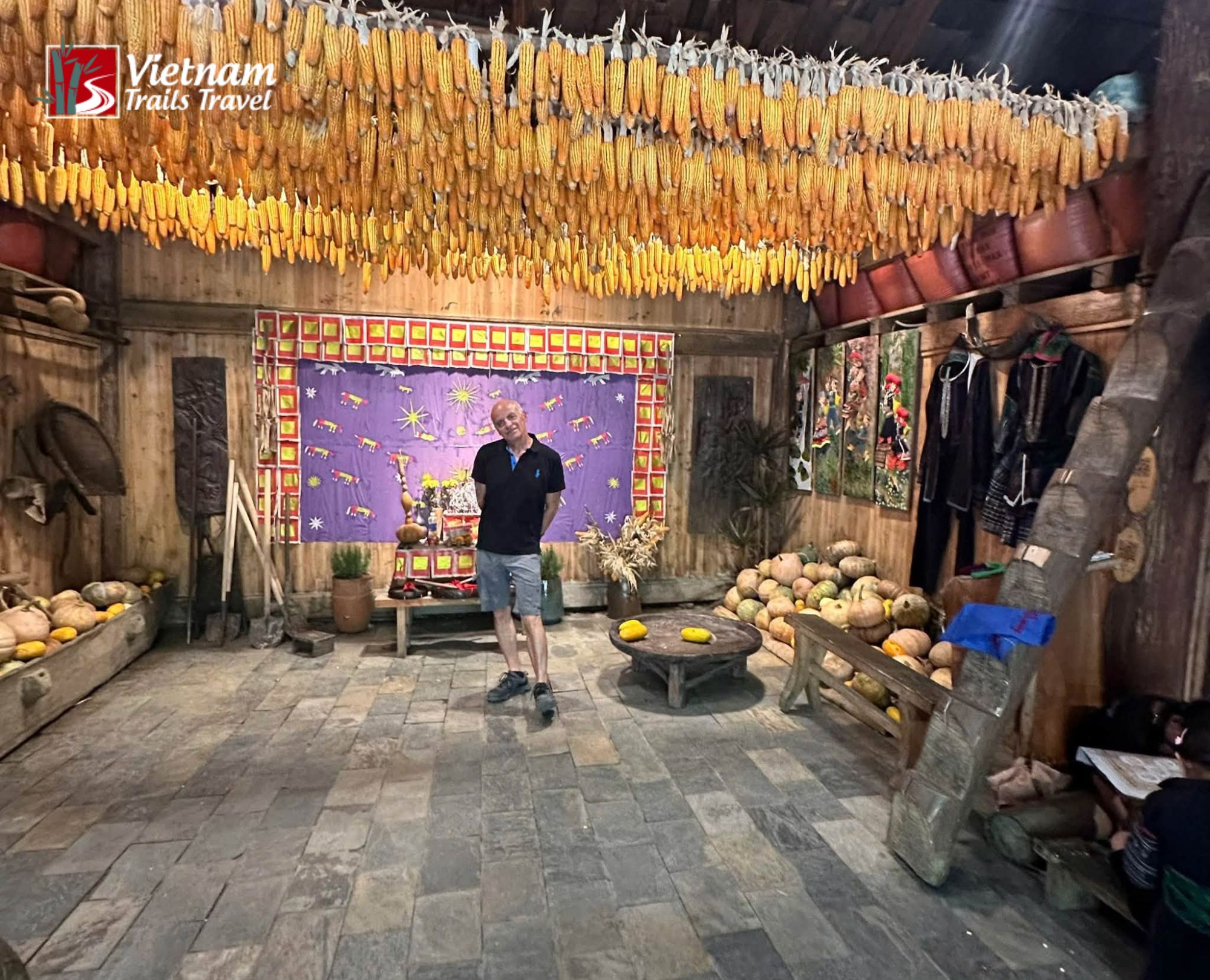
A tourist exploring the interior layout and traditional architecture of a dzao ethnic minority house
Inside a H’mong family’s house, you see traditional stilt architecture: a central room with large wooden posts supporting the roof, cooking area with a wood-burning clay stove along one wall, sleeping quarters separated by cloth partitions and a lower level with storage for corn stalks, rice and farming tools.
The house design reflects how H’mong families have adapted to mountain life for generations.
You learn how rice terraces on lower slopes connect to corn plantations on steeper hillsides, part of the ethnic farming system in Sapa.
6:30 PM: Return to Sapa Town
Your return trek to Sapa town retraces the morning path. Walking uphill takes about 1.5 hours.
You rest occasionally as you climb. Dinner is served at a restaurant in Sapa town center.
8:00 PM: Rest
You check into your hotel for overnight accommodation. The cool mountain temperature of Sapa makes sleep comfortable after your first day trekking.
Breakfast at your hotel fuels you for your day’s trekking through Sapa’s ethnic villages.
The meal includes rice, seasonal vegetables, boiled eggs and tea or coffee, preparing you for this longer trek of nearly 12 kilometers.
8:00 AM: Muong Hoa Valley
Your morning trek descends the southeast side of Sapa along Muong Hoa Valley.
The valley’s rice terraces and rice paddies spread below in tiers on both sides.
Scenic trail curving through emerald terraces under an overcast sky with hikers and backpacking travellers in view at Muong Hoa Valley
You trek approximately 6 kilometers down a gradual mountain path toward Y Linh Ho village.
This trek in Sapa follows a route through farming areas where ethnic H’mong communities work their land daily.
9:30 AM: Y Linh Ho village
Stop in Y Linh Ho village to visit a Dzay family’s traditional wooden house.
The house structure shows H’mong architectural design: a central room with large wooden posts supporting the roof, a cooking area with a clay stove along one wall, sleeping quarters separated by cloth partitions and a lower level with storage for crops, corn stalks and farming tools.
Group of travellers capturing a group selfie on the scenic path backed by steeply terraced green hills around Y Linh Ho
The H’mong family may offer you tea or water drawn from a well outside.
Your local guide explains the Dzay house design—how stilt construction allows air circulation for drying crops, why the roof slopes steeply to shed heavy mountain rainfall and how H’mong families have built this way for over a century.
You see family members weaving traditional textiles, hanging them to dry before they are sold or traded.
10:15 AM: Toward Lao Chai village
Your trek continues 2 kilometers toward Lao Chai village. The path passes through rice paddies and rice fields at different growth stages depending on the season.
You observe how H’mong farmers rotate their crops on the same land: rice in lower valleys, corn on middle slopes, cassava on steeper hillsides, an ethnic farming system refined over generations.
11:30 AM: Arrive in Lao Chai
You arrive in Lao Chai, another ethnic H’mong village where several families live close together in a mountain settlement.
The village layout clusters homes near water sources and farming areas.
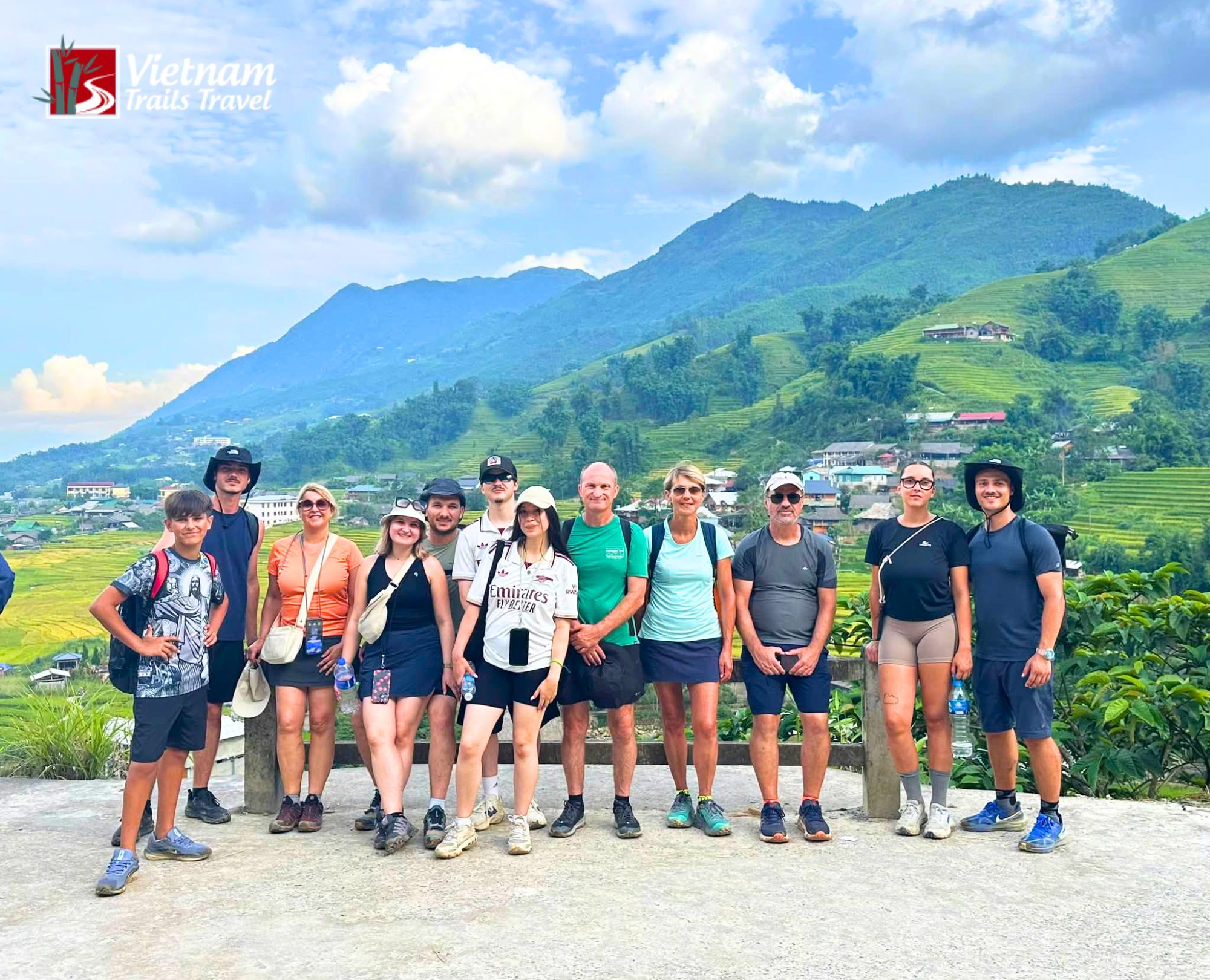
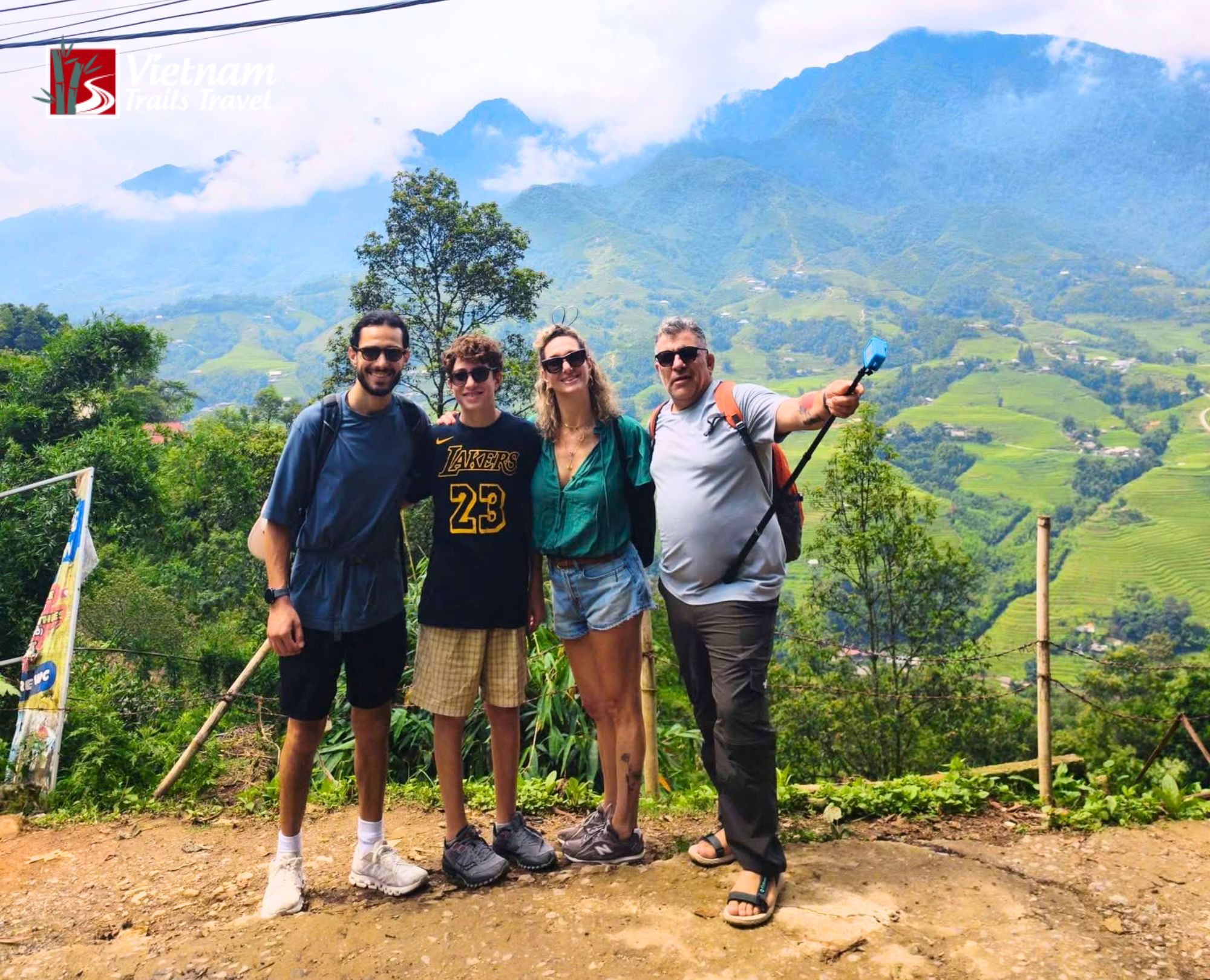
International trekkers taking a group picture overlooking the vibrant rice fields and ethnic minority village of Lao Chai
Some residents work in nearby fields, while others sit near homes doing textile weaving or preparing midday meals.
A few families operate small shops selling handicrafts—embroidered textiles, silver jewelry, wooden items to trekkers visiting the area.
12:00 PM: Local lunch
Your lunch is served at a family’s home in Lao Chai village or a simple local restaurant.
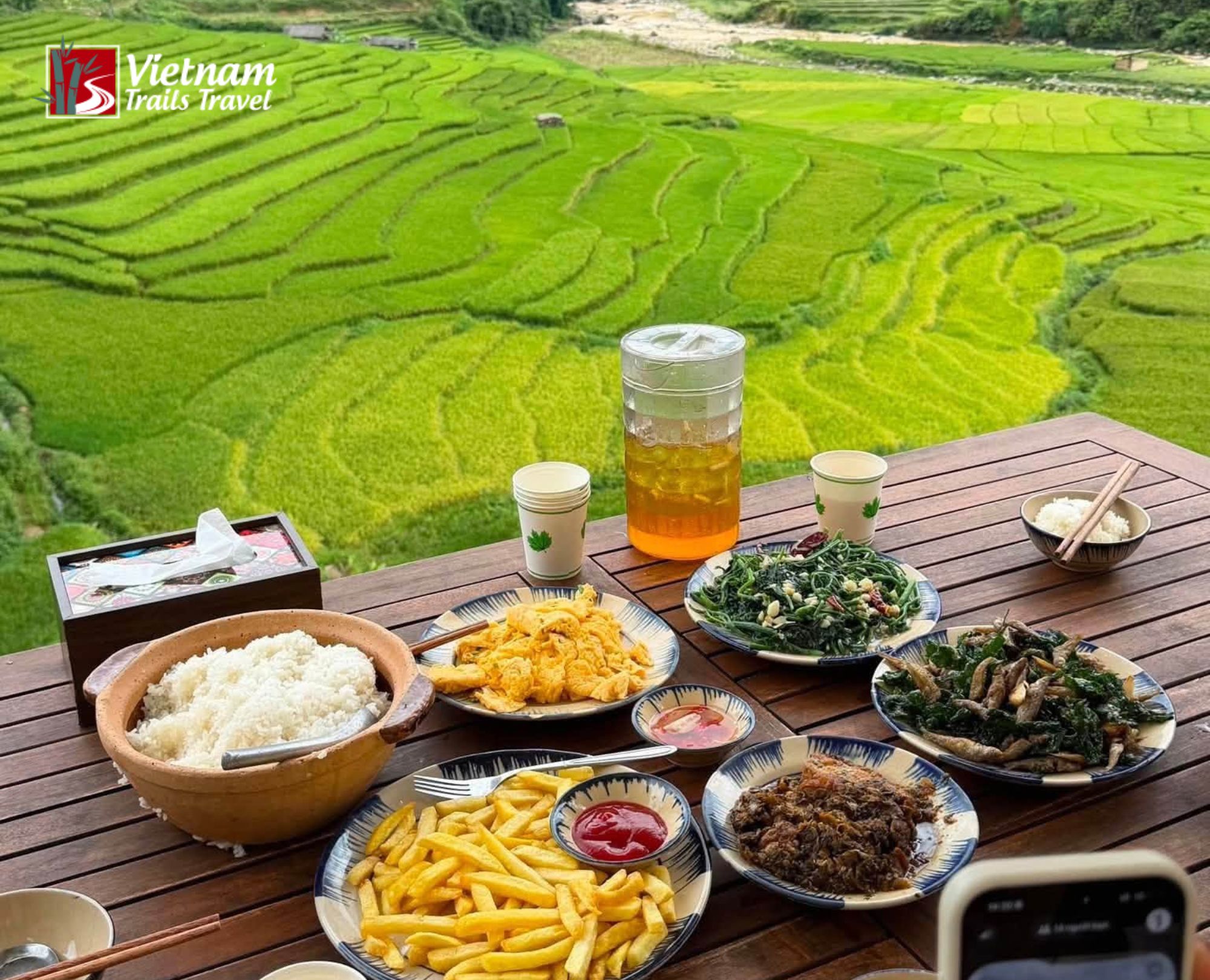
You eat the same meal the family prepares for themselves: white rice, seasonal vegetables (leafy greens, squash, or beans) and protein such as chicken, fish or pork.
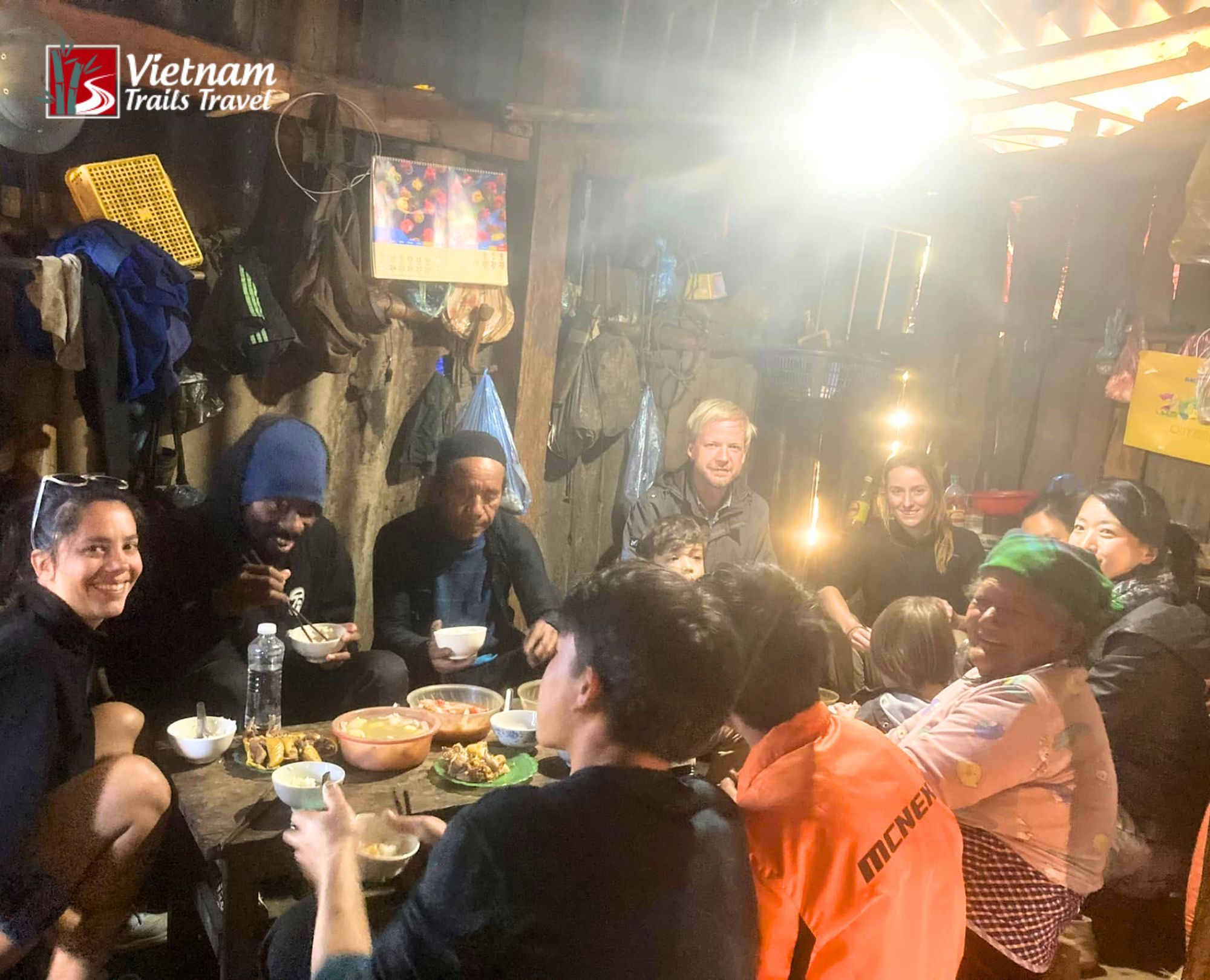
Tour participants experiencing authentic minority culture by eating a home cooked lunch alongside local villagers
This direct homestay meal experience shows how mountain ethnic families actually eat daily, not tourist-modified food versions.
You sit at a low wooden table or on a bench by the cooking fire, surrounded by family members going about their daily tasks.
1:30 PM: Toward Ta Van village
After lunch, your trek continues 2 kilometers toward Ta Van village, home to the Dzay ethnic minority people.
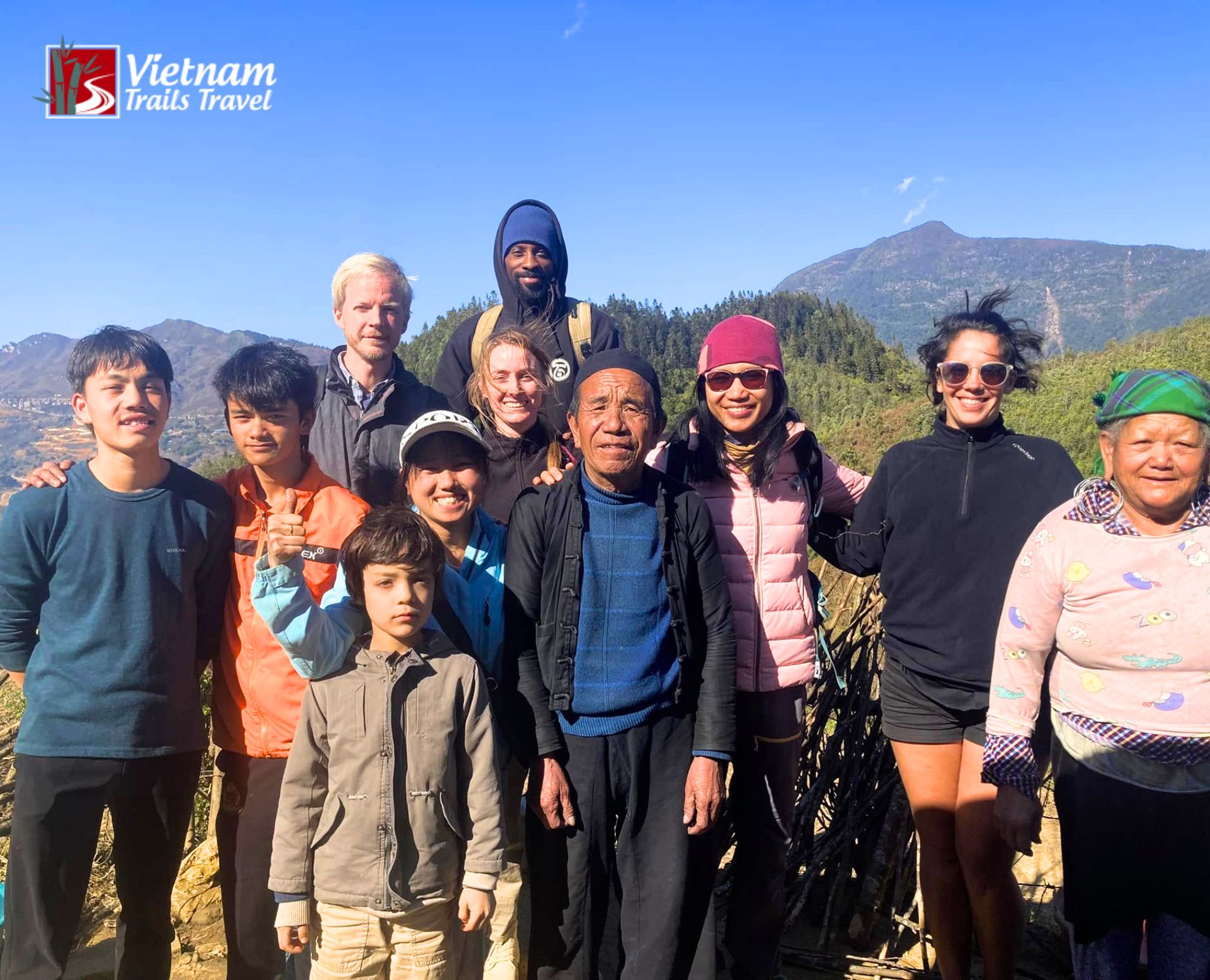
H’mong community members and guests sharing a joyful moment with forested mountains towering behind them
During this trekking section, you cross small streams using stepping stones or simple wooden bridges, walk slightly uphill and move through rice paddies and rice fields that change appearance depending on the farming season.
2:45 PM: Arrive in Ta Van village
You arrive in Ta Van village, home to Dzaog settlements you’ve visited: the houses show distinctive architectural details unique to Dzao culture.
Dzao families build with larger windows, different roof angles, and decorative painted doors reflecting Dzao spiritual traditions.
You visit a Dzao family’s home and observe how their house interior layout and design differ from H’mong homes.
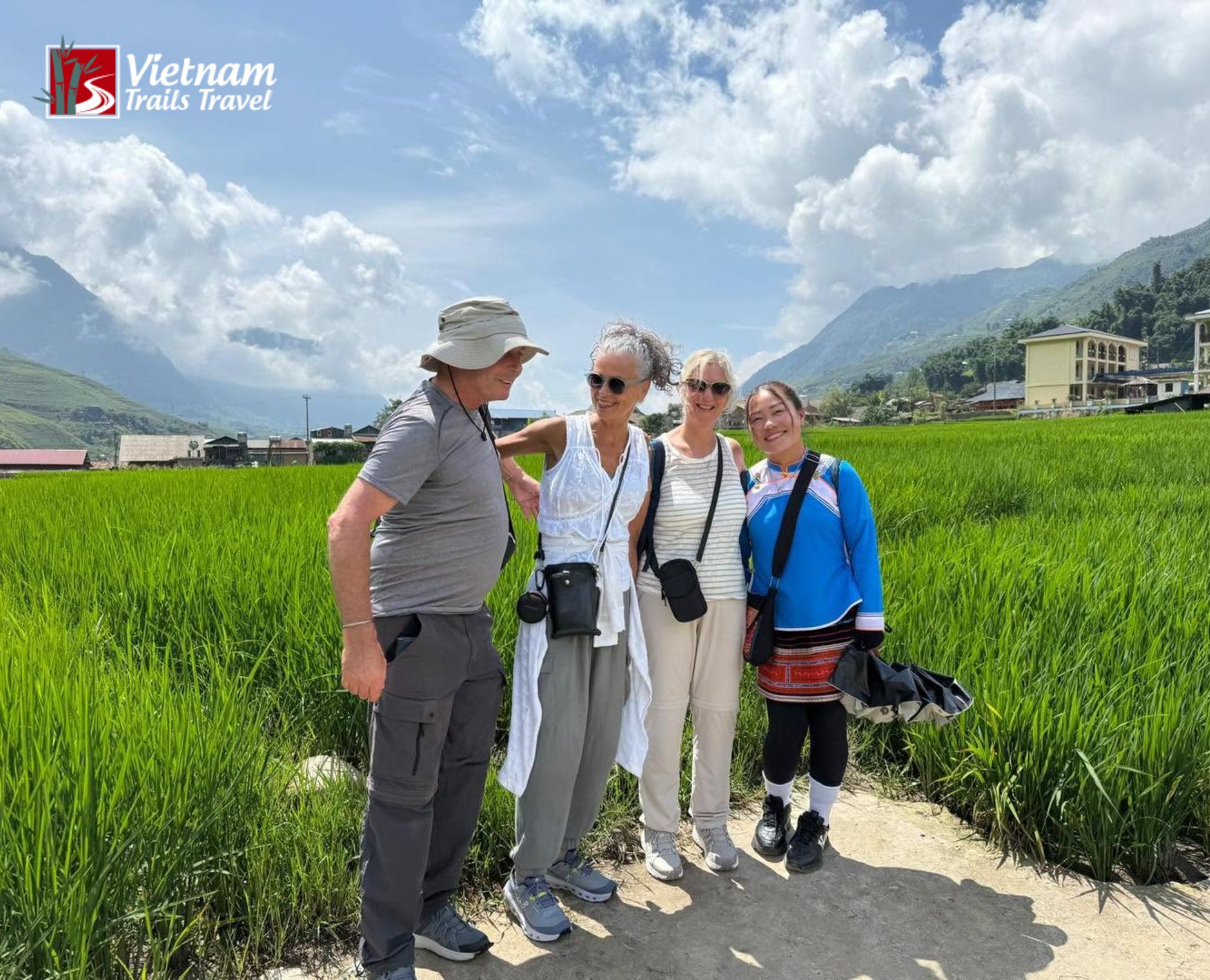
Vietnam Trails Travel group posing with a local Hmong guide in the vibrant green rice terraces of Ta Van Village
Your local guide explains these architectural differences, rooted in distinct ethnic traditions and how different mountain ethnic groups adapt buildings to local climate and their cultural beliefs.
You learn about Dzao farming practices, their distinctive textile patterns, weaving techniques, and traditions separate from H’mong customs.
4:00 PM: Return to Sapa Town
Your final trekking section of the day covers 2 kilometers to the parking lots at Ta Van village’s edge.
From this point, the driver picks you up to transfer back to Sapa town (approximately 20 minutes driving on winding mountain roads).
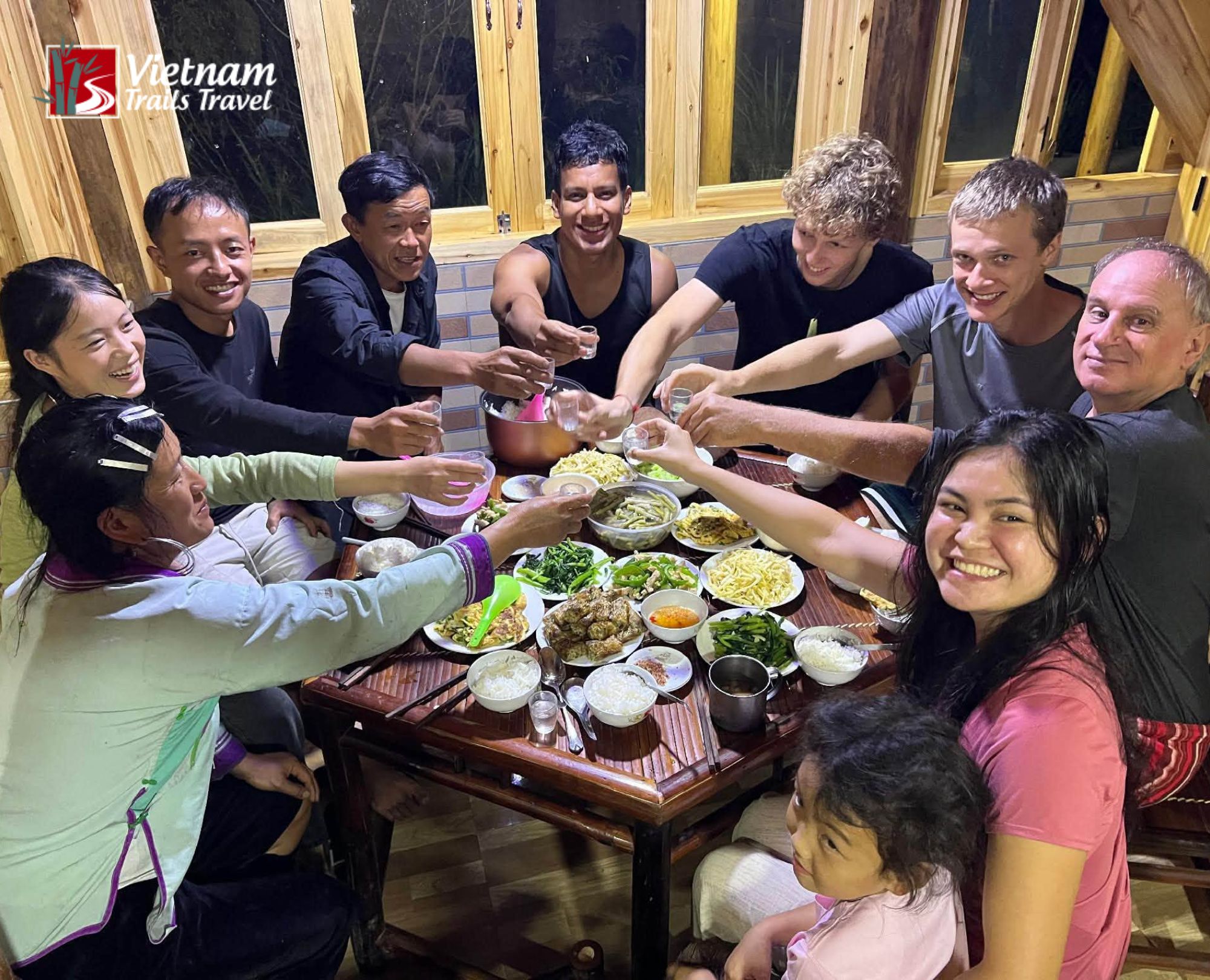
Tourists sharing a joyful dinner and raising glasses in a cultural toast with local ethnic minority family members
You arrive back at your hotel in Sapa. You shower, wash your trekking clothes, and rest at the hotel.
5:30 PM – 6:30 PM: Free time in Sapa
Free time to explore Sapa town. You can visit Sapa’s central market to buy souvenirs such as embroidered bags, woven scarves or handmade honey.
You wake up at your accommodation and enjoy sunrise coffee or tea while watching morning light spread across Sapa’s mountains.
The air is cool and often misty at this early hour in the northern Vietnam highlands.
7:00 AM: Breakfast
Breakfast with local mountain specialties: rice porridge (cháo), eggs, pickled vegetables and tea, fuels you for the day’s final trekking section before the driver take you back to Hanoi.
8:00 AM: Pickup
Your morning trek heads toward Giang Ta Chai village through bamboo forests on a narrow mountain path.
The trekking trail alternates between uphill and downhill sections with mixed terrain: packed earth, tree roots, and occasionally muddy sections.
This 3-4 kilometer trek in Sapa’s mountains tests your leg muscles as you navigate elevation changes and dense vegetation.
9:30 AM: Rattan suspension bridge
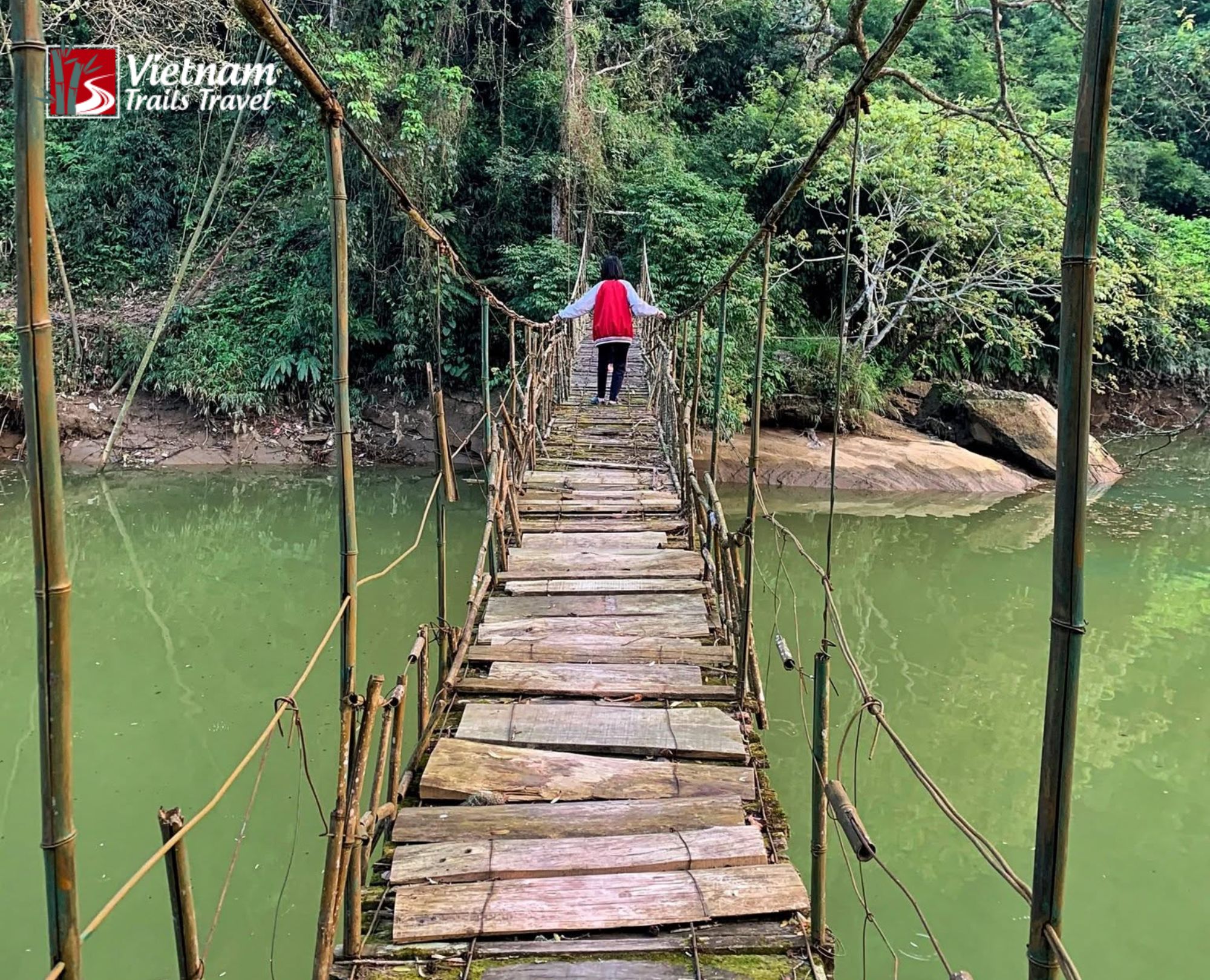
You arrive at a rattan suspension bridge that spans a mountain stream on the trek route.
The bridge construction uses woven rattan rope for railings and wood planks for the walking surface, a traditional bridge design that has proven durable for decades.
A tourist experiences the iconic rattan and wood suspension bridge with traditional, durable design on the scenic trekking trail leading into Giang Ta Chai village
Your local guide crosses first to demonstrate the safe crossing technique, then you follow carefully.
The crossing takes about 5 minutes. On the far side, you enter Giang Ta Chai village.
9:45 AM: Trek at Giang Ta Chai village
You enter Giang Ta Chai village, home to Red Zao ethnic minority families.
This ethnic group’s visual identity differs noticeably from previous H’mong and Dzay communities in your trek: Zao women wear distinctive red and embroidered clothing; the village layout clusters around a central water source and house architecture shows Zao design preferences, different door styles, roof decoration and building orientation related to their spiritual beliefs.
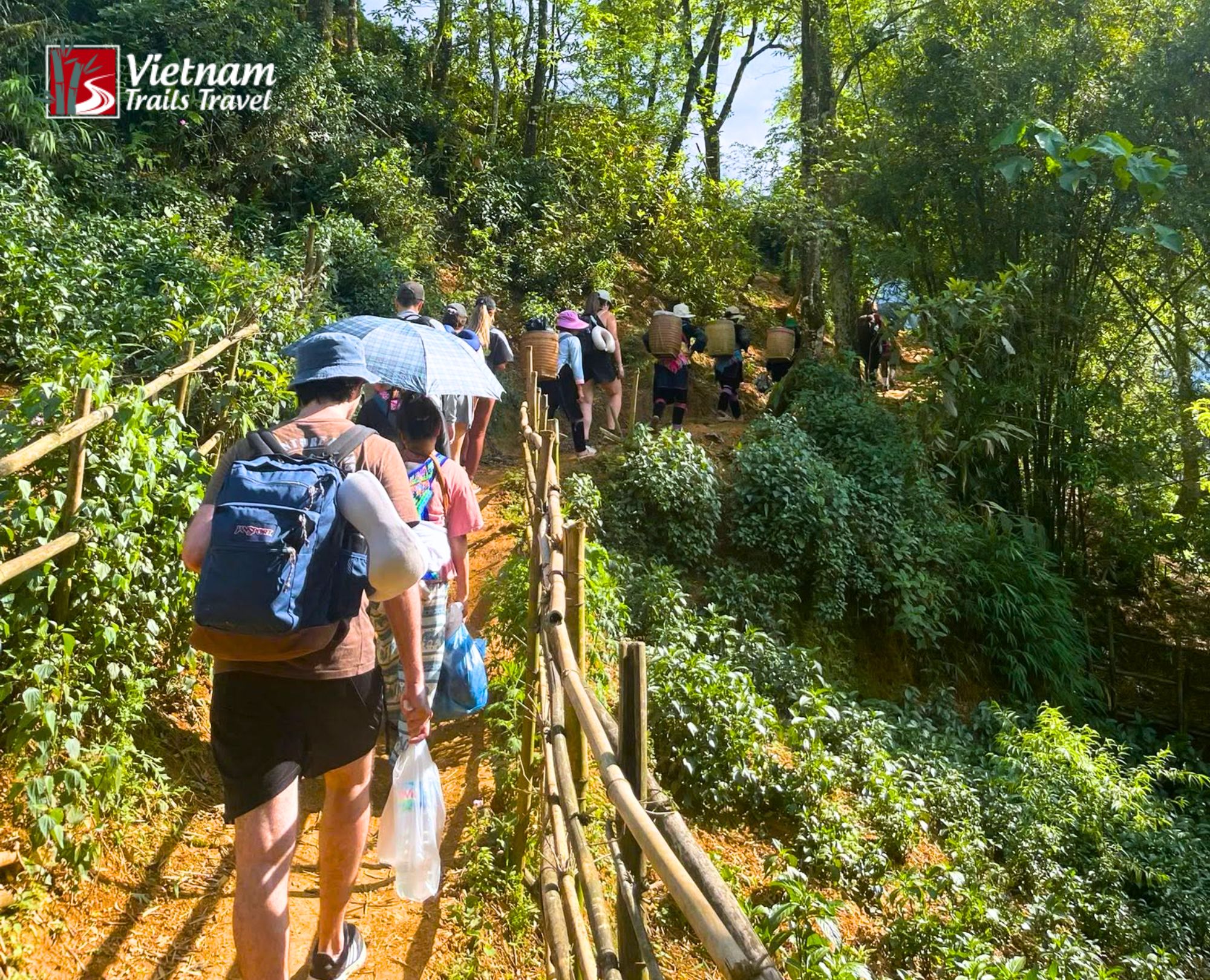
Vietnam Trails Travels clients experiencing a challenging jungle trekking section through dense vegetation and bamboo forests on their way to Giang Ta Chai
You spend time with a Dzay ethnic family, observing how they organize their home space, the specific farming and weaving tools they use and decorative items reflecting Dzay cultural traditions.
Many Dzay women in the village continue wearing traditional dress daily and you can observe detailed embroidery work on clothing and household textiles made by local hands.
11:00 AM: Su Pan Village
Your trek continues toward Su Pan (also called Supan) village, home to H’mong people living in this higher-altitude mountain region of northern Vietnam.
The trekking path crosses the Muong Hoa River—depending on the season, this means wading through shallow water, using stepping stones or crossing a temporary wooden bridge.
Architectural overview of higher altitude H’mong houses in Su Pan village
After crossing, the trail climbs about 2 kilometers uphill. This represents the most physically demanding trekking section of your entire tour: the slope is steeper, the distance feels longer and you trek at higher altitude. You rest several times during this final climb.
You arrive in Su Pan village and stop at a family’s home or small wooden shelter.
A local family or shopkeeper may offer water, soft drinks, or light snacks.
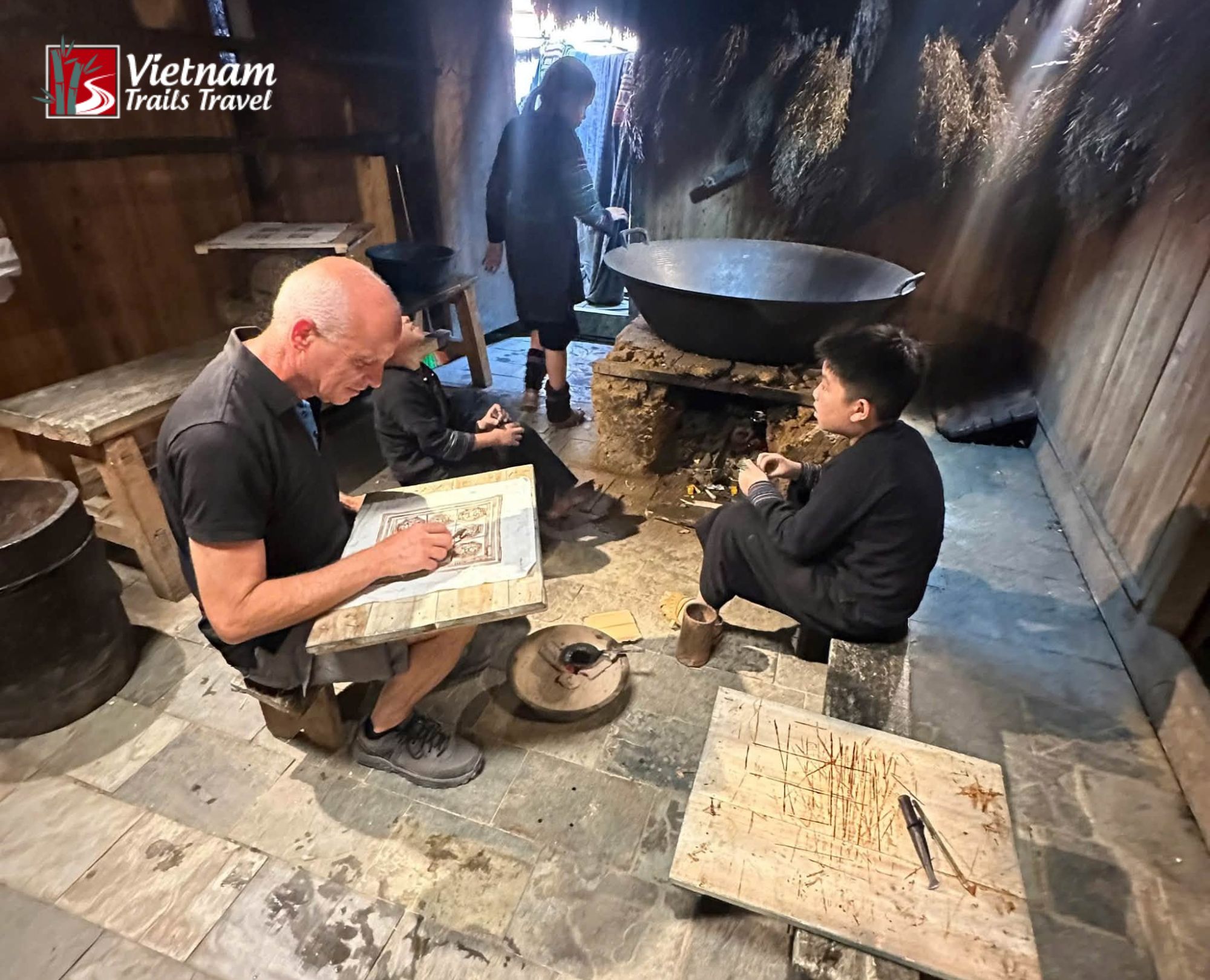
A tourist experiencing local culture by learning traditional crafts inside a Red Zao ethnic house
You sit and catch your breath while observing this higher-altitude H’mong ethnic settlement where farming conditions and village life differ from lower villages visited earlier in your trek.
12:45 PM:
The car meets you at Su Pan to drive back to Sapa town (approximately 15-20 minutes on winding mountain roads). You ride uphill past switchback turns with expanding views of the valley below.
1:15 PM: You arrive back in Sapa town. Lunch at a local restaurant gives you time to rest, shower if needed at your hotel and prepare for the journey back to Hanoi.
Travelers enjoying a traditional local lunch with authentic regional dishes
3:30 PM: Return to Hanoi
You depart Sapa by sleeper bus heading back to Hanoi. The 5.5-hour bus journey follows the same Lao Cai–Hanoi highway route you traveled on Day 1.
As you travel from Sapa toward Hanoi, the mountain scenery gradually transforms: steep mountain valleys slowly flatten into foothills, then agricultural plains, then increasingly dense suburban development as you approach Hanoi city.
9:00 PM: Tour ends
You arrive in Hanoi at the original pickup point. Your Sapa trekking tour ends here.
Your guide confirms you’ve returned to Hanoi safely and all tour services conclude.
Travel tips:
Pack Proper Footwear: Bring sturdy hiking shoes or boots with good grip. Trails can be muddy and steep, especially during the trek to Giang Ta Chai and Su Pan.
Dress in Layers: Mountain weather changes quickly. Pack lightweight clothing for daytime trekking and warm layers like a fleece or jacket for chilly mornings and evenings.
Bring Rain Protection: Always carry a waterproof jacket or poncho. Mountain showers can happen unexpectedly at any time of year.
Carry Cash in Small Notes: ATMs are limited outside Sapa town. Bring Vietnamese Dong in smaller denominations to buy local handicrafts, water, or snacks in the villages.
Protect Your Belongings: Keep your electronics and documents in a waterproof bag or backpack liner. A small daypack is ideal for carrying your daily essentials while walking.
Respect Local Culture: Ask for permission before taking photos of local villagers, especially children and elders, and dress modestly when visiting traditional homes.
Stay Hydrated and Energized: Carry a reusable water bottle to refill along the way and pack some high-energy snacks like trail mix or chocolate for demanding uphill climbs.