Overview of Bat Trang pottery village tour from Hanoi
This Hanoi 1-day tour takes you out of the Old Quarter and into Bat Trang, a pottery village 14 km east of central Hanoi that has been firing kilns since the 14th century.
You will walk narrow alleys where families have made ceramics for 700 years.
Our Hanoi 1-day tour suits travelers who’ve already done the city sights and want a day that feels different.
Couples, families with kid and anyone who likes working with their hands all fit this trip.
A Singaporean tourist family is making pottery at Bat Trang pottery village
The Bat Trang Pottery Village tour version we run goes deeper than the standard half-day options on Klook or GetYourGuide.
You get two pottery sessions instead of one, lunch in a family home with canh măng mực (the village’s signature soup), and a visit to a working wood-fired kiln still in use after 100 years.
This is the Bat Trang Ceramic Village tour the way locals would design it for their own visiting friends.
Hanoi 1-day tour detailed itinerary
08:30: Meet & Greet at your central hanoi hotel
Your driver and English-speaking guide meet you at your hotel lobby in the Old Quarter, French Quarter, or West Lake area.
Your guide uses the drive to explain the core difference between this Bat Trang Pottery Village tour and visits to standard craft centers.
09:00: Arrival at Bat Trang
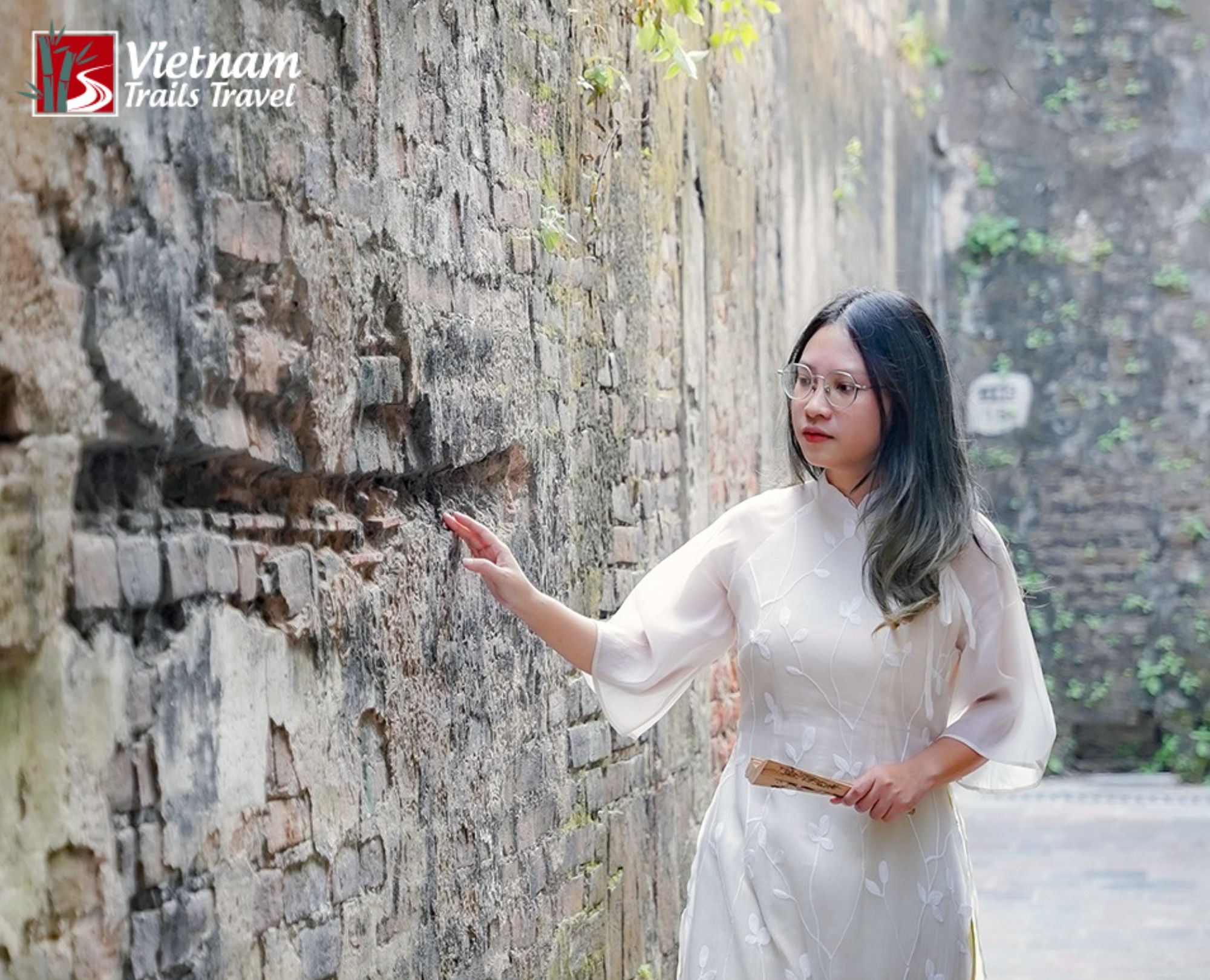
You walk from the parking lot directly into the oldest section of the village on foot.
You will notice the alleys are extremely narrow, sometimes only leaving enough room for one person to pass.
The historic moss-covered brick walls of Bat Trang pottery village alleys
The walls along this route look unusual because builders made them from recycled coal blocks.
Locals packed these blocks together as insulation, developing a practical building technique they have used for 200 years.
Your guide stops at several homes that still use these coal walls today.
We walk past open workshops where families are actively wedging clay, throwing pots, and stacking kilns.
Some workshop owners wave hello, and a few might pull you inside to show their techniques.
This short walk helps you understand how the village is organized. It gets you ready for the next activities on this Hanoi full-day tour.
09:45: Van Van Ancient House
A short walk brings us to Van Van Ancient House. Builders constructed this wooden home 200 years ago and the current family preserves it as a small private museum.
You will find original ceramic motifs from the 15th century, blue enamel teapots, dragon vases and old ceramic stamping molds displayed inside.
The owner is a direct descendant of the founding family and knows the exact history of the collection.
The owner explains through your guide how to tell the difference between royal Le dynasty ceramics and common village pottery.
You spend 30 minutes here learning how ceramic styles changed over the centuries based on these historical artifacts.
10:30: Pottery Class #1: Wheel Throwing
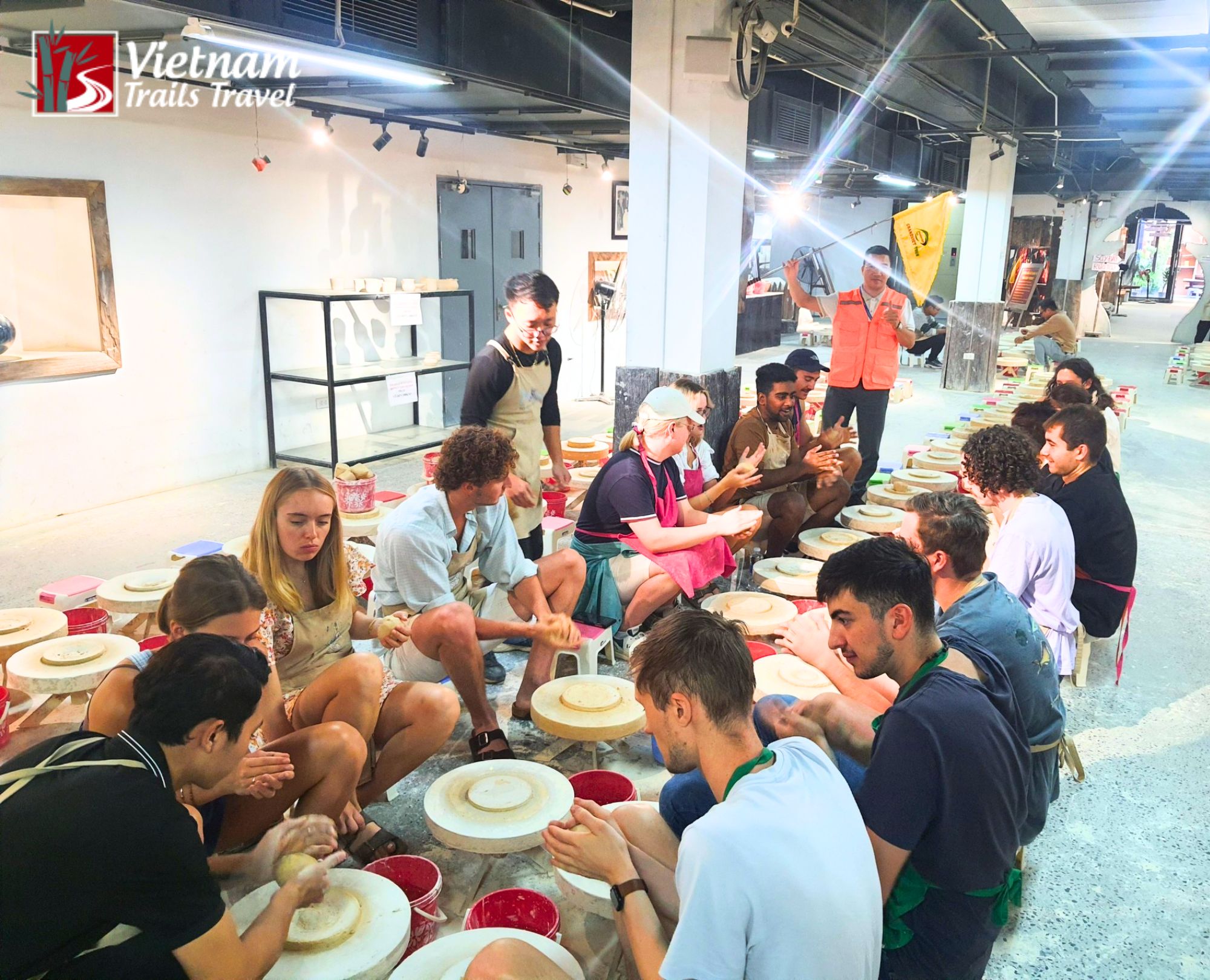
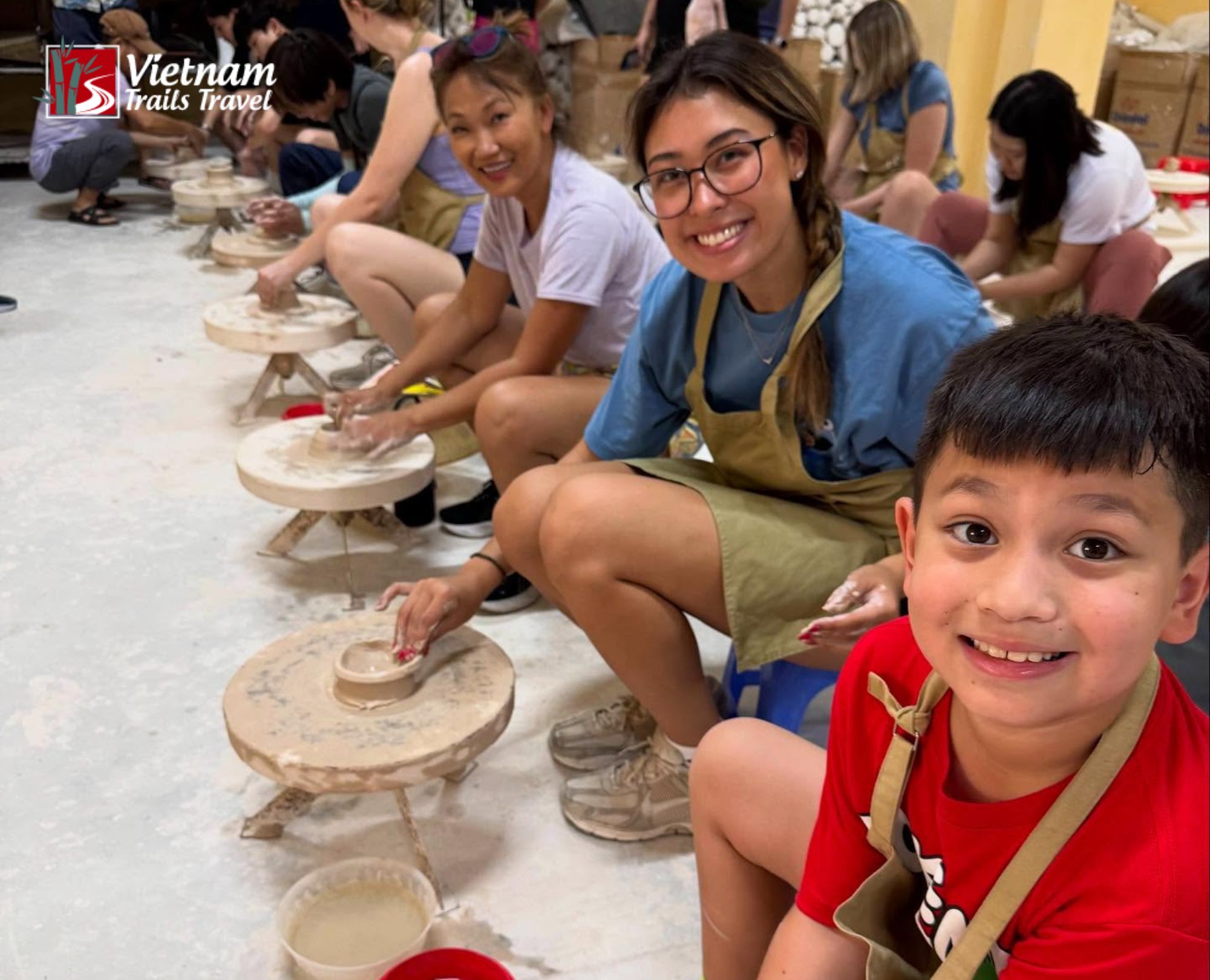
We move to an active workshop where the physical work begins. You sit at either a foot-powered or electric wheel, put on a protective apron over your clothes and prepare to work the clay.
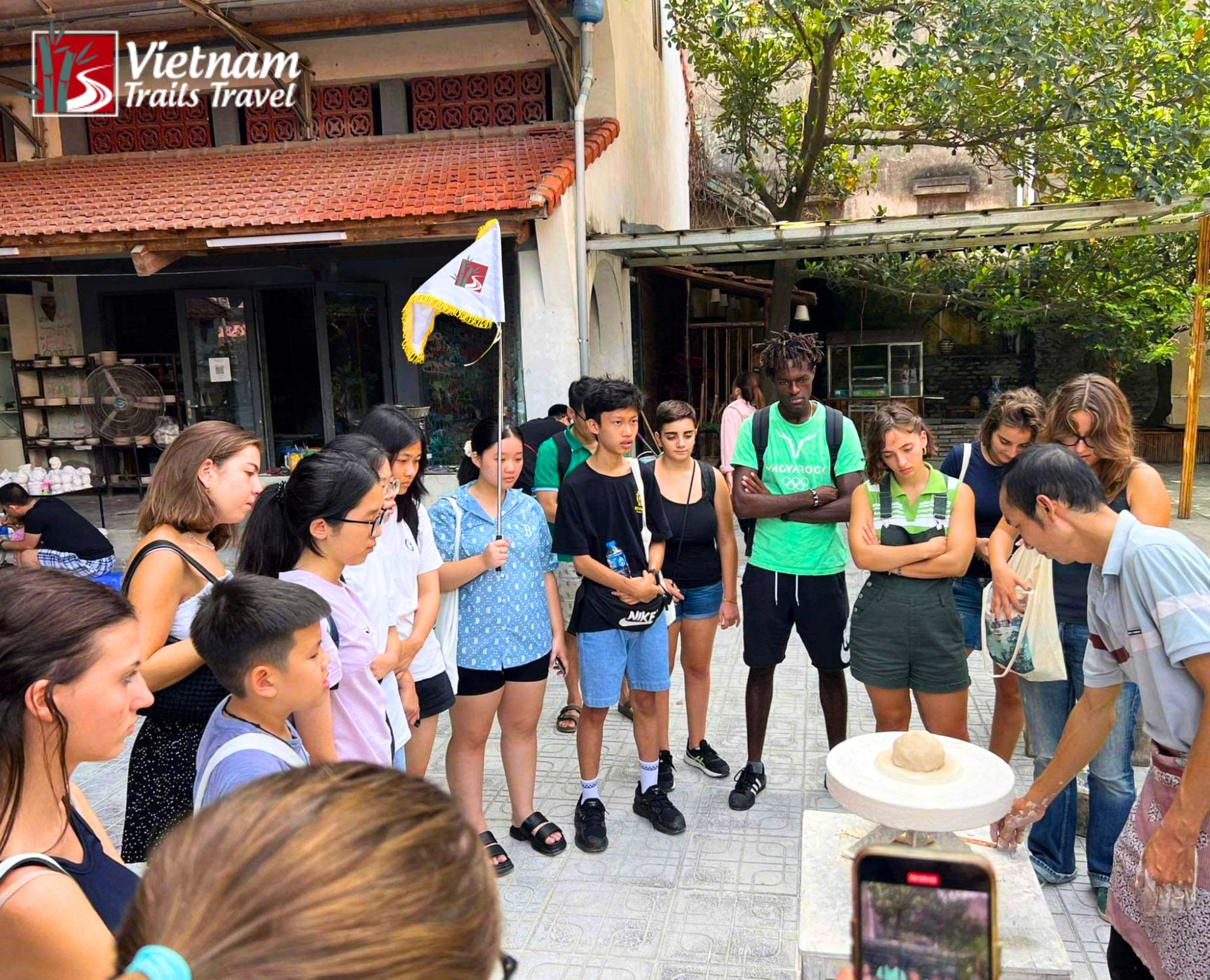
The master ceramicist performs a quick throwing demonstration first to show proper hand placement.
You make two or three pieces over the 75-minute class, usually starting with a cup, moving to a small bowl and ending with a wildcard piece like a vase or candle holder.
Foreign tourists experiencing pottery making at Bat Trang Ceramic Village
The master coaches your hand movements the entire time to keep the clay centered.
Most first-timers struggle with their first piece, improve on the second, and produce a solid third item.
You can stop and watch the master work whenever your hands need a rest.
12:00: Lunch with a local restaurant
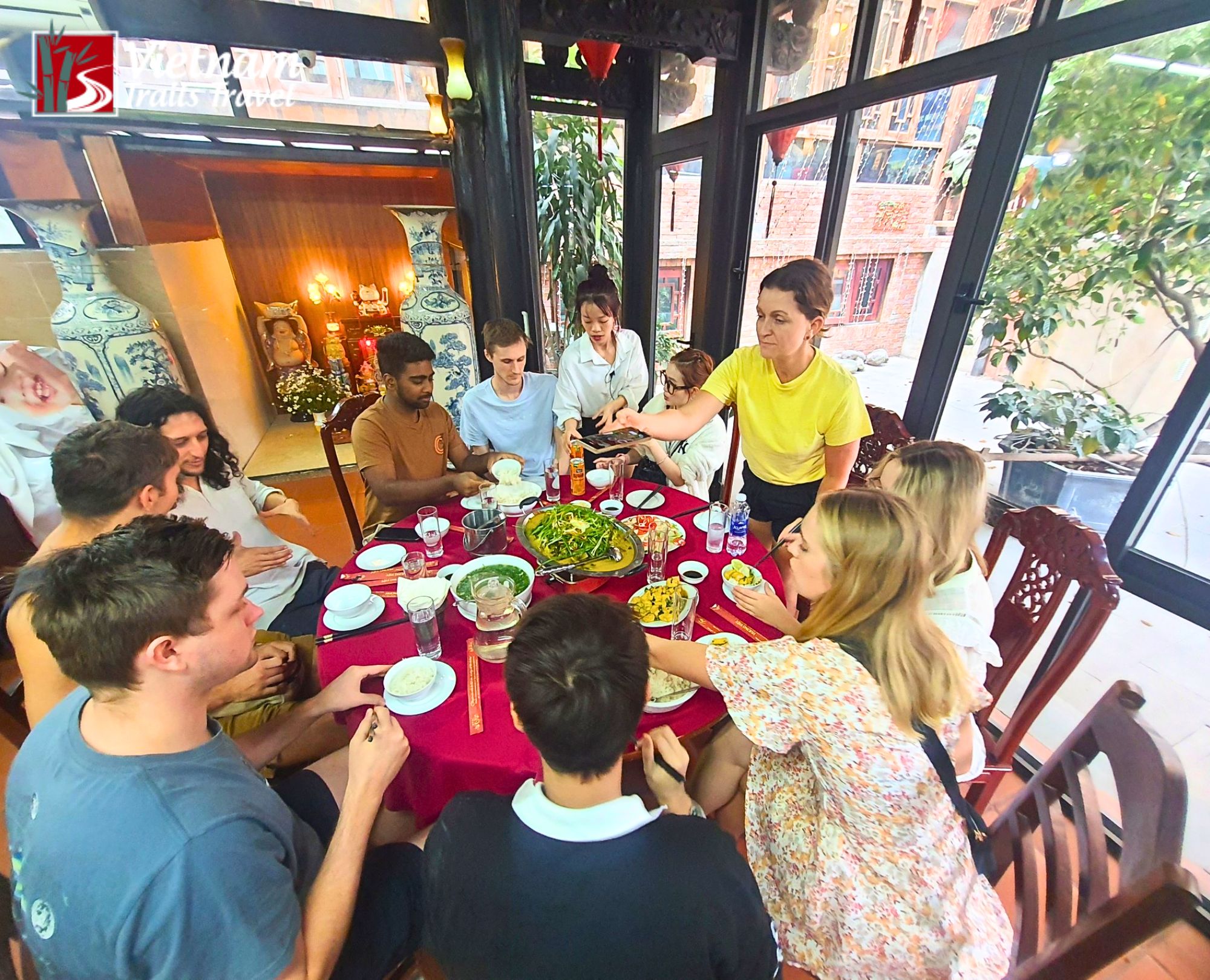
The local restaurant serves lunch at a wooden table in the brick courtyard behind the workshop.
We source the rice from nearby Hung Yen province, while the grandmother cooks the main dishes fresh that morning.
Tourists enjoying a traditional Vietnamese lunch at a local restaurant
The signature dish on the table is canh măng mực, a highly specific bamboo and dried squid soup found almost nowhere outside this community.
The cook hand-shreds dried squid into thin strips, then simmers the meat with fresh bamboo shoots, pork bone broth, and a touch of black pepper.
Locals say this recipe represents their way of combining river ingredients with mountain ingredients in one single bowl.
The meal also includes cá kho tộ (clay pot caramelized fish), rau muống xào tỏi (stir-fried water spinach with garlic), and bánh tẻ Bát Tràng (steamed rice cakes wrapped in dong leaves).
13:30: Bat Trang Pottery Museum
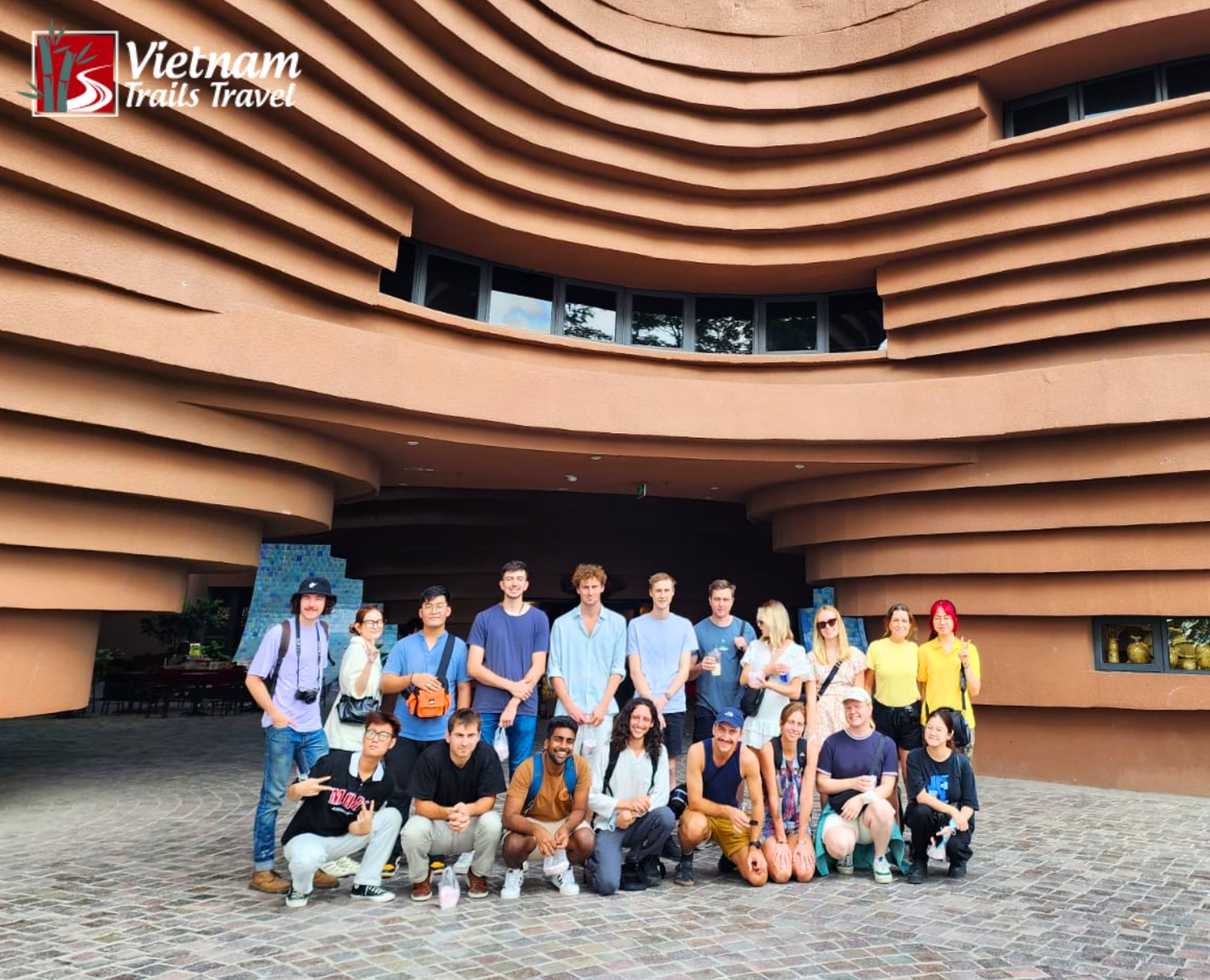
You walks to the Bat Trang Pottery Museum after finishing lunch. Hanoi architect Hoang Thuc Hao designed this facility in 2021 and the architecture itself serves as a major attraction.
The design uses seven massive structures that look like pottery wheels stacked in a spiral.
They used red brick and exposed concrete to look like traditional clay. You explore four floors of exhibits inside the building.
Tourists exploring intricate ceramic statues and ancient pottery
The displays show 700 years of local pottery. You will see ceramics made for Vietnamese royalty and old pieces sent overseas to Japan and Europe.
The top-floor balcony provides an excellent vantage point for viewing the village rooftops and the Red River.
You have 45 minutes to study the museum collections and take photos of the unique building design.
14:30: Pottery Class #2: Glazing and Painting
We head back to the workshop for your second hands-on pottery session.
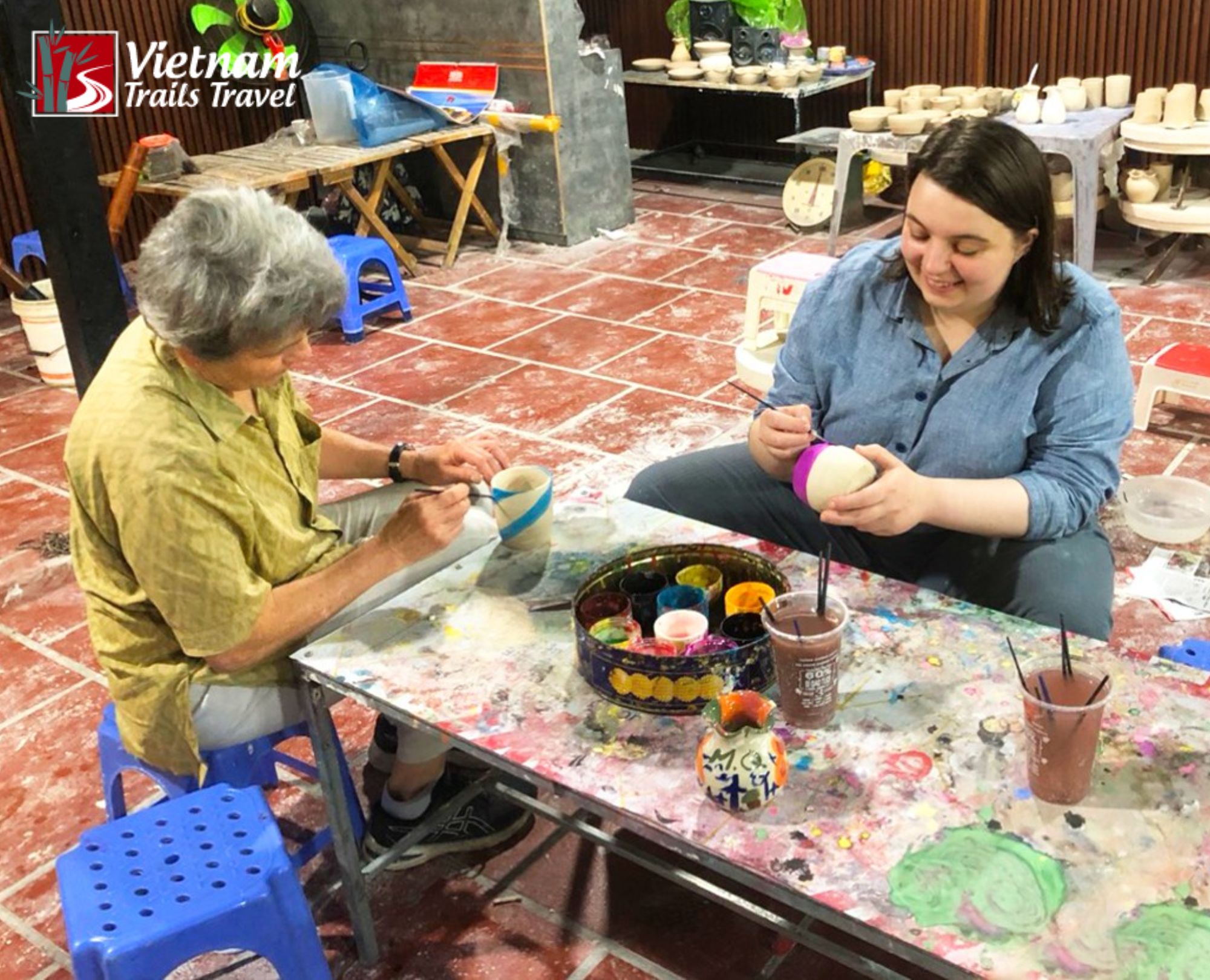
You pick up a set of pre-fired blank pieces, such as cups, plates, or small vases, along with a tray of liquid cobalt blue glaze.
The master ceramicist shows you how to apply basic traditional patterns, including bamboo leaves, lotus petals, and fish scales.
You then paint your pieces freehand using the techniques just learned.
Travelers enjoying a ceramic painting class and decorating handmade pottery
This session requires less physical effort than the wheel-throwing class and works perfectly for anyone experiencing hand fatigue.
The workshop staff fires your painted pieces in the kiln overnight.
They pack the finished ceramics safely and deliver them directly to your hotel the next afternoon.
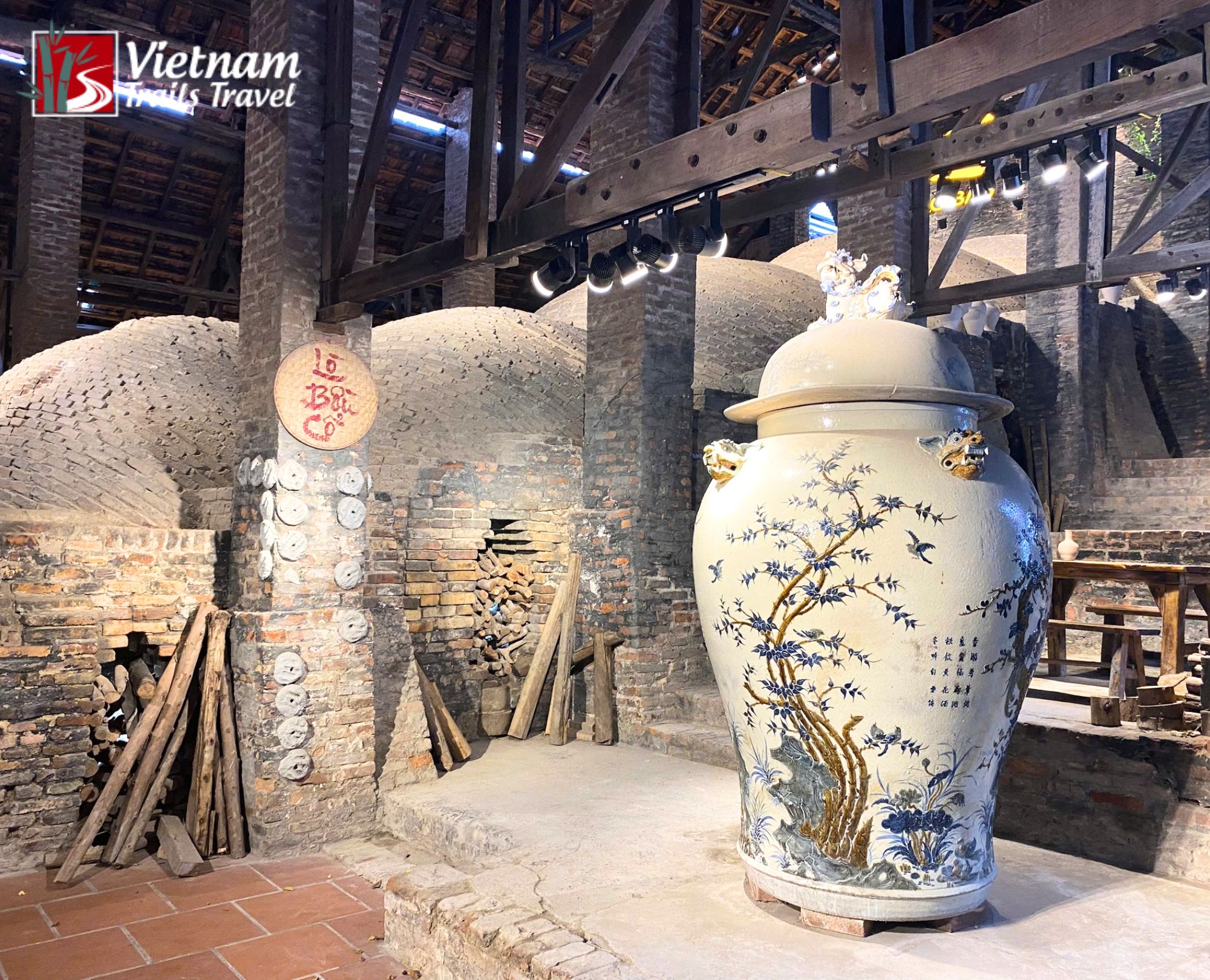
16:00: Visit a working wood-fired kiln (Lò Bầu Cổ)
A 10-minute walk takes the group to a working traditional wood-fired kiln.
Most pottery workshops in the area now use modern gas kilns for speed and efficiency but a few families still rely on traditional wood-fired versions to produce premium pieces.
Ancient dragon kiln (Lo Bau Co) with traditional brick structures
You observe how workers stack the internal chambers and learn how the fire travels progressively through the structure.
The owner explains why a single firing cycle can take up to 36 hours to complete.
He usually offers you a cup of tea brewed in a handcrafted local teapot while discussing the intense labor required.
You will not find this specific technical stop on any standard Bat Trang Pottery Village tour available on booking sites.
16:45: Ceramic Market for Shopping
The itinerary closes at the main ceramic market, giving you 30 minutes for shopping.
You will find that prices here run 50% to 70% cheaper than retail shops located on Gai street in the Old Quarter.
A family of tourists shopping for handmade souvenirs in a narrow alley
Your guide helps you inspect items to spot authentic local pieces and avoid cheaper imports.
You learn to look for the official maker’s stamp on the bottom and check the weight, since real village ceramics feel notably denser than they appear.
Mid-range tea sets generally cost between 300,000 and 600,000 VND. Hand-painted bowls range from 50,000 to 150,000 VND each.
The market vendors offer professional packing and international shipping services if you decide to buy larger items.
17:00: Drive Back to Hanoi
We leave the village area around 17:00 to begin the drive back to the city center.
The vehicle travels along the Red River, catching the late afternoon light on the water if the weather cooperates.
Your guide uses this return trip to answer any final questions you have about Vietnamese ceramics.
17:30: Tour Conclusion
The driver drops you off at your hotel at exactly 17:30. You should check the vehicle seats quickly for any personal items before stepping out.
Your guide walks you to the hotel lobby to conclude the Hanoi 1-day tour services.
Travel tips:
Wear clothes you don’t mind getting dirty: Pottery involves wet clay, aprons are provided but splashes happen.
Bring comfortable shoes: The village has narrow alleys with uneven surfaces; skip the high heels.
Pack light: You will be busy with your hands, so use a small crossbody bag instead of a bulky backpack.
Carry cash (VND): Small family shops and market vendors prefer cash; keep some notes handy for quick purchases.
Double-check your items: When shopping, look for the maker’s stamp on the bottom to ensure you are buying genuine Bat Trang ceramics.