The Cu Chi Tunnels tour from Phu My Port is a full-day private shore excursion built around one site, the wartime tunnel network northwest of the city.
Most of the day is the site itself: a guided walk through the grounds, a short crawl through a safe section and a close look at how the Viet Cong lived underground.
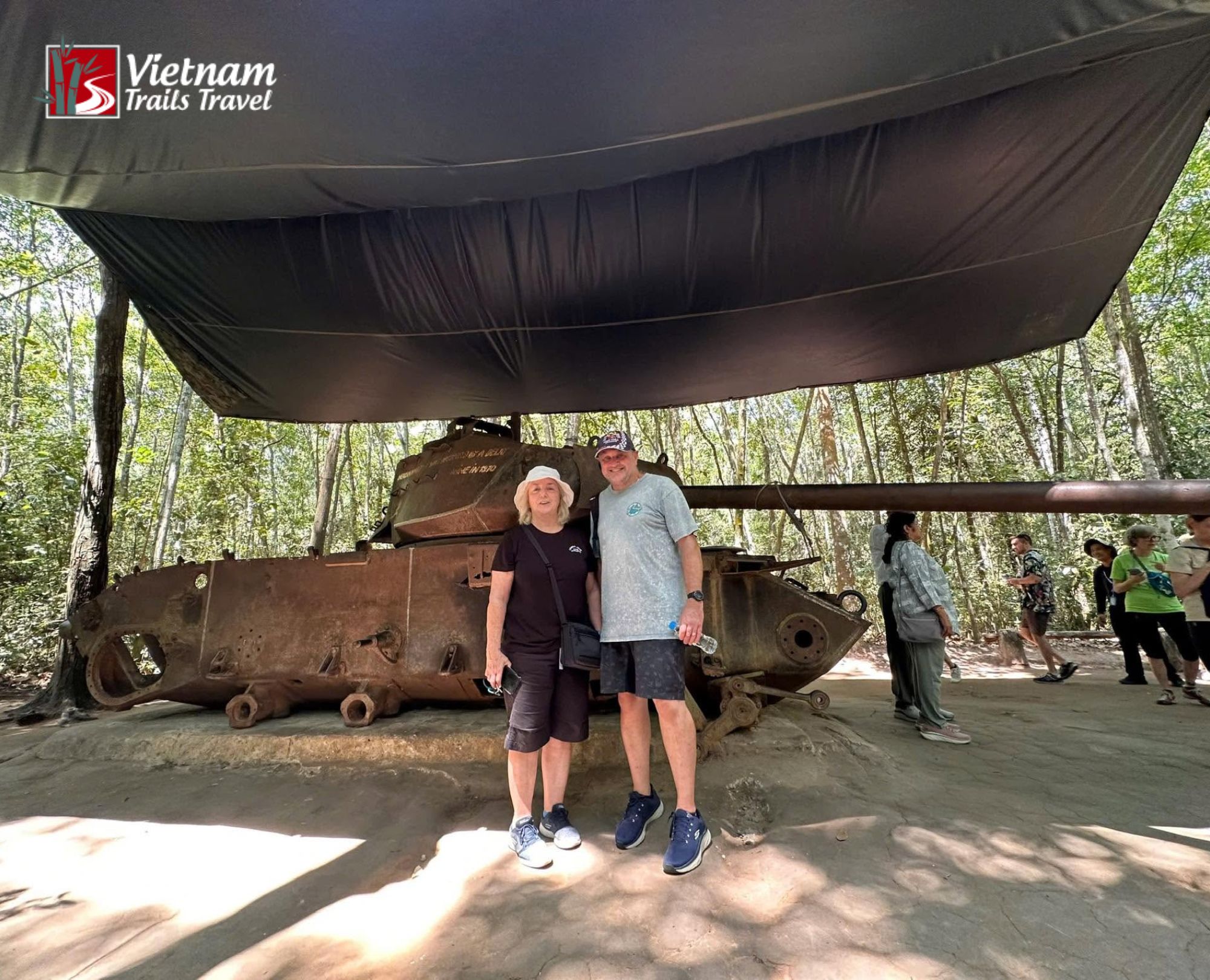
Two tourists taking photos with a Vietnam War-era tank relic
The drive each way is long, so this works best as a single, focused day rather than a packed city tour.
Cu Chi Tunnels tour from Phu My Port Itinerary
Cu Chi Tunnel sits roughly 110 km from Phu My Port, about 2.5 hours by road.
The times below are a guide and shift with traffic and your ship’s schedule.
08:00 AM: Meet and greet Vietnam Trail Travel team
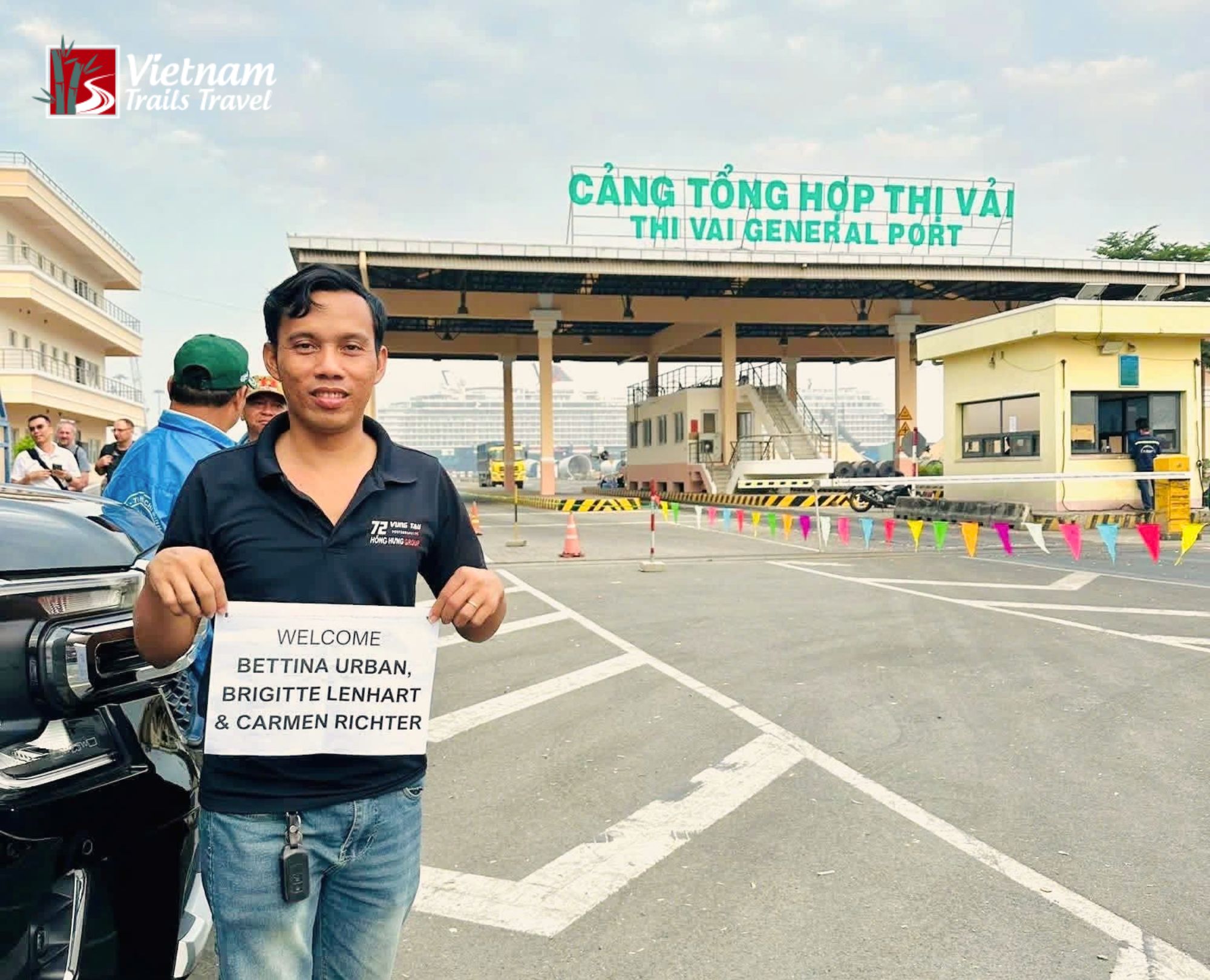
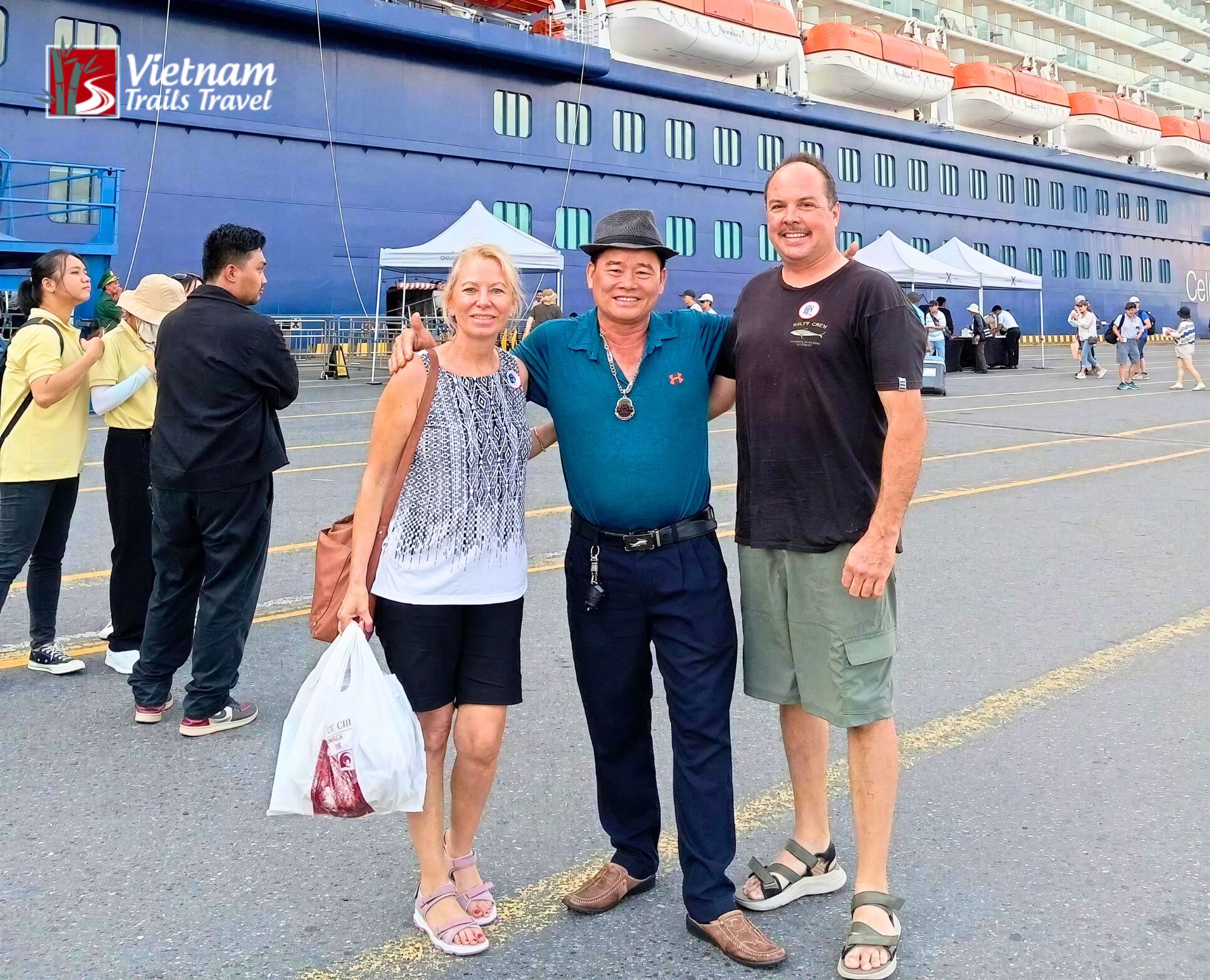
The tour guide picks you up at the Phu My port gate in the Vung Tau area, around 200 m from the ship.
A tour guide holding a name sign welcomes guests at Phu My Port
You either walk out or take the port shuttle to the gate, where the driver and an English-speaking tour guide wait with a name board.
You can choose pick up inside the port, near the cruise. Just only pay 25$/ person
The private, air-conditioned car leaves soon after for the route northwest toward Cu Chi.
A short break can be made along the way for photos or fresh tropical fruit.
This transfer takes about 2.5 hours, with the heaviest traffic usually near Ho Chi Minh City.
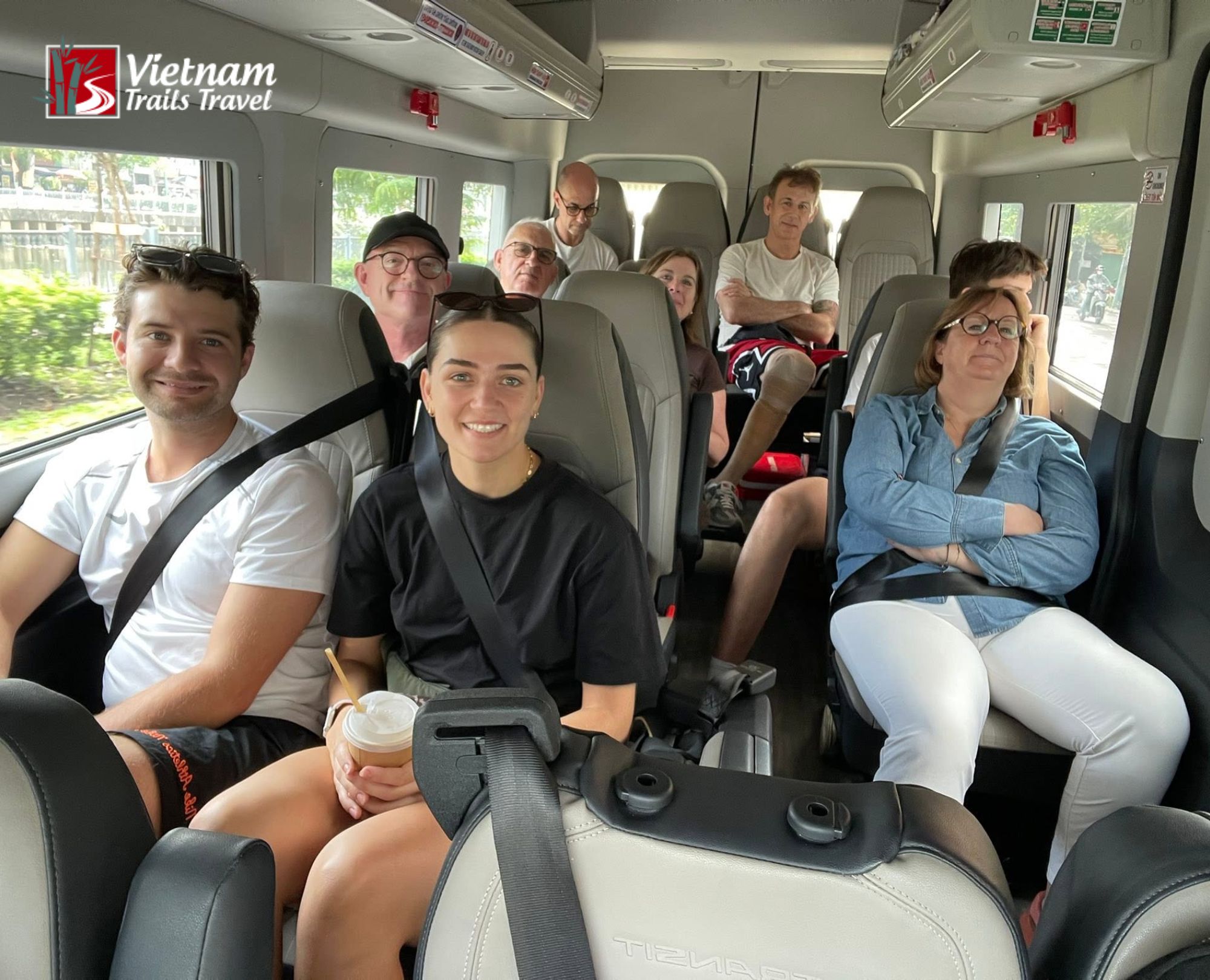
Happy tourists enjoying their trip on a 16-seat van heading to the Cu Chi Tunnels
Phu My is the deep-water port for the region, since larger ships cannot reach the city’s own river berths.
The first stretch follows the Long Thanh–Dau Giay expressway before the road narrows into the Cu Chi district.
10:45 AM: Arrival at Cu Chi
Arrival at the famous Cu Chi Tunnels is normally around 10:45.
The site sits in a patch of forest that was a stronghold during the war with the United States.
Two areas are open to visitors: Ben Dinh, the nearer and busier section and Ben Duoc which is quieter and more local.
Your tour uses one of the two and the guide confirms which on the day.
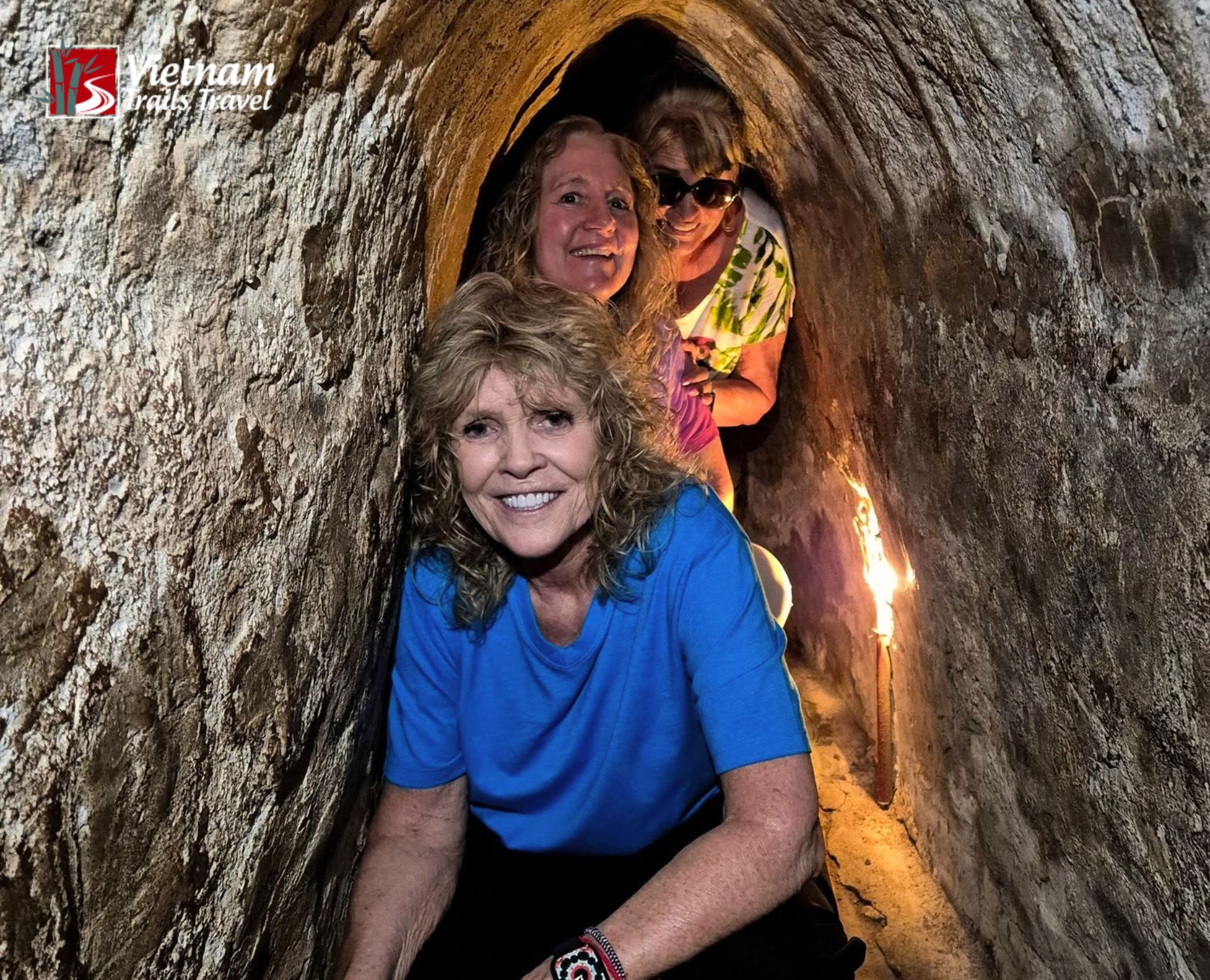
A female tourist experiencing crawling through the Củ Chi Tunnels
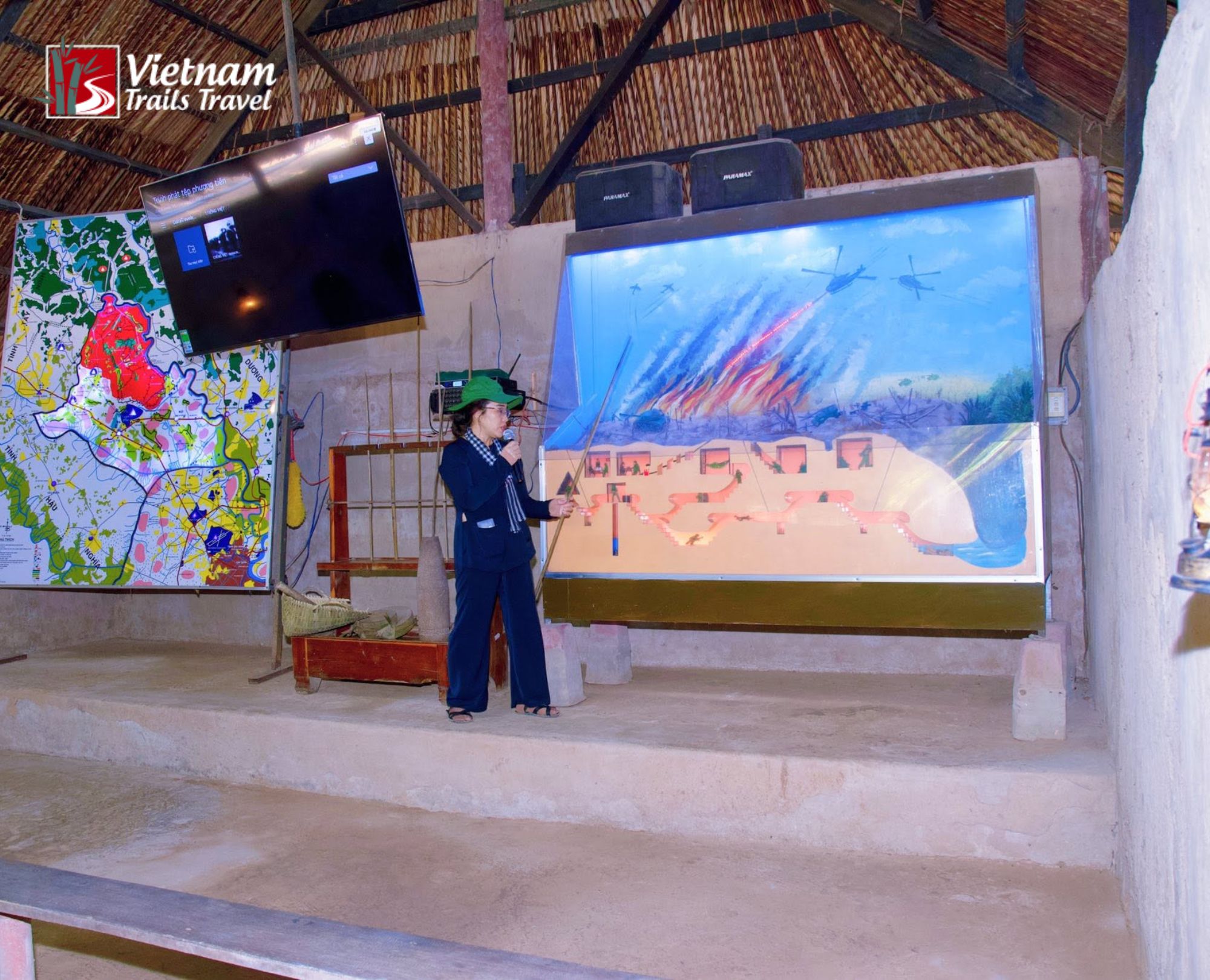
The visit opens in a small room, where you watch a short introductory video showing how the tunnels were constructed.
The film sets up the background before you experience the underground network, how it was dug by hand and kept out of sight.
Time to explore the network above and below ground runs about two hours.
A female tour guide showing tourists a historical film and explaining about the war at Củ Chi
The Cu Chi tunnels formed part of an intricate system that once reached around 250 km, used by Viet Cong fighters as living areas, storage rooms, field hospitals and wartime command posts.
The guide points out the details that show how people held out in the underground tunnels for years.
Work on the network began in the late 1940s against the French then grew through the 1960s into the system seen today.
The area around Cu Chi, once called the Iron Triangle, took heavy bombing during the war, which pushed daily life further underground.
The passages run on up to three levels, from about three to ten meters deep, linked by narrow shafts.
Tourists exploring the underground space inside the Củ Chi Tunnels
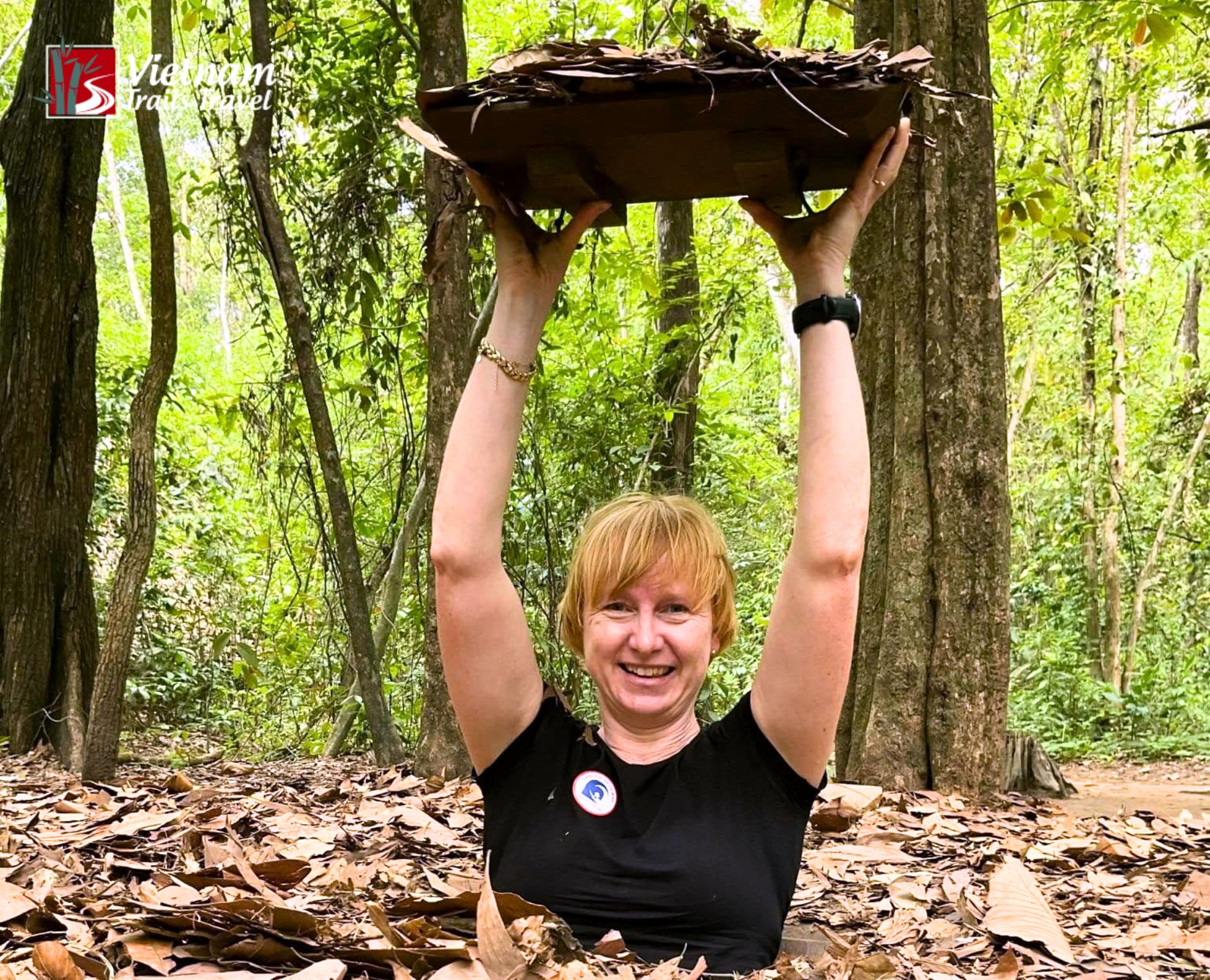
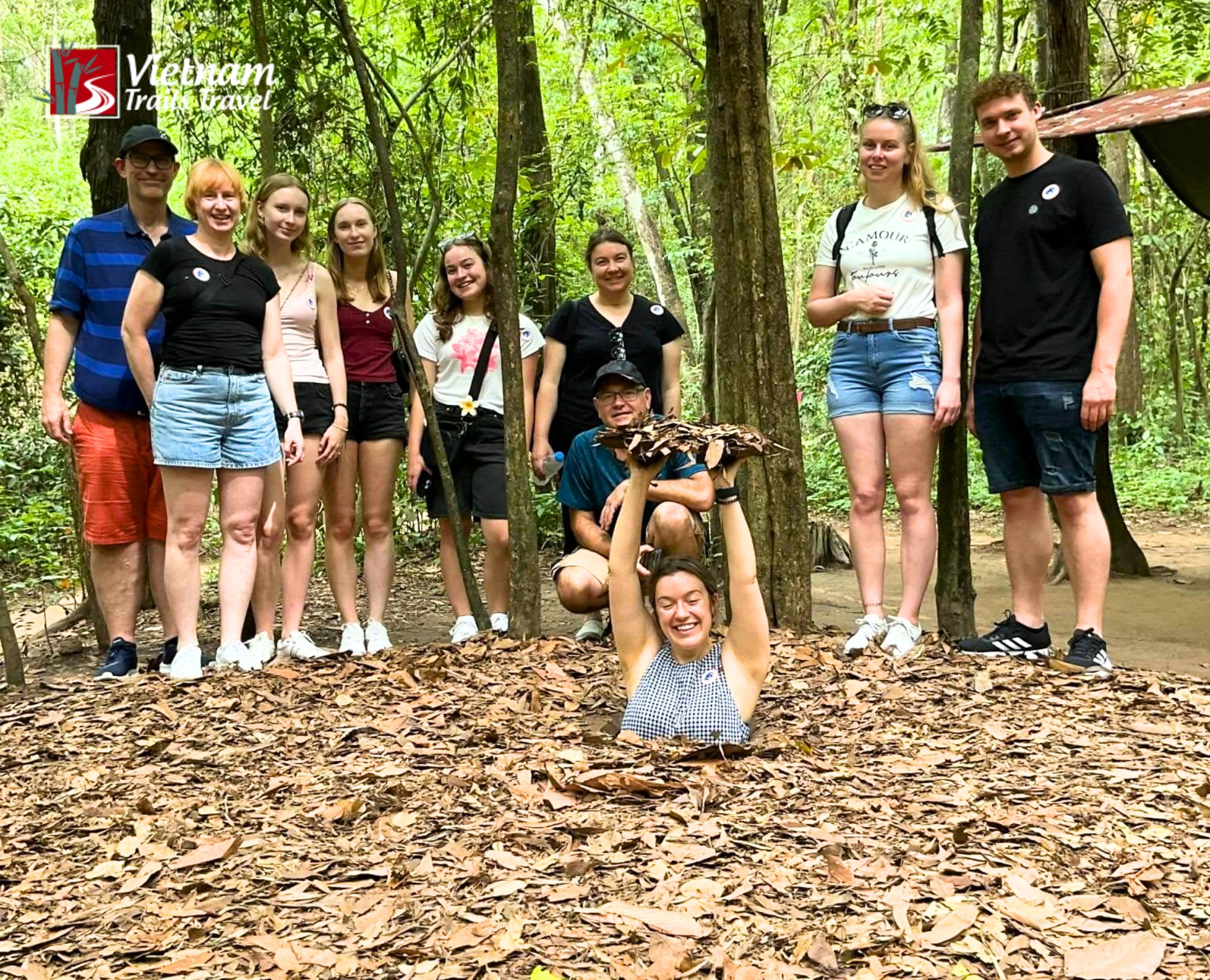
Hidden trapdoors, barely the width of a person, sit flush with the forest floor, one of the first things the guide demonstrates.
The Hoang Cam kitchen shows how cooking smoke was carried far from the cooking spot to avoid detection.
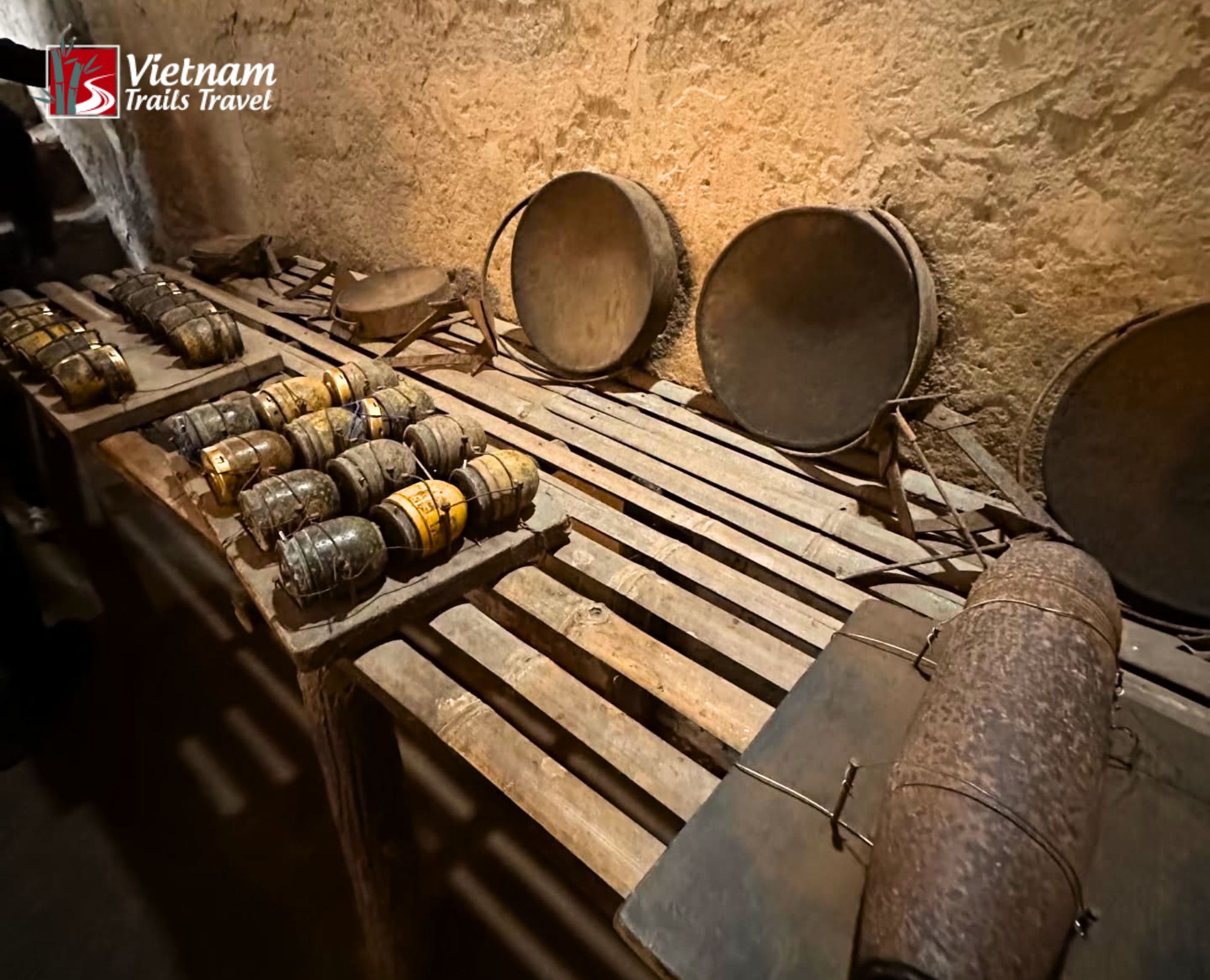
Weapon workshops, an ammunition factory and a small museum hold self-made tools, traps built from scrap metal and unexploded ordnance, a clear sign of the ingenuity behind the network.
A reconstructed booby-trap display explains the defenses set around each tunnel mouth.
Air vents disguised as termite mounds brought in fresh air and concealed wells supplied water, so you could stay below for long spells.
Meeting rooms, sleeping quarters and a field hospital sat deeper in, away from the entrances.
Much of this is explained at marked points along the trail with sections opened up so the layout is easy to picture.
A safe, widened length of tunnel is open for anyone who wants to crawl through and feel the real scale of the space.
The passage is short, lit, and has exits along the way, so entering the tunnels is easy to try and easy to skip.
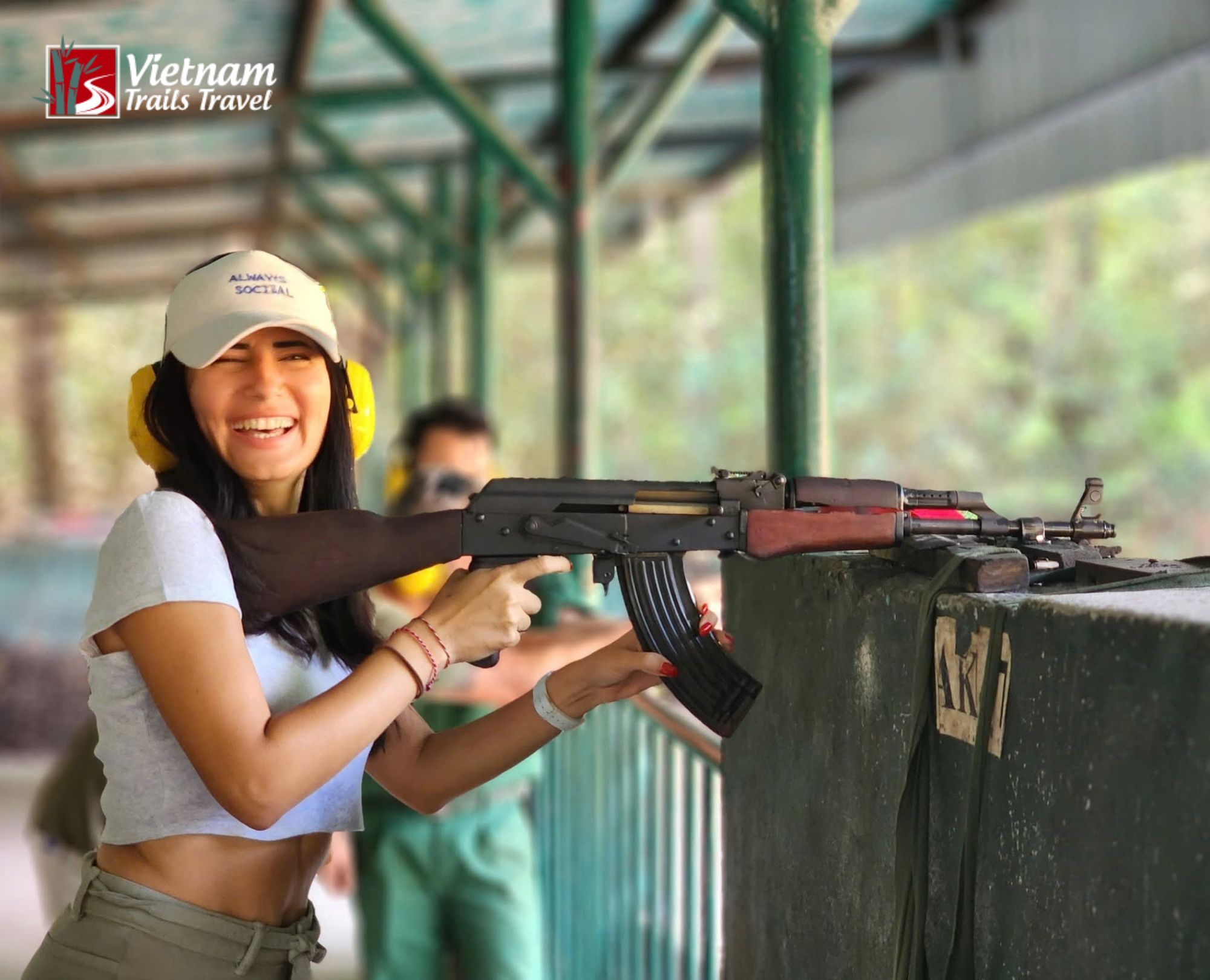
A shooting range also sits on site, where you can fire an AK-47 or M16 for an extra fee, paid on the spot in USD or Vietnamese Dong.
A female tourist experiencing shooting an AK-47 at the firing range
For most foreign tourists, this is the clearest view they get of Vietnam’s wartime history — the resilience and ingenuity behind an underground network that played a real role in the conflict up to 1975.
The visit is the main sight of the day, and the guide gives the context that turns a set of holes in the ground into a clear window on Vietnam’s past.
12:45 PM: Wartime tasting
Before lunch, a simple wartime snack of boiled tapioca with tea and peanuts is offered, the plain food that soldiers lived on.
The tasting is quick and easy to pass on. A small souvenir shop near the exit sells handicrafts and war-era reproductions.
01:00 PM: Lunch in Cu Chi
Lunch is served at a local restaurant in Cu Chi, close to the site, with southern Vietnamese food and vegetarian dishes on request, a welcome rest before the long drive.
This tour stays focused on Cu Chi and makes no sightseeing stop in Ho Chi Minh City, which keeps the return to the port on schedule.
02:00 PM Transfer back to the port
Departure from Cu Chi is around 14:00, with the road running back through open countryside and a short comfort stop if needed.
The transfer back to the port takes roughly three hours, so the guide keeps track of the time for your cruise and reaches Phu My with a clear buffer rather than a rush.
03:00 AM: Return to the port
Drop-off at the port is around 18:00, outside the gate near your ship.
End of the Cu Chi Tunnels tour from Phu My Port.
Travel tips:
Prepare for a long drive: The transfer between the port and the tunnels takes approximately 2.5 to 3 hours each way. You may want to bring a book or other activities to pass the time.
Wear comfortable clothing: The tour involves a guided walk through forest grounds and the opportunity to crawl through a section of the tunnel.
Decide on the tunnel crawl: A safe, widened, and lit section of the tunnel is available for those who want to experience the space. If you prefer not to enter, the tunnel is easy to skip.
Bring extra cash: While the tour is focused on the tunnels, there is a shooting range on-site where you can fire an AK-47 or M16 for an extra fee, payable in USD or Vietnamese Dong.
Inform your guide of dietary needs: Lunch is served at a local restaurant, and vegetarian dishes are available upon request.
Check your belongings: Before you are dropped off at the port gate at 18:00, ensure you have all of your personal items.