
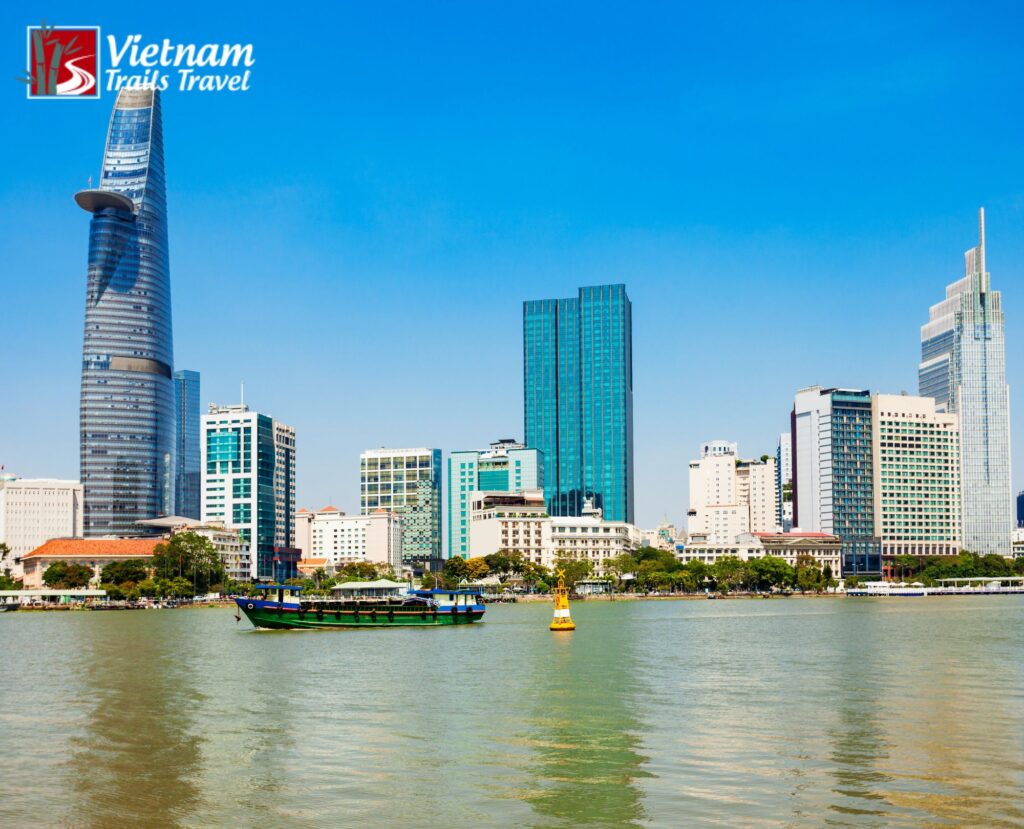
If there is one city in Southeast Asia that perfectly captures the “work hard, play hard” spirit, it is Ho Chi Minh City. Most locals still call it Saigon, and as you step out of the airport in 2026, you will immediately feel why. The air is thick with the scent of street food, the hum of electric motorbikes, and an undeniable sense of ambition.
In this Ho Chi Minh City Travel Guide, we aren’t just looking at the famous landmarks. We are diving into how the city has changed in 2026, from the brand-new Metro lines to the hidden rooftop bars that only locals know about. Whether you have 48 hours or a full week, here is everything you need to plan your perfect trip.
1. The brief about Ho Chi Minh
Ho Chi Minh City (Saigon), nestled in the heart of southern Vietnam, South East Asian, operates on Indochina Time (ICT), which is UTC+7 . Vietnam uses a single time zone across the entire country, so there is no daylight saving time adjustment, is the country’s largest and most vibrant metropolis — a city that captivates every traveler who sets foot in it.
Culturally, it is a rich tapestry woven from Vietnamese, Chinese, and French influences, visible in everything from its grand colonial architecture — the Notre-Dame Cathedral, the Central Post Office, the Reunification Palace — to the ancient pagodas and Chinese temples of the Cholon district, all coexisting harmoniously alongside a modern skyline.
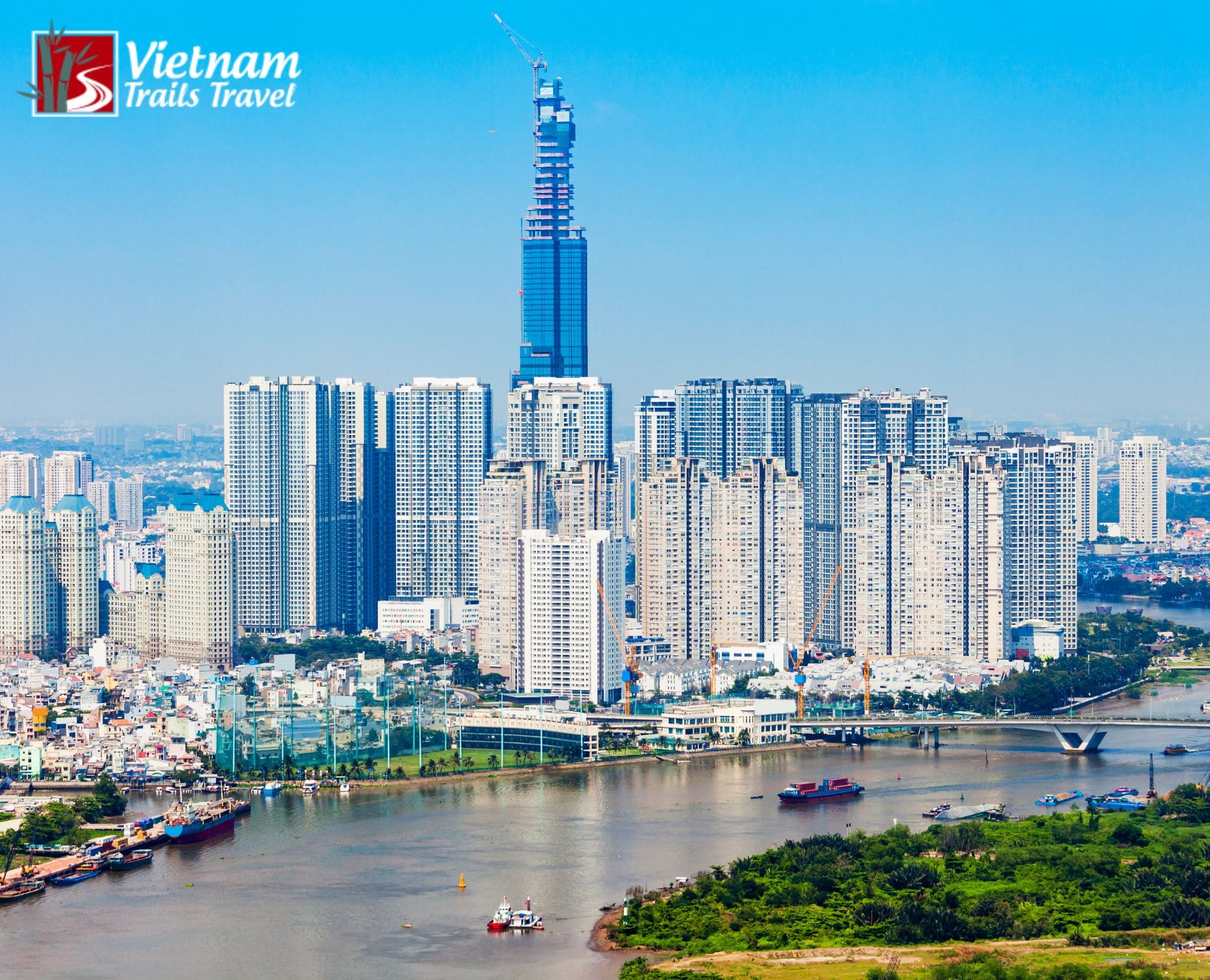
For travelers, the city offers an endless array of experiences: cruise the Saigon River at sunset, explore the eye-opening War Remnants Museum, shop the colorful stalls of Ben Thanh Market, or simply get wonderfully lost wandering the narrow alleyways of its older neighborhoods.
And then there is the food — arguably the greatest reason to visit — where steaming bowls of phở and bún bò Huế, crispy bánh mì sandwiches stuffed with fresh herbs, silky hủ tiếu noodle soup, and strong Vietnamese iced coffee (cà phê sữa đá) are served up around the clock at humble street-side stalls and lively local restaurants.
Whether you come for the history, the culture, the buzzing energy, or simply the incredible cuisine, Ho Chi Minh City is a destination that will leave a lasting impression on every traveler lucky enough to experience it.
2. The best time to visit Ho Chi Minh City
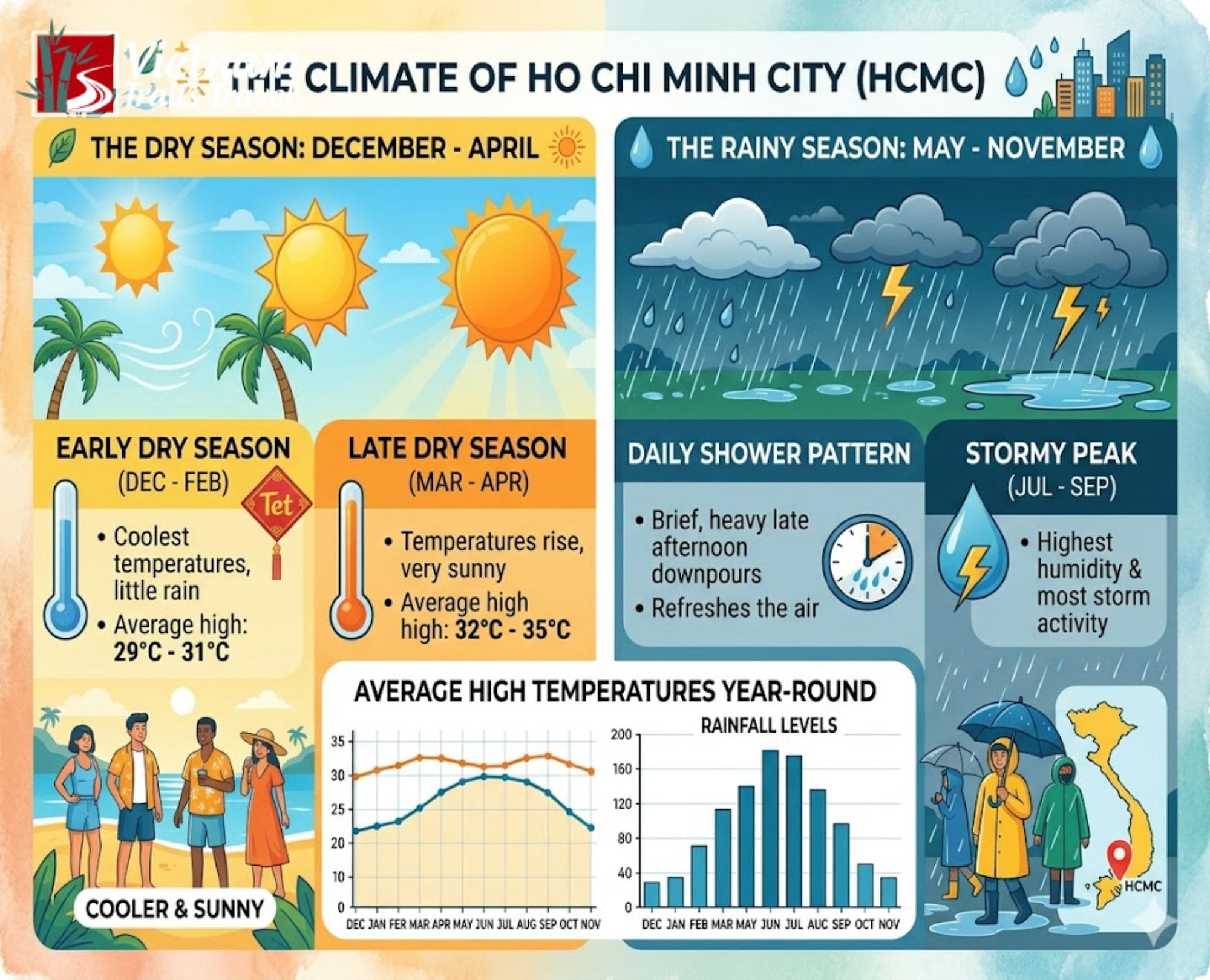
The best time to visit Ho Chi Minh City is during the dry season from December to March, when days are sunny, humidity is lower, and the weather is ideal for exploring. Ho Chi Minh City weather stays warm year-round, with average highs between 29–35°C, but rainfall patterns make a big difference in the experience.
2.1. Dry weather & rainy season
2.1.1. December – April – Dry Season
The best months are December, January, and February — the rainy season will have just ended, and these three months provide the coolest temperatures combined with the lowest amount of rainfall, averaging around 27–28°C.
Ho Chi Minh City comes alive during Tet, the Vietnamese Lunar New Year — considered the most important festival in the country — which typically falls between late January and mid-February, when the city transforms with traditional decorations and festive energy.
March weather remains characterized by moderate temperatures and consistent humidity, with average daytime temperatures ranging from 23–33°C and nearly 9 hours of sunshine, making it the sunniest month. April serves as the transition month, with temperatures rising to highs of 34°C.
2.1.2. May – November – Rainy season
From May to November, the wet season brings a dependable afternoon downpour, usually lasting a few hours. July through September tends to be stormy, hot, and humid. However, a drop in tourists during this period leads to significant discounts on accommodations, flights, and tours, and the rain showers are usually short-lived, often occurring in the late afternoon or early evening.
| Period | Weather | Crowd | Budget |
|---|---|---|---|
| Dec – Feb | Best | High | Higher |
| Mar – Apr | Good | Moderate | Moderate |
| May – Nov | Rainy | Low | Budget-friendly |
2.2. How Ho Chi Minh City’s Weather Differs from Hanoi
One of the easiest things about planning a trip to Ho Chi Minh City is the weather — it’s warm year-round and only really has two moods: dry and rainy. That makes packing simple and your itinerary flexible.
The dry season is when the city shines. Clear skies, warm evenings, and sidewalk life in full swing — this is the stretch most travelers fall in love with. The rainy months sound worse than they are: showers usually arrive in short, heavy bursts in the afternoon, then move on. Locals just duck into a café and wait it out. The city stays warm through it all.
Hanoi up north is a different experience. It runs on four seasons, with a genuinely cold winter and a heavy, humid summer. So if you’re combining both cities, the Saigon half will almost always be the easier one to dress for — and if Ho Chi Minh City is your only stop, you can stop worrying about the weather and start worrying about which bánh mì spot to try first.
| Category | Ho Chi Minh City (South) | Hanoi (North) |
| Seasons | Two seasons (Dry & Rainy) | Four seasons (Spring, Summer, Autumn, Winter) |
| Season Breakdown |
• Dry Season (Nov – Apr): Sunny, low humidity. • Rainy Season (May – Oct): Short, heavy afternoon bursts. |
• Spring (Feb – Apr): Cool, drizzly rain. • Summer (May – Aug): Hot, humid, stormy. • Autumn (Sep – Nov): Mild, dry, pleasant. • Winter (Dec – Jan): Cold, grey, dry. |
| Year-round Feel | Consistently warm and tropical | Significantly varies by season |
| Humidity | High year-round | Very high (peaks in Spring with “nồm” weather) |
| What to Pack |
• Light, breathable clothes • Sun protection (sunglasses, sunscreen) • Umbrella or raincoat (for rainy season) |
• Versatile layers (T-shirts to heavy coats) • Warm gear for winter (scarves, jackets) • Rain gear |
3. Getting Around
For years, the best way to see Saigon was on the back of a motorbike. While that’s still a thrill, 2026 has brought some much-needed upgrades to the city’s infrastructure.
3.1. Shuttle Bus
Tan Son Nhat International Airport (SGN) is located approximately 6–8 km from District 1, making it one of the most centrally located airports in Southeast Asia. There are currently two main public bus routes serving the airport, along with a dedicated airport shuttle bus (Bus 49) for a more comfortable ride.
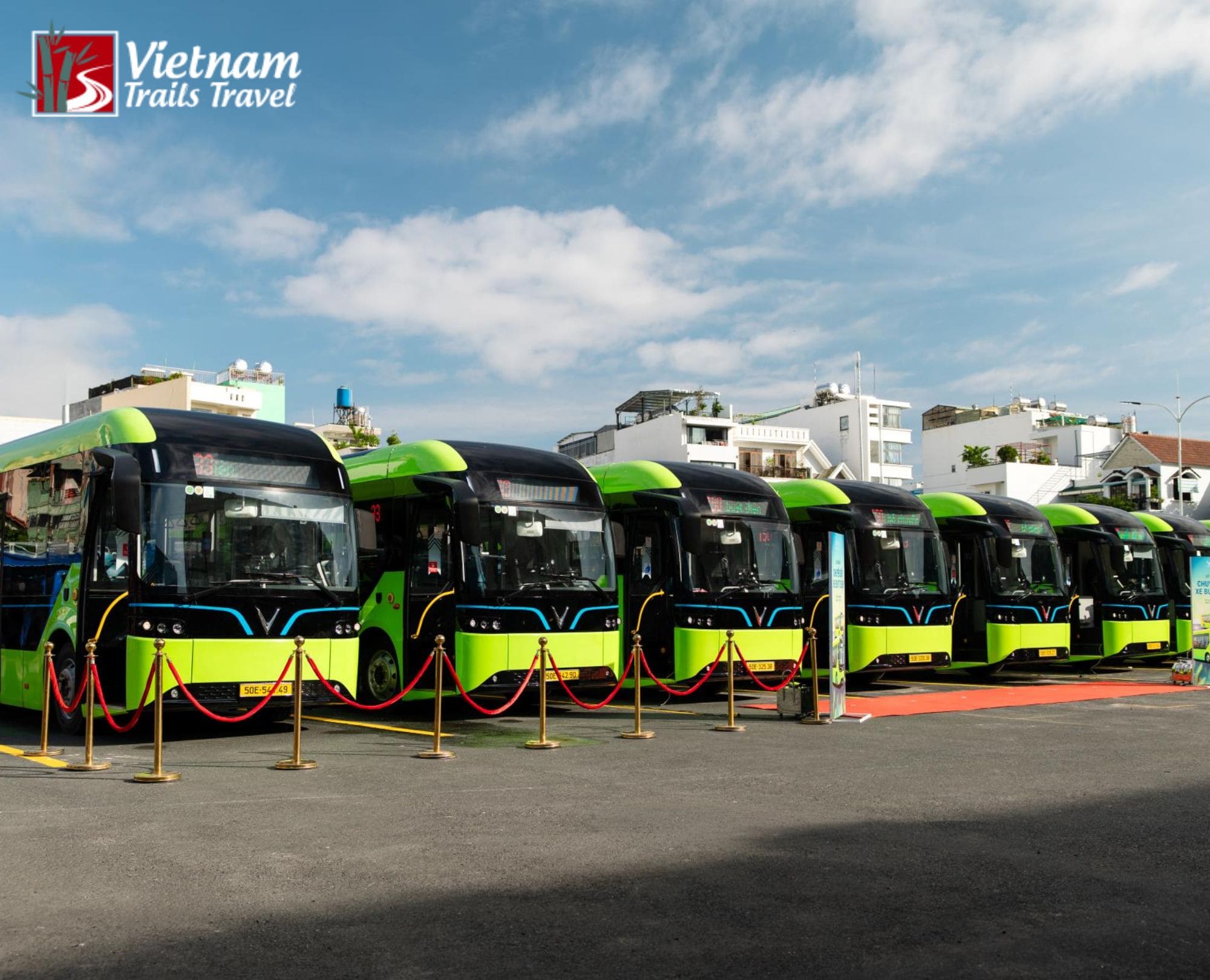
Bus 109 — Most Recommended for Tourists
- Fare: 15,000 – 20,000 VND (~$0.60–0.80 USD)
- Hours: 5:30 AM – 10:40 PM daily
- Frequency: Every 15–20 minutes
- Journey time: ~45 minutes to Ben Thanh Market
- Payment: Cash only (buy at yellow booth or on board)
Airport Pickup Point
Clearly signed Airport Bus stops outside both terminals; follow the bus icons from Arrivals. Fast Track Vietnam The yellow ticket booth is easy to spot at both the international and domestic terminals. Bus 109 now ends at Terminal 3, so if you are at Terminal 1 or Terminal 2, you may need to take the free inter-terminal shuttle first.
Full Route & City Drop-off Points
Bus route number 109 from Tan Son Nhat International Airport has the following stops: Tan Son Nhat International Terminal – Domestic Terminal – Truong Son Street – Tran Quoc Hoan Street – Hoang Van Thu Street – Nguyen Van Troi Street – Nam Ky Khoi Nghia Street – Nguyen Dinh Chieu Street – Cach Mang Thang Tam Street – Pham Hong Thai Street – Le Lai Street – Central Bus Station (opposite Ben Thanh Market) – Pham Ngu Lao Street – and Park 23rd September (last stop).
3.2. Mastering the metro line 1
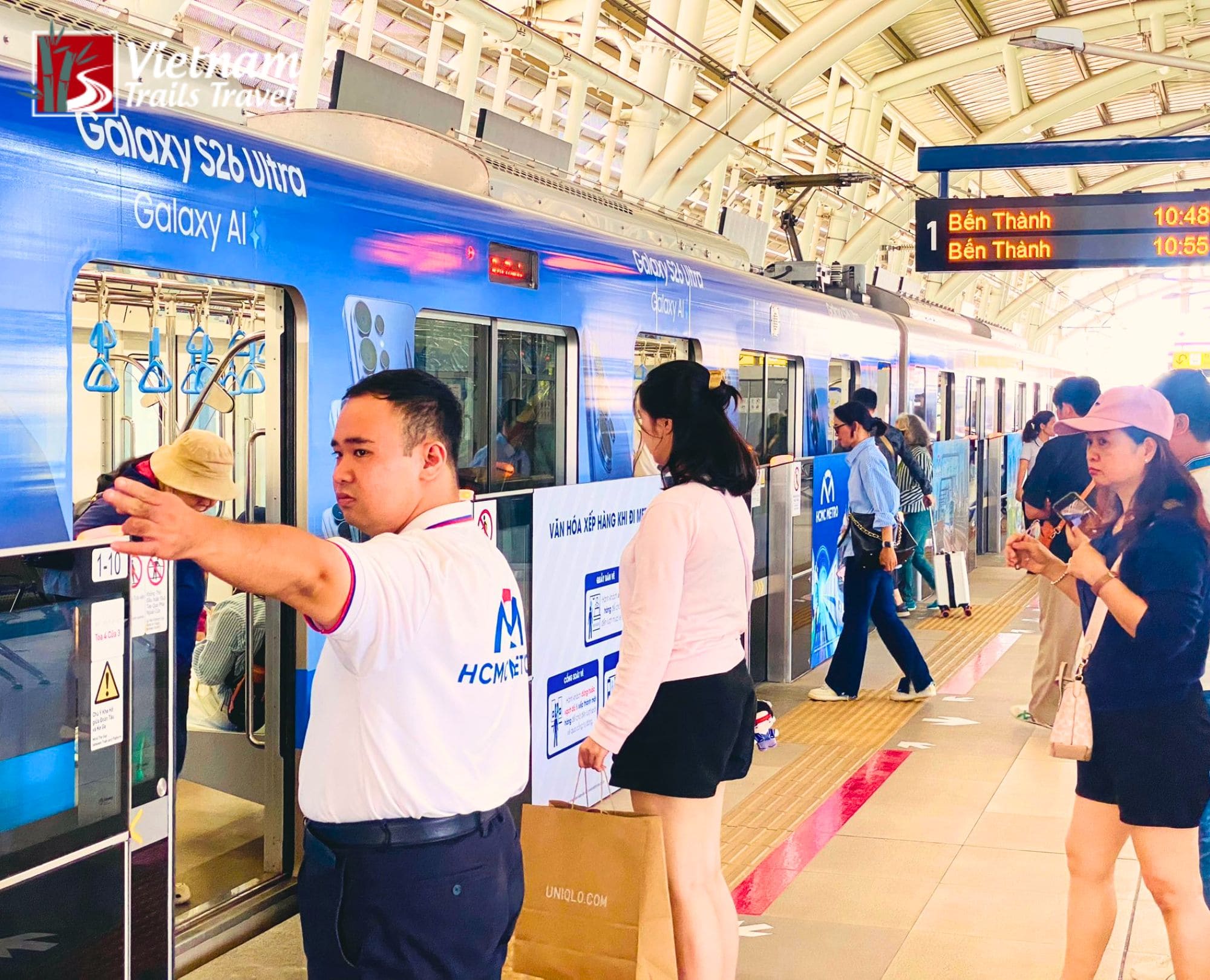
This is the biggest game-changer in this Ho Chi Minh City Travel Guide. The Metro Line 1 is finally fully operational, connecting Ben Thanh Market in the city center to Thao Dien and Suoi Tien. It’s air-conditioned, incredibly fast, and very cheap. For tourists, it’s the easiest way to hop between District 1 and the trendy expat areas without worrying about traffic jams.
However, while the bus is great for a general loop of District 1, many travelers find that their exploration needs more flexibility—especially when visiting sites further afield or traveling in a group.
3.3. Taxi
Ho Chi Minh City has a well-established taxi network with several reputable companies operating around the clock. The two most reliable and widely trusted taxi companies are Vinasun (white cars) and Mai Linh (green cars), which are the most recommended choices for travelers to avoid scams and overcharging.
Other operators include Phuong Trang (FUTA) and ride-hailing apps such as Grab, Be, and Xanh SM. Most taxis in Ho Chi Minh City are metered by law, with a base fare of around 12,000 VND and a per-kilometer rate of approximately 16,000 VND.
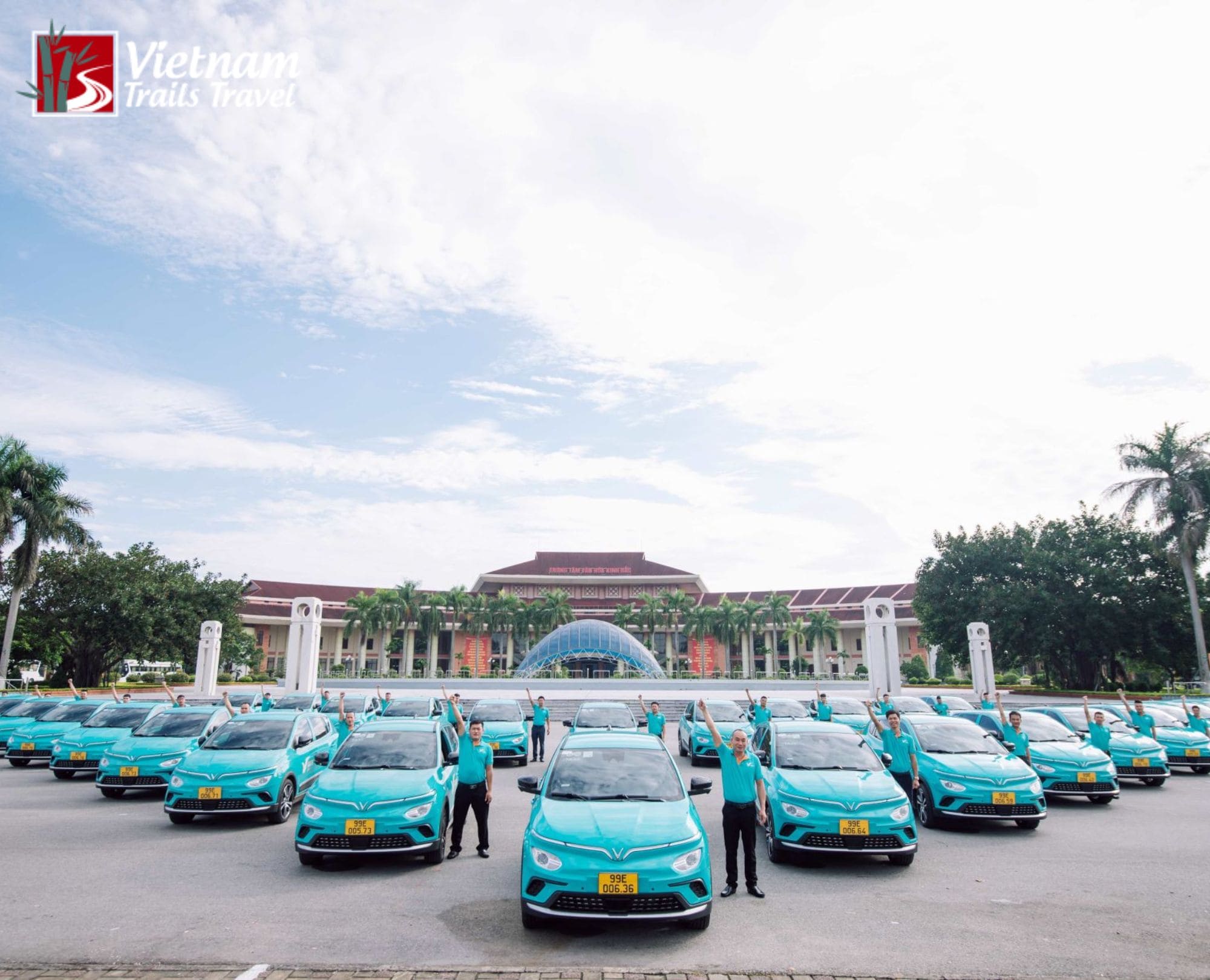
For the journey from Tan Son Nhat International Airport to a hotel in the city center (District 1), the average taxi fare ranges from 150,000 to 200,000 VND (approximately USD 6–8), plus an additional 10,000 VND airport toll fee.
The trip typically takes 15 to 30 minutes depending on traffic. For ride-hailing apps, the average price is slightly lower at 130,000 to 170,000 VND (approximately USD 5–7), with the advantage of a fixed fare shown upfront before confirming the ride.
The official taxi stand is located on the Ground Floor of the terminal building — as you leave through the main exit of the Arrivals Hall, turn left and you will find the rank, which is manned by a taxi attendant who can help assign a driver to you.
3.4. Train
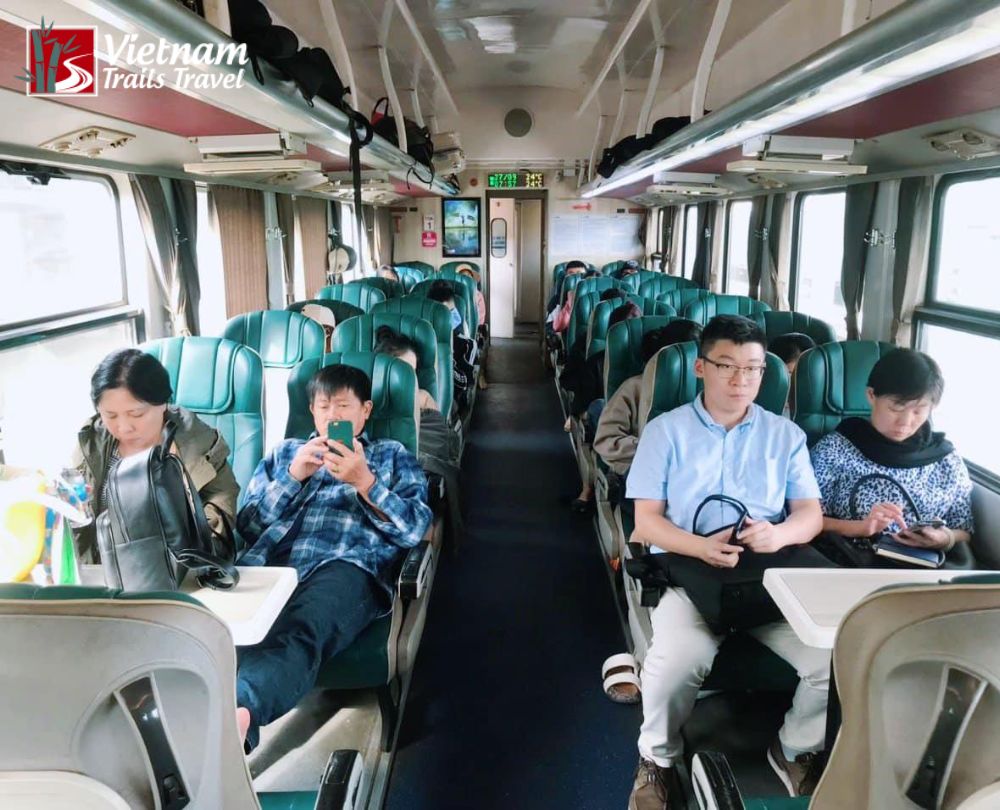
If you’re looking to catch that old-school Vietnam vibe, just tell your driver to drop you off at 01 Nguyen Thong in District 3. That’s Saigon Station (Ga Sài Gòn). If you live in central areas like Districts 1, 2, or 4, it only takes 15-20 minutes to get to the train station. This isn’t a high-speed terminal; it’s a place of nostalgia where the journey truly matters more than the arrival.
When booking your ticket, don’t just ask for “a seat.” You need to know the comfort hierarchy. For the full experience, go for the Soft Sleeper (4-berth cabin)—it’s the “first class” of our tracks, where you get a proper bed and a bit of privacy.
If you’re on a budget but still want to sleep, the Hard Sleeper (6-berth) is fine, though the top bunk is a bit of a climb! For short hops to places like Phan Thiet, a Soft Seat with air-con is all you need.
You can learn about the train codes before processing to book a seat. The SE (Super Express) trains, like the SE2, SE4, or SE8, the smaller the number, the higher the priority; even numbers go from south to north, and odd numbers go from north to south.
They are faster, cleaner, and timed better for tourists. If you see an SNT code, that’s the dedicated line to the beach city of Nha Trang, and the SPT is your ticket to the dunes of Mui Ne (Phan Thiet).
My pro tip: If you are hungry, just wait for the trolley rolling down the aisle. They have a tiny market inside the train, where they sell instant noodles, snacks, coffee, and boiled eggs, etc.
4. Things to do in Saigon 2026
When people ask about the best things to do in Saigon 2026, I always tell them to mix the “Must-Sees” with the “Hidden Gems.”
4.1. Historical & Cultural Landmarks
4.1.1. Reunification Palace
-
Address: 135 Nam Ky Khoi Nghia, Ben Thanh Ward, District 1, Ho Chi Minh City.
-
Opening Hours: 8:00 AM – 4:30 PM Daily (Ticket counter closes at 3:30 PM).
-
Entrance Fee: 65,000 VND (includes the Palace and the Norodom Exhibit).
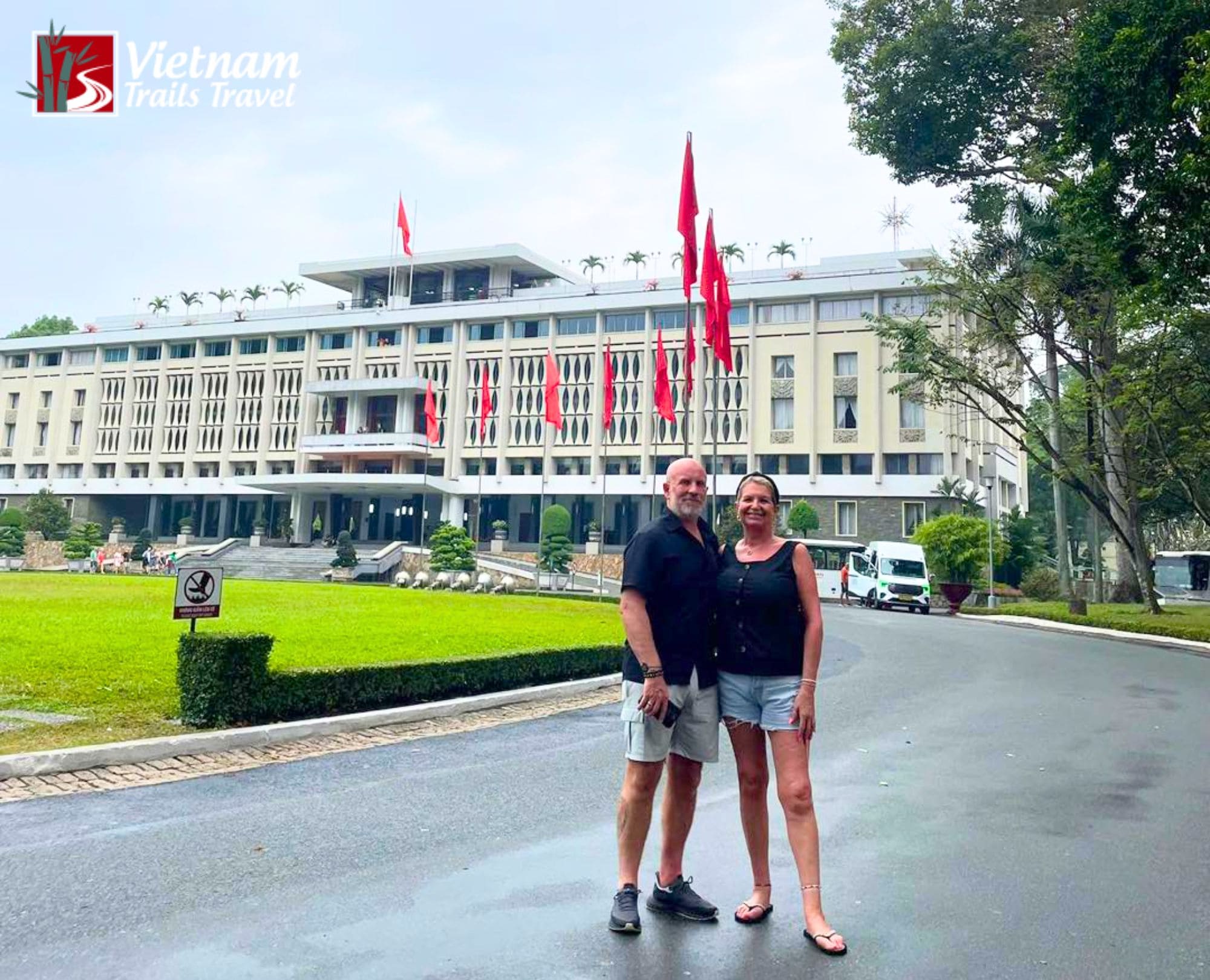
Also commonly called the Independence Palace, the Reunification Palace was where the Vietnam War officially ended in 1975. Today it stands as a symbol of the strength of the Vietnamese people. Underground bunkers, elegant staterooms, and even a cinema space are found at the palace. It’s one of the most iconic and unmissable stops in the city.
4.1.2. War Remnants Museum
-
Address: 28 Vo Van Tan, Ward 6, District 3, Ho Chi Minh City.
-
Opening Hours: 7:30 AM – 5:30 PM Daily (Ticket counter closes at 5:00 PM).
-
Entrance Fee: 40,000 VND per person.
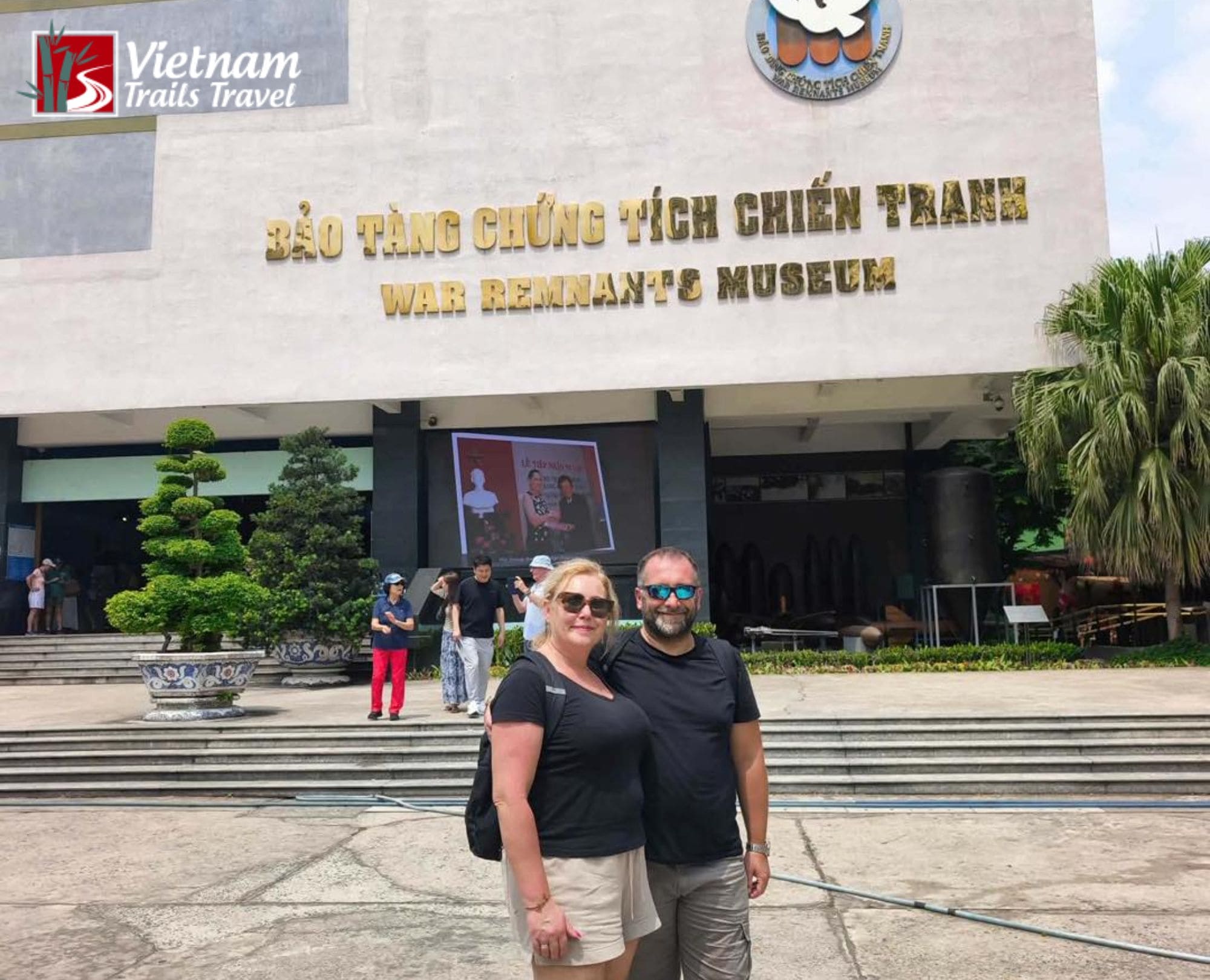
This powerful museum is devoted to showing the impact of the US invasion of Vietnam on civilians from a Vietnamese perspective, in eight thematic exhibitions with over 20,000 artifacts. The images of atrocities, destruction, and effects of Agent Orange are upsetting, so prepare yourself emotionally before visiting. While it’s a deeply moving experience, it’s essential for gaining a larger understanding of the conflict and modern-day Vietnam.
4.1.3. Notre-Dame Cathedral & Central Post Office
-
Address: 1-2 Cong Truong Cong Xa Paris, Ben Nghe Ward, District 1.
-
Opening Hours: Mon-Fri: 7:00 AM – 6:00 PM; Sat-Sun: 8:00 AM – 5:00 PM.
-
Entrance Fee: Free.
The design of Ho Chi Minh City’s Central Post Office, completed in 1891, mimics an old-world European railway station with soaring ceilings and a giant clock face, including hand-painted maps of the old city. Right across the street, the Notre-Dame Cathedral is one of Saigon’s most photographed colonial landmarks. Both can be visited together in under an hour.
4.1.4. Saigon Opera House
-
Address: 7 Lam Son Square, Ben Nghe Ward, District 1, Ho Chi Minh City.
-
Opening Hours: Primarily open during scheduled performances. The ticket office is usually open from 9:00 AM – 6:00 PM.
-
Ticket Price: Viewing the architecture from the outside is free. Tickets for cultural shows like the “A O Show” typically range from 700,000 VND to 1,600,000 VND depending on the seat class.
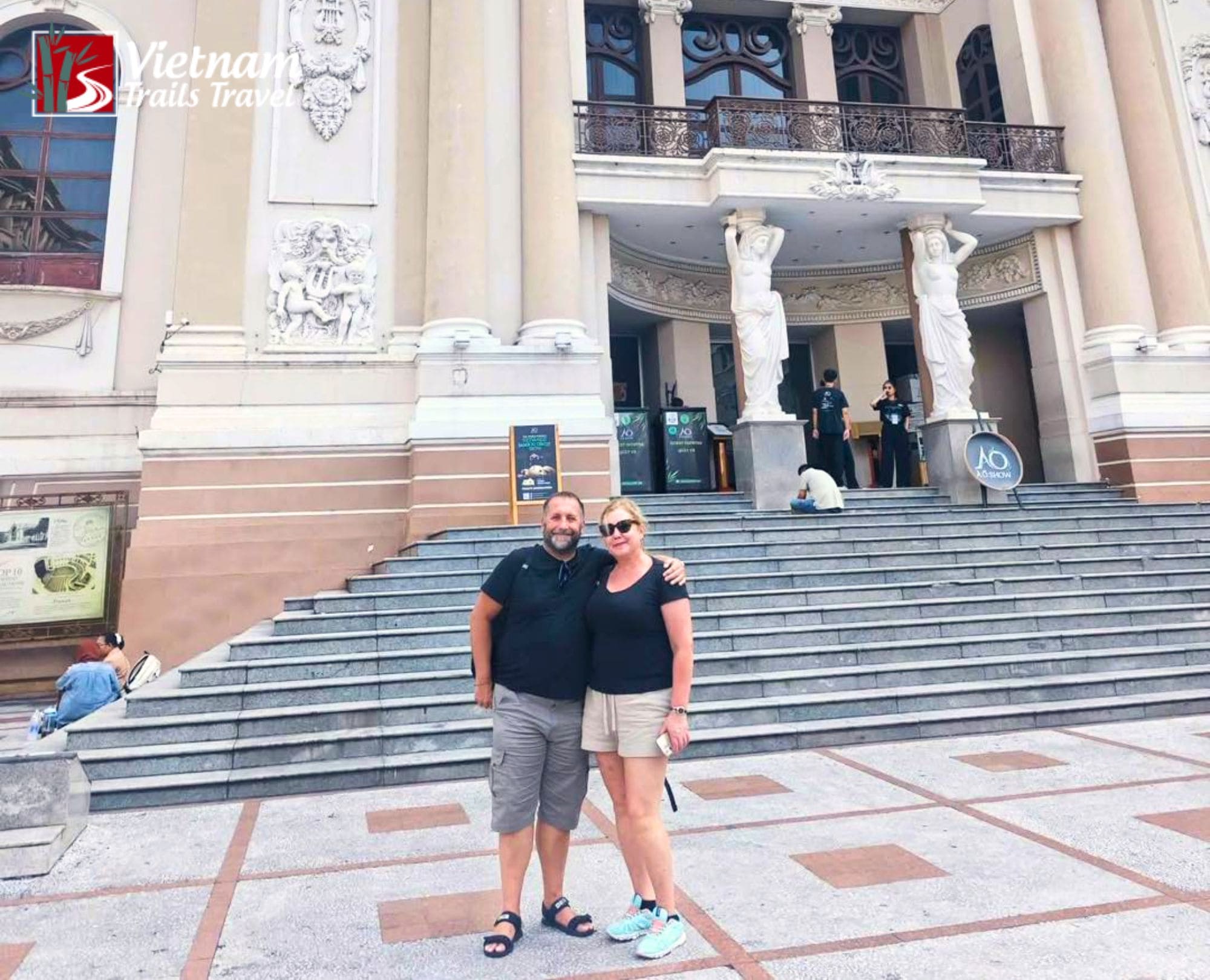
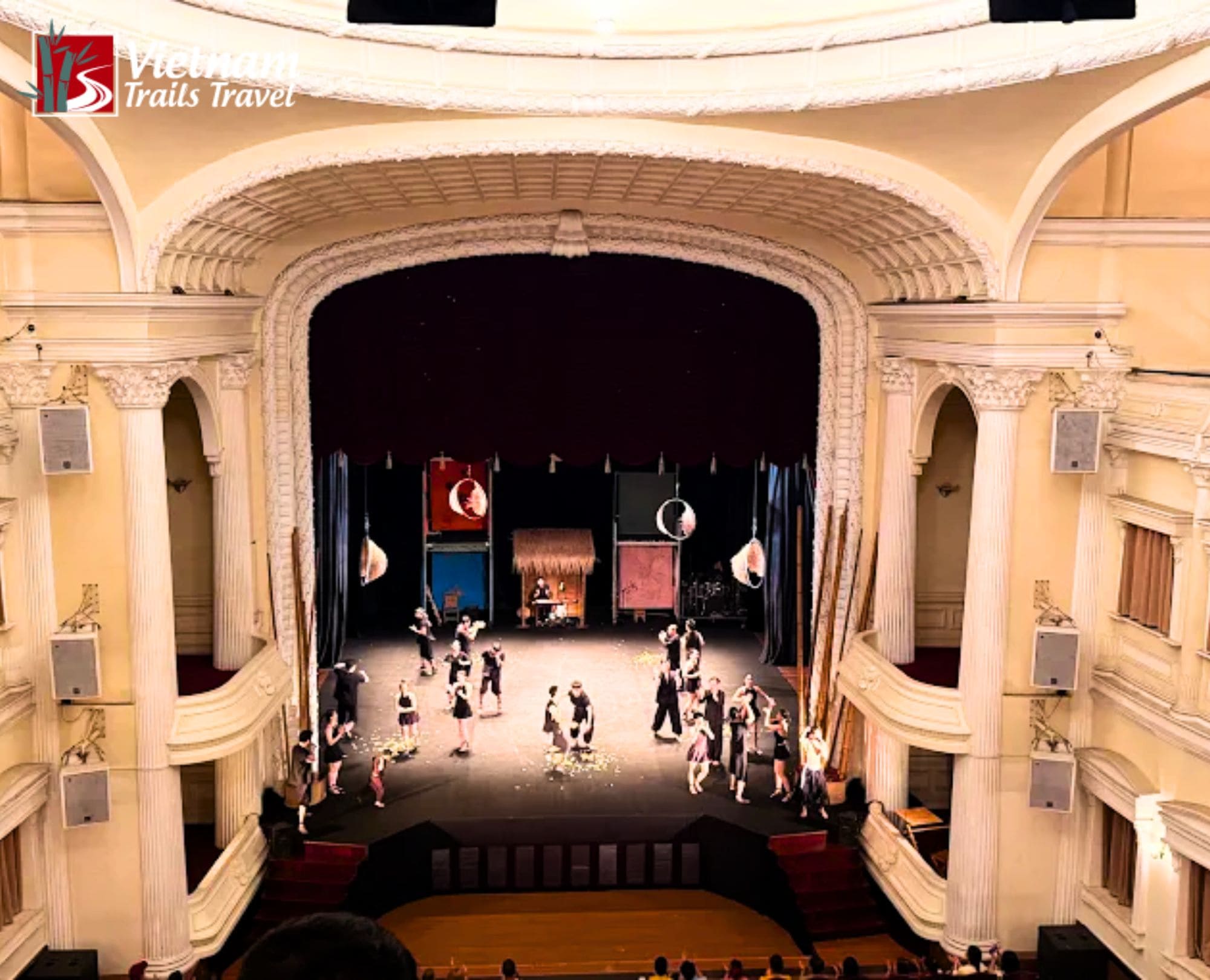
The Saigon Opera House is a landmark piece of French colonial architecture built in 1897. It is home to the Ho Chi Minh City Ballet and Symphony Orchestra, but is best known for evening cultural shows such as AO and Teh Dar. Catching a performance here is a truly special Saigon evening.
4.2. Temples & Pagodas
4.2.1. Jade Emperor Pagoda
-
Address: 73 Mai Thi Luu Street, Da Kao Ward, District 1, Ho Chi Minh City.
-
Opening Hours: 7:00 AM – 6:00 PM Daily.
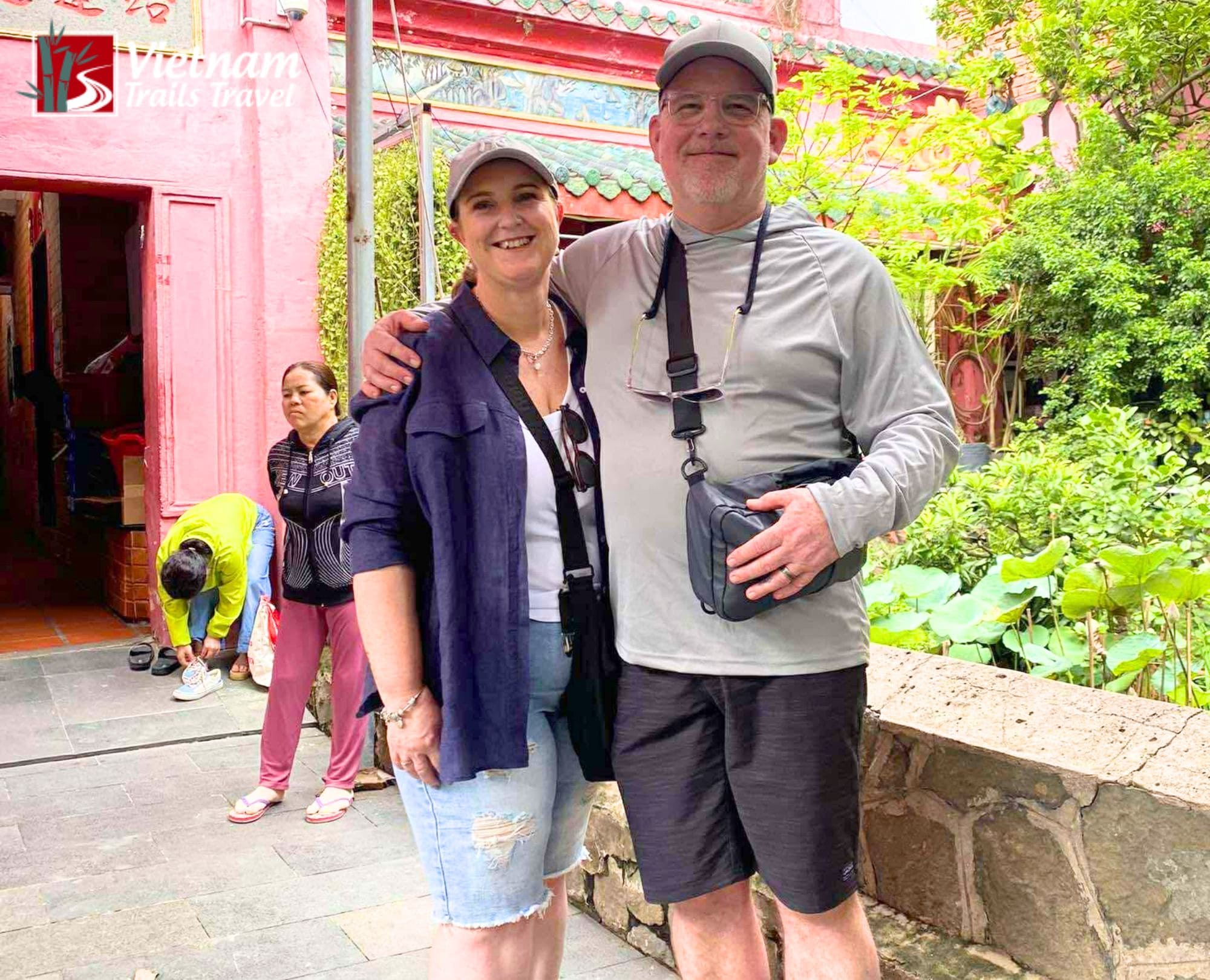
Ho Chi Minh City’s Jade Emperor Pagoda is considered one of the city’s finest temples. Dedicated to the Taoist Jade Emperor, Buddhist elements can also be seen throughout. Its nickname is the Tortoise Pagoda, because of the many tortoises that live in the grounds.
4.2.2. Thien Hau Temple
-
Address: 710 Nguyen Trai Street, Ward 11, District 5, Ho Chi Minh City.
-
Opening Hours: 6:00 AM – 5:30 PM Daily.
Thien Hau Temple, built by Cantonese immigrants in the early 19th century, pays tribute to the goddess of the sea and protector of seafarers, displaying intricate porcelain dioramas from Chinese mythology.
4.2.3. Tan Dinh Church (Pink Church)
-
Address: 289 Hai Ba Trung Street, Vo Thi Sau Ward, District 3, Ho Chi Minh City.
-
Opening Hours for Visitors: Monday – Friday: 8:00 AM – 11:00 AM & 2:00 PM – 5:00 PM (Closed on Saturdays and Sundays for visitors).
This stunning 1876 pink French and Gothic-style church is part of the Roman Catholic Archdiocese of Ho Chi Minh City. It was painted in its famous rose hue in 1957 and is a fantastic photo spot.
4.3.Nightlife & Entertainment
4.3.1. Bui Vien Street
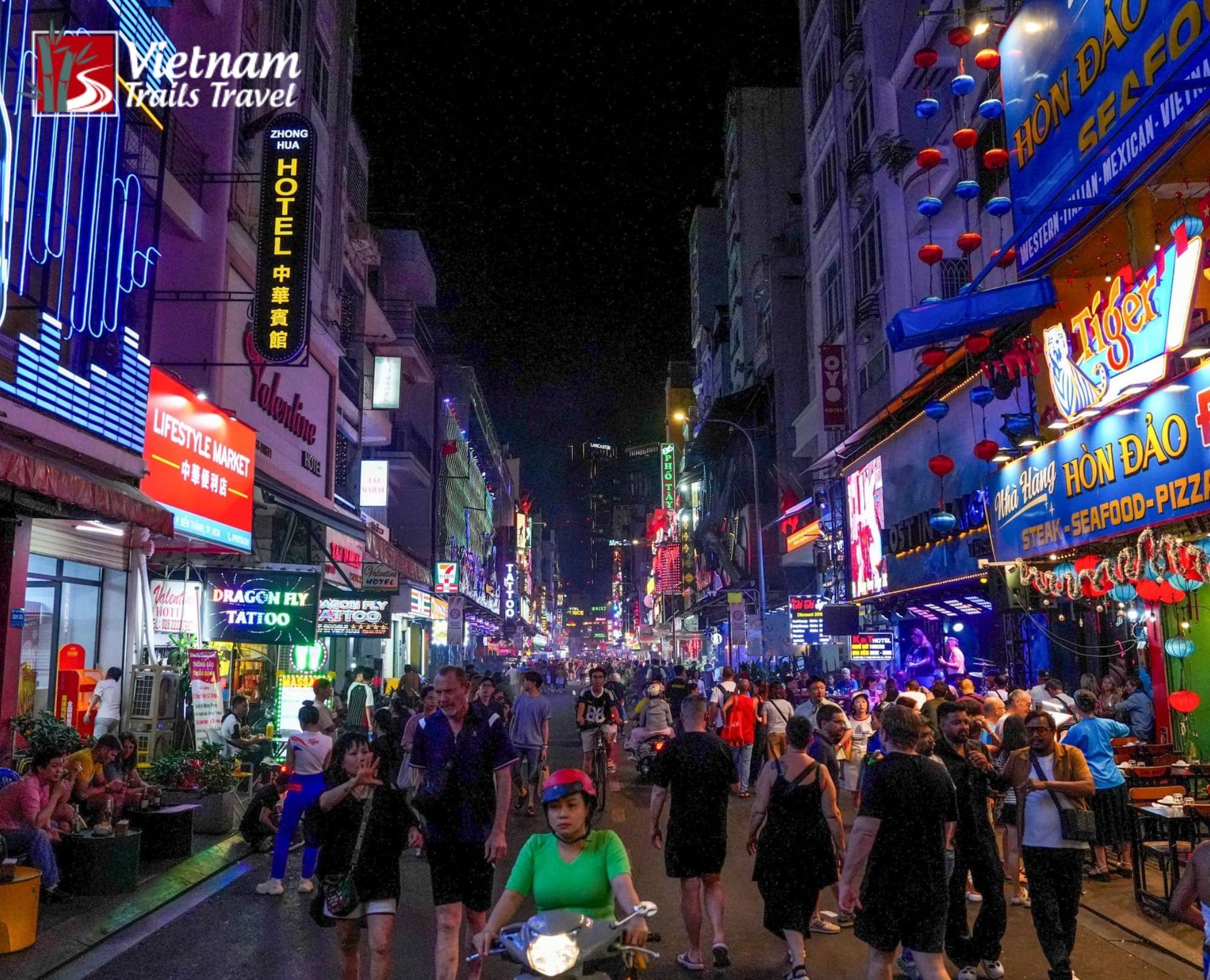
The most famous place to find nightlife in Ho Chi Minh City is Bui Vien Street — the backpacker street of Vietnam. This street is full of bars and clubs, and you can also have a drink on one of the many plastic chairs right on the street. Whether you like jazz or EDM, there is something for everyone.
4.3.2. A O Show — Lune Production
The most famous cultural performance in Ho Chi Minh City, the A O Show (Ao Lang Pho) is a breathtaking bamboo circus and acrobatics show that tells the story of Vietnamese village life through movement, rhythm, and stunning visual storytelling. Performed inside the iconic Saigon Opera House, it is one of the top-rated shows in Southeast Asia. Shows typically run at 6:00 PM and 8:00 PM.
4.3.3. CHAO Show
An intimate dinner show experience featuring exceptional live Vietnamese traditional music performed across multiple instruments from North, Central, and Southern Vietnam. Set in a cozy 150-seat venue, guests enjoy a beautifully presented dinner while being mesmerised by some of the finest traditional musicians in the country. One of the highest-rated evening experiences in the city.
4.3.4. Water Puppet Show
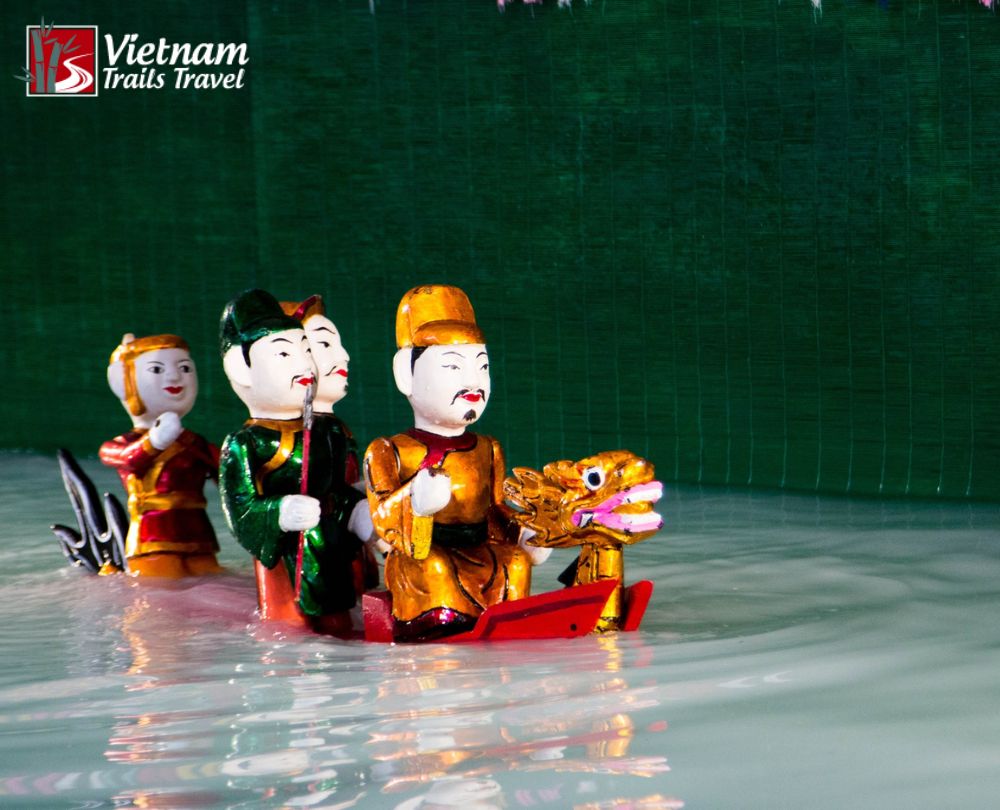
If you want to understand Vietnamese culture beyond street food and heavy traffic, spend one evening at a traditional water puppet show. The most famous venue is the Golden Dragon Water Puppet Theater, right beside Tao Dan Park in the heart of the city.
The stage is a waist-deep pool of water. Behind a bamboo screen, puppeteers stand hidden for nearly an hour, controlling wooden puppets with long underwater rods — a technique dating back to the Red River Delta over 1,000 years ago. You will hear the sharp beat of drums, the echo of traditional đàn tranh music, and sudden bursts of laughter from local children when dragons spit water across the stage.
A small local tip: sit in the middle rows, not too close. The splashing water can block your view, and the full stage lighting looks much better from a slight distance.
Shows usually last around 50 minutes, making it a perfect cultural stop after dinner in District 1. Even travelers who do not understand Vietnamese can easily follow the folk stories through movement, music, and humor.
4.3.4. City sightseeing double-decker bus
If it is your first time in the city, the Ho Chi Minh City Sightseeing Double-Decker Bus is an experience you shouldn’t miss. These bright red buses offer a fantastic “birds-eye view” of the city’s major landmarks.
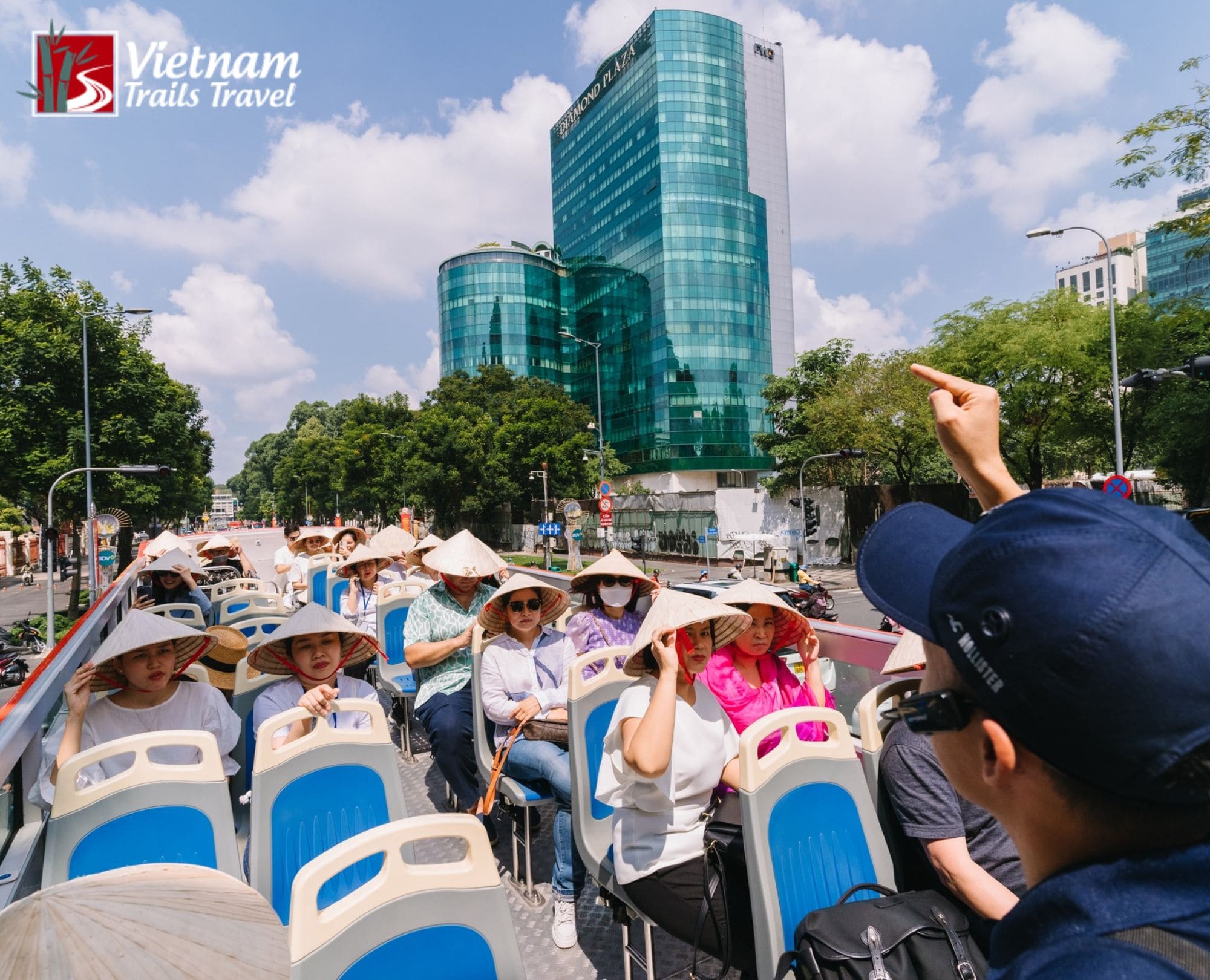
With a “hop-on, hop-off” ticket, you can cruise past the Opera House, Ben Thanh Market, and the Independence Palace while listening to an automated multi-language audio guide. Sitting on the open-top deck at night, as the city lights up and the breeze hits your face, is one of the most relaxing ways to soak in the Saigon atmosphere.
4.3.5. Night Street Food Tour by Motorbike / Vespa
One of the most exhilarating and authentic night experiences available in Saigon. Guests ride on the back of motorbikes or Vespas driven by friendly English-speaking local guides, weaving through back alleys and busy streets to discover hidden street food gems that most tourists would never find on their own.
Each tour visits 6–8 restaurants and street stalls, tasting a wide variety of authentic Vietnamese dishes along the way. A perfect combination of food, culture, and urban adventure.
- Ticket price: From 800,000 – 1,200,000 VND per person (~$32–$48 USD) including all food and guided experience. Tours typically run from 6:00 PM – 10:00 PM
4.4. Kid zones in Ho Chi Minh city
4.4.1. Suoi Tien Theme Park
- Address: 120 Song Hanh (Xa Lo Ha Noi), Tang Nhon Phu, Thu Duc
- Rating: 4.3/5 (22,447 reviews)
- Hours: 8:00 AM – 5:00 PM daily
- Phone: +84 28 3896 0260
Suoi Tien is the largest and most popular theme park in Ho Chi Minh City, and a one-of-a-kind destination that blends thrilling rides with Vietnamese cultural and religious elements — a combination found nowhere else in the world.
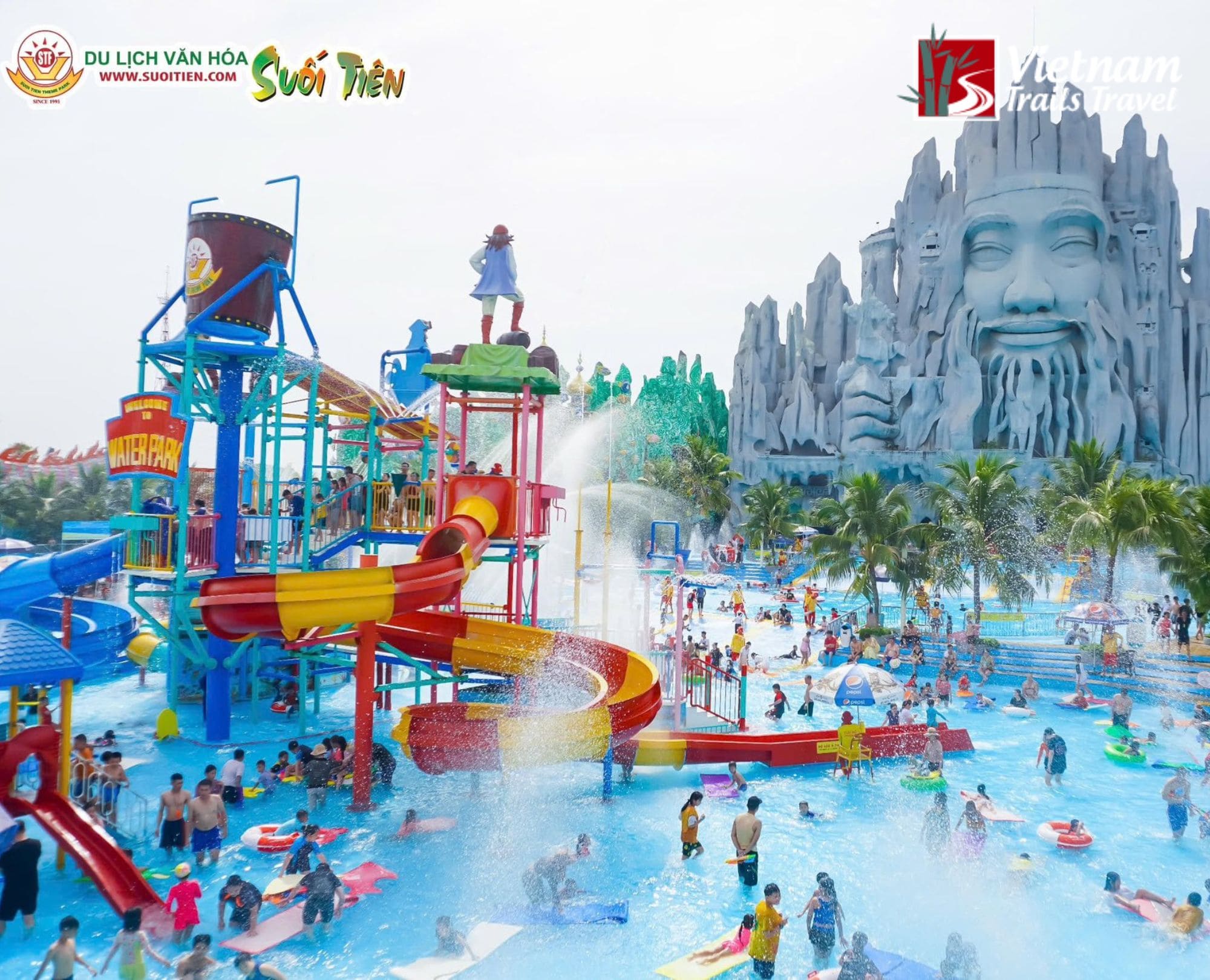
The park features a full water park with pools and slides, a snow castle, VR experiences, a haunted house, a farm walk, and a range of rides for all ages. What makes it truly unique is its setting among giant Buddha statues, mythological dioramas, and scenes from Vietnamese folklore. Easily accessible via Metro Line 1 (Suoi Tien station), making it very convenient for visitors staying in District 1.
Tip: Buy a combo ticket online in advance. Admission around 150,000–200,000 VND for children.
4.4.1. Dam Sen Water Park
- Address: Hoa Binh/3 Binh Thoi, District 11
- Rating: 4.3/5 (30,586 reviews)
- Hours: 9:00 AM – 6:00 PM (closed Tuesdays)
- Phone: +84 28 3858 8418
The go-to water park for families in Ho Chi Minh City, Dam Sen Water Park features 36 water rides including high-speed slides, a wave pool, a lazy river, and a flying fox over the water.
The park is large, well-maintained, and far less crowded on weekends, meaning short to zero queues. Food courts are available inside at very affordable prices. Note that most large slides require a minimum height of 1.4 m, so younger or smaller children should be checked in advance. Lockers are available for a small fee.
Best for: Older children and adults who love water rides, hot weather days. Admission: Around 220,000 VND for adults; children’s rates vary by height.
4.4.1. Grand Park Kids Theme Park & Water Park
- Address: Nguyen Xien Phuoc Thien, Long Thanh My, Thu Duc
- Rating: 4.8/5 (7,621 reviews)
- Hours: 9:00 AM – 9:00 PM daily
- Phone: +84 844 268 068
One of the newest and most exciting family destinations in HCMC, Grand Park (part of Vinhomes Grand Park) features a colorful theme park and a water park at some of the most affordable prices in the city — around 250,000 VND per person.
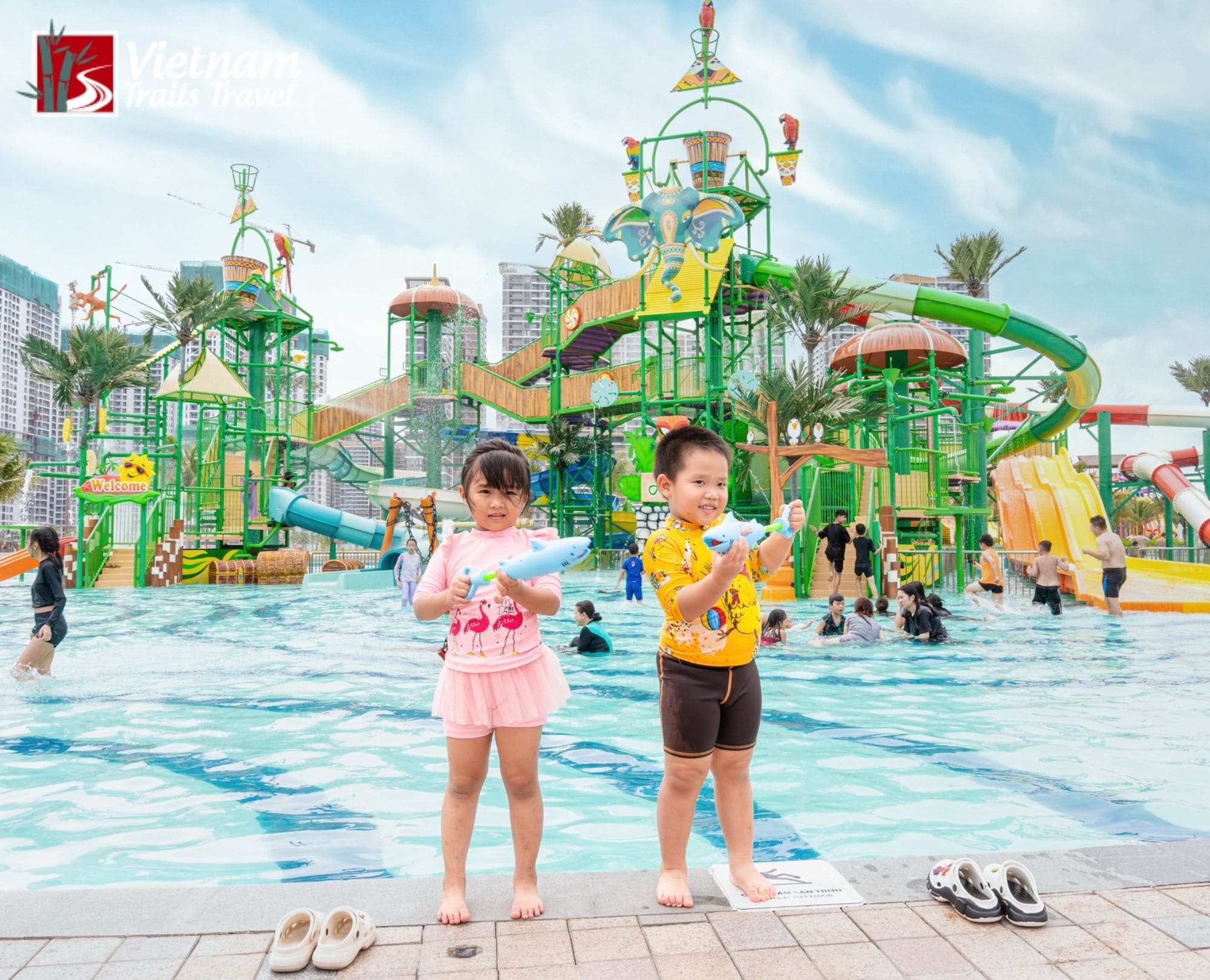
Families consistently rave about the clean facilities, fun slides, splash areas, and the variety of rides for different age groups. The sprawling park grounds are beautifully maintained and make for a full-day outing. Note that the park is cash only and bags are checked at the entrance.
4.4.1. Saigon Zoo & Botanical Gardens
- Address: 2 Nguyen Binh Khiem, Da Kao, District 1
- Rating: 4.3/5 (35,160 reviews)
- Hours: 7:00 AM – 6:30 PM daily
- Phone: +84 28 3829 1425
One of the oldest zoos in Asia, dating back to 1865, the Saigon Zoo and Botanical Gardens is a beloved institution in the heart of the city. The zoo is home to elephants, tigers, lions, white tigers, giraffes, zebras, rhinoceros, monkeys, capybaras, and hundreds of bird species, all set within a lush, shaded botanical garden.
It is a relaxed, walkable green space perfect for a family morning or afternoon. The capybara enclosure is a particular highlight. While some facilities are dated, it remains excellent value and a genuinely enjoyable outing for families with children.
Admission: Very affordable, around 50,000–80,000 VND per person.
4.4.1. Jump Arena – The largest outdoor amusement park in Vietnam.
Address:
- Jump Arena Him Lam: Vietopia Campus, 2-4, Street 9, Tan Hung Ward, District 7, Ho Chi Minh City
- Jump Arena Le Thi Rieng, District 10: 875 Cach Mang Thang 8 Street, District 10, Ho Chi Minh City (Inside Tho Trang Park)
- Jump Arena Him Lam Q7 is open from 9:00 AM to 7:00 PM (Monday-Friday) and 9:00 AM to 9:00 PM (Saturday & Sunday). Ticket prices range from 170,000 to 210,000 VND per person.
Jump Arena is the largest amusement and sports center in Vietnam, known for its rich world of trampoline experiences. Children can freely jump, somersault, and experience the feeling of freedom in the air with trampoline sports games such as: free jumping, trampoline basketball, wall climbing, handball, etc.
If children want to show off their courage, they can participate in challenging height games such as: freefall, balancing on a rope, aerial challenges, zip lining… or activities requiring skill and physical strength such as: climbing artificial rock walls , Ninja challenges, trampoline towers… Younger children can explore the indoor playground filled with the colors of childhood with slides, ball pits, obstacle courses…
After hours of exhilarating fun, the whole family can relax and recharge at the food and coffee area. Furthermore, Jump Arena impresses with its spacious, safe environment and enthusiastic, professional staff. All of this will provide the whole family with memorable and enjoyable moments of fun.
4.4.1. The TiNiWorld
- Address:
- TINIWORLD AEON Tan Phu
- TINIWORLD AEON Binh Tan
- TINIWORLD Nowzone District 5
- TINIWORLD The Estella HCM District 2
- TINIWORLD Gigimall Go Vap
- TINIWORLD Crescent Mall, District 7
- TINIWORLD Thiso Mall Thu Thiem
- TINIWORLD Nguyen Thi Thap Street, District 7
- Opening hours: 10:00 AM – 9:30 PM
- Ticket prices: From 120,000 – 180,000 VND
TiNiWorld is a renowned chain of educational and entertainment centers with playgrounds specifically designed for children. The playgrounds utilize modern technology combined with physical activities to help children develop skills, improve their physical fitness, and foster creative thinking.
At tiNiWorld, children can explore a variety of play spaces to suit their interests and personalities, such as: a sand play area, a dollhouse, a Lego building area, and more.
Read More: Ho Chi Minh City 1 Day Tour
5. Currency Exchange Places in Ho Chi Minh City
5.1. Ha Tam Jewelry
- Address: 2 Nguyen An Ninh, Ben Thanh, District 1
- Rating: 3.7/5 (1,002 reviews)
- Hours: 8:00 AM – 7:00 PM daily
A gold shop and money changer right at the entrance of Ben Thanh Market, Ha Tam is one of the most famous and busiest currency exchange spots in the entire city. It consistently offers some of the best rates around the Ben Thanh area, particularly for USD $100 new bills.
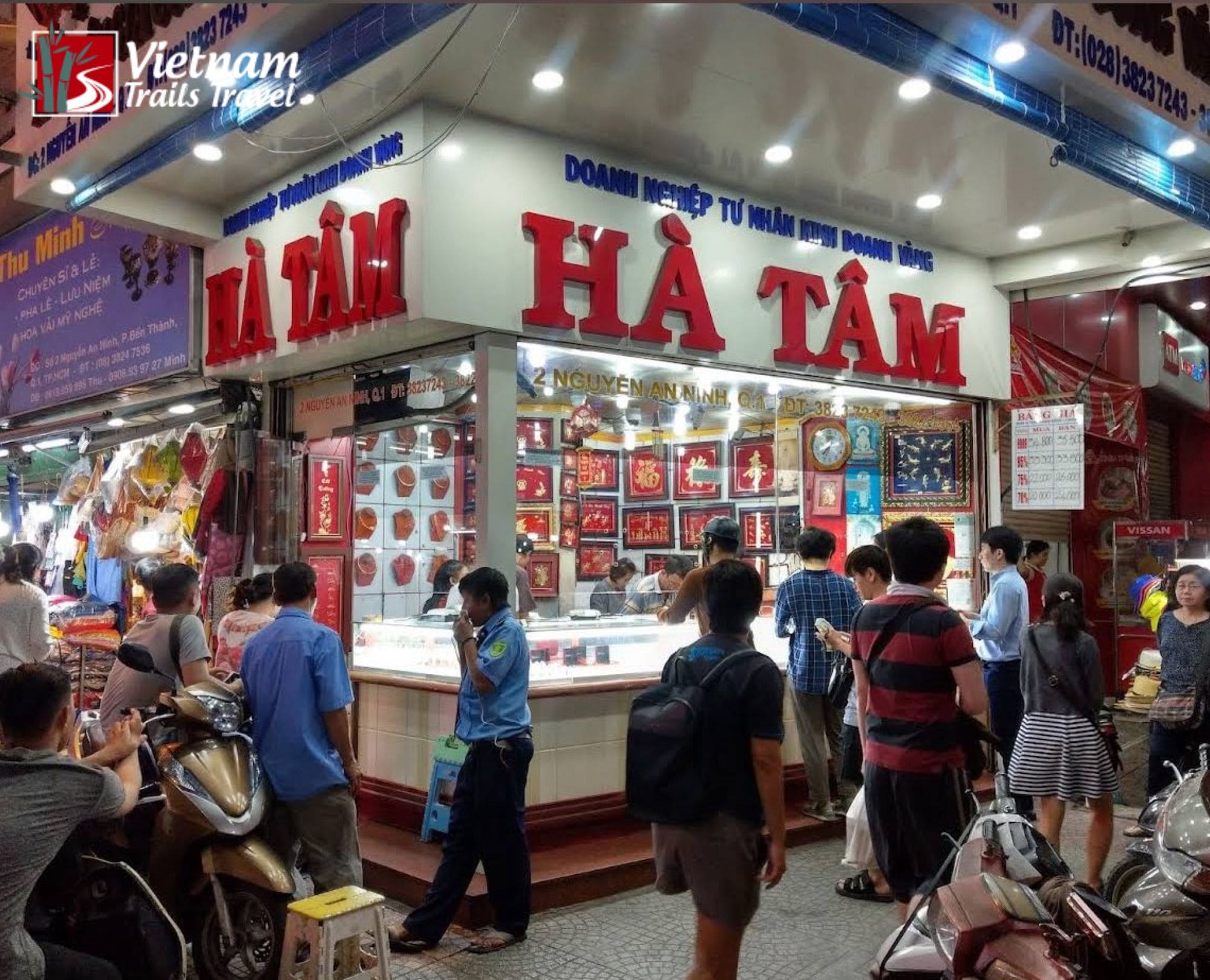
Be prepared for queues of 15–30 minutes during peak hours, as it draws a steady stream of locals and tourists. Go early in the morning to avoid the rush. Always bring crisp, clean notes — they are strict about the condition of foreign currency.
Best for: Large amounts of USD, early morning visits for shortest queues.
5.2. Hung Long Money Exchange
- Address: 86 Mac Thi Buoi, Ben Nghe, District 1
- Rating: 4.0/5 (711 reviews)
- Hours: 8:00 AM – 8:00 PM daily
- Phone: +84 28 3829 7887
One of the most consistently recommended money changers in District 1, Hung Long is favored by both expats and travelers for its competitive rates, no-commission policy, and organized, efficient service.
The process is straightforward — you present your currency, they show you the rate on a calculator, and once you agree, you receive a numbered token and wait for your name or number to be called.
Staff count the money in front of you using a machine for full transparency. Located just steps from Nguyen Hue Walking Street, making it extremely convenient for tourists.
Best for: USD, EUR, GBP, THB and most major currencies. Bring crisp, unmarked notes for the best rate.
5.3. May Van Money Exchange
- Address: 1 Nguyen An Ninh, Ben Thanh, District 1
- Rating: 3.8/5 (298 reviews)
- Hours: 8:00 AM – 8:00 PM Mon–Sat, Closed Sunday
- Phone: +84 28 3823 1836
Located directly next door to Ha Tam, Mai Van is the second most popular exchange counter in the Ben Thanh Market cluster. Its rates are comparable — sometimes marginally lower than Ha Tam — but the queues are significantly shorter, making it a practical choice when you want a good rate without a long wait. The process is transparent: rates are shown upfront, and money is counted in view of the customer. A reliable fallback if Ha Tam’s line is too long.
Best for: USD exchange, quick transactions, less crowded alternative to Ha Tam.
5.4. Western Union — Dong Da
- Address: 16 Cach Mang Thang Tam, Ben Thanh, District 1
- Rating: 4.3/5 (302 reviews)
- Hours: 8:00 AM – 9:00 PM daily
- Phone: +84 28 3829 8820
A branch of the globally recognized Western Union network, this location in District 1 is a trusted option for travelers who prefer an internationally reputable exchange service.
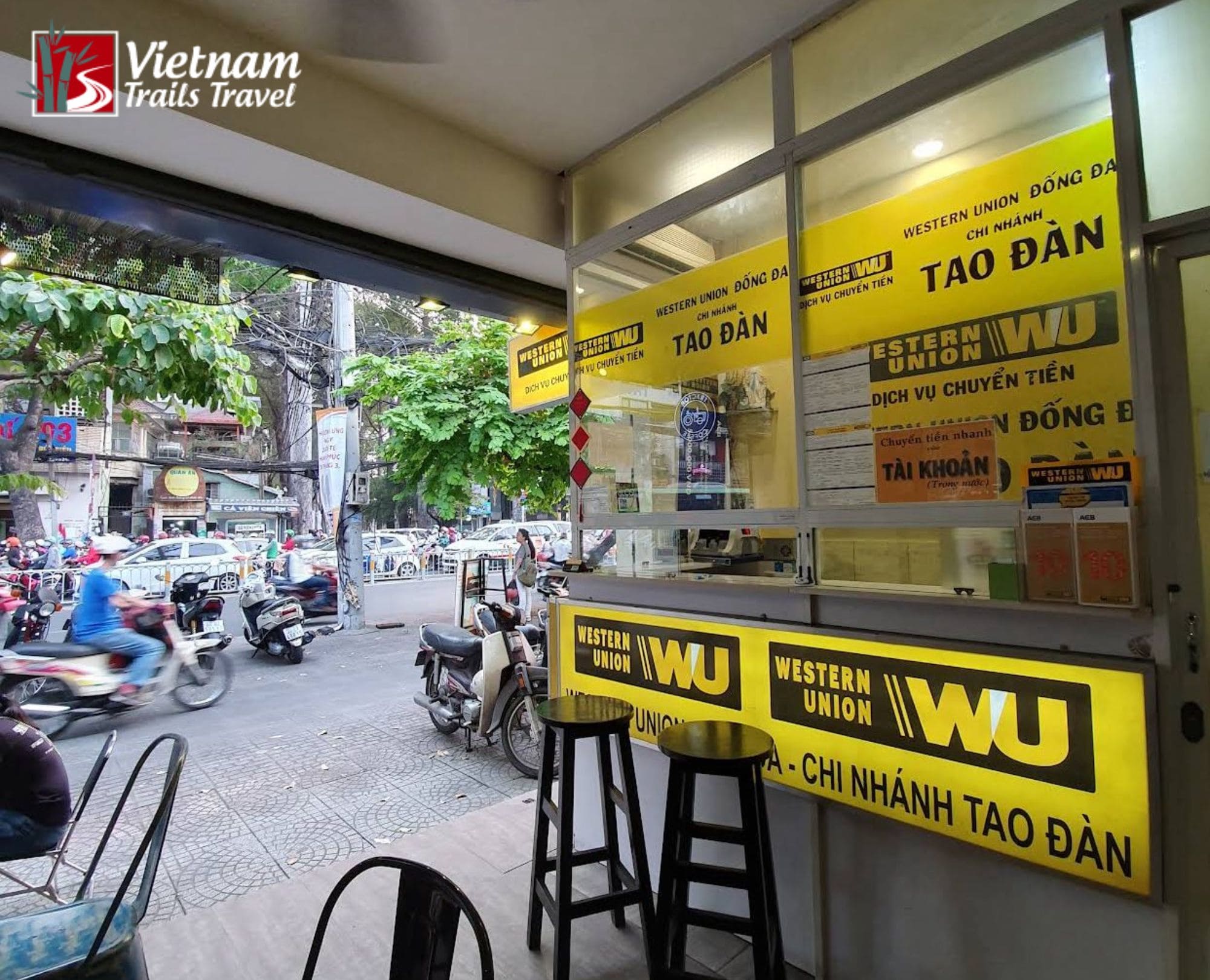
Rates are generally decent — better than hotel exchanges and airport counters — and the process is professional, with friendly English-speaking staff. Western Union also handles international money transfers, making it a dual-purpose stop. One notable plus: this location can sometimes provide USD cash if you need to exchange back.
Best for: Travelers who prefer a trusted international brand, international money transfers.
5.5. VietBank Currency Exchange
- Address: 89-73 Nam Ky Khoi Nghia, Ben Thanh, District 1 (inside Saigon Square)
- Rating: 4.1/5 (78 reviews)
- Hours: 9:00 AM – 5:00 PM Mon–Sat, Closed Sunday
Conveniently located at the front of Saigon Square shopping center in District 1, VietBank Currency Exchange is a quiet, no-fuss option that offers good USD rates with no commission fees. It sees far less foot traffic than the Ben Thanh market changers, meaning shorter waits and a calmer, more relaxed transaction. A good choice for travelers who are already shopping in the Saigon Square area and need to top up their dong.
Best for: USD exchange, quick and hassle-free transactions with no commission.
6. Ho Chi Minh Food
6.1. Street food
6.1.1. Pho (Vietnamese Noodle Soup)
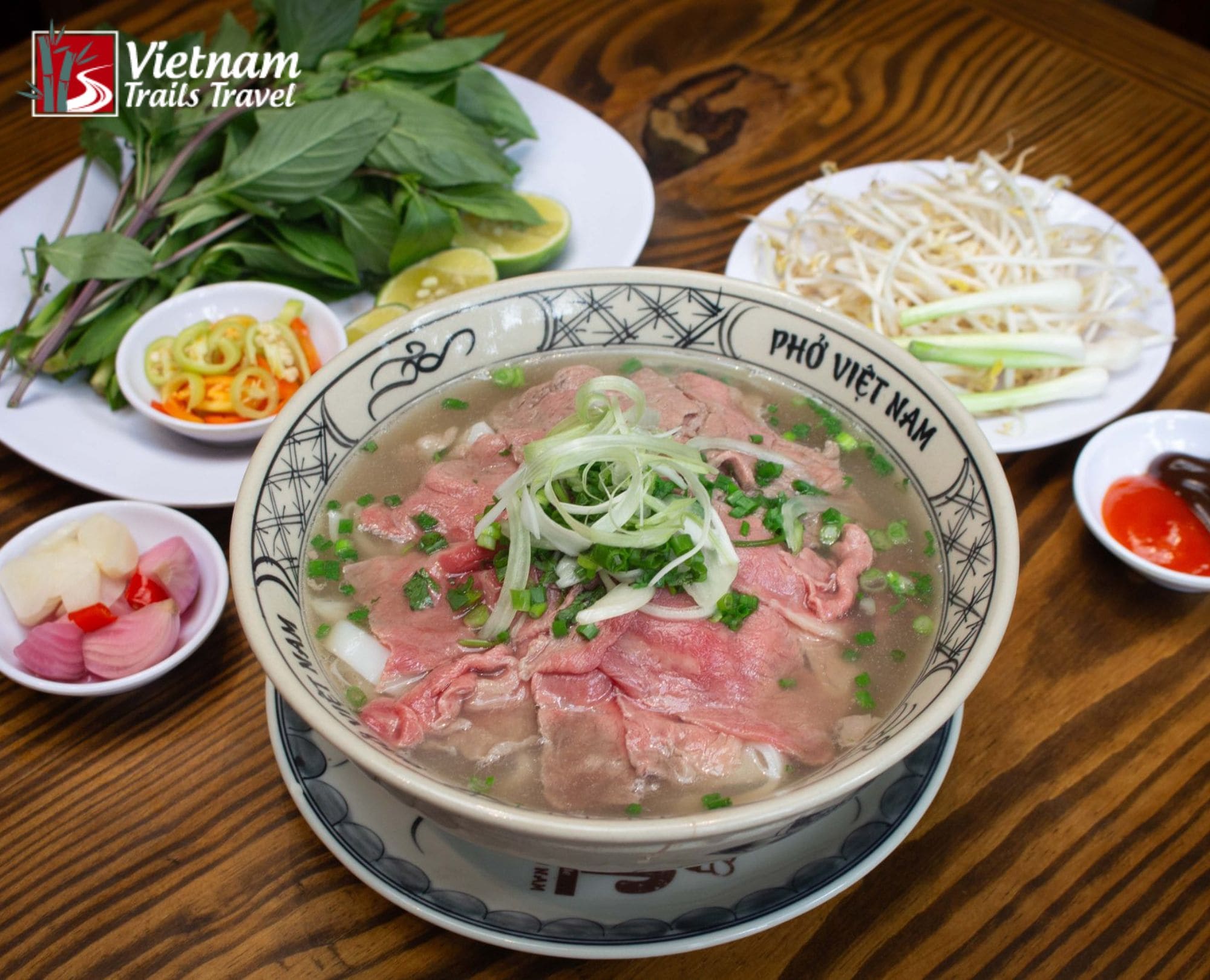
A slow-simmered beef broth served with rice noodles, fresh herbs, and your choice of meat. Saigon-style pho is slightly sweeter and more aromatic than its northern counterpart.
6.1.2. Banh Mi (Vietnamese Sandwich)
Saigon’s Bánh Mì is distinct for its super-crispy crust and airy interior.
-
The Experience: A “classic” version includes layers of pâté, Vietnamese sausage, head cheese, buttery mayo, pickled daikon, carrots, and a kick of fresh chili.
-
Top Tip: For a unique twist, try the Bánh Mì Huỳnh Hoa—known as the “heavyweight” of sandwiches due to its massive amount of fillings.
6.1.3. Com Tam (Broken Rice)
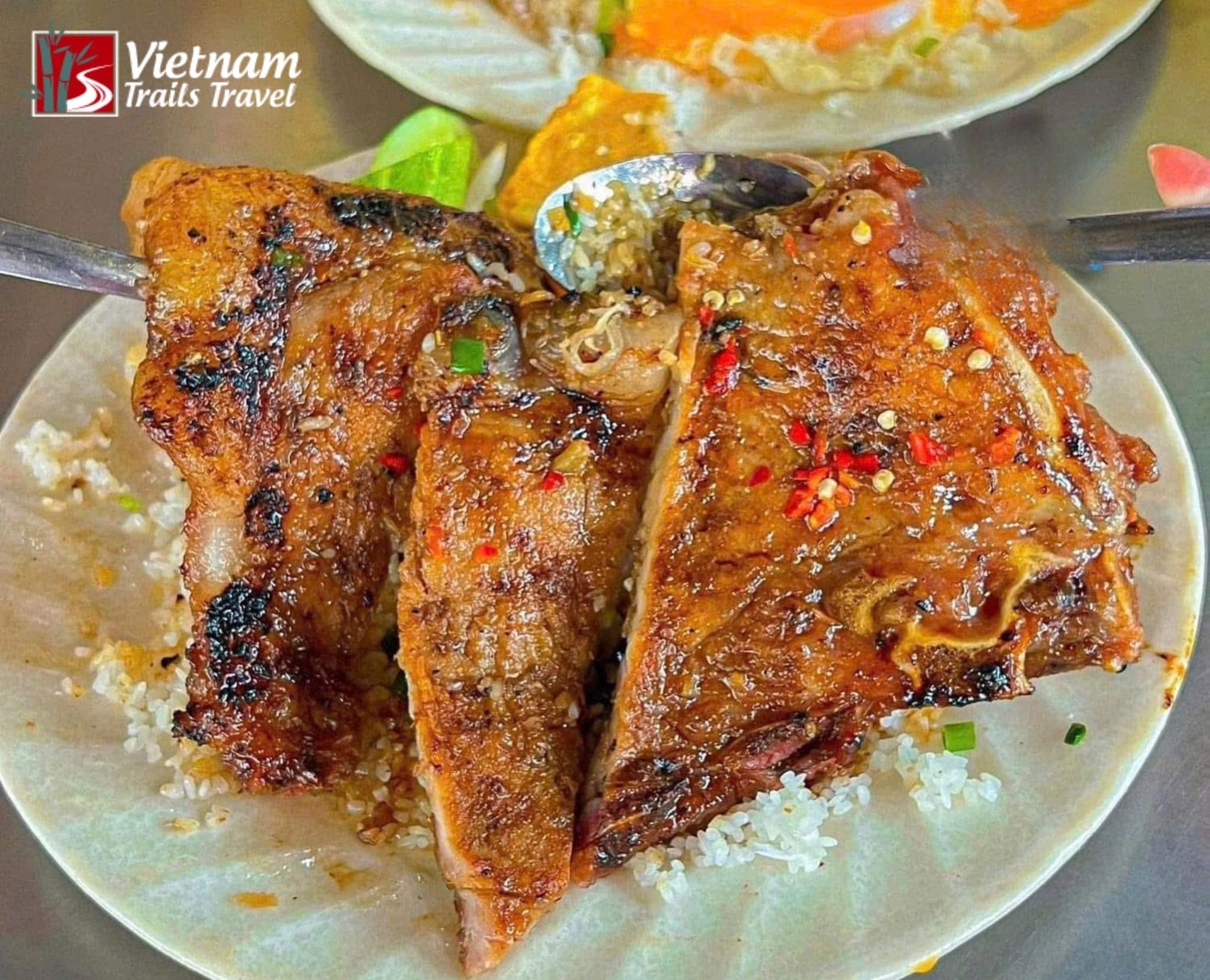
If Hanoi is famous for Pho, Saigon is the kingdom of Cơm Tấm. Originally a dish for farmers made from fractured rice grains, it has become a culinary icon.
- What’s in it: Fragrant broken rice topped with a caramelized grilled pork chop (Sườn nướng), shredded pork skin (Bì), and a savory steamed egg meatloaf (Chả).
- The Secret: It’s all about the thick, sweet-and-savory fish sauce drizzled over the top.
6.1.4 Hu Tieu Nam Vang
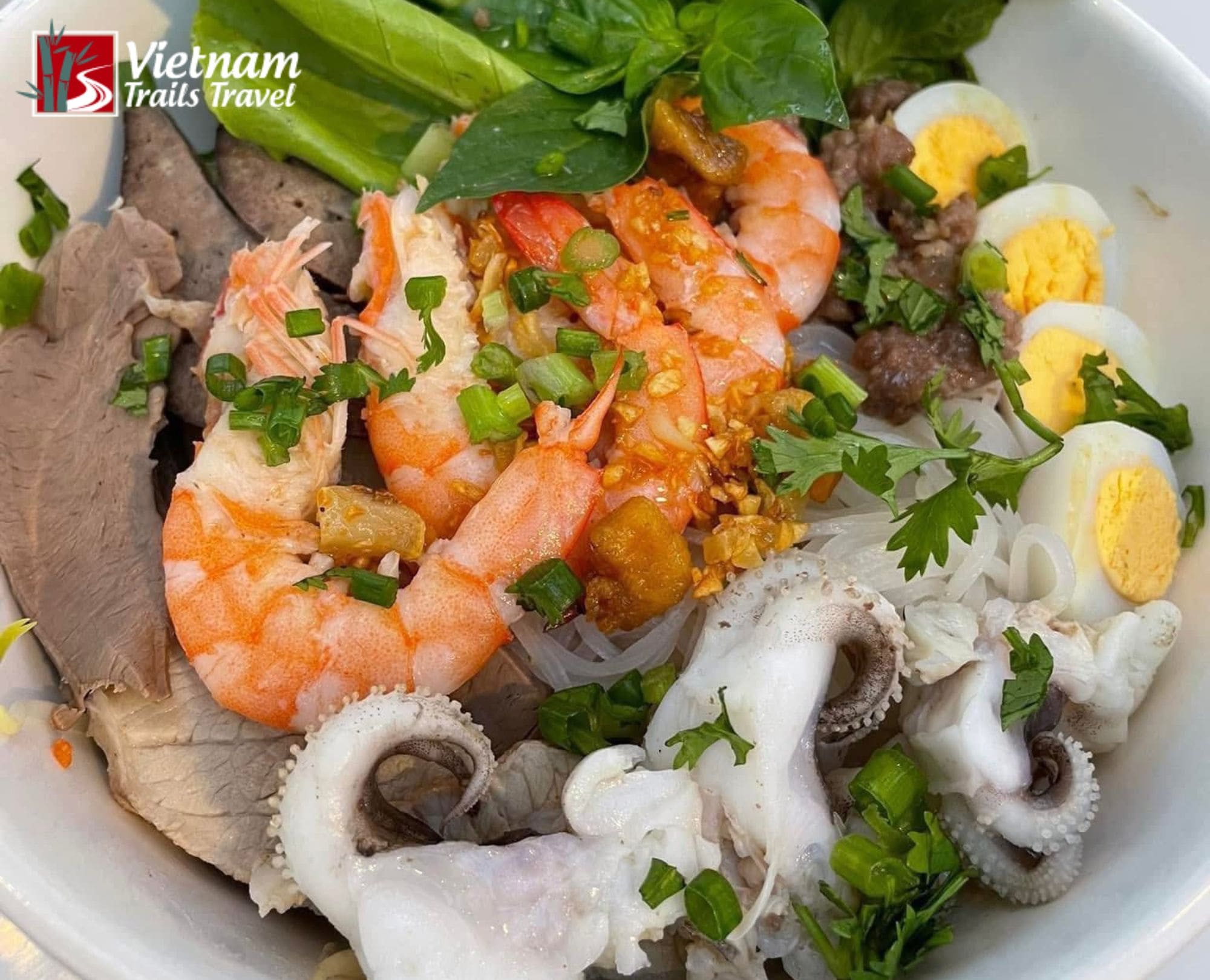
This dish reflects the multicultural history of Saigon, blending Cambodian, Chinese, and Vietnamese flavors.
-
Flavor Profile: A clear, intense pork bone broth served with chewy rice noodles, shrimp, quail eggs, minced meat, and liver.
-
Insider Tip: You can order it “dry” (Hủ tiếu khô) where the noodles are tossed in a special soy-based sauce and the broth is served in a separate bowl.
6.1.4. Banh Xeo (Sizzling Crispy Pancake)
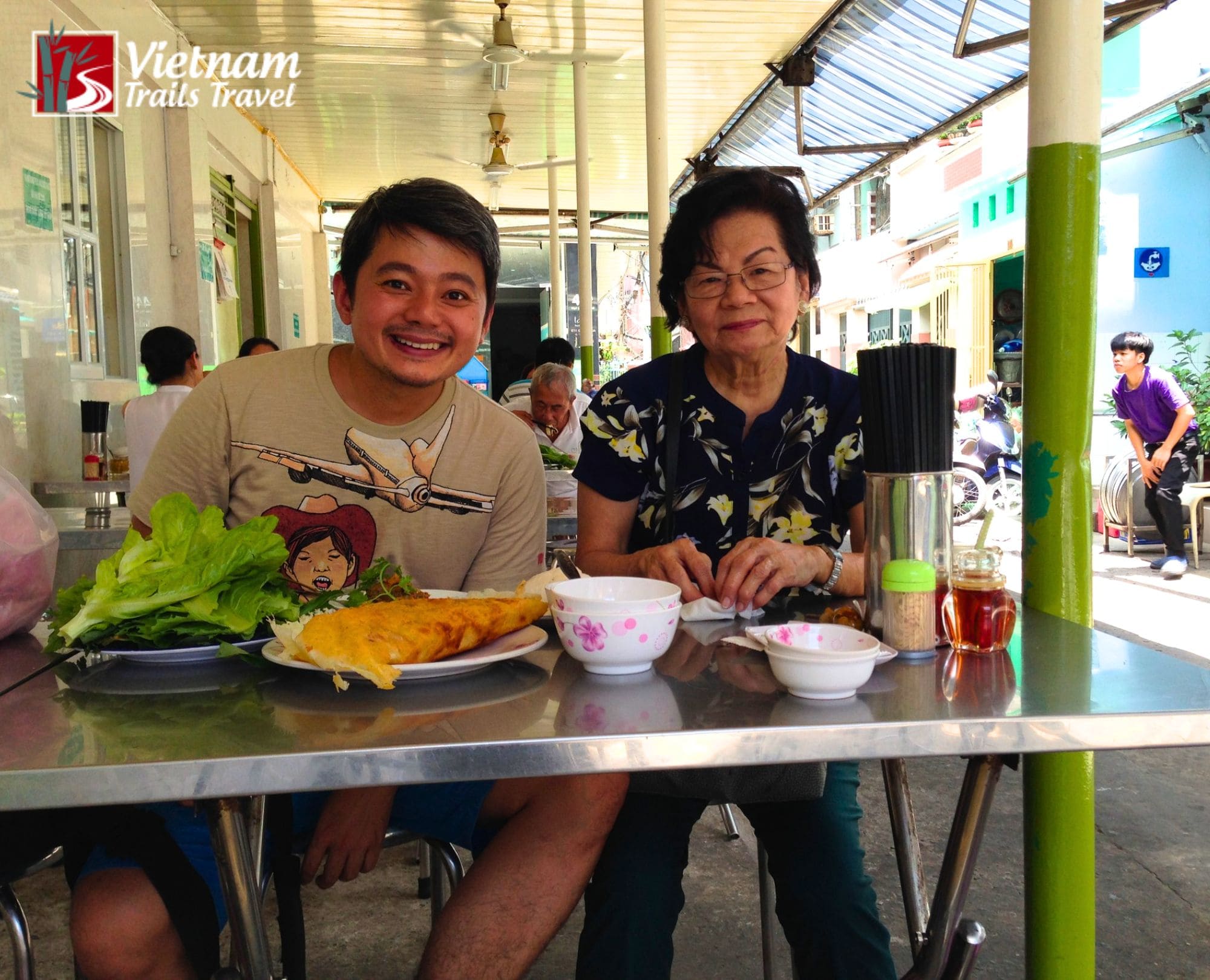
The Southern version of Bánh Xèo is much larger and thinner than in other regions.
-
The Sound: “Xèo” is the sizzling sound the batter makes when it hits the hot crepe pan.
-
How to eat: You tear a piece of the crispy pancake (filled with shrimp, pork, and bean sprouts), wrap it in a large mustard leaf or lettuce with various herbs, and dip it into a light chili fish sauce.
6.1.5. Ốc (Snails & Shellfish) – The Social Dining Culture
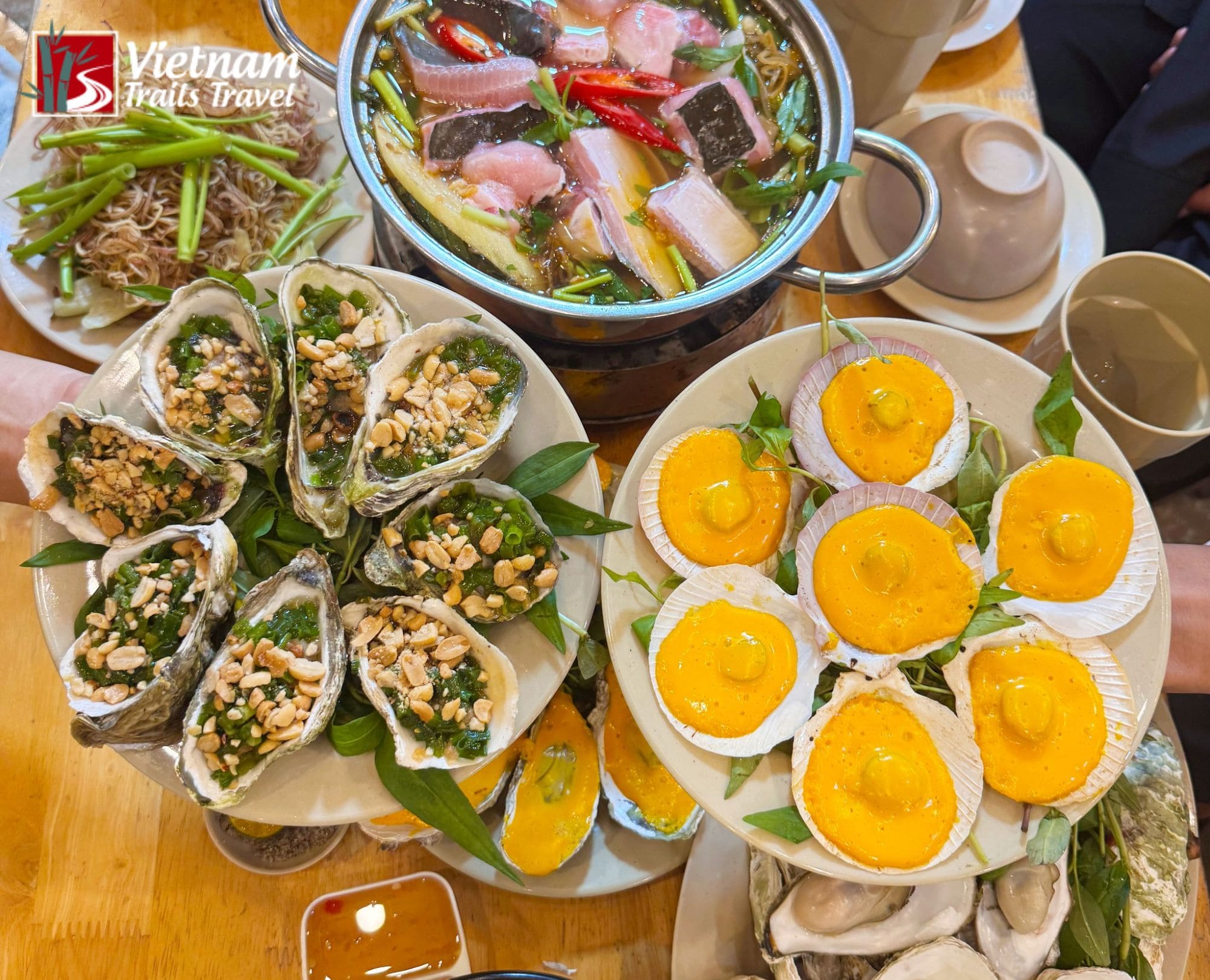
To eat like a local, you must experience an “Ốc” night. It’s not just about the food; it’s about the “Nhậu” (socializing) culture.
-
Variety: Dozens of types of snails, clams, and scallops cooked in various styles: sautéed with garlic, grilled with scallion oil, or simmered in salted egg sauce.
6.2. Dinner Cruise
Forget the dusty streets and the endless stream of scooters for a moment. The real magic of this city hidden in plain sight—right on the Saigon River. As the evening chill settles in, boarding a dinner cruise feels like entering a different dimension where the city’s chaos turns into a silent, sparkling backdrop.
The first thing that hits you isn’t the menu, but the aroma. Depending on which vessel you choose, you’ll be greeted by the smoky scent of grilled prawns over charcoal or the sophisticated fragrance of lemongrass-infused sauces.
-
The Authentic Touch: If you’re on a traditional wooden boat like the Indochina Junk, the creak of the timber and the sound of the “Đàn Bầu” (monochord) create a hauntingly beautiful atmosphere. It’s raw, it’s soulful, and it feels like old Saigon.
-
The Modern Pulse: For a more “Manhattan” vibe, the sleek cruisers offer panoramic glass windows. It’s where you sip a crisp white wine while watching the Landmark 81 pierce the clouds like a giant bamboo stalk made of glass.
Here’s a trick I tell my close friends: when the boat departs from the pier (usually toward the Thu Thiem Bridge), try to snag a seat on the port side (left side) of the vessel. Why? Because as the boat turns, you get the most iconic, long-exposure-worthy view of the District 1 skyline without having to crane your neck over other diners.
Does a dinner taste better with a 360-degree view of a glowing metropolis? I’ll let you be the judge of that once you have that first bite of succulent seafood while gliding under the stars.
7. Where to stay in Ho Chi Minh city?
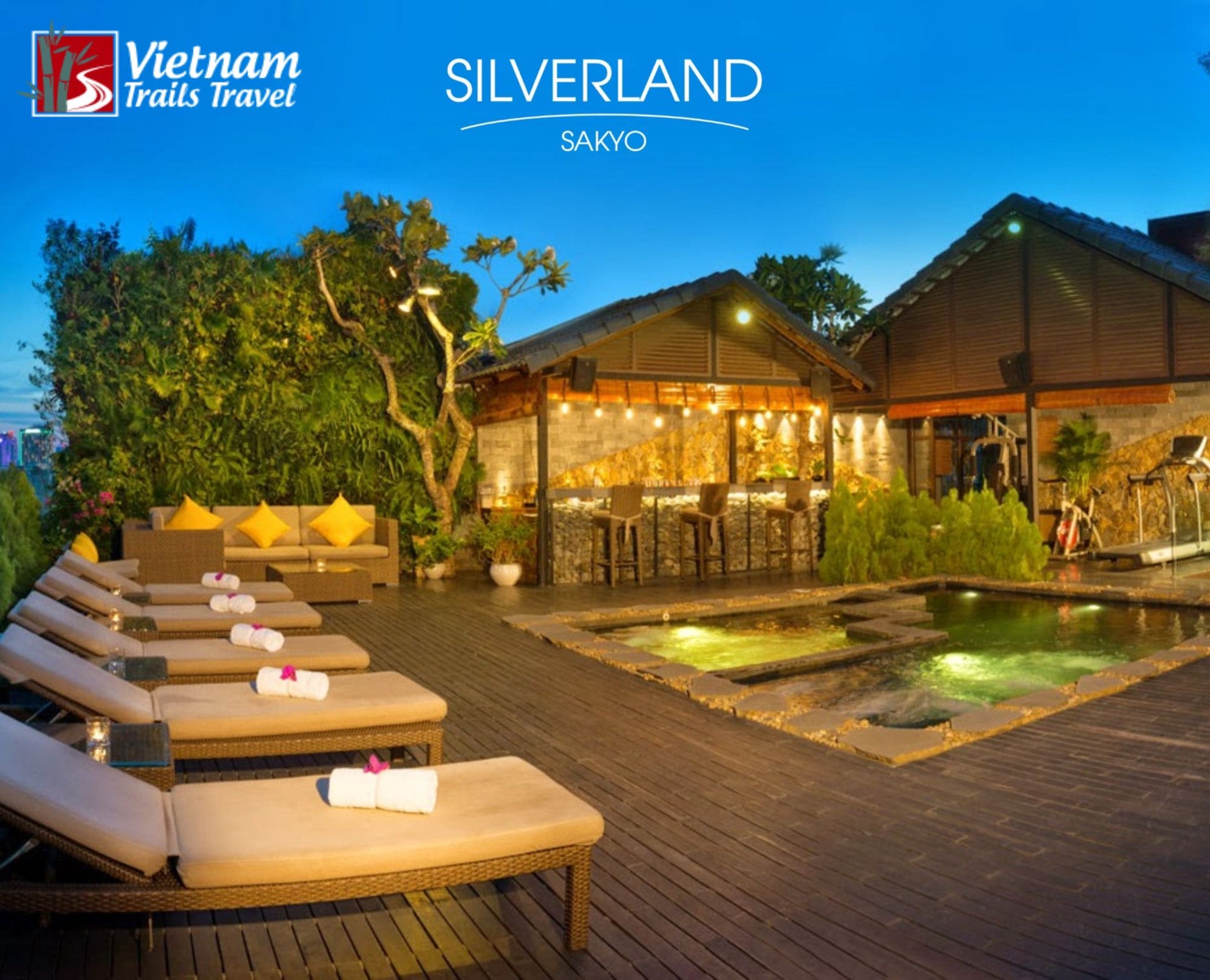
Finding the right base in Saigon is like choosing the right pair of shoes for a marathon—get it wrong, and you’ll be feeling the “blisters” of traffic and noise all day. After a decade of wandering these streets, I’ve realized that every district has its own heartbeat and scent, from the aroma of expensive perfume in District 1 to the sizzling lard of street-side Hu Tieu in District 4.
Here is the breakdown of where you should drop your bags, depending on the “vibe” you’re chasing.
7.1. District 1: The Pulse of the City
This is the Saigon you see on postcards. It’s where history meets the future, with French colonial buildings standing in the shadow of glass skyscrapers.
-
Pros: You are in the middle of everything. Landmarks like the Opera House and Ben Thanh Market are a short walk away. The selection of rooftop bars and fine dining is unparalleled.
-
Cons: It’s loud, expensive, and never sleeps. If you stay near Bui Vien, expect bass drops until 4 AM. Prices here average $60–$150 for a decent hotel.
7.2. District 2 (Thao Dien): The Expat Hideaway
Across the bridge, the air feels slightly clearer. It’s a “village” within a city, popular with families and digital nomads.
-
Pros: Incredible craft beer scene, chic riverside cafes, and less chaotic traffic. It’s where you go to “escape” Saigon without actually leaving it.
-
Cons: You’re far from the main sights. A Grab car into the center can take 30-40 minutes during rush hour (and the traffic on the Saigon Bridge is no joke).
7.3. District 3: The Leafy Soul
If District 1 is for tourists, District 3 is for those who want to live like a local with style.
-
Pros: Wide, tree-lined boulevards and beautiful villas. It’s home to the War Remnants Museum and some of the city’s best boutique hotels. It’s much quieter than District 1 but just as central.
-
Cons: It’s more spread out; you’ll find yourself using Grab bikes more often than walking.
7.4. District 4: The Street Food Labyrinth
Once a “no-go” zone, District 4 is now the trendiest place for Airbnbs with a view.
-
Pros: The best street food value in the city (Xom Chieu street is a must). You can find high-end apartments like The Tresor for half the price of a D1 hotel, literally just across a small bridge.
-
Cons: The “hems” (alleys) can be confusing and narrow. It lacks the green spaces or grand architecture of its neighbors.
7.5. District 5: The Cinematic Chinatown (Cho Lon)
A sensory overload of incense, Chinese herbal medicine, and old-world architecture.
-
Pros: The most authentic atmosphere in the city. The temples are stunning, and the dim sum is unbeatable.
-
Cons: It’s dense and can feel overwhelming. Most hotels here are older, and English is less commonly spoken than in District 1.
7.6. Tan Binh District: The Airport Anchor
Located right next to Tan Son Nhat (SGN), this is purely functional.
-
Pros: Perfect for a late-night arrival or an early-morning flight. You can find clean, basic rooms for $20–$30.
-
Cons: It’s a purely commercial and residential area. There is zero “sightseeing” here, and you’ll spend your life in traffic if you try to visit the center daily.
8. Markets & Shopping Malls in Saigon
8.1. Traditional Markets
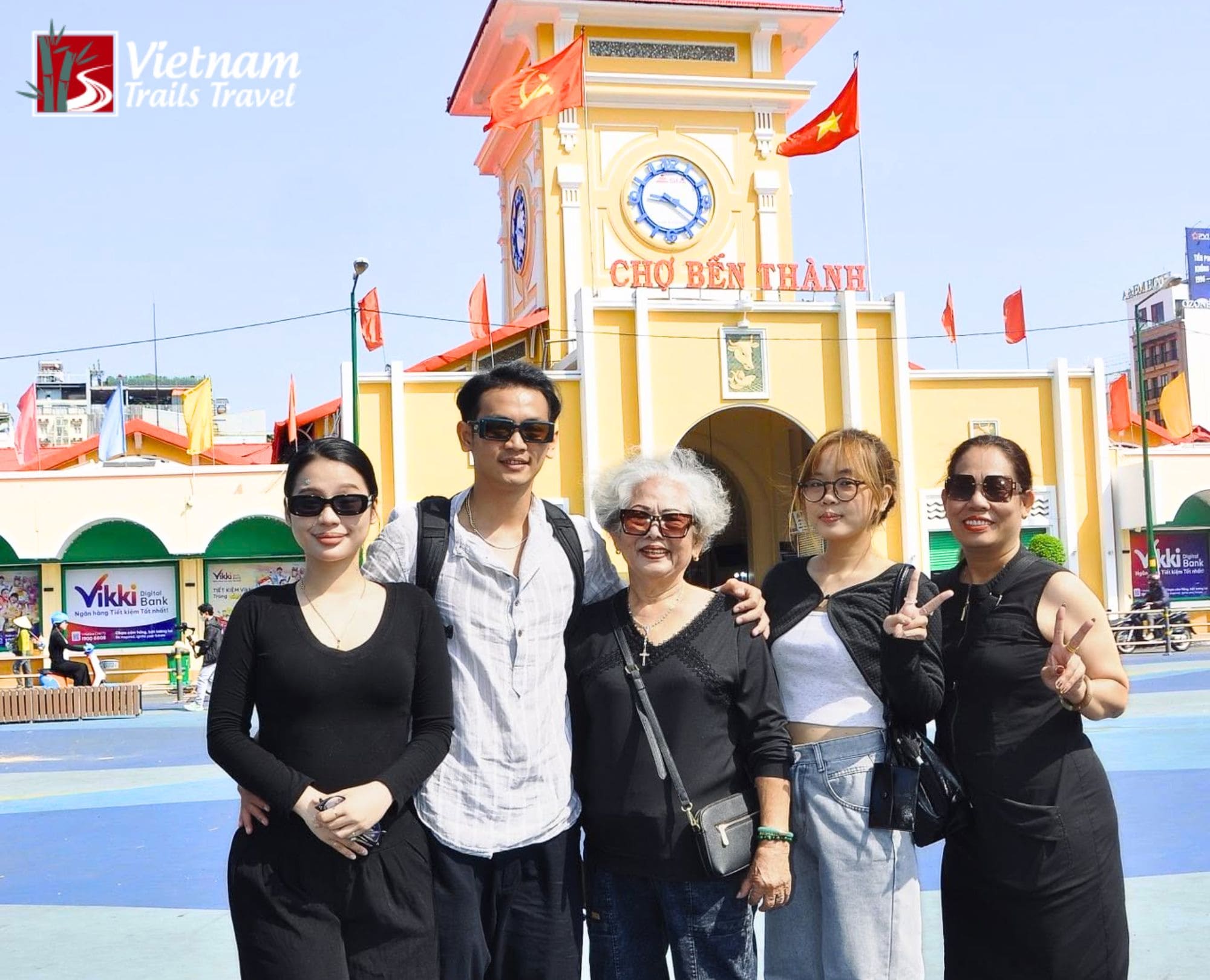
8.1.1. Ben Thanh Market: The Souvenir Central
This is the city’s beating heart, a whirlwind of custom-tailored Ao Dai, lacquerware, and coffee beans. You’ll be greeted by vendors calling out in multiple languages amidst the aroma of roasting Robusta.
-
Address: Le Loi St, Ben Thanh Ward, District 1.
-
Hours: 6:00 AM – 6:00 PM.
-
Top Buys: Weasel Coffee (Cà phê Chồn), silk pajamas, handicrafts, and dried mango.
-
Expert Tip: Start bidding at 40% of the first price. Always ask for vacuum-sealing for food items to avoid airline issues!
8.1.2. Tan Dinh Market: The Fabric Mecca
Known as the “Market for the Wealthy” locals, the air here smells like starched linen and frying garlic from the legendary food stalls. It is the absolute best spot for high-quality textiles.
-
Address: 336 Hai Ba Trung, Ward 8, District 3.
-
Hours: 5:00 AM – 11:00 PM.
-
Top Buys: Silk, lace, and high-end cotton by the meter; also, the famous Chicken Sticky Rice (Xôi Gà).
8.1.3. Binh Tay Market: The Wholesale Giant
Located in Cholon (Chinatown), this architectural marvel smells intensely of Chinese medicinal herbs and dried seafood. It’s where the “real” trade happens.
-
Address: 57A Thap Muoi, Ward 2, District 6.
-
Hours: 6:00 AM – 7:00 PM.
-
Top Buys: Kitchenware, hats, wholesale snacks, and traditional Chinese tea sets.
-
Expert Tip: The second floor is a treasure trove for bags and accessories at wholesale rates.
8.1.4. Ba Chieu Market: The 24-Hour Pulse
A true local hub. It’s a fresh market by dawn and a vibrant fashion hub by dusk. You’ll hear the rhythmic chopping of vendors and the chatter of late-night bargain hunters.
-
Address: 40 Dien Hong, Ward 1, Binh Thanh District.
-
Hours: 5:00 AM – Midnight.
-
Top Buys: Vintage/Second-hand clothing, household items, and cheap street snacks.
8.1.5. Ho Thi Ky Flower Market: The Neon Maze
Walking through here at 3 AM is a botanical dream filled with lilies and roses. By evening, the adjacent alley transforms into a legendary Cambodian-influenced street food street.
-
Address: Alley 52 Ho Thi Ky, Ward 1, District 10.
-
Hours: 24/7 (Flowers peak at 2 AM; Food peaks at 6 PM).
-
Top Buys: Fresh exotic flowers and unique Cambodian snacks.
8.2. Shopping Malls
8.2.1. Takashimaya (Saigon Centre)
The pinnacle of luxury. If you need crisp AC and Japanese-standard service, this is it. The basement food hall is a paradise for gourmets.
-
Address: 92-94 Nam Ky Khoi Nghia, District 1.
-
Hours: 9:30 AM – 9:30 PM.
-
Top Buys: International luxury brands, Japanese cosmetics, and high-end tea.
8.2.2. Vincom Center
A massive glass skyscraper. Building B is filled with high-street favorites, perfect for a quick fashion fix.
-
Address: 72 Le Thanh Ton, District 1.
-
Hours: 10:00 AM – 10:00 PM.
-
Top Buys: Zara, H&M, Uniqlo, and tech gadgets.
8.2.3. Crescent Mall
Spacious and breezy, located in the expat-friendly District 7. It offers a more relaxed pace compared to the hectic District 1.
-
Address: 101 Ton Dat Tien, District 7.
-
Hours: 10:00 AM – 10:00 PM.
-
Top Buys: Mid-range fashion brands and home decor.
9. Vietnam eSIMs
As someone who has been navigating Saigon’s bustling alleys for a decade, I’ve seen countless travelers lose their first hour of vacation fumbling with paperclips and tiny plastic SIM cards. Don’t let that be you. In a city where you need Grab to get around and Google Maps to find that “hidden” coffee shop, an eSIM isn’t just a luxury—it’s your lifeline.
For the best experience, I recommend sticking to the “Big Three” local carriers. Prices below include the standard 50,000 VND ($2) activation fee.
9.1. Vietnam eSIM Comparison
| Provider | Best Package | Data & Benefits | Validity | Total Price (VND/USD) |
| Viettel | 5G150T | 5GB / Day (Best 5G coverage) | 30 Days | 200,000 VND (~$8) |
| Vinaphone | BIG120 | 2GB / Day (Very stable urban signal) | 30 Days | 170,000 VND (~$7) |
| Mobifone | S159 | 6GB / Day + Free local calls | 30 Days | 210,000 VND (~$8.5) |
| Wintel | WIN60 | Truly Unlimited Data (Local favorite) | 30 Days | 110,000 VND (~$4.5) |
9.2. Where and How to Buy
-
Option A: Airport Kiosks
Immediately after customs at Tan Son Nhat (SGN), you’ll see official booths. Just present your physical passport (e-copies are a no-go), let them take a quick photo for registration, and scan the QR code they provide. It’s about $2-$3 more than city prices, but you’ll have a local number for your Grab driver before you even step outside.
-
Option B: Online
If you hate queues, use apps like Airalo or Gigago before you board your flight. No passport is required, but you’ll pay a premium for that convenience. My tip? Install it while you still have home Wi-Fi, then toggle “Data Roaming” ON for that line as soon as the plane wheels touch the tarmac.
-
Option C: City Stores
Head to an official Viettel Store in District 1. It’s cooler (literal AC!), cheaper, and you avoid the “airport tax.”
Tip: Always text KTTK to 191 (for Viettel) or 888 (for Vinaphone) the moment they activate your plan. If the automated reply doesn’t show the GBs you paid for, you can fix it right there at the counter!
10. Top 5 Best Laundry Services in Ho Chi Minh City
10.1. SESA Coin Laundry (Self-Service)
- Address: 170 De Tham, District 1
- Rating: 5.0/5 (1,157 reviews) — Perfect score!
- Hours: Open 24 hours, 7 days a week
- Price: ~100,000 VND per full wash + dry cycle (~$4 USD)
The highest-rated laundry in all of Ho Chi Minh City, and it’s easy to see why. SESA is a modern self-service coin laundromat open around the clock — perfect for travelers on any schedule.
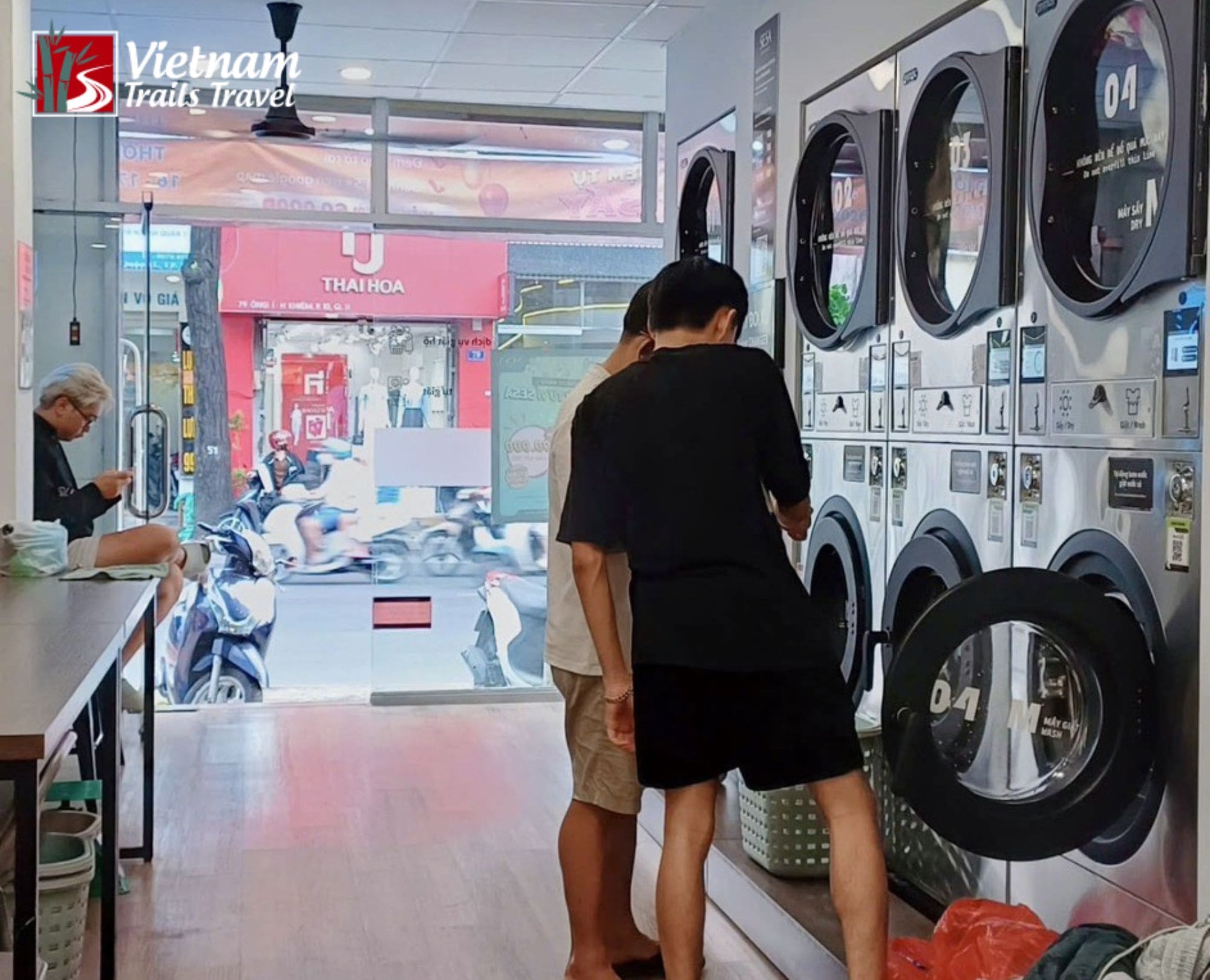
The machines automatically dispense detergent and fabric softener, a full wash and dry cycle takes about 60 minutes, and the friendly staff are always on hand to assist. Free WiFi is available while you wait, and there are plenty of cafes and restaurants nearby. A flawless experience every time.
Best for: Travelers who want the most efficient, clean, and reliable self-service option.
10.2. Tiệm Giặt 1988 — Same Day Laundry Service (Drop-off & Delivery)
- Address: 212B/C7 Bis, Nguyen Trai Street, District 1
- Rating: 4.9/5 (521 reviews)
- Hours: 8:00 AM – 8:00 PM daily
- Price: Per kg basis, very competitive
One of the most beloved laundry services among travelers and long-term visitors alike, Tiệm Giặt 1988 offers same-day turnaround, hotel pickup, and door-to-door delivery — all managed easily via WhatsApp in English.
Clothes come back clean, neatly folded, and smelling fresh. The team is responsive, punctual, and genuinely reliable. Multiple reviewers call it their go-to every time they’re in HCMC.
Best for: Travelers who want full-service laundry with hotel delivery and same-day return.
10.3. Laundry Service — 14G Ton That Dam (Drop-off & Delivery)
- Address: 14G1 Ton That Dam Street, District 1
- Rating: 4.9/5 (319 reviews)
- Hours: 8:00 AM – 9:00 PM daily
- Price: Bag-based pricing, outstanding value
This small but mighty laundry service near the central business district is a favorite for its exceptional convenience and value. Just message them on WhatsApp and they will pick up your dirty laundry from your hotel concierge in the morning and return it clean and folded the same afternoon. Reviewers consistently note the prices are a fraction of hotel laundry costs, the English communication is smooth, and the service is both fast and trustworthy.
Best for: Business travelers and tourists staying in central District 1 hotels who want a no-fuss, WhatsApp-based pickup and delivery.
10.4. Laundry Service District 1 — Kim Hoàng (Drop-off & Delivery)
- Address: 265/8A Pham Ngu Lao, District 1
- Rating: 4.7/5 (352 reviews)
- Hours: 8:00 AM – 10:30 PM daily
- Price: 45,000 VND/kg (~$1.70 USD), minimum 3 kg
Conveniently located in the heart of the Pham Ngu Lao backpacker district, Kim Hoàng Laundry is a reliable and drop-off service that handles clothes with care — separating whites, darks, and colors before affordable washing.
They offer same-day express service, pickup and delivery with a small extra fee, and even communicate via WhatsApp. One reviewer even had a forgotten watch returned without hesitation, which says a lot about their honesty.
Best for: Budget travelers and backpackers staying in the Pham Ngu Lao area.
10.5. Dan’s Wash & Stay (24/7 Self-Service)
- Address: 185/10 Pham Ngu Lao, District 1
- Rating: 4.5/5 (157 reviews)
- Hours: Open 24 hours, 7 days a week
- Price: 30,000–40,000 VND per wash + 30,000 VND per dry cycle (~$1.20–$1.50 USD)
A beloved institution among backpackers, Dan’s Wash & Stay is a 24/7 self-service laundromat tucked just off the Bui Vien walking street. Free detergent and softener are provided, machines take cash directly, and video tutorials are posted for first-timers.
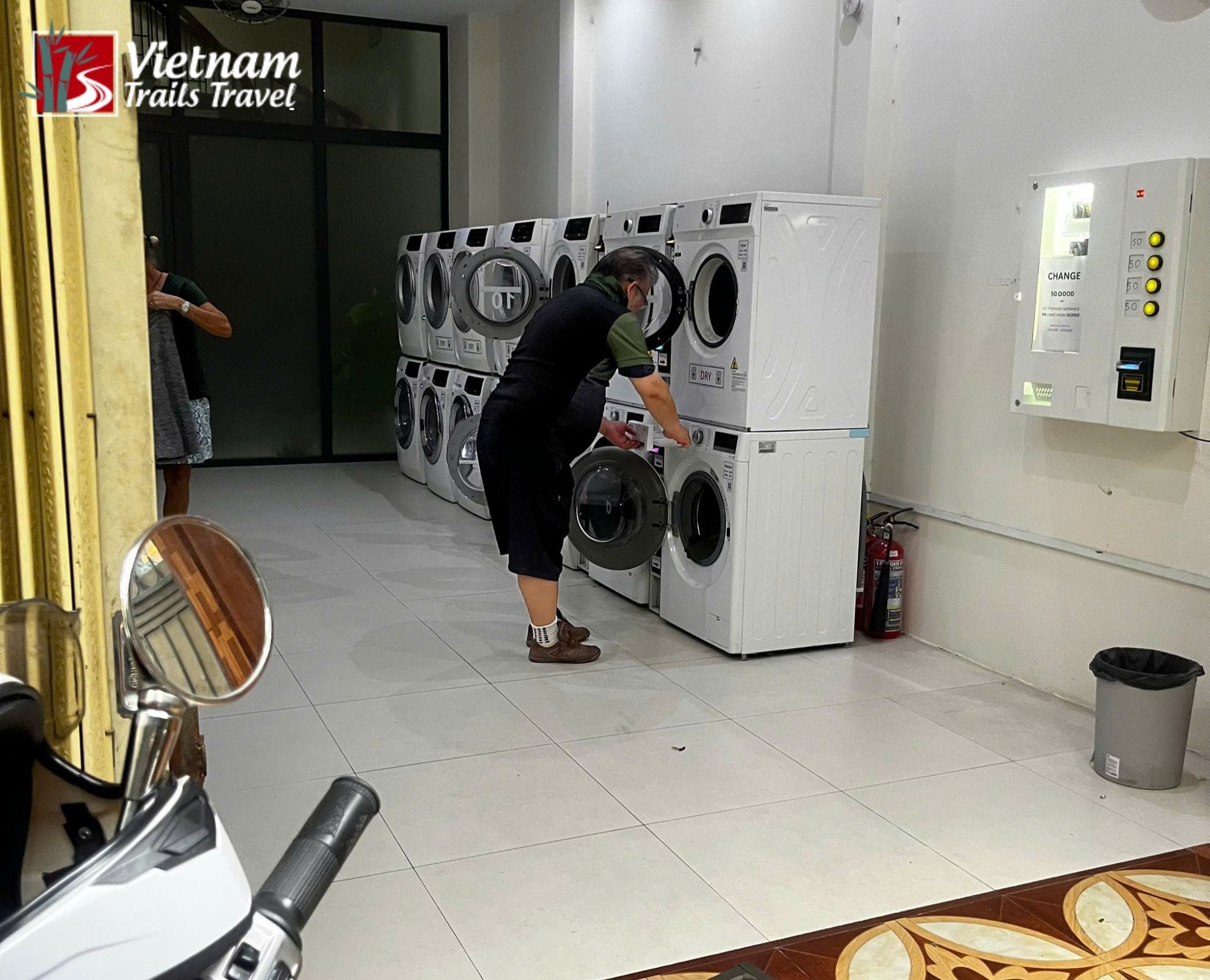
You can also store luggage here, making it a handy double service. With some of the lowest prices in the city and round-the-clock availability, it’s perfect for late-night laundry emergencies.
Best for: Backpackers and budget travelers who want to do their own laundry at any hour.
| # | Name | Kind | Price | Hours | Best For |
|---|---|---|---|---|---|
| 1 | SESA Coin Laundry | Self-service | ~100k VND/load | 24/7 | Reliability & convenience |
| 2 | Tiệm Giặt 1988 | Drop-off/Delivery | Per kg | 8AM–8PM | Same-day hotel delivery |
| 3 | Laundry 14G Ton That Dam | Drop-off/Delivery | Per bag | 8AM–9PM | Central Hotel Guests |
| 4 | Kim Hoang Laundry | Drop-off/Delivery | 45k VND/kg | 8 AM–10 :30 PM | Backpacker area |
| 5 | Dan’s Wash & Stay | Self-service | 30–40k VND/load | 24/7 | Late-night budget wash |
11. Full-day excursions: Beyond the city limits
If you wish to understand the soul of Southern Vietnam, you must venture beyond the city’s skyscrapers. Here are two definitive one-day itineraries for 2026.
Option 1: The spiritual heights & war history (Tay Ninh & Cu Chi)
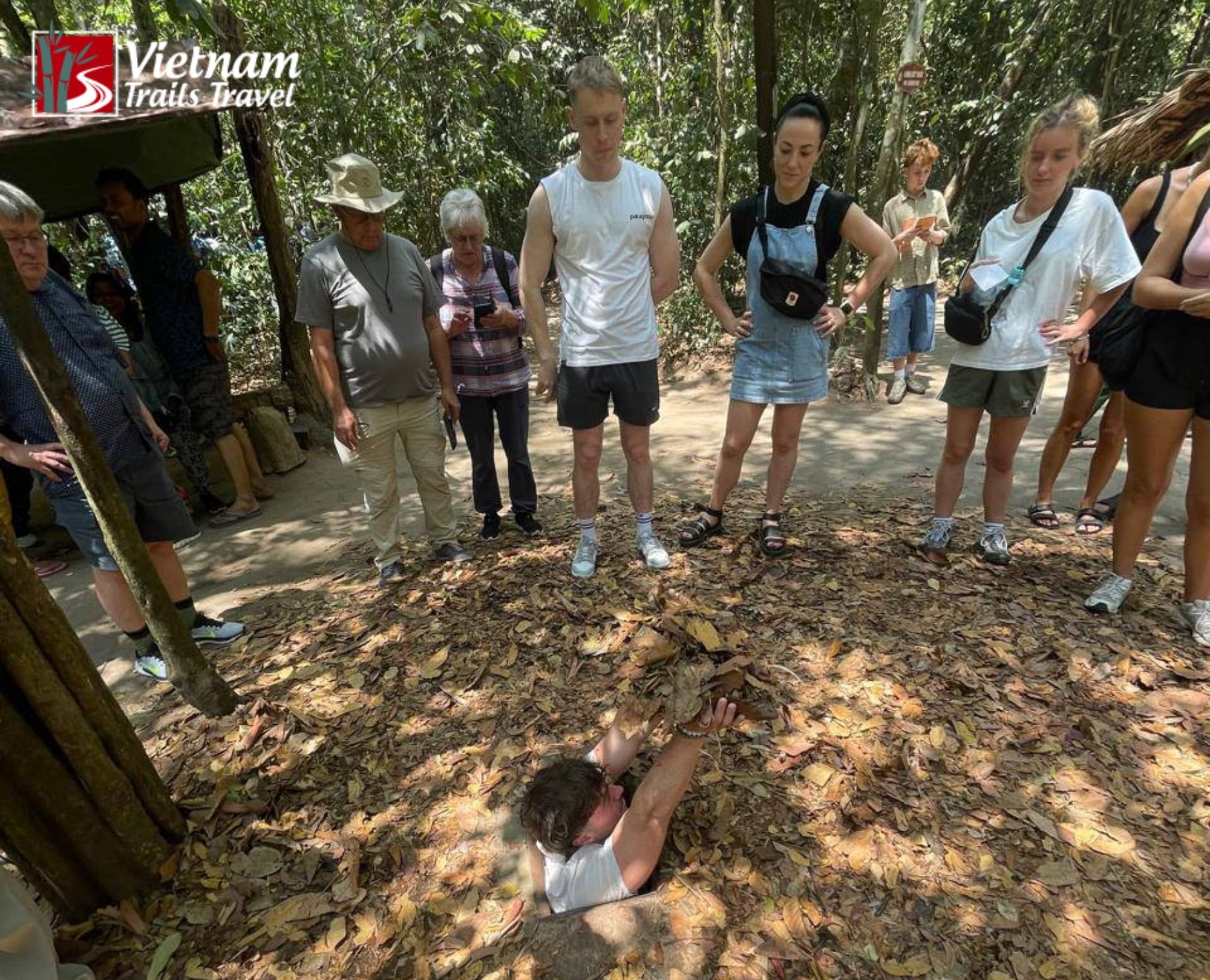
A profound journey combining the architectural wonders of the Cao Dai Holy See, the breathtaking heights of Ba Den Mountain, and the historic Cu Chi Tunnels.
Built by the Viet Cong in the 1940s as protection from French air raids, the Cu Chi Tunnels extend underground for more than 250 kilometers. This network of tunnels later provided vital access and strategic control over rural areas during the Vietnam War.
Read More: Cu Chi Tunnel and Cao Dao Temple 1 day
Option 2: The coastal escape (Vung Tau City)
A refreshing day trip for those who crave the ocean breeze, fresh seafood, and colonial architecture. Thanks to the 2026 highway upgrades, Vung Tau is more accessible than ever.
Read More: Vung Tau Full Day Tour
Option 3: The Mekong Delta immersion (My Tho & Ben Tre)
A journey into the “Rice Bowl of Vietnam,” where life moves to the rhythm of the river. This tour offers a perfect escape into the lush, green waterways and rural workshops of the south. Travelers have highly recommended visiting the Mekong Delta for an immersive experience in local history and culture. Full-day boat tours take you through palm-fringed waterways, floating markets, and traditional villages — a world away from the city buzz, yet only a couple of hours from downtown.
Read More: Mekong Delta Tour From Ho Chi Minh City
13. FAQ: Saigon Travel Guide
13.1. Is Ho Chi Minh City safe for solo travelers in 2026?
Yes, Ho Chi Minh City remains one of the safest cities in Southeast Asia for solo travelers, including women. Violent crime is extremely rare. However, like any major metropolis, petty theft such as phone or bag snatching can happen in crowded areas like Bui Viện or near markets.
Pro Tip: Use ride-hailing apps like Grab or Xanh SM instead of hopping on random motorbikes, and keep your phone away from the curb when checking maps.
13.2. How many days should I spend in Ho Chi Minh City?
To truly experience the city, 3 to 4 days is the “sweet spot.”
Day 1-2: Explore the historical center (District 1 & 3) and enjoy the culinary scene.
Day 3-4: Take a day trip to the Cu Chi Tunnels or the Mekong Delta. If you are a digital nomad or a slow traveler, you could easily spend a week exploring the hidden cafes in District 2 and the local life in District 5 (Cholon).
13.3. Can I use the Metro in Ho Chi Minh City yet?
Absolutely! As of 2026, Metro Line 1 is fully operational and is a favorite for tourists. It connects the Ben Thanh Central Station to various points across the city, including the expat hub of Thao Dien. It’s the fastest way to avoid the legendary Saigon traffic during rush hour.
13.4. Do I need to carry cash, or is Saigon cashless in 2026?
The city has moved rapidly toward a cashless society. Most cafes, convenience stores, and restaurants now accept QR code payments, Apple Pay, and Google Pay. However, if you are planning to eat at authentic street food stalls or shop at local markets like Ben Thanh, carrying some Vietnamese Dong (VND) is still essential. Small notes (10,000 to 50,000 VND) are very handy.
13.5. Can I drink tap water in Saigon?
While water treatment has improved by 2026, we still do not recommend drinking tap water directly. Stick to bottled water, which is available everywhere for a few cents, or use the filtered water stations provided in most modern hotels and co-working spaces.
13.6. Is the E-visa process difficult for Vietnam in 2026?
Not at all. The Vietnam E-visa system is now very streamlined. Most nationalities can apply online and receive their visa via email within 3 to 5 working days. Just ensure your passport has at least 6 months of validity and that the information on your visa matches your passport exactly to avoid delays at Tan Son Nhat Airport.
13.7. What is the best way to get from the airport to the city center?
You have three great options in 2026:
- Private car for airport transfer: Door-to-door service, fix and clear price, flexible itinerary.
- Electric Taxi (Xanh SM): Quiet, clean, and eco-friendly (Around 150,000 – 200,000 VND).
- Grab: Reliable and easy to book via the app.
- Airport Bus: The yellow shuttle bus (Line 109) is the most budget-friendly way to get to District 1.
13.8. What should I wear when visiting temples or pagodas?
Saigon is modern, but its religious sites are traditional. When visiting places like the Jade Emperor Pagoda or the Vinh Nghiem Pagoda, ensure your shoulders and knees are covered. A light scarf or sarong in your bag is a great “emergency” fix for hot days.
14. Conclude
Saigon is a city that gets under your skin. It’s loud, it’s hot, and it’s chaotic—but it’s also incredibly welcoming and full of life. We hope this Ho Chi Minh City Travel Guide helps you fall in love with the city just as much as we have.
