
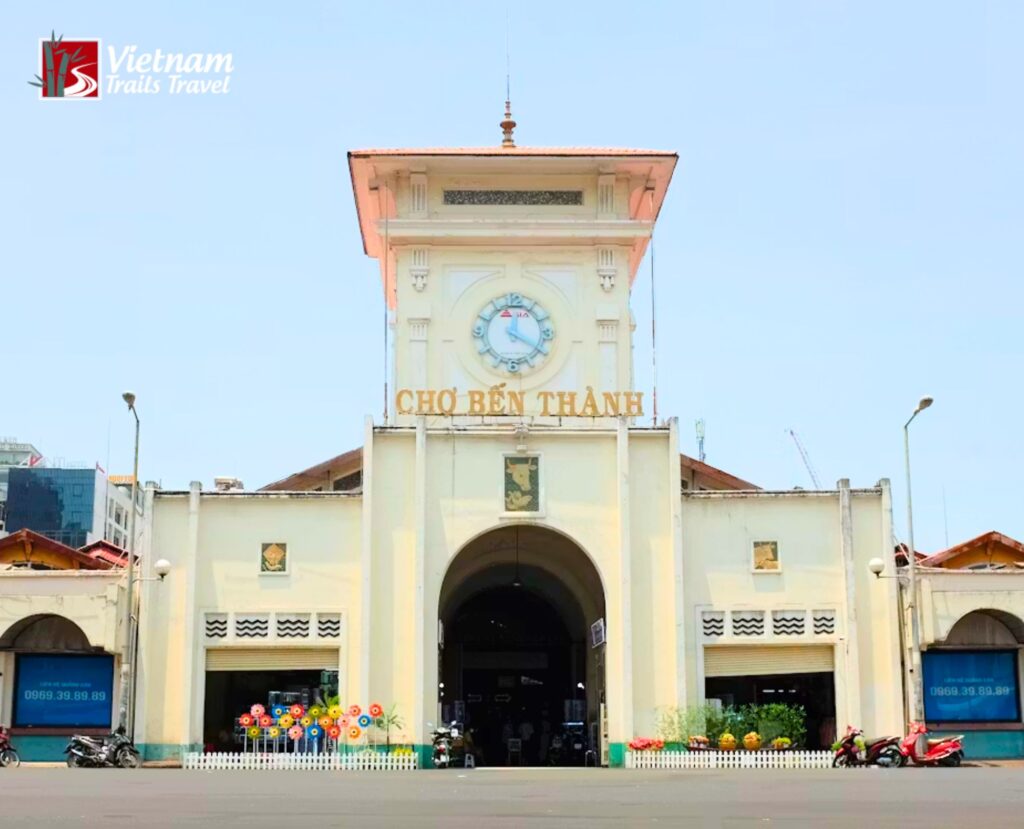
Ben Thanh Market sits in the center of Ho Chi Minh City, at the southern end of Le Loi Street in District 1, and it trades daily from about 06:00 to 19:00, holidays included. After the main hall shuts, the night market spreads onto the two side streets and runs until roughly 23:00.
There is no entrance fee, most traders prefer cash, and bargaining is expected on everything except cooked food. This Ben Thanh Market travel guide sets out the practical details first: hours, gates, what sells where, realistic prices, transport options and the mistakes that cost first-time visitors money.
1. Ben Thanh Market at a glance
The building covers 13,056 m² and holds close to 1,500 booths run by several thousand traders. Daily footfall is estimated at more than 10,000 people, a mix of local shoppers buying dried goods and produce, and international visitors after souvenirs and lunch.
Ben Thanh Market is one of the oldest surviving structures in the city and has served as a symbol of Saigon since the current hall opened in 1914. Hotel desks list it as Ben Thanh Market Ho Chi Minh City, guidebooks shorten it to Ben Thanh Market Vietnam, and taxi drivers know it as Cho Ben Thanh.
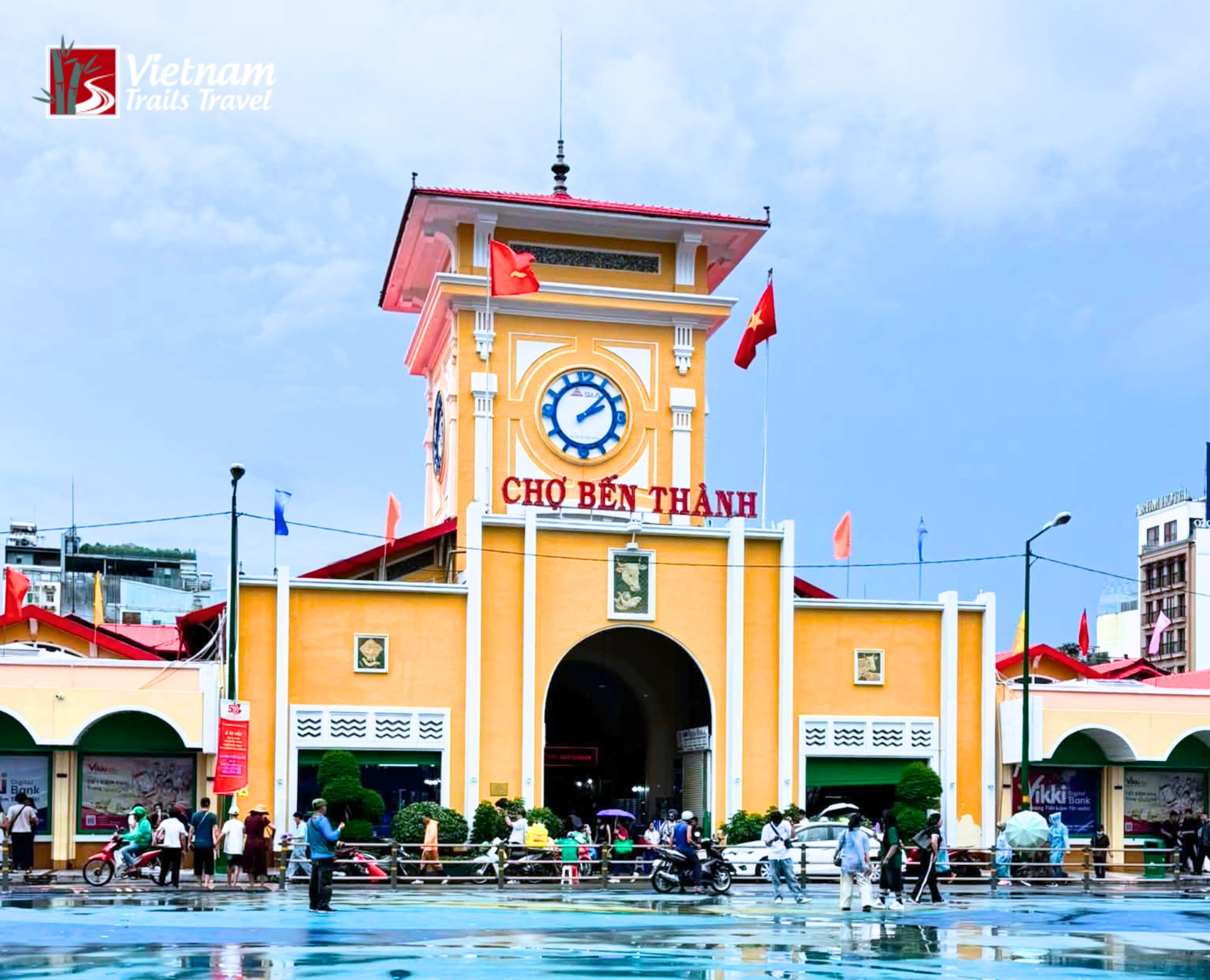
This is the iconic market Ho Chi Minh City points its visitors toward first. In November 2024, the People’s Committee added it to the register of city-level architectural and artistic heritage sites.
| Detail | Information |
|---|---|
| Address | Le Loi, Ben Thanh Ward, District 1 |
| Main hall hours | Approx. 06:00 to 19:00 daily |
| Fresh food section | From around 04:00 |
| Night stalls | 19:00 to approx. 23:00 |
| Entrance fee | None |
| Time needed | 1-2 hours |
| Nearest metro | Ben Thanh station, Line 1 |
That table answers most planning questions. The rest of this page deals with what those numbers mean once you are standing at the south gate.
2. Where Ben Thanh Market is located
Four roads box the site in on all sides: Phan Boi Chau to the east, Phan Chu Trinh to the west, Le Thanh Ton street to the north, and Quach Thi Trang Square with Le Loi street to the south.
The market sits roughly 550 m southwest of the People’s Committee building and about 8 km from Tan Son Nhat International Airport. Most riverside and Dong Khoi hotels are within a ten-minute walk, which is why Ben Thanh Market in Ho Chi Minh City ends up on almost every first-day plan.
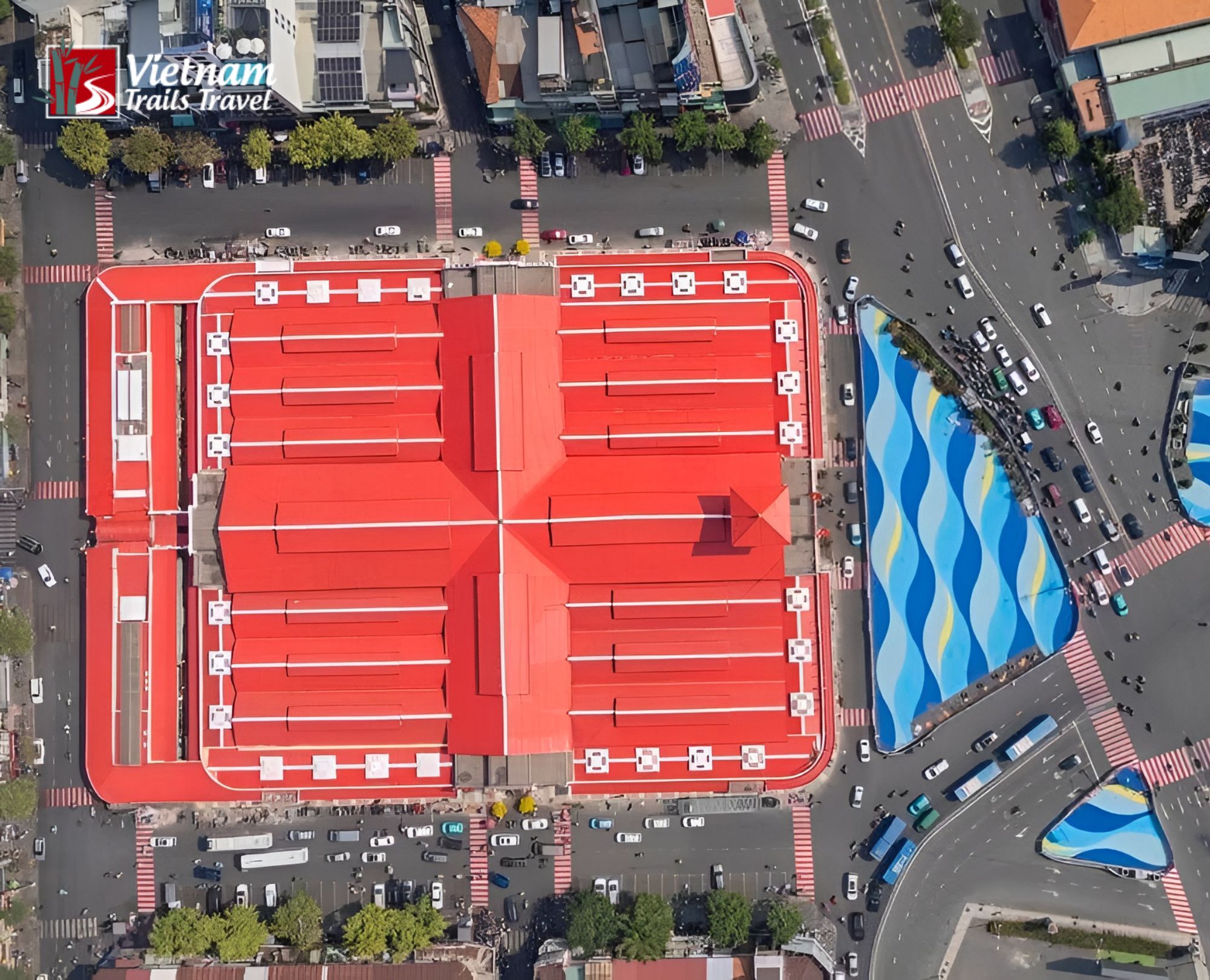
Orientation is simple once you find the three-faced clock tower, which faces the square and marks the south gate. The streets surrounding Ben Thanh Market carry heavy motorbike traffic, so the pedestrian crossings are worth the extra thirty seconds.
Ben Thanh station on Metro Line 1 opens directly onto the square, which has changed the arrival pattern for a lot of visitors since the line began running in December 2024. Few attractions in the heart of Ho Chi Minh City are this easy to reach without a vehicle.
3. Ben Thanh Market opening hours and closing time
3.1 Daytime trading
Management sets official operating hours from 07:00, with traders required to finish laying out goods by 07:30. In practice, the fresh food and seafood aisles open far earlier, from around 04:00, because they supply restaurants and local households before the tourist crowd arrives.
Ben Thanh Market operates every day of the year, Tet included, though stall numbers thin out over the holiday week and management issues separate notices for those dates.
Closing comes at 19:00, and packing up begins from about 18:30. A trip that starts after 18:00 will catch shutters coming down across half the aisles, so the last useful entry time for serious shopping is roughly 17:30.
3.2 Ben Thanh Market at night
Once the main hall locks up, vendors set out tables and racks along Phan Boi Chau and Phan Chu Trinh. This lively night market runs from about 19:00 to 23:00 and leans much harder toward food than the daytime operation, with grilled seafood, bun cha, banh xeo and iced drinks served at plastic tables under strip lighting. Clothing, bags, hats and souvenirs fill the rest of the stalls.
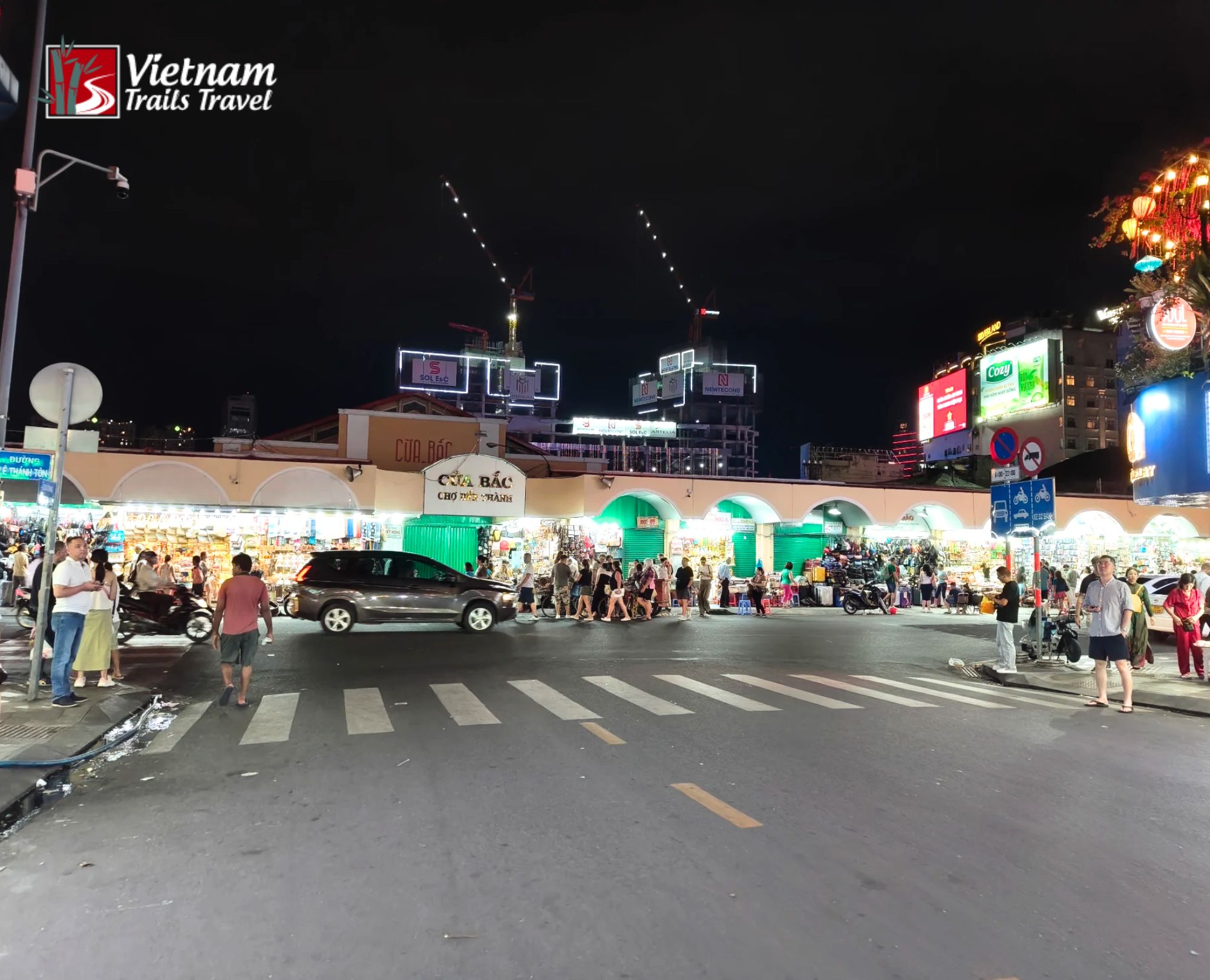
Prices after dark are not automatically lower, but the temperature is, which is why plenty of local families turn up after work. Menus in English are standard here, so ordering takes no effort. Traffic still moves along both side streets, so keep to the vendor side rather than the kerb.
3.3 Best time to visit
Most people visit Ben Thanh Market between 07:00 and 09:00, and that early window gives the coolest air, the fullest produce displays and sellers who are still in a good mood about price negotiation.
Midday brings tour groups, and the aisles get slow-moving between 11:00 and 14:00. The window from 15:00 to 17:00 works well for anyone who wants photographs without shoulder-to-shoulder crowds.
For a single trip that covers both moods, an hour indoors late in the afternoon followed by dinner outside after 19:00 gives the full picture without doubling back to the center.
Read more: The Ultimate Ho Chi Minh City Travel Guide 2026 Update
4. History of Ben Thanh Market
Trading on this patch of Saigon goes back to informal riverside trading beside the Ben Nghe river in the 17th century. The name “Ben Thanh Market” comes from that setting: ben means wharf, thanh refers to the Gia Dinh citadel that stood nearby, and the two words together describe a market at the wharf beside the citadel.
French administrators formalized the operation in the 19th century under the name Les Halles Centrales. Flooding, fire and a collapsing structure forced relocation, and in 1912 construction started on the present building beside the My Tho railway terminus, on ground reclaimed from a drained pond called Bo Ret.
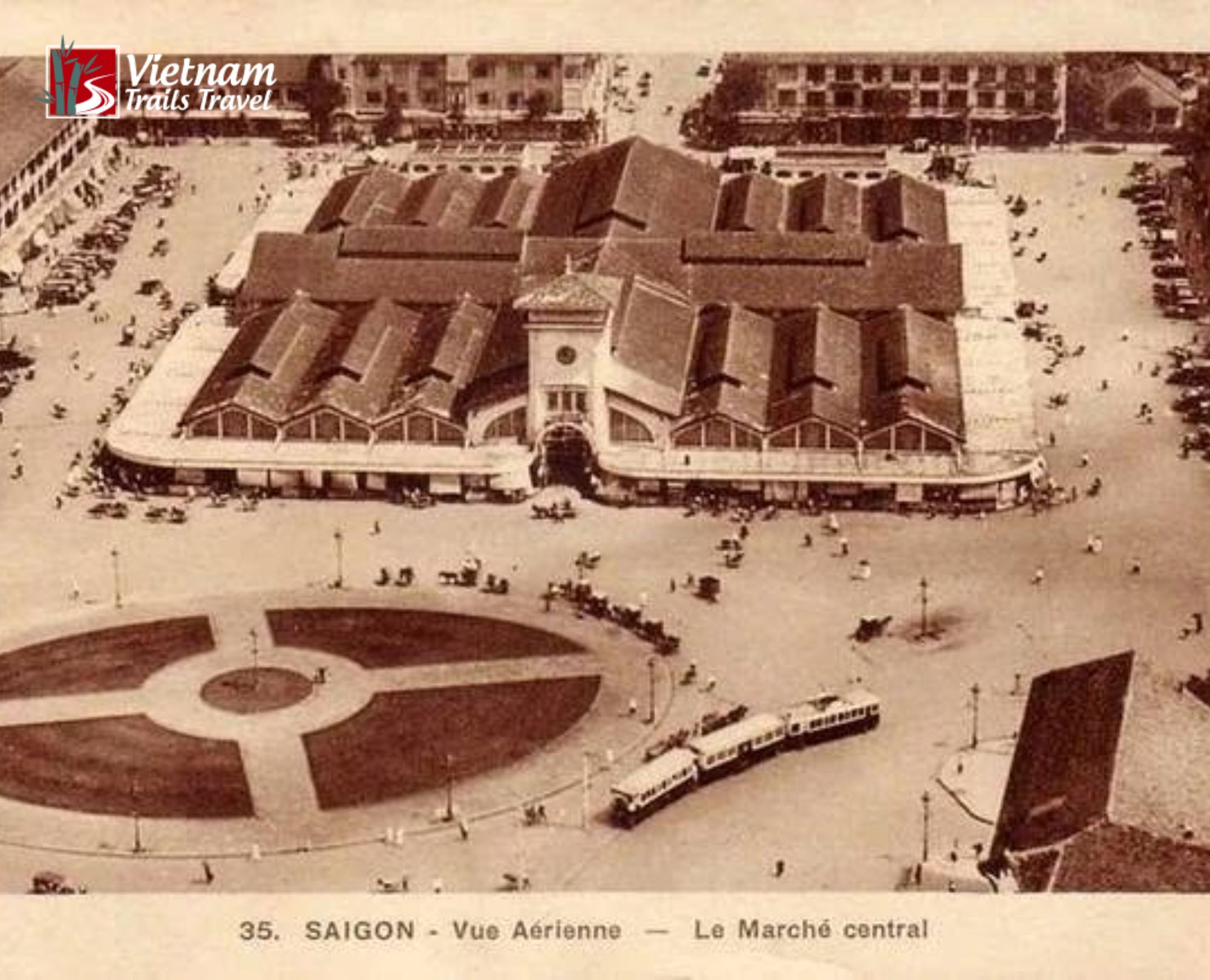
Brossard et Maupin completed the work in 1914, and the reclaimed land explains why the floor sits slightly below street level and why heavy rain occasionally puts water in the aisles.
Three major renovations followed in 1952, 1985 and 2022, plus a façade restoration completed ahead of Tet 2026. None of them altered the French colonial exterior that has made the hall a symbol of Ho Chi Minh City for more than a century.
5. Ben Thanh Market architecture and the four gates
The architecture of Ben Thanh Market is plain by French colonial standards: a low, wide hall with a yellow ochre façade, arched openings and a clock tower over the southern entrance. That tower is the single most photographed highlight of the market and doubles as the meeting point every taxi driver and guide recognises.
The market has 4 main entrances, plus twelve secondary doors, and each of the four is set with ceramic bas-relief panels created by the artist Le Van Mau during the 1952 works, with input from master craftsmen of the Bien Hoa pottery tradition. Twelve panels in total show fruit, fish, poultry and other goods traded indoors, and they are easy to miss if you walk through without looking up.
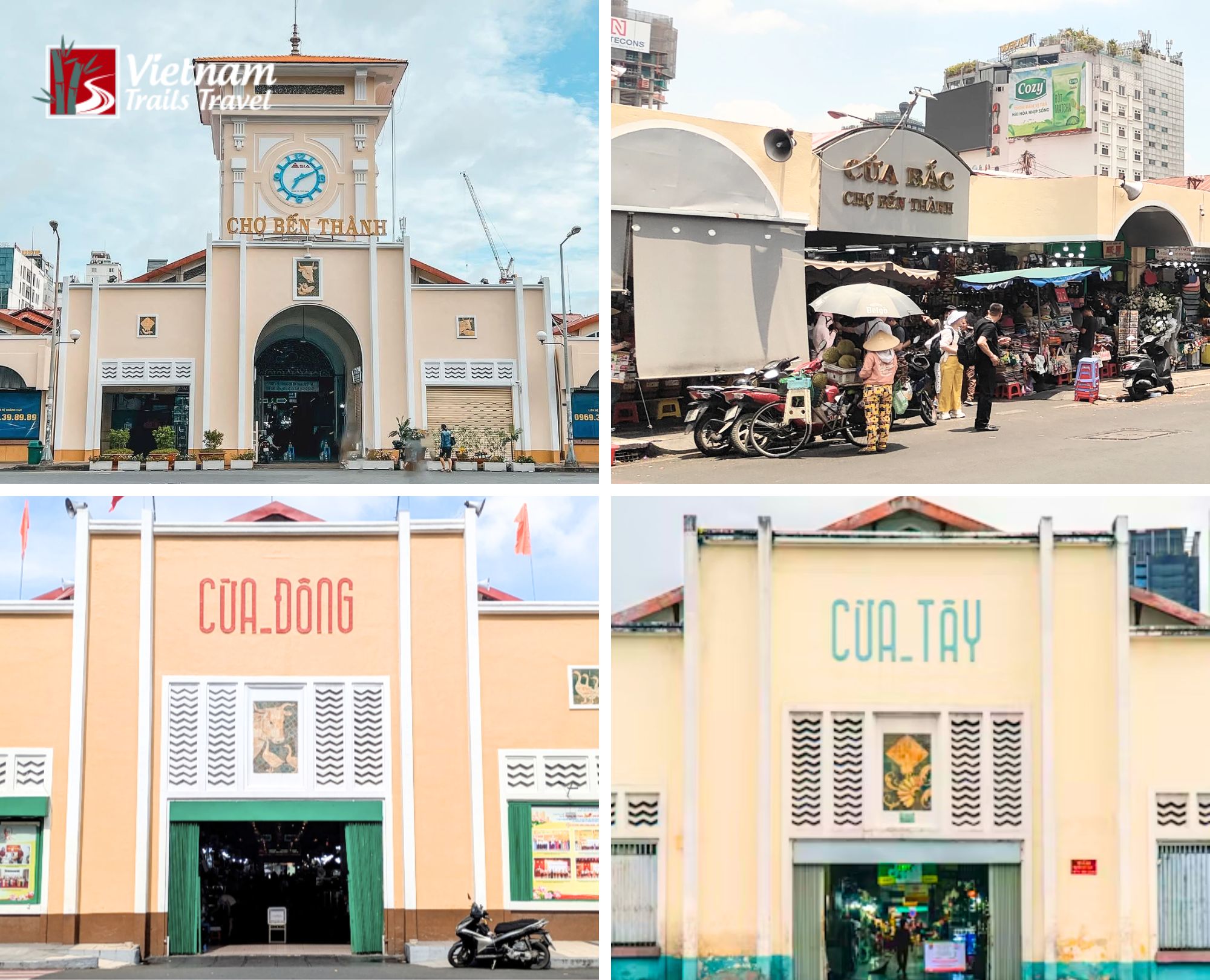
Ventilation was designed for a pre-air-conditioning era, so the hall stays warm. Ceiling fans do what they can. Anyone sensitive to heat should plan around the cooler hours rather than counting on relief once through the door.
6. Ben Thanh Market directory: what sells where
Each gate opens onto a different category, and knowing which one you want saves twenty minutes of circling. The directory below covers what Ben Thanh Market offers behind each door, and it works as a rough map rather than a fixed rule, since trading lines shift over time.
The south gate, under the tower and facing Quach Thi Trang Square, leads into dried goods and fabric: dried squid, cashews, tea, coffee beans, dried fruit and bolts of cloth. Cured and packaged items sold at the market are concentrated here, which makes it the practical starting point for edible gifts.
The east gate on Phan Boi Chau street opens onto cosmetics, confectionery and packaged snacks. Vietnamese coffee brands, chocolate and candy sit within a few metres of the door.
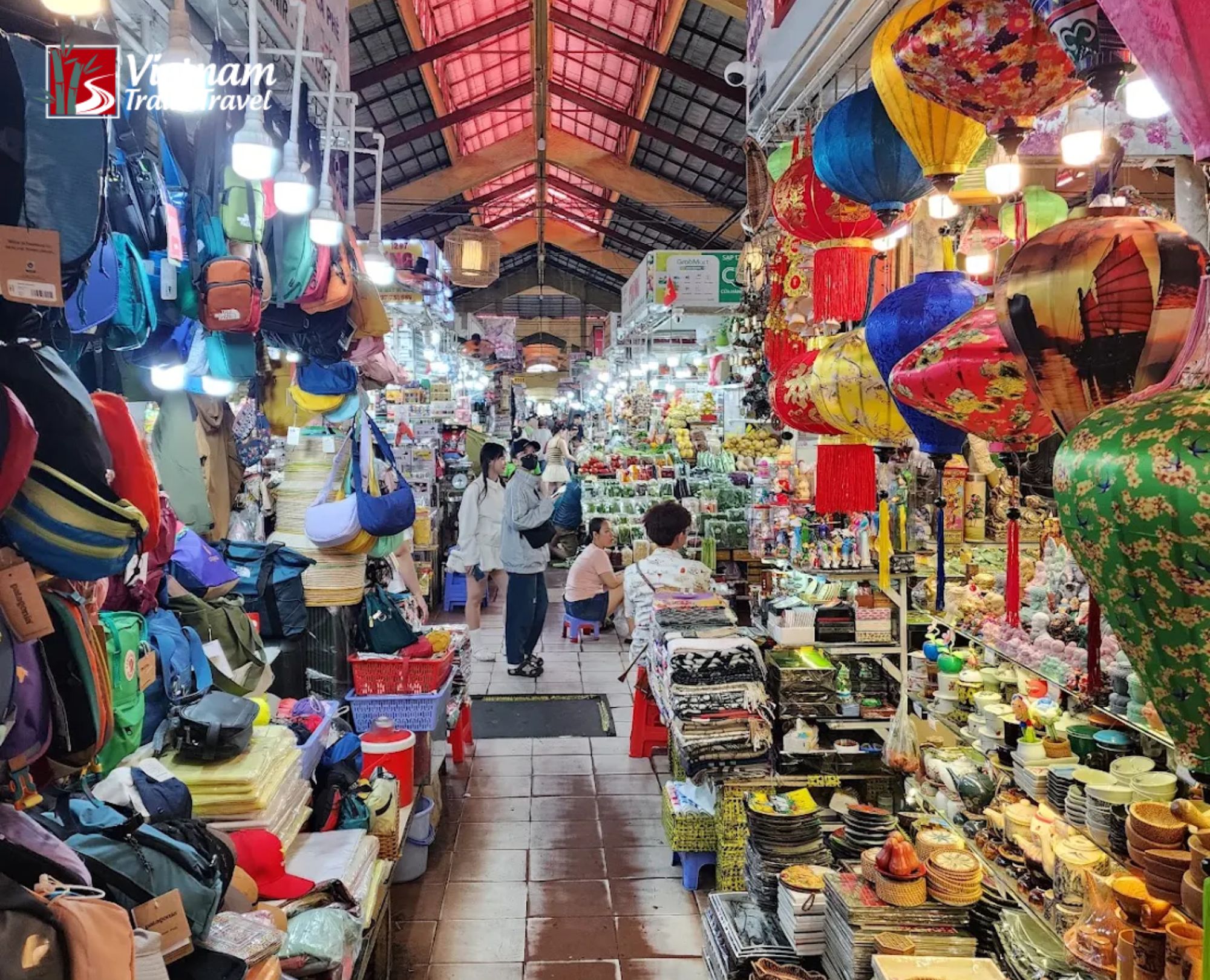
The west gate on Phan Chu Trinh street covers footwear, handicraft goods and souvenirs, from lacquerware and embroidered purses to bracelets, scarves and wallets. Most visitors shopping for gifts spend the bulk of their time in this quarter.
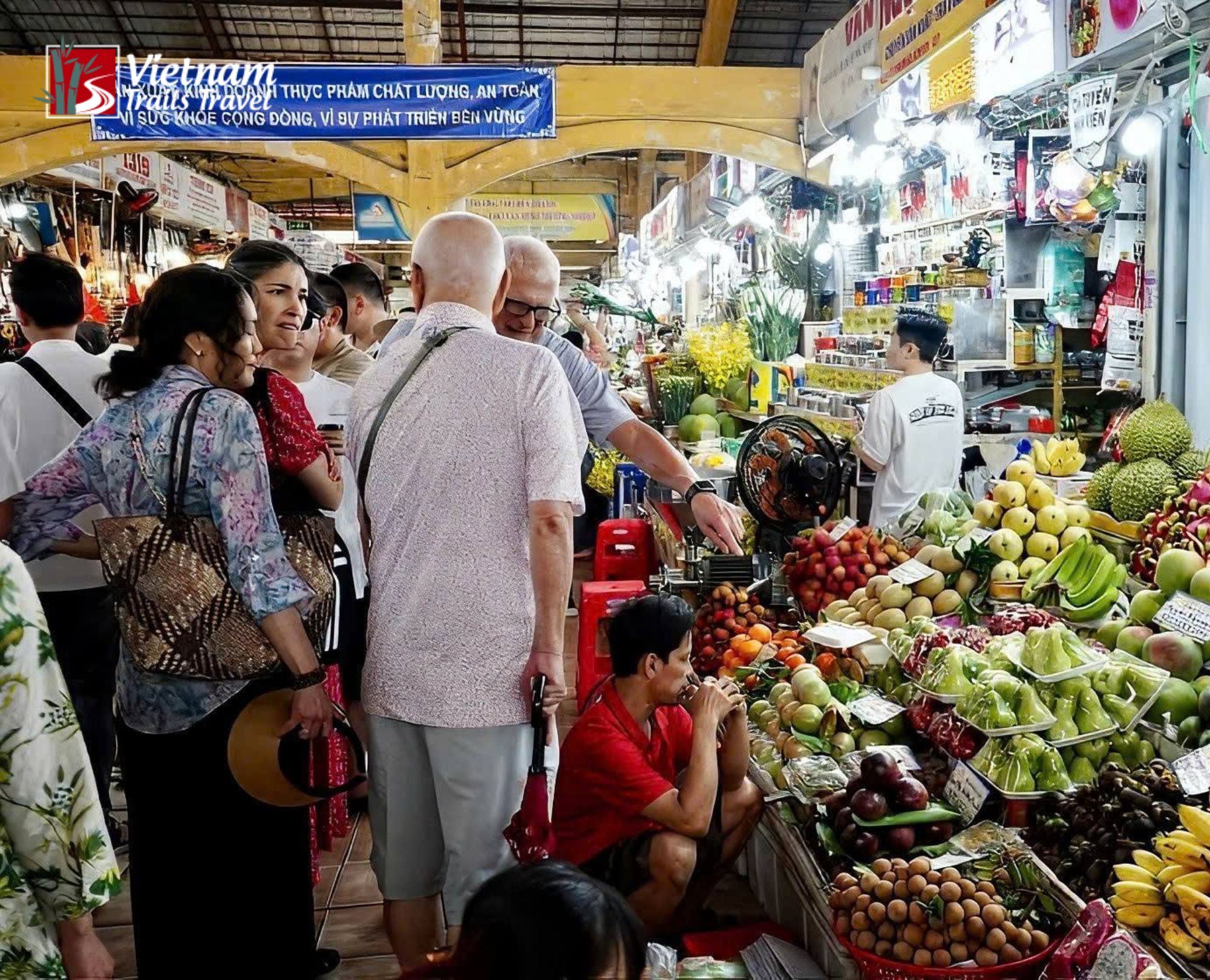
The north gate on Le Thanh Ton street handles flowers, fresh produce and tropical fruits, along with meat and seafood counters. Mangosteen, rambutan, dragon fruit and durian appear in season, and sellers will cut and pack fruit for immediate eating.
The middle of the hall is given over to cooked food, with clothing and tailoring stalls filling the aisles between the food court and the western wall.
7. Shopping at Ben Thanh Market
Ben Thanh Market shopping falls into three groups. Edible souvenirs travel best: vacuum-packed coffee, dried mango, cashews, pepper and lotus tea all survive a flight and clear customs in most countries.
Handicraft items form the second group, covering lacquer bowls, ceramic dishes, embroidered table runners, conical hats and bamboo work. Clothing makes up the third, with T-shirts, linen shirts, ao dai in ready-made sizes and a long line of bags carrying labels that are not what they claim to be.
Quality varies from one stall to the next within the same aisle, so a two-minute comparison walk before committing usually pays for itself. The shopping experience improves once you stop treating the first quote as information. Tailors working indoors will take measurements and turn around a shirt or dress in 24 to 48 hours, which suits travellers staying at least two nights in Ho Chi Minh City.
A realistic sense of price protects you more than any haggling technique. Prices around the market settle at roughly 40,000 to 80,000 VND for a printed T-shirt, 150,000 to 350,000 VND for a decent lacquer bowl, 250,000 to 600,000 VND for a copy handbag and 120,000 to 250,000 VND for 500 g of branded Vietnamese coffee. Those are figures after negotiation, not opening quotes.
Read more: Top 10 Shopping In Ho Chi Minh City You Shouldn’t Miss
8. Ben Thanh Market food and where to eat
The food court occupies the middle of the hall, and the choice runs across most of the standards of Vietnamese cuisine: pho, bun bo Hue, banh xeo, com tam, goi cuon, bun thit nuong and che for dessert. Numbered photo menus with English translations and prices remove the guesswork.
To eat at Ben Thanh Market, you should budget 60,000 to 150,000 VND per dish, above what the same bowl costs at a street food stall three blocks away. That premium buys seating, English-speaking service and a hygiene standard that suits nervous first-time visitors to Vietnam. Popular counters turn tables quickly, so seats free up faster than the crowd suggests.
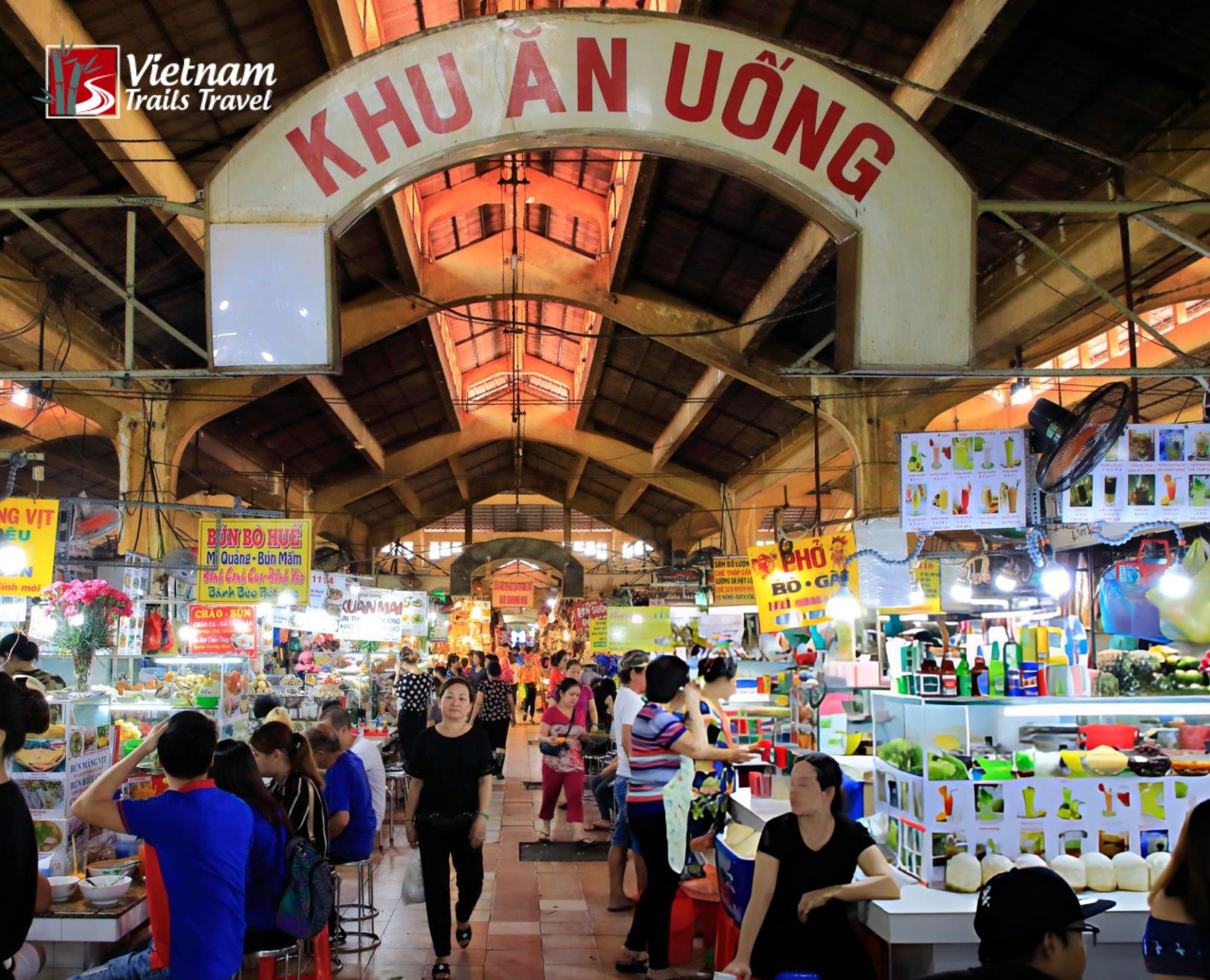
The food court is at its best either side of the main rush: before 11:00 or after 14:00. Fresh coconut, sugarcane juice and Vietnamese iced coffee are sold throughout the hall and cost 25,000 to 50,000 VND. Anyone with a serious interest in street food will get more from the outdoor grills after dark, where the seafood is priced by weight.
9. How to bargain without wasting time
Negotiation is normal on every non-food item here. Opening quotes to foreign visitors typically sit at two to three times the acceptable price, so a counter at roughly half the asking figure is neither rude nor unusual.
Three things move the number faster than argument. Cash in hand, held visibly, signals a real buyer. A few steps toward the next vendor produce a final offer often enough to be worth trying once. A purchase of two or three items from the same seller gives them a reason to drop the unit price.

Fixed-price stalls exist, usually marked in English, and they suit anyone who dislikes the process. Rates there sit somewhere between the tourist quote and the hard-bargained figure. Cooked food carries listed prices and is not negotiable.
10. How to get to Ben Thanh Market
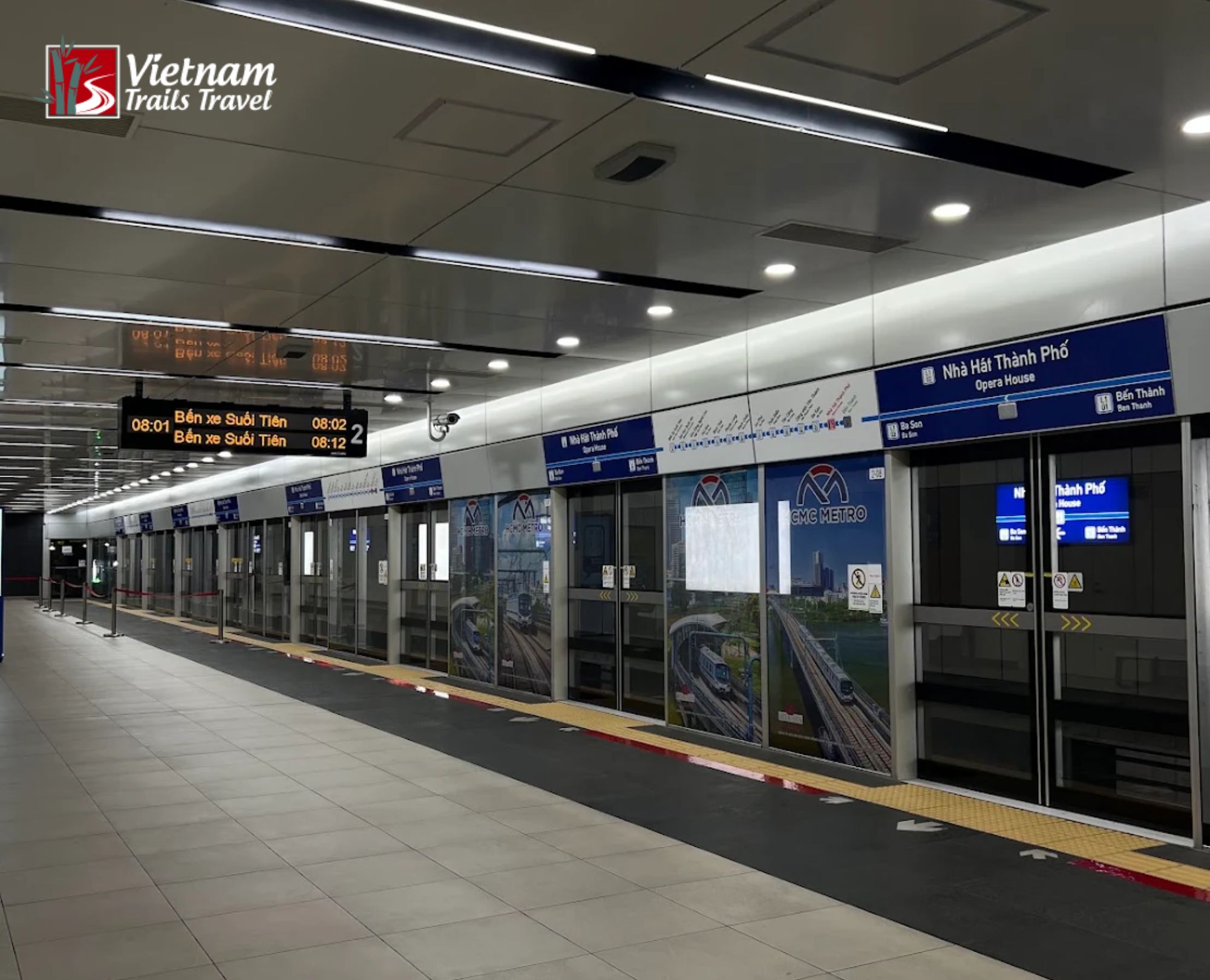
Metro Line 1 is now the cleanest option from An Phu, Thao Dien and the eastern districts, with Ben Thanh station sitting directly in front of the building and trains running from early morning to late evening. Tickets cost a few thousand dong per trip and the station exit puts you at the south gate.
Grab or a metered taxi from the Dong Khoi and Nguyen Hue area takes five to ten minutes and costs 30,000 to 60,000 VND. From Tan Son Nhat International Airport, the same trip covers about 8 km and takes 25 to 45 minutes depending on rush hours, which fall between 07:00 and 08:30 and again from 16:30 to 19:00. Airport taxis charge roughly 170,000 to 220,000 VND for the run, while a booked private transfer removes the queue at arrivals and fixes the fare in advance.
City buses use the surrounding square as a hub, and a large share of the network passes within 200 m. On foot, the site is reachable from anywhere in the northern half of District 1: Saigon Square is 250 m away, the Opera House about 900 m, and Independence Palace roughly 1 km.
11. Ben Thanh Market reviews: what visitors report
Ben Thanh Market reviews split along fairly predictable lines. Visitors who arrive expecting a functioning Vietnamese market with local prices tend to leave disappointed, since the tourist share of trade has been high for decades and the quotes reflect it. Those who treat the trip as a look at a historic building plus an hour of gift shopping generally rate it well.
Two complaints recur often enough to plan around. The first is aggressive selling in the clothing aisles, where sellers call out and occasionally take hold of a sleeve. A clear no and continued walking ends it. The second is price inflation, which is a solved problem once you know the settled rates listed above.
Nobody comes here for the cheapest shopping in Ho Chi Minh City. Convenience, concentration and the building itself explain why Ben Thanh Market’s place near the top of the attraction lists has held for so long.
12. Travel tips for a smoother visit
Cash in small denominations matters more than anything else. Card acceptance is patchy, and a 500,000 VND note for a 60,000 VND purchase invites the change problem that ends with a rounded-up price. ATMs sit within 100 m of the south and north gates.
Bags belong in front of you inside the market, particularly at the doorways where the crowd compresses. Phone snatching from moving motorbikes happens on the streets outside, so photographs are best taken from the pavement rather than the kerb.
Light clothing and water are sensible given the temperature indoors, and a pack of wet wipes is worth carrying for the food court. Toilets are available for a small fee. For anyone with limited mobility, the aisles are narrow and often blocked by stock, so the outer ring near each gate is easier to work through than the middle.
13. What to see near Ben Thanh Market
The position makes this an easy anchor for a half day on foot. Saigon Square, a five-minute walk north, sells much the same clothing at listed prices in air conditioning.
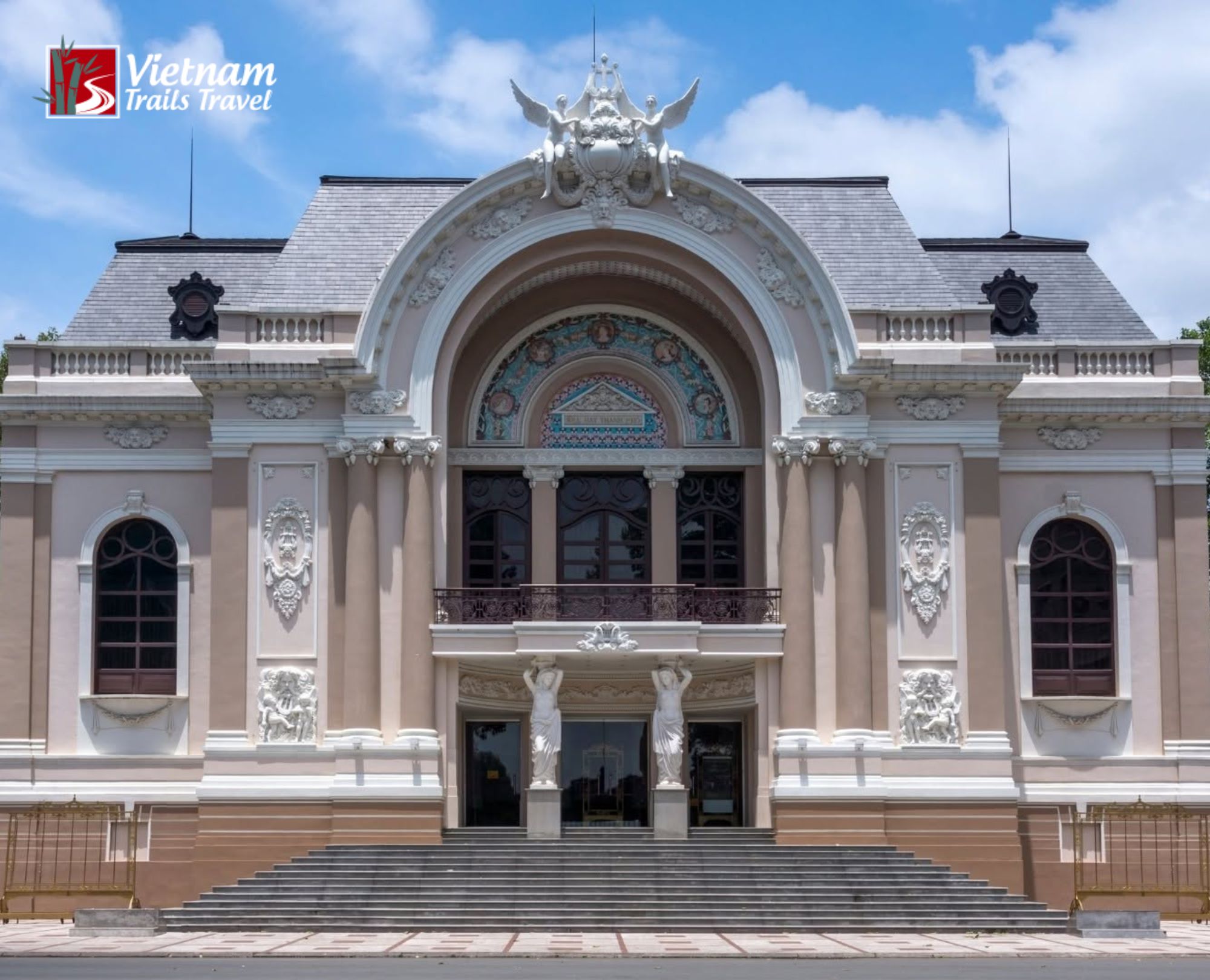
Nguyen Hue walking street runs 900 m northeast and turns into an evening promenade. The Opera House, Central Post Office and Notre Dame Cathedral form a cluster of landmarks in Ho Chi Minh City’s historic center, all within about 1 km and all reachable on the same walk.
Independence Palace and the War Remnants Museum sit roughly 1 to 1.8 km northwest and both need an hour or more, so they suit a separate block of time rather than a quick add-on.
Bui Vien backpacker street lies 700 m west, which makes the district around Ben Thanh Market a convenient base for anyone who wants to explore Ben Thanh Market and the nightlife strip in one evening. Very few districts put this many attractions in the heart of the city within walking range of each other.
Read more: Independence Palace Saigon: History, Architecture & Guide
14. A two-hour plan for a first visit
A first visit to Ben Thanh Market works best in a fixed order. Arrival at the south gate under the clock tower gives you the photograph and a reference point you can return to. Fifteen minutes on the dried goods and coffee aisles handles the edible gifts while your patience is fresh.
From there, a move west toward Phan Chu Trinh covers handicraft and souvenir stalls, and 30 to 40 minutes is enough to compare prices properly across three or four sellers. Lunch or a drink in the central food court takes another 30 minutes and provides the sit-down break that the heat makes necessary.
The last stretch runs north to the fruit and flower section, where a cut fruit box costs 40,000 to 70,000 VND and makes a better photograph than anything in the clothing aisles. Anyone with more time to explore can leave through the north gate and continue to Saigon Square, or come back after 19:00 for the outdoor food.
15. Frequently asked questions
What time does the market open and close? Official trading runs from 07:00 to 19:00, though the fresh food aisles open from about 04:00 and many traders raise their shutters by 06:00. The outdoor operation near the market runs from 19:00 until roughly 23:00.
Is there an entrance fee? No. Access to the hall and the surrounding streets is free at all times.
How long should I spend there? Most visitors find one to two hours enough, including a meal. Serious shoppers comparing tailors or lacquerware prices may want longer.
Is Ben Thanh Market worth visiting? Yes, for the building, the concentration of gift options and the food court, provided you arrive with realistic price expectations. Ben Thanh Market Saigon is a convenience destination rather than a bargain destination.
Can I use a card? Some larger businesses accept cards, often with a surcharge. Cash is faster and gives you leverage when negotiating.
Is it safe? Generally yes. Petty theft in crowded doorways and phone snatching on the streets outside are the main risks, and both are avoidable with normal city-center care.
What should I buy? Coffee, dried fruit, cashews, lacquerware, embroidered textiles and conical hats travel well and cost less than airport equivalents. Electronics and branded goods are better bought elsewhere.
Is the night market different from the day market? Yes. The outdoor version is food-led, cooler and more relaxed, while the indoor hall carries the full range of produce, fabric and household goods.
Read more: Ho Chi Minh City 1 Day Tour
