
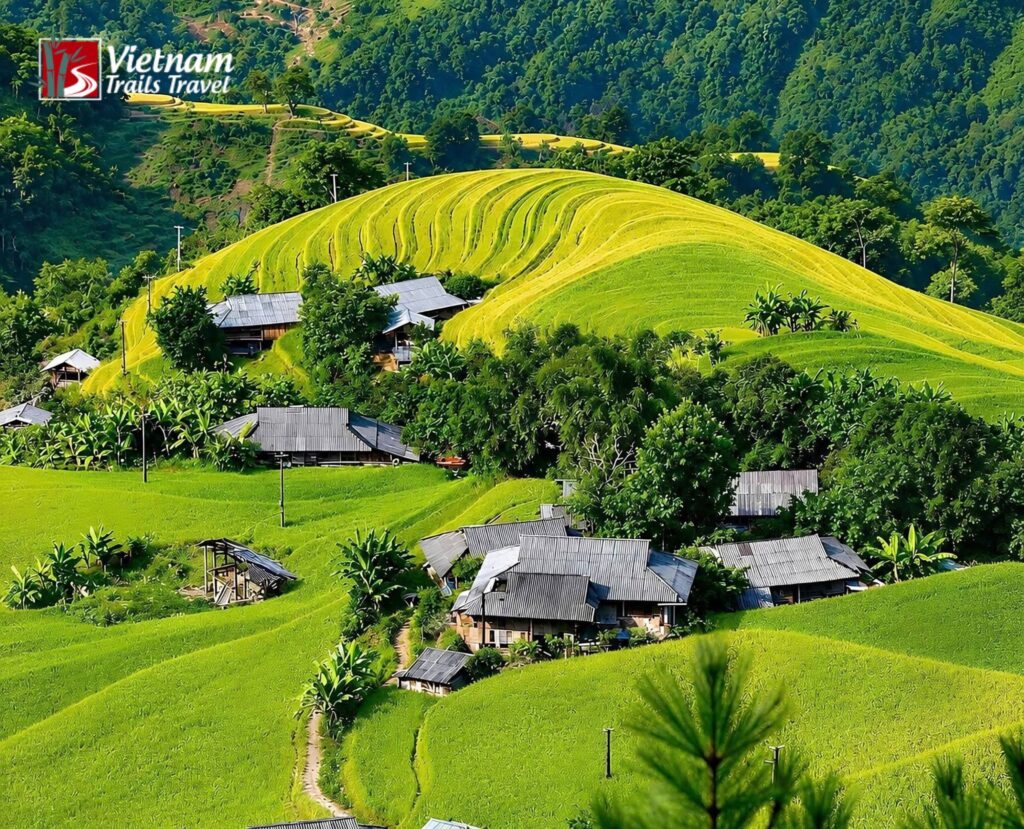
The Hoang Su Phi rice terraces turn gold from late September to early October, and the area sits about 300 km from Hanoi, a 6- to 8-hour drive by private car. Farmers plant a single crop each year on slopes that climb toward the Chinese border, so the viewing window is short and the exact dates move with the rainfall.
Since the 2025 provincial merger, the area belongs to Tuyen Quang province, although travelers and tour operators still call the whole region Ha Giang. This guide covers heritage communes, distances and travel times, a month-by-month calendar, walking routes, the Sunday market, and sample 3- to 4-day itineraries.
1. Hoang Su Phi rice terraces
Hoang Su Phi is a remote highland area in the far west of Tuyen Quang province, in northern Vietnam, previously the western part of Ha Giang. Dao, Nung, La Chi, Tay and Mong farmers built the terraces over generations, and a 760-hectare core zone was recognized as a national heritage site in 2011.
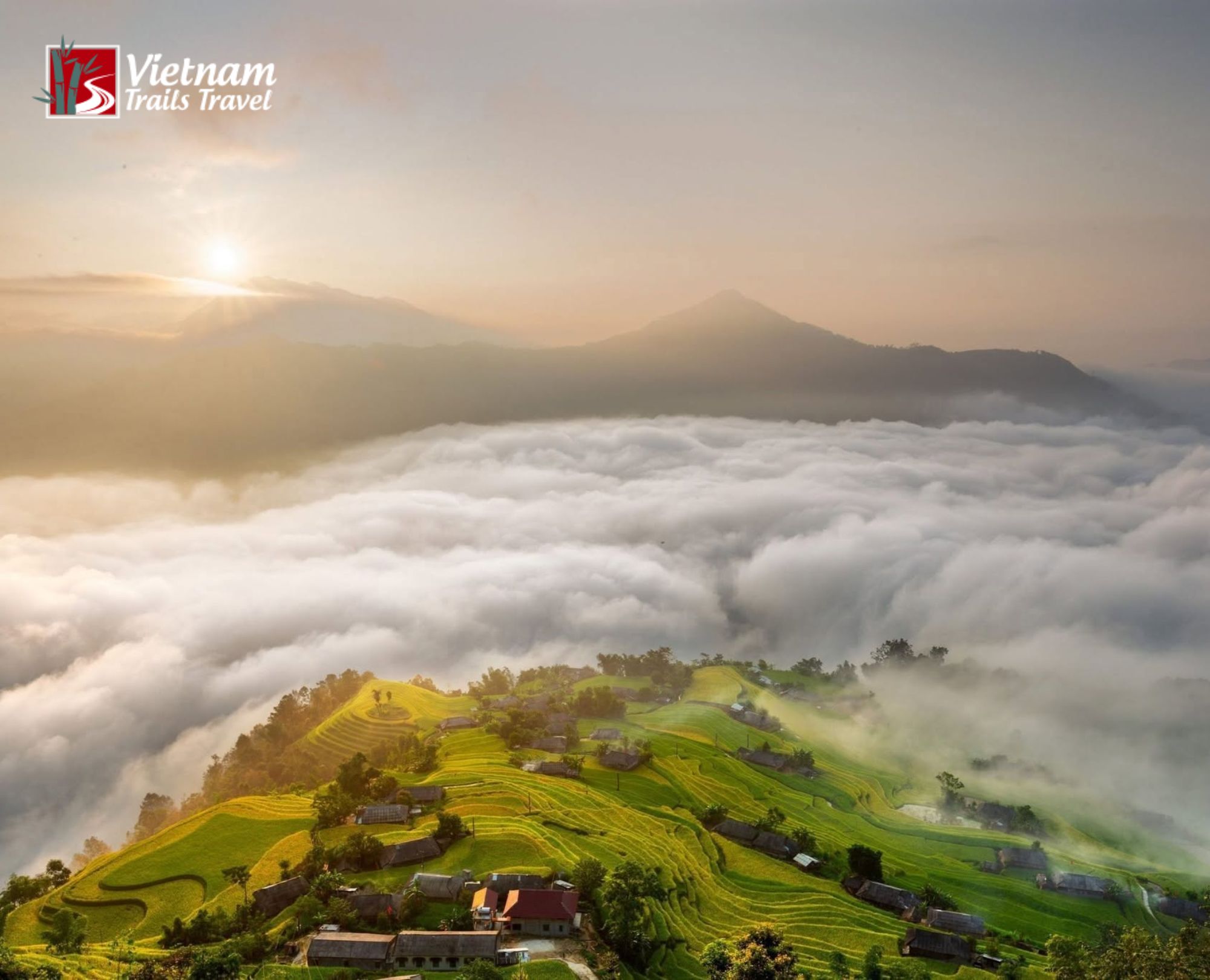
Most travelers who visit Hoang Su Phi rice terraces plan three days from Hanoi, with a long road day at each end and one full day for viewpoints, village walks and the weekly market.
| Item | Detail |
|---|---|
| Location | Far west of Tuyen Quang province, near the border with China |
| Distance from Hanoi | About 300 km, 6 to 8 hours by private car |
| Distance from Ha Giang city | About 100 km, 3 to 4 hours |
| Harvest window | Late September to early October |
| Rice crops per year | One |
| Heritage status | Listed in 2011 |
| Weekly market | Sunday morning in Vinh Quang |
| Typical stay | 2 to 3 nights |
2. Where the terraces are located and the 2025 name changes
Hoang Su Phi lies between the Tay Con Linh mountain range and the Chieu Lau Thi massif, close to the border with Yunnan province in China. Vinh Quang town, the main service center, stands at the foot of Tay Con Linh, the highest mountain in the district.
The former Hoang Su Phi district covered about 629 km2 and was made up of Vinh Quang town and 24 communes. Valley floors sit near 550 m above sea level, while regional tour operators place the highest terraces at around 1,500 m.
Altitude shapes the whole landscape, from rice at valley level to forest and tea on the upper ridges, and morning mist often fills the valleys between the mountains of Hoang Su Phi.
Administrative names changed in 2025. Ha Giang province merged into Tuyen Quang province on 1 July 2025, and Resolution No. 1684/NQ-UBTVQH15, issued on 16 June 2025, combined Vinh Quang town with four neighboring communes into a single unit, the commune of Hoang Su Phi.
Travelers and tour operators still use the name Ha Giang, although maps and booking platforms are gradually switching to Tuyen Quang. Searches for Hoang Su Phi Ha Giang travel therefore still return the most useful results, and the viewpoints in this guide keep the commune names that guides and homestay hosts use every day.
Read more: Ha Giang Loop Tour 3 Days 3 Nights
3. History and heritage status of the terraced fields
Generations of work went into the terraced fields. Households cut each step into the slope by hand and routed water from mountain streams through small channels to every level.
Regional tourism authorities describe the oldest sections as roughly a century old. Each rice terraced field is a hand-built step in the slope and depends on water from the forest above.
Vietnam’s Ministry of Culture, Sports and Tourism listed the core zone in 2011. Six communes make up the rice terrace heritage area: Ban Luoc, San Sa Ho, Ban Phung, Ho Thau, Nam Ty and Thong Nguyen.
Vietnamese media report close to 3,700 hectares of terraced fields across the wider district, with the most scenic 1,380 hectares concentrated in 11 communes. Hoang Su Phi’s farmers harvest once a year because of the altitude and cool climate, which is why the magnificent terraced rice fields change so clearly from month to month.
Function explains the beauty of terraced fields here, since every curve follows the slope and every wall holds water. Terraces in Hoang Su Phi follow the contour of each hillside, which explains the layered patterns visible from the road.
4. Best time to visit and the yearly calendar
The best time to visit Hoang Su Phi for golden color is the last week of September through the first two weeks of October. Lowland Vietnam gets two or three crops a year, but the highland rice season here runs only from planting in late spring to harvest in autumn.
In most years, the rice harvest season starts in the final week of September and ends before the close of October, and rainfall can shift those dates by one or two weeks. Below, a calendar shows what each period looks like, and a spare day in the schedule protects against fog or rain at the best viewpoint.
| Period | What you see | Notes |
|---|---|---|
| Late May to June | Flooded terraces that reflect the sky | Transplanting; wet roads |
| July to August | Green slopes after planting | Rainy season; occasional landslides |
| Early September | Rice begins to turn yellow | Fewer visitors than peak weeks |
| Late September to early October | Golden fields and active harvest | Peak season; book early |
| Mid to late October | Straw drying, fields turning brown | Cool, clear days; thinner crowds |
| November to April | Bare fields | Cold and often misty |
4.1 The flooded season
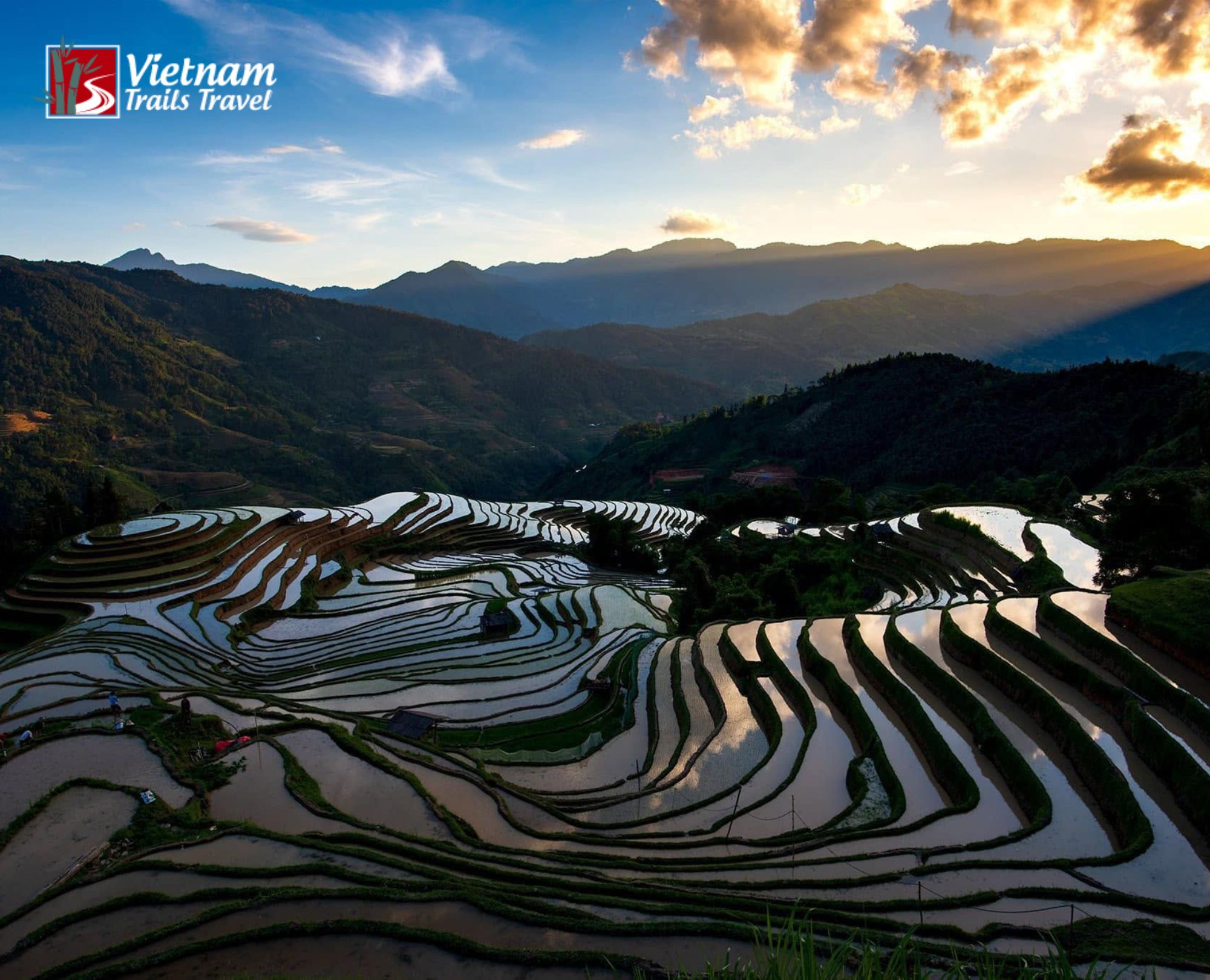
From late May to June, the fields are flooded for transplanting. At sunrise, the terraces are filled with water that mirrors the sky, and mist often hangs over the lower valleys.
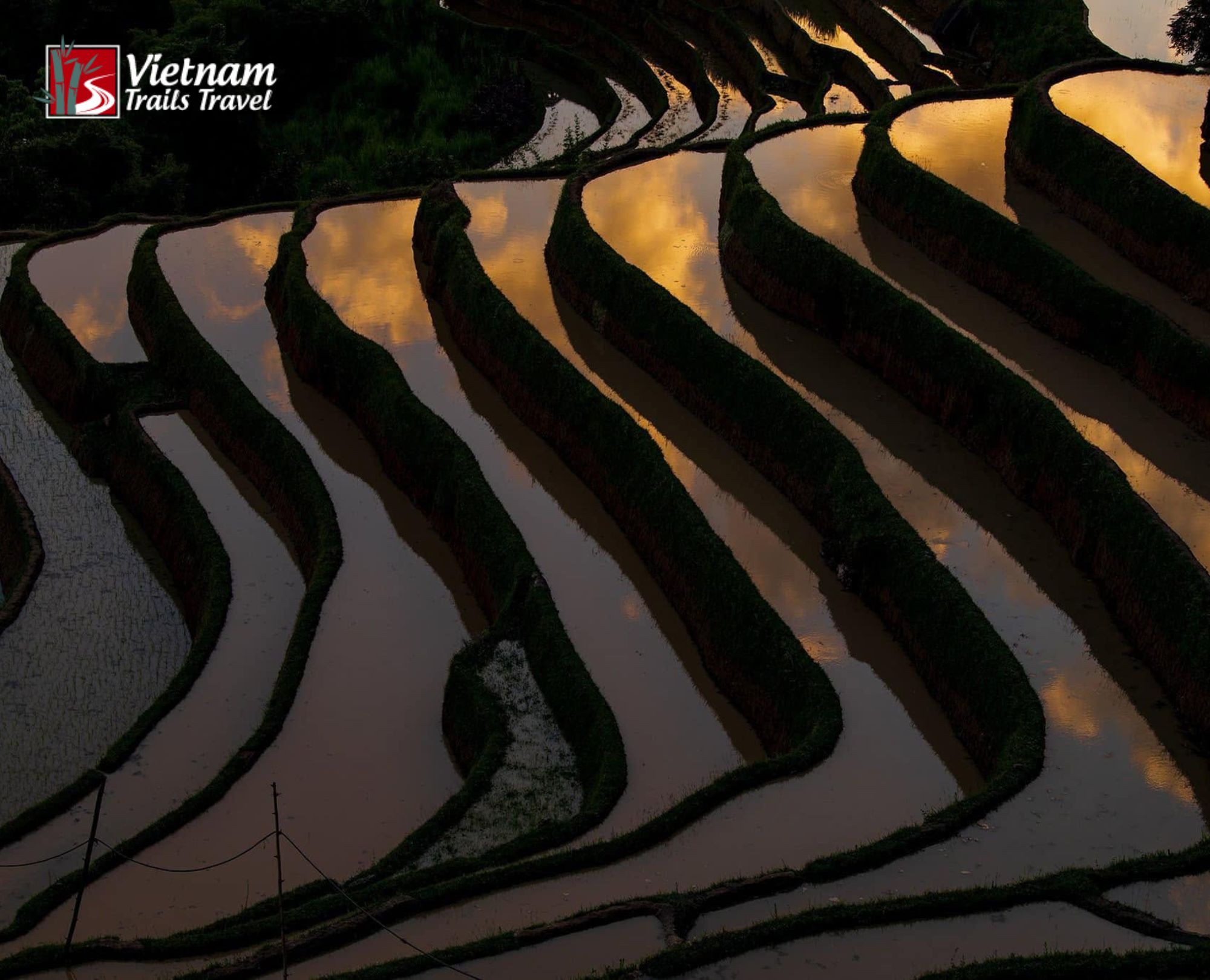
Fields in Hoang Su Phi are at their most reflective in these weeks, and photographers value the stunning rice paddies at sunrise. Rain can make mountain roads slippery, so drivers should allow extra time between villages.
4.2 The summer months
By July and August, green rice covers the slopes and the lush hillsides look like stacked bands of color. Rain falls often, and landslides can close short stretches of mountain road. The scenery of Hoang Su Phi in these months suits walkers who prefer quiet paths over crowds.
4.3 The golden harvest
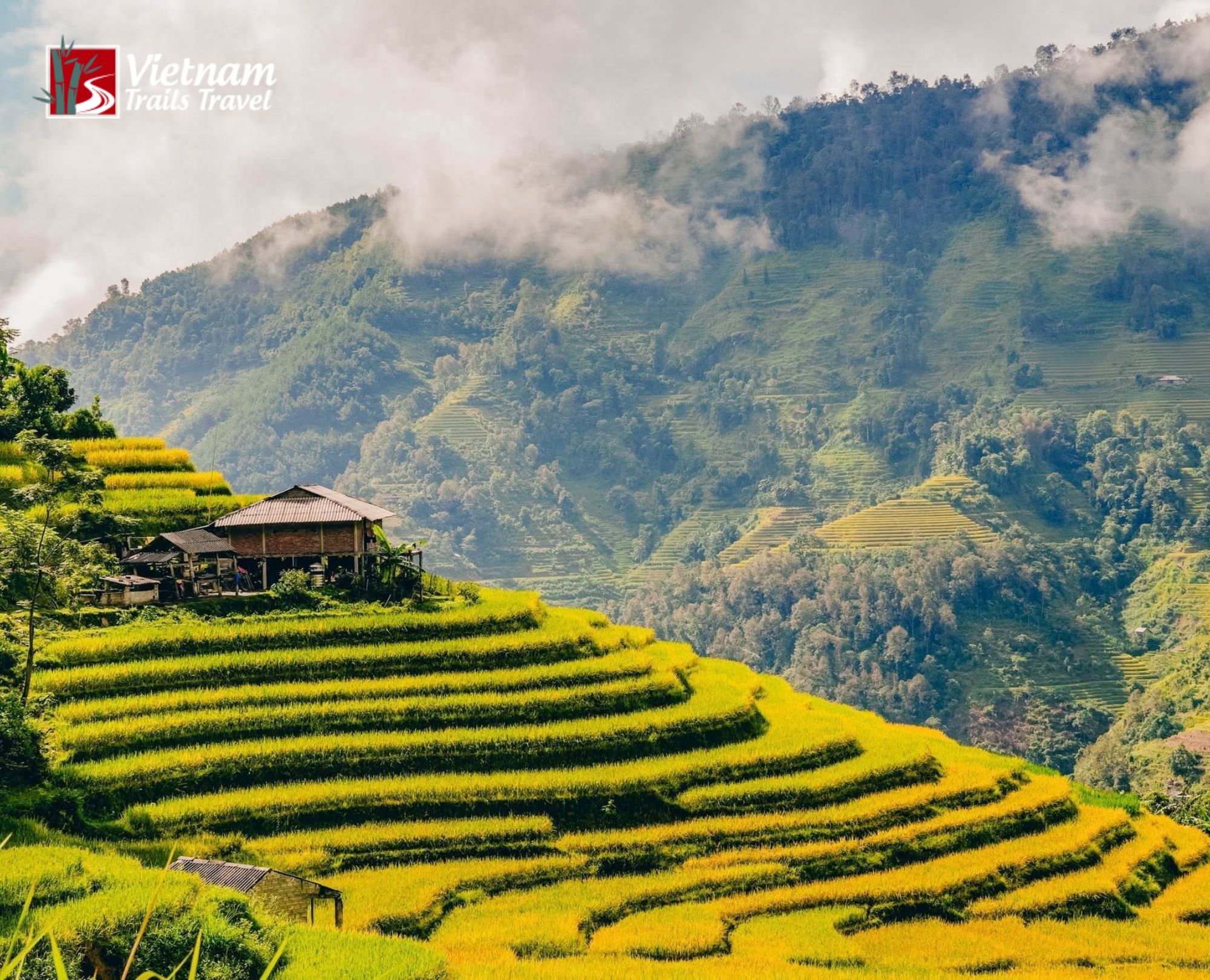
The color of ripe rice moves from pale green to yellow in early September and reaches full gold in the final week of the month. In peak weeks, golden terraces cover the slopes around Ban Phung and Nam Ty, and the fields glow in the low light of early morning and late afternoon.
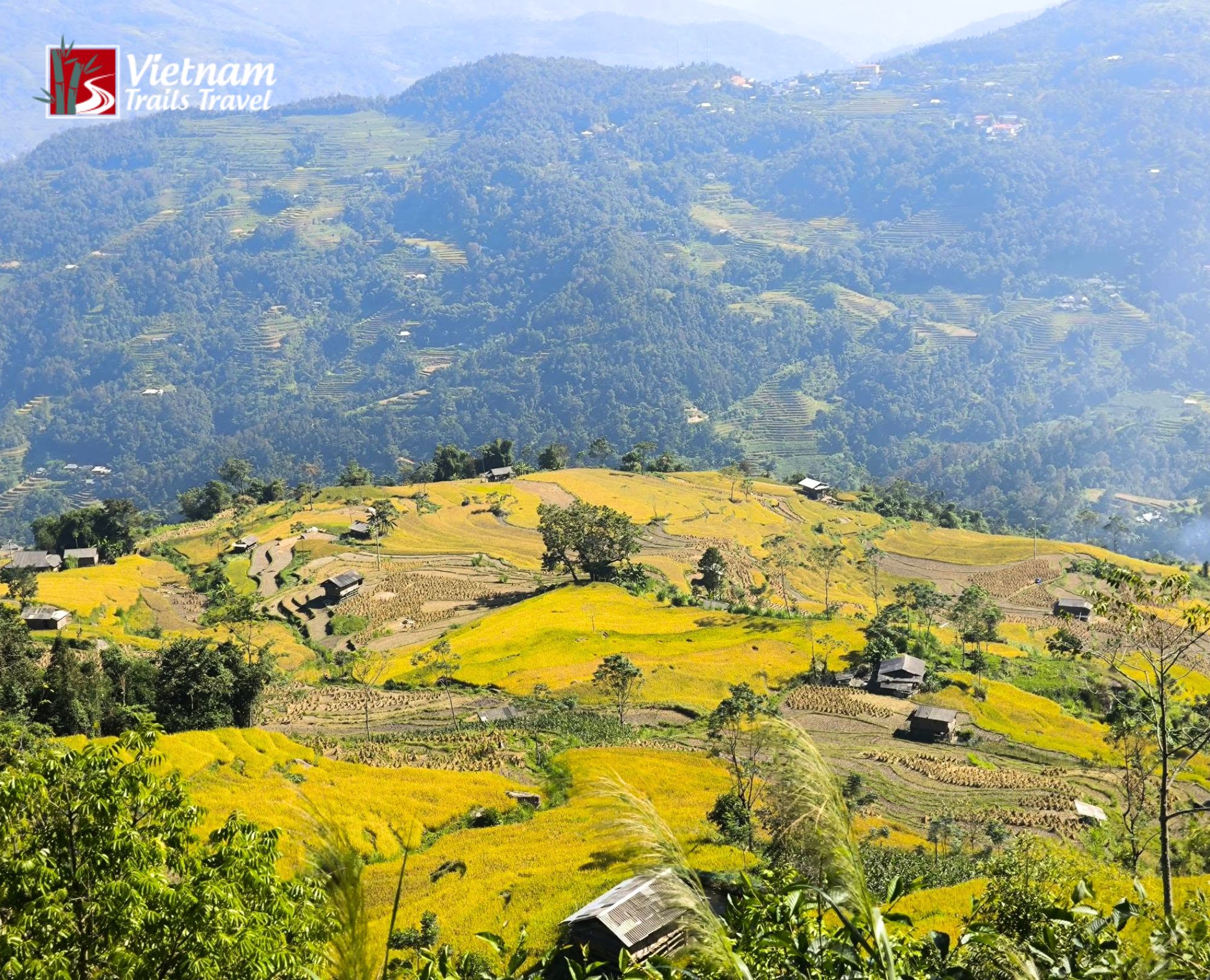
Farmers cut the crop by hand and carry bundles along narrow footpaths, so harvest work is part of the view. Harvest in Sapa often finishes by the start of September, which means travelers who miss that window can still see golden rice terraces here. Anyone comparing the best terraced rice fields in Vietnam should schedule this period.
4.4 After the harvest
After mid-October, straw dries in bundles and the hillsides turn brown. From November to April, the area is cold and often misty, and the fields are bare. Visits in this period focus on villages, the market and tea, since the beauty of Hoang Su Phi in these months lies in its culture instead of its color.
Read more: Ha Giang Loop Adventure: A Complete Travel Guide 2026
5. The six heritage communes and the best viewpoints
Each commune in the heritage zone offers a different angle on the landscape. Distances between them are long enough that most visitors choose two bases instead of trying to see all six in one day. Regional tourism listings give approximate terrace areas for three of the communes.
| Commune | Approximate terrace area | Position |
|---|---|---|
| Ban Phung | 140 ha | About 30 km north of Vinh Quang, near the Chinese border |
| Nam Ty | 144 ha | Roughly halfway along the 58 km road from Bac Quang |
| Ho Thau | 138 ha | About 30 km southwest of Vinh Quang |
5.1 Ban Luoc
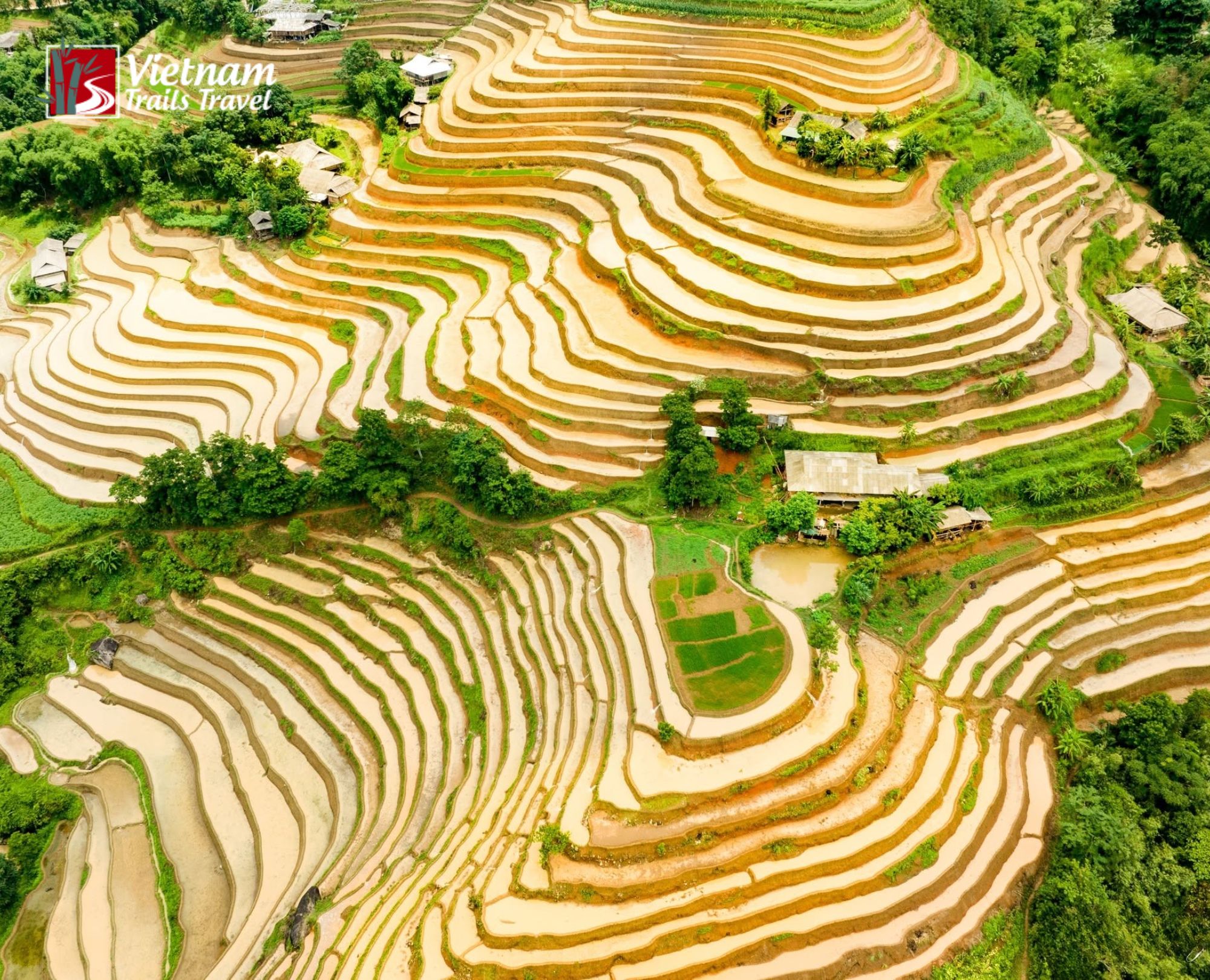
Ban Luoc is one of the most remote communes in the area and holds one of the largest and most continuous terrace systems. Local communities farm the slopes, and several homestays let guests wake up above the fields. Terraces in Ban Luoc belong to the core heritage zone, and the steep slopes reward an early morning walk.
5.2 Ban Phung
Ban Phung sits near the Chinese border, about 30 km north of Vinh Quang. The slope is steep, and the terraced fields in Ban Phung are among the highest in the district.
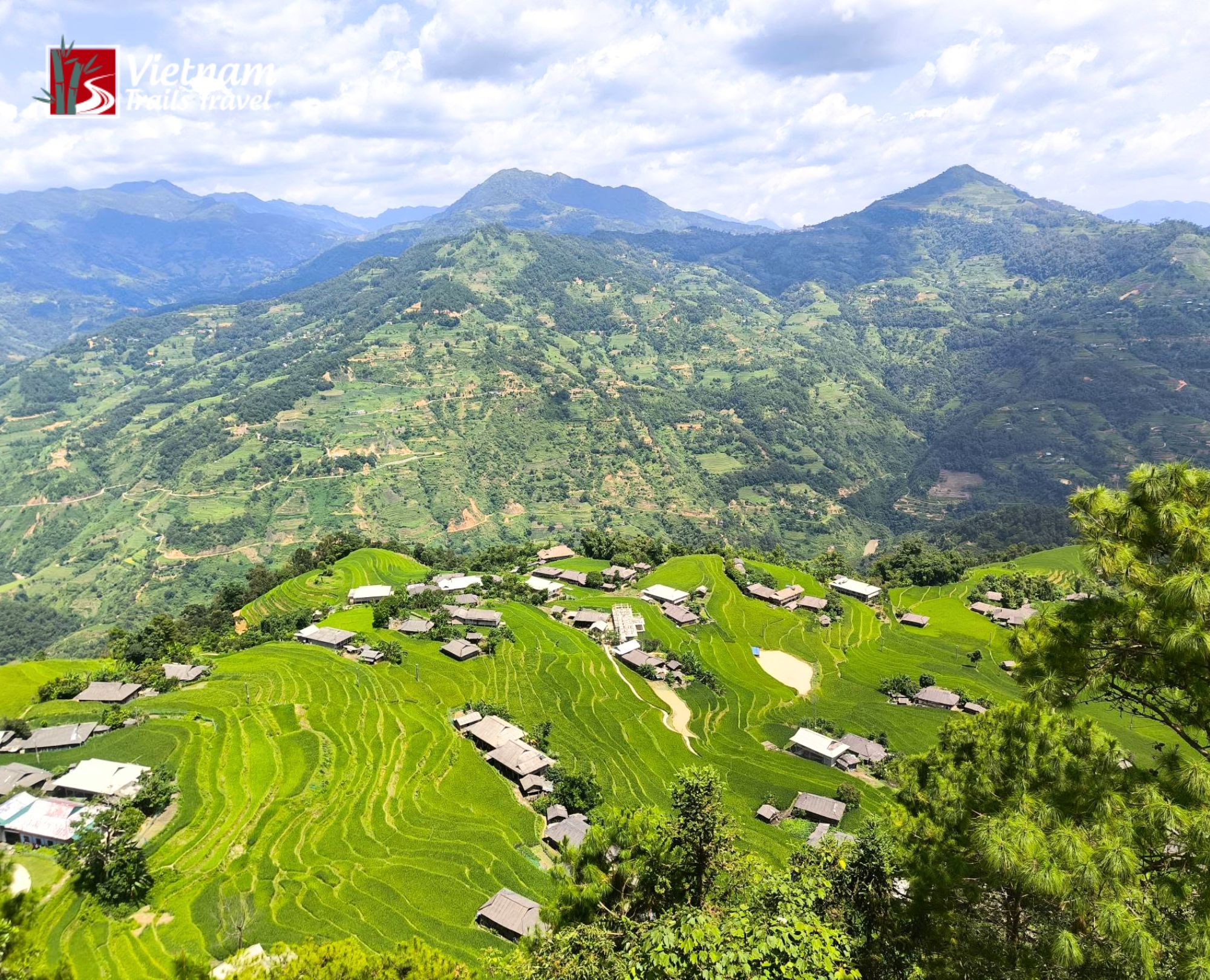
From the village road, the terraces stretch up the mountainside in tight curves, and a clear morning gives a long view across the valley. Many visitors consider the incredible rice terraces around Ban Phung worth the long drive.
5.3 Ho Thau
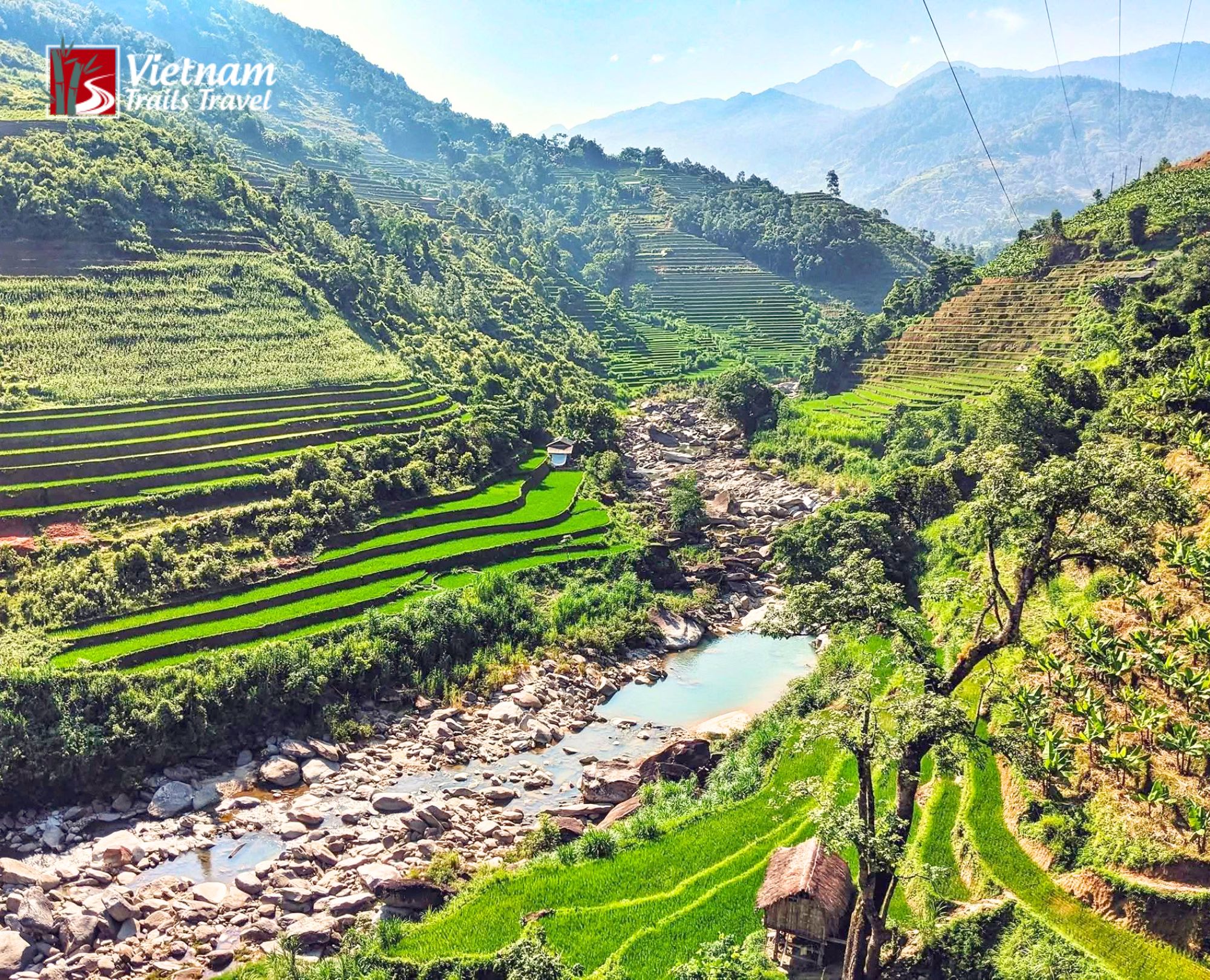
This commune lies about 30 km southwest of Vinh Quang. Red Dao families live here and plant forest above their fields to protect the slopes from landslides. Rice terraces in Ho Thau are smaller in scale than those near the road, yet the village lanes connect easily to short walks and homestays.
5.4 Thong Nguyen and Nam Ty
Thong Nguyen and Nam Ty follow one another along the road between Bac Quang and Vinh Quang. Both are easy stops for visitors with limited time, because viewpoints sit beside the road and need no long walk. Past cultural weeks have staged paragliding contests above the fields in both communes.
5.5 San Sa Ho
San Sa Ho completes the six-commune heritage zone. Guides and homestay hosts can confirm current road conditions before this commune is added to a route.
6. How to get to Hoang Su Phi
Hoang Su Phi has no airport and, at the time of writing, no direct public bus from Hanoi. International visitors who go to Hoang Su Phi usually fly into Noi Bai International Airport first, then continue overland by private car, by bus plus a local transfer or by motorbike.
6.1 From Hanoi by private car
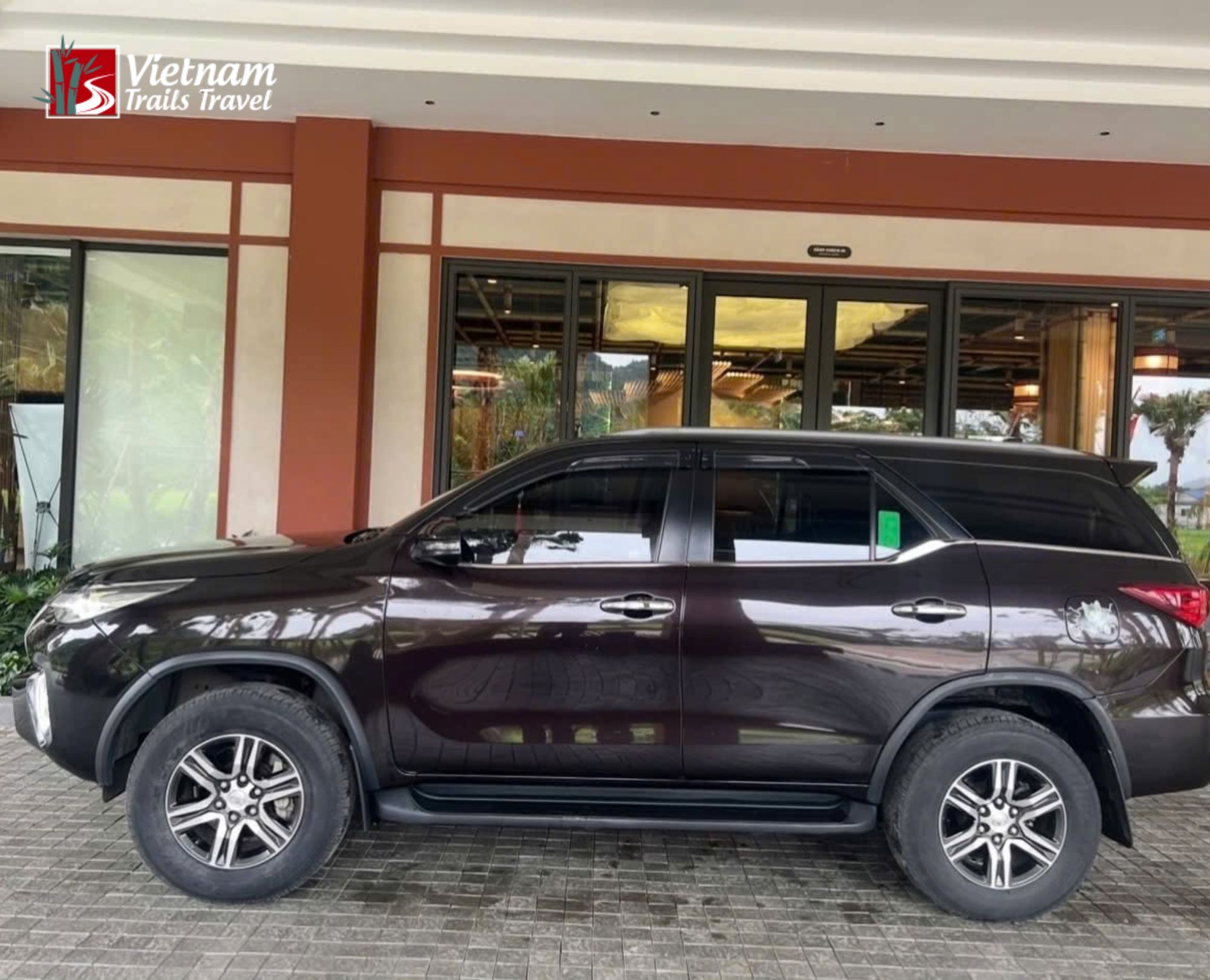
A private car with a driver is the simplest option. The route runs about 300 km along National Highway 2 to Tan Quang, then turns onto Road 177 for the final 58 km to Vinh Quang, counted from the Bac Quang T junction. Drive time is 6 to 8 hours depending on traffic and stops. Pickup from Noi Bai airport or a Hanoi hotel is easy to arrange in advance.
6.2 By bus and local transfer
Buses leave My Dinh bus station for Ha Giang and take about 6 to 8 hours, with both day and overnight sleeper services. Passengers can ask to get off at Tan Quang or the Bac Quang T junction, then continue by taxi or local minibus. Departures on the last leg are irregular, so the final transfer is best booked through a homestay or driver before arrival.
6.3 By motorbike
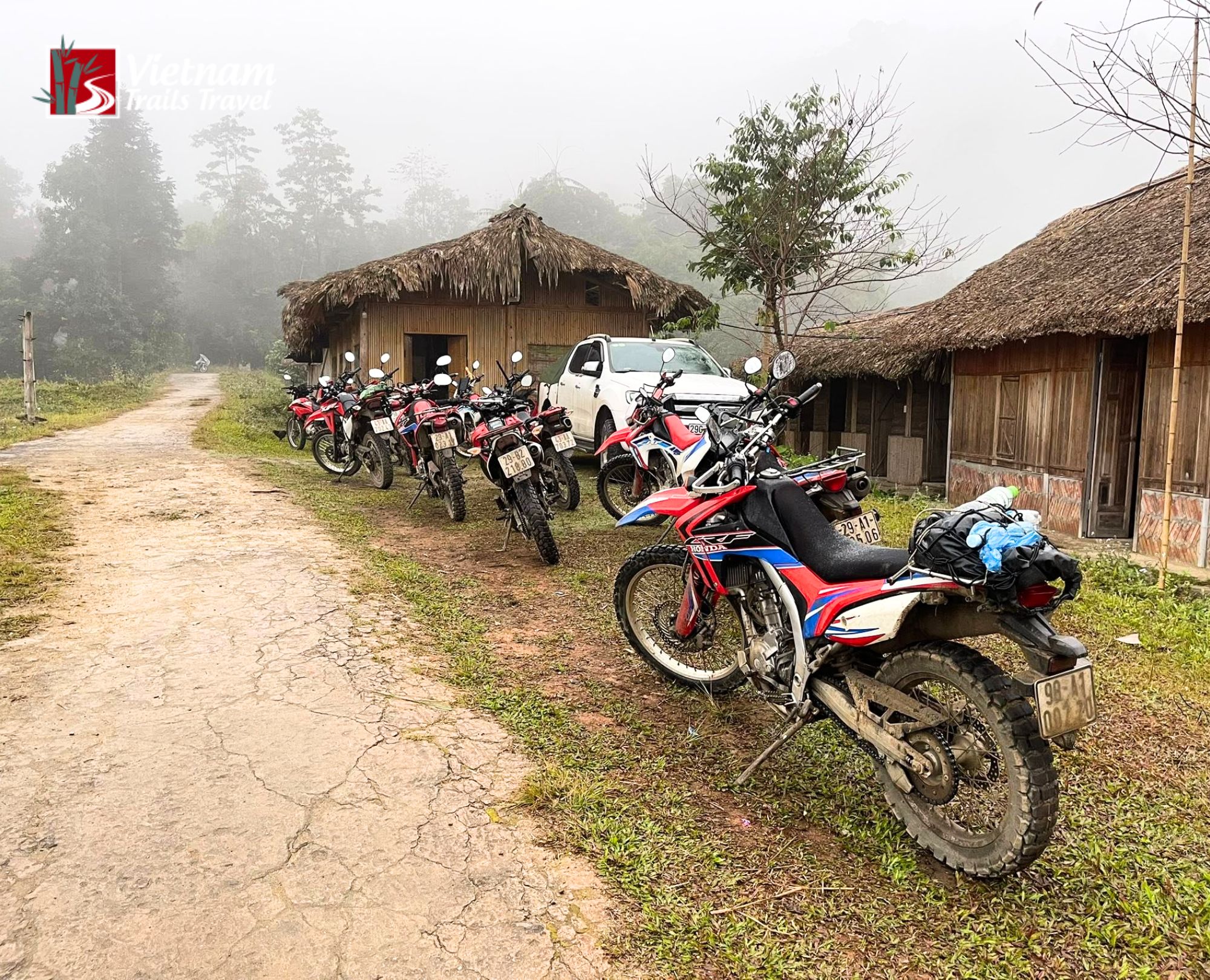
Experienced riders follow National Highway 2 through Tuyen Quang to Tan Quang, then Road 177, and need 8 to 10 hours from Hanoi, including breaks. Its last section includes a winding mountain pass with sharp bends and little traffic. Fog and rain are the main hazards, and daylight arrival is strongly advised.
6.4 Distances between the main stops
| Route | Approximate distance |
|---|---|
| Hanoi to Vinh Quang | 300 km |
| Ha Giang city to Vinh Quang | 100 km |
| Bac Quang T junction to Vinh Quang | 58 km |
| Vinh Quang to Bac Ha through Xin Man | About 85 km |
The road to Hoang Su Phi is winding, and the roads beyond Vinh Quang are narrower still. Services in the town itself are limited. Cash and fuel are best arranged before leaving for the outer communes.
7. Trekking in Hoang Su Phi
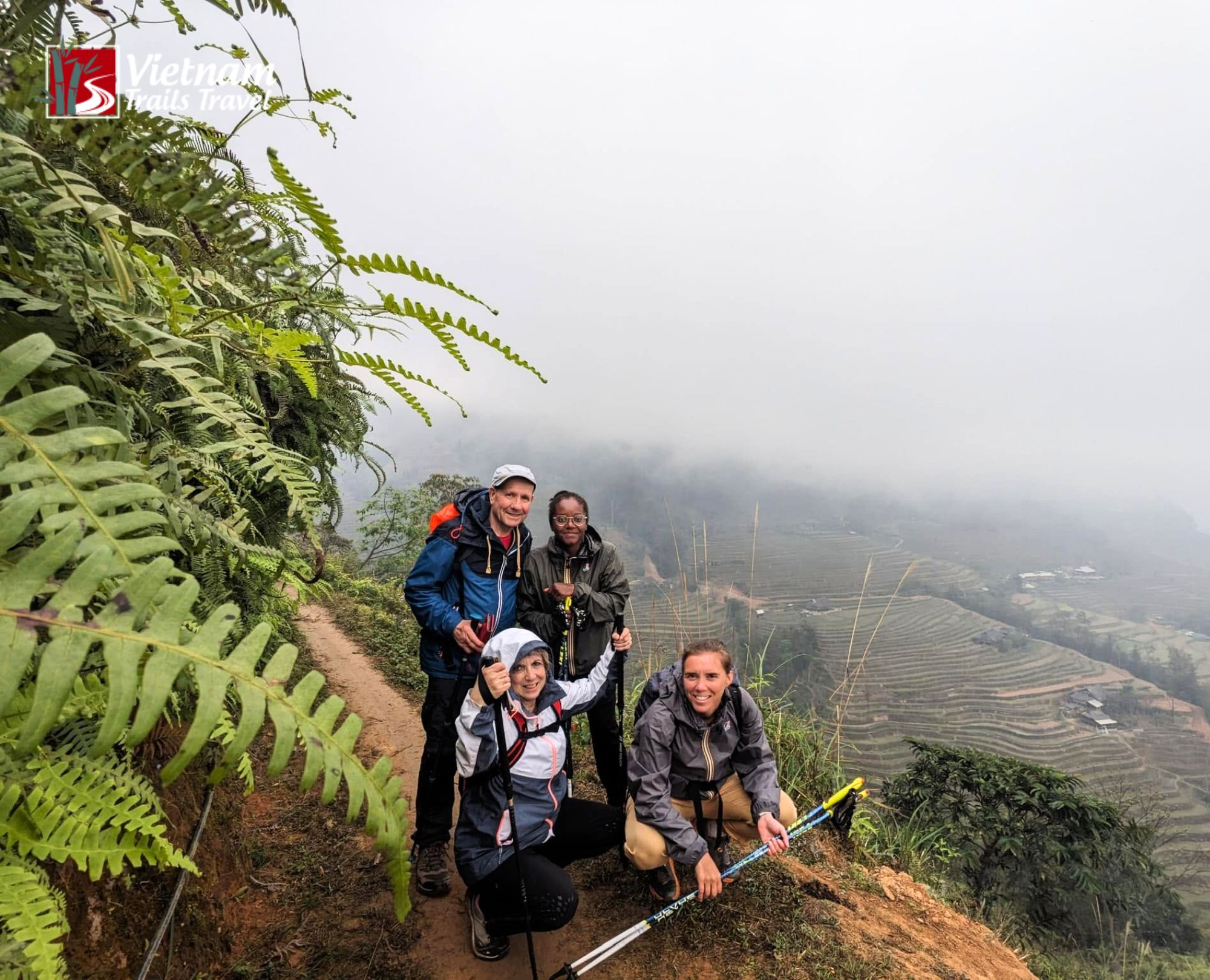
The best way to see how the terraces connect to villages, forest and water channels is on foot, and visitors who explore Hoang Su Phi this way meet far more of the local community than those who stay in the car.
Established trekking routes range from two-hour village loops to full-day hikes between communes, and local guides lead most of them. A typical day starts at 08:00 after breakfast at the homestay and ends at the next village before 16:00. Paths are a mix of dirt tracks and stone steps, and they turn slippery after rain.
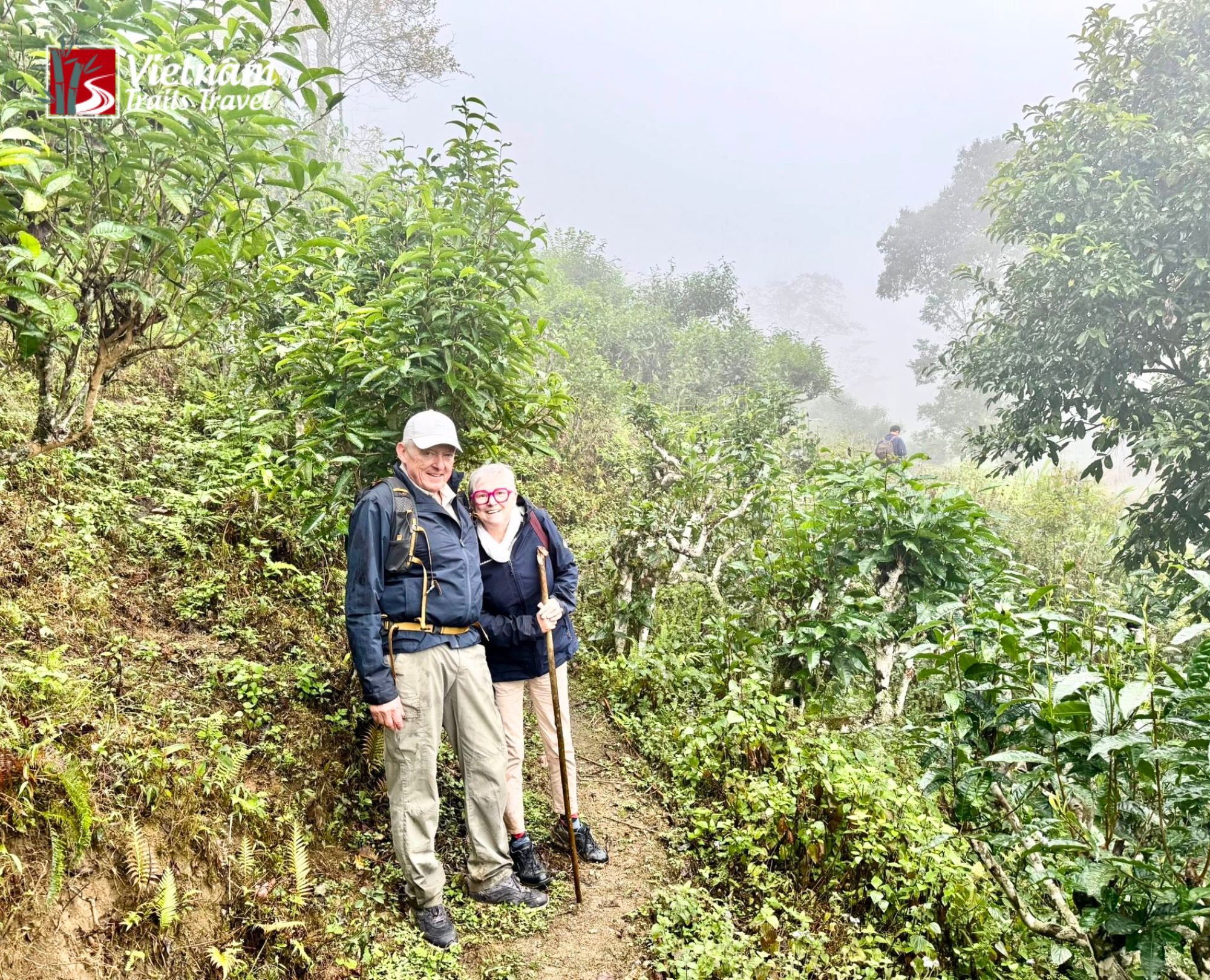
The mountain of Chieu Lau Thi is considered sacred by the La Chi people, and the summit climb suits experienced hikers only. Lower routes that link two or three villages and return by car suit most visitors. A Hoang Su Phi trekking tour with a local guide also gives access to private paths and introductions to host families, which are difficult to arrange alone.
8. Culture, markets and local food
8.1 Hoang Su Phi market on Sunday morning
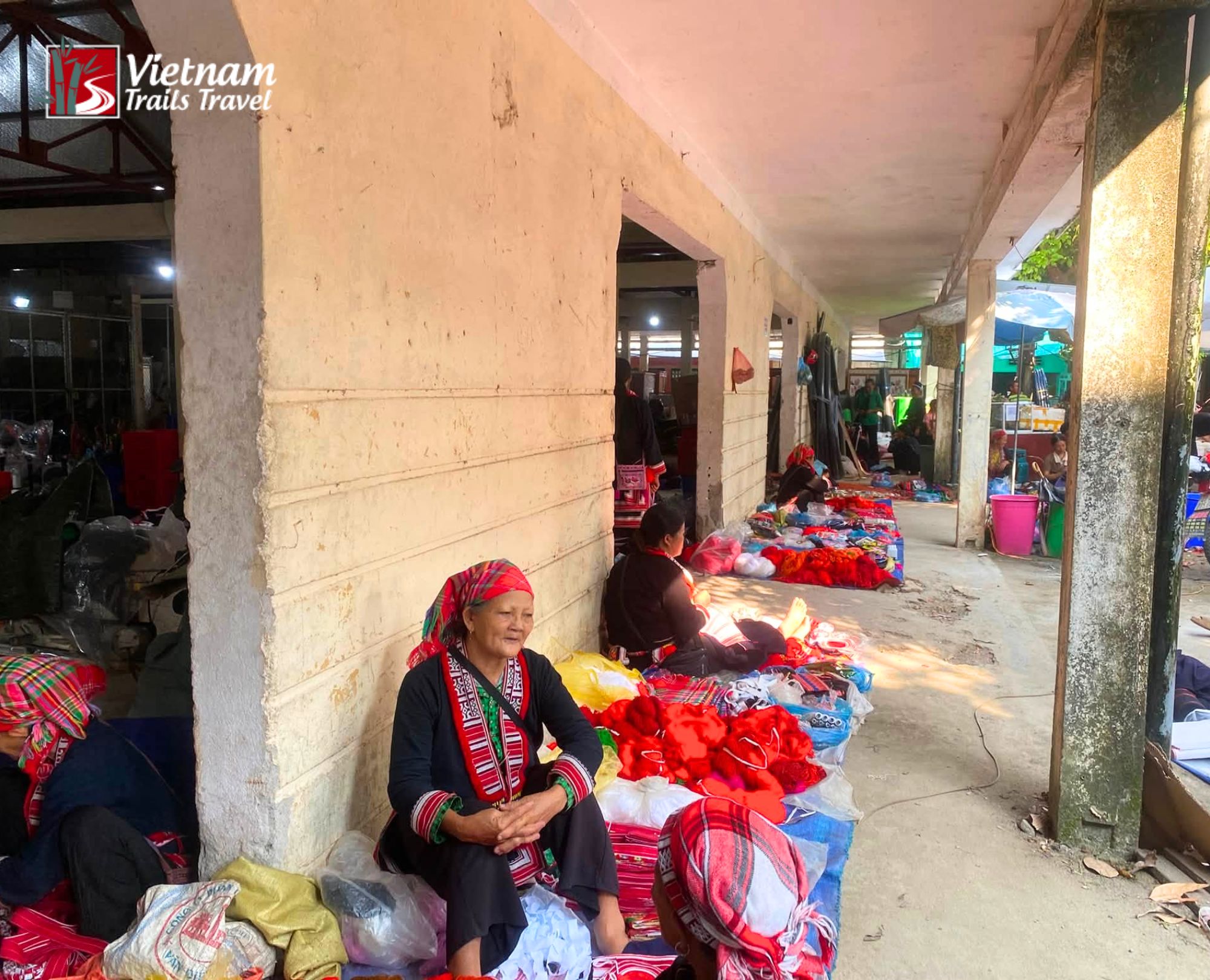
Vinh Quang hosts a weekly market every Sunday morning, starting around 06:00 and spreading along the main street. Nung, Tay, Mong and La Chi villagers sell vegetables, livestock, tools and cloth. An early arrival gives the fullest view of the stalls. Xin Man holds its own Sunday morning market, and travelers heading toward Lao Cai can combine the two.
8.2 Ethnic groups and homestay life
Hoang Su Phi is home to roughly a dozen ethnic groups, and published sources list twelve or thirteen. These ethnic minorities keep their own languages, house styles and festival calendars. A herbal bath prepared by a Dao host from forest plants is a cultural experience that suits tired legs after a long walk.
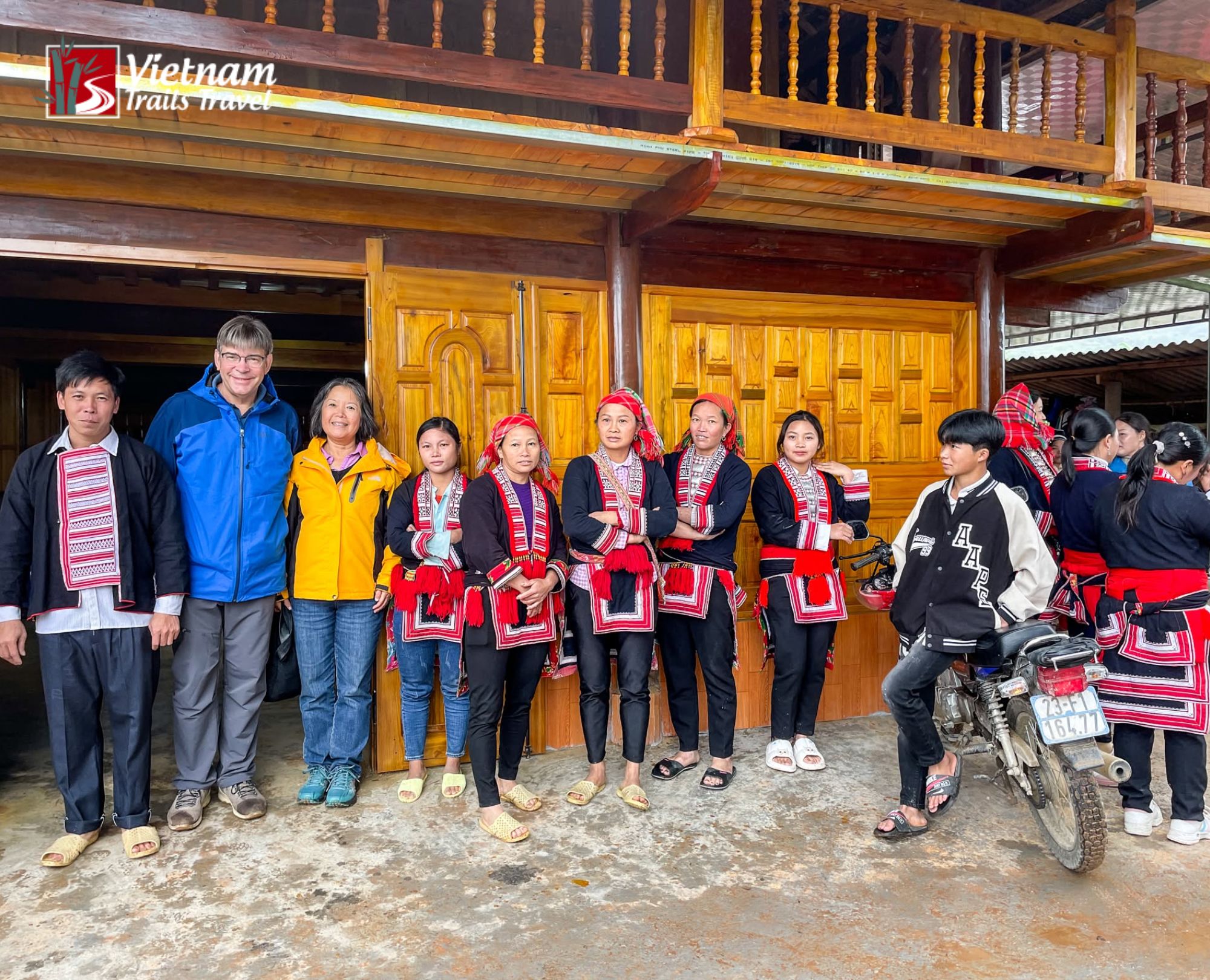
Old tea trees on the higher slopes produce a local specialty tea, and village women pick the buds by hand. Homestay dinners are cooked on wood stoves and typically include sticky rice, garden vegetables and grilled meat.
8.3 The annual culture and tourism week
Provincial authorities have organized a culture and tourism week around the terraces in past years, usually in September. Programs have included a Mong cultural festival, off-road races in Vinh Quang, paragliding contests over the fields and a recreated highland market.
The 2021 edition, the sixth of its kind, was scheduled from 4 to 30 September according to Vietnam News Agency. Dates and programs change each year, so confirmation with local tourism offices or a tour operator is worth doing before booking transport.
9. Where to stay
Vinh Quang has small hotels and guesthouses with basic facilities. Villages such as Ban Phung have family homestays, and lodge-style properties such as Panhou Village Eco Lodge serve visitors who want private rooms with a view.
Homestay rooms commonly cost 200,000 to 500,000 VND per night, roughly US$8 to US$20 at recent exchange rates. Rooms near the main viewpoints fill up during the last two weeks of September, so reservations made several weeks ahead are sensible.
10. Hoang Su Phi vs Sapa and Mu Cang Chai
Sapa and Mu Cang Chai both sit in Lao Cai province after the 2025 merger, and both draw far more visitors than Hoang Su Phi. Access to Sapa runs through Lao Cai city, which the 264 km Hanoi to Lao Cai expressway links to the capital, and the town has a wide range of hotels.
Its neighbor is known for large, continuous terraces and paragliding. Hoang Su Phi offers a quieter experience, but the trade-off is longer drives, fewer hotels and a stronger reliance on homestays.
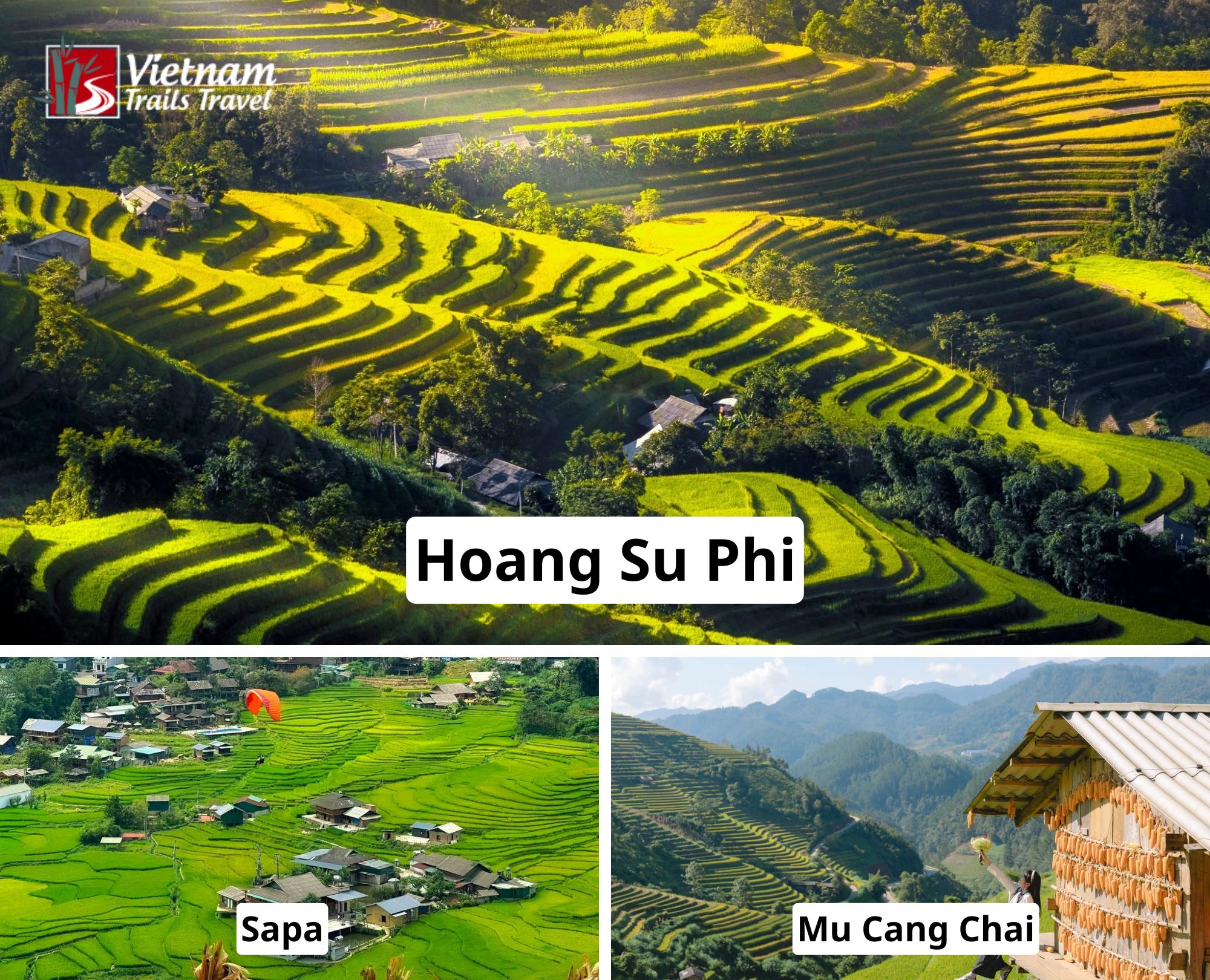
Timing also differs. Harvest in Sapa often wraps up by early September, while Hoang Su Phi peaks in late September and early October, so the two places can complement one another.
The classic Ha Giang Loop covers Quan Ba, Yen Minh, Dong Van and Meo Vac, and Hoang Su Phi lies well to the west of it. Some operators join the two in one itinerary, for example Hanoi, Hoang Su Phi, Quan Ba, Dong Van, Meo Vac, Ba Be Lake and back to Hanoi. Riders and drivers who add the loop should allow at least five to six days in total.
11. Sample itineraries from Hanoi
11.1 Three days, two nights
The first day is mostly road. A private car leaves Hanoi at 06:30, stops for lunch around 12:00 and reaches the first terraces along Road 177 by 15:00, which leaves time for a late afternoon viewpoint before check-in at 17:30.
On day two, breakfast at 07:00 is followed by a guided walk of three to four hours between villages. Lunch at the homestay at 12:30 leads into a slow afternoon drive to two or three viewpoints.
Day three starts with the Vinh Quang market if it falls on a Sunday. Departure is set for 09:00, with arrival in Hanoi between 17:00 and 18:00.
11.2 Four days with an extended route
Days one and two follow the three-day plan above. On day three, an 85 km drive leads from Vinh Quang through Xin Man to Bac Ha, timed so that arrival coincides with the Sunday market. Day four is a full day of road travel back to Hanoi along the Hanoi to Lao Cai expressway.
12. Practical tips before you go
Weather in the mountains changes quickly, so anyone traveling to Hoang Su Phi should carry a light rain jacket, shoes with good grip and a warm layer in every season.
Mornings in October are cool, and village homestays rarely have heating. Mobile signal is patchy outside Vinh Quang, and cash is needed for homestays, meals and the market. Passports are required at check-in because accommodation providers register foreign guests.
Respect for farmers matters during harvest. Terrace walls are fragile, and stepping on them can damage a crop that feeds a family for the year. Photographers should ask before taking close portraits at the market or in villages. Guides can suggest viewpoints that avoid trampling the paddies.
13. Frequently asked questions
13.1 When is the best time to visit the terraces?
Late September to early October is the best period, when the single annual crop turns golden. Exact dates change with rainfall, so a flexible schedule helps.
13.2 How far are the terraces from Hanoi?
About 300 km separates the terraces from Hanoi, and a private car needs 6 to 8 hours. No direct public bus runs from Hanoi, so most visitors book a car or a tour.
13.3 Can I visit without a tour?
Independent travel is possible by hired car, motorbike or a bus plus local transfer. Homestay bookings, road conditions and limited facilities make planning important.
13.4 How many days are enough?
Three days with two nights gives time for the road, one full day of viewpoints and walks, and a Sunday market visit. Four to five days suit travelers who want to add the Xin Man Sunday market or a loop extension.
14. Book a trip to the terraces
Vietnam Trails Travels can arrange private transfers from Hanoi, homestay bookings and guided walks timed to the harvest window. A Hoang Su Phi tour from Hanoi can run for three to five days and can be combined with a Sunday market stop or the Ha Giang Loop. Travel dates, group size and preferred pace can be sent through vietnamtrailstravels.com, and the team will build a route that fits.
