
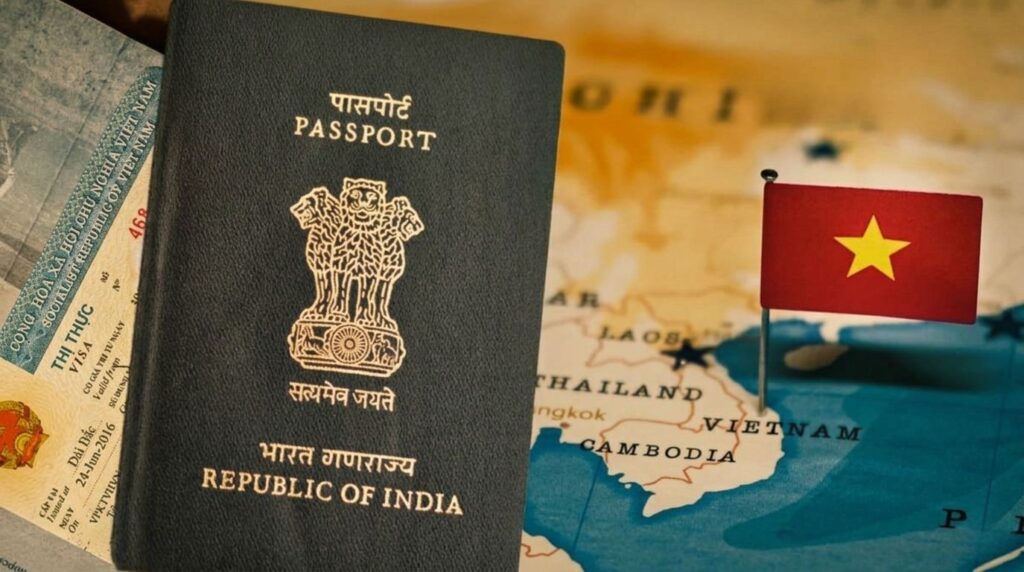
Planning a trip to Vietnam from India? Whether you’re dreaming of cruising through Ha Long Bay, exploring ancient Hoi An, or closing a business deal in Ho Chi Minh City, understanding the visa process is your first step.
This guide breaks down everything Indian passport holders need to know about obtaining a Vietnam visa in 2026 from e-visa applications to avoiding common rejection errors.
Obtaining a valid Vietnam visa for Indian citizens is essential, and the visa for Indians involves specific steps and documentation. Indian travelers must follow the outlined process, which includes preparing the necessary documents and choosing between options like the convenient e-visa to ensure a smooth application experience.
1. Do Indian citizens need a visa for Vietnam?
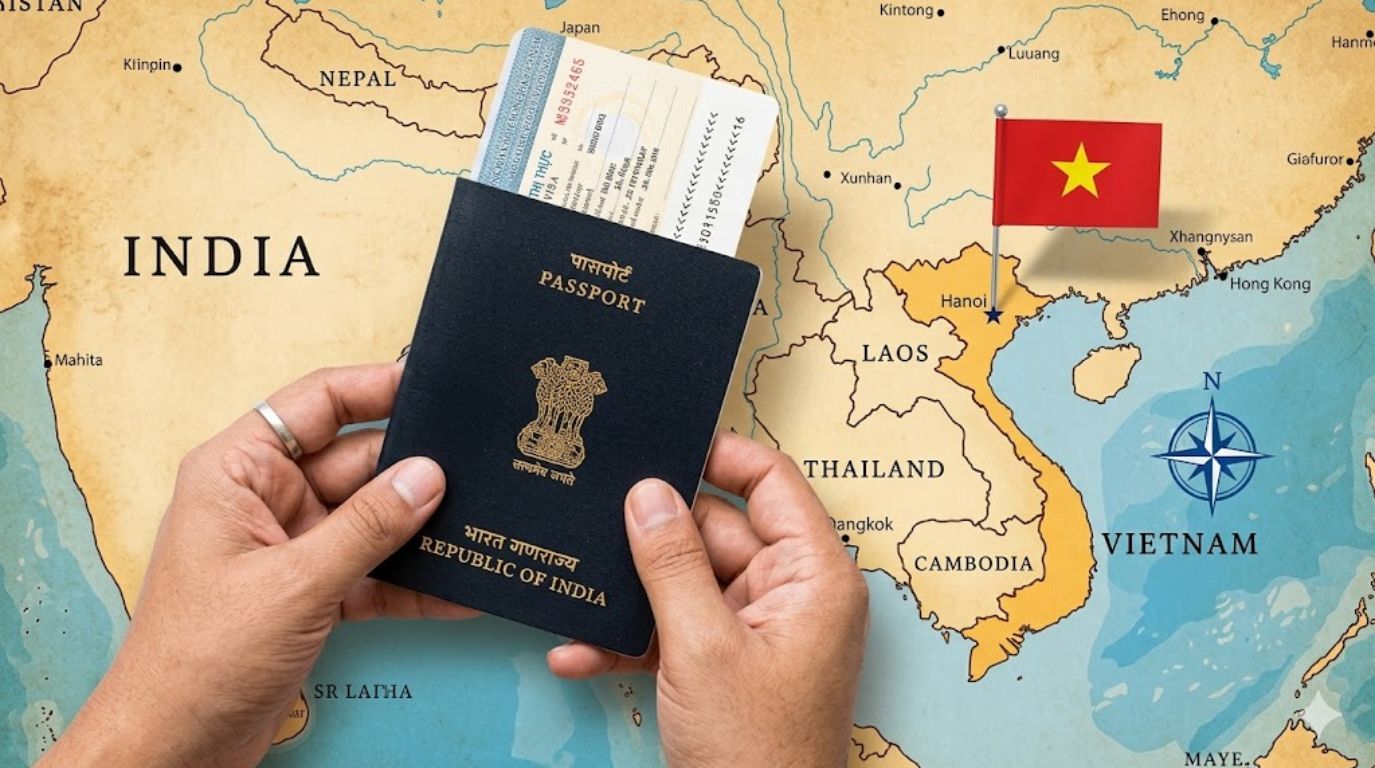
The short answer is yes. Indian citizens generally need a visa to enter Vietnam, regardless of the purpose of their visit, including tourism and business. Vietnam does not offer a general visa exemption for Indian passport holders, making it essential for them to obtain a visa for entry, except for the specific Phu Quoc exemption discussed below.
Unlike travelers from certain European and ASEAN countries who enjoy visa-free access, even short 3-5 day trips to Hanoi, Da Nang, or Ho Chi Minh City require prior visa approval for Indians.
Here are the key entry rules for Indian travelers in 2026:
- A valid passport with at least 6 months remaining validity from your intended entry date
- Minimum 2 blank pages for immigration stamps
- Apply at least 10-15 days before departure to avoid last-minute issues. The online application process for a Vietnam visa is secure, user-friendly, and can be completed through official government portals.
- Without a pre-approved visa (e-visa or approval letter), airlines flying from Delhi, Mumbai, Bengaluru, Chennai, or other Indian hubs will typically deny boarding
- Vietnam does not currently offer a visa exemption for Indian passport holders for general entry
1.1. The Phu Quoc Island exemption
Indian tourists can enjoy a 30-day visa exemption for Phu Quoc if they meet specific conditions. This exemption applies when entering from another country and not traveling to mainland Vietnam during the stay.
To qualify for the Phu Quoc visa exemption, travelers must enter Vietnam from a third country and leave within the allowed time frame; otherwise, a visa is required. The key conditions include:
- Arriving directly at Phu Quoc International Airport (PQC) via international flight
- Transiting airside through another Vietnamese airport without clearing mainland immigration
- Having proof of onward travel outside Vietnam within 30 days
- Not entering any mainland city before or after Phu Quoc
Example itineraries:
- Delhi → Bangkok → Phu Quoc (direct): Qualifies for exemption if you stay only on Phu Quoc
- Delhi → Ho Chi Minh City → Phu Quoc: Does NOT qualify—Ho Chi Minh City entry requires a visa
Many Indian travelers mistakenly assume “Vietnam is visa-free if I go to Phu Quoc first.” This confusion leads to frequent denials at mainland immigration counter locations.
Vietnam Trails Travel can help design Phu Quoc-only itineraries that legally use the exemption, but we generally recommend obtaining an e-visa for maximum flexibility across Vietnam.
2. Types of Vietnam visas available for Indian passports
In 2026, Indians have three main visa options to visit Vietnam:
- Vietnam E-Visa: Most common and recommended option
- Visa on Arrival (VOA): Requires pre-approval letter from a licensed agency
- Embassy/Consulate Sticker Visa: Traditional visa stamped in passport
For purpose-based categories, tourist visa (DL) and business visa (DN) are most relevant for short-term Indian travelers. The embassy/sticker visa is suitable for those needing stays longer than 90 days or traveling for official diplomatic purposes.
Since the August 15, 2023 policy change under Circular 24/2023/TT-BCA, the Vietnam e-visa can be issued for up to 90 days with single or multiple entry options—a significant upgrade from the previous 30-day limit.
The e-visa system is managed by the Vietnam Immigration Department under the Ministry of Public Security, ensuring official oversight and public security throughout the visa application process.
2.1. Vietnam E-visa
The most common visa option for Indian travelers in 2026 is the 90-day e-visa, allowing single or multiple entries. The Vietnam electronic visa portal offers a fully online process with transparent fees and acceptance at 40+ entry points including airports, land borders, and seaports.
Key features of the Vietnam e-visa:
- Validity up to 90 days
- Available for single or multiple entry
- Usable for tourism and short business visits
- Issued as a printed e visa PDF to carry
For added convenience, travelers can also use the Visa On Arrival online application method, which allows applicants to apply digitally and receive their approval letters before arriving in Vietnam.
To apply for a Vietnam e-visa, travelers must visit the official e-visa portal (evisa.xuatnhapcanh.gov.vn or thithucdientu.gov.vn) and upload a clear scan of their passport bio page along with a passport-style photo. Be cautious of look-alike scam sites.
Application requirements:
- Scanned passport data page (clear, no glare)
- Recent passport photo with white background (4×6 cm)
- Planned entry/exit dates and entry checkpoint
- First accommodation details in Vietnam
The e visa fee ranges from approximately $25 USD for single entry to $50 USD for multiple entry, paid online via international card. These fees are non-refundable even if the application is rejected. Processing for e-visas generally takes 3 to 5 working days after submission of the application.
Vietnam Trails Travel provides a guided e-visa application service for Indian clients, checking all required documents and dates before submission to reduce rejection risk.
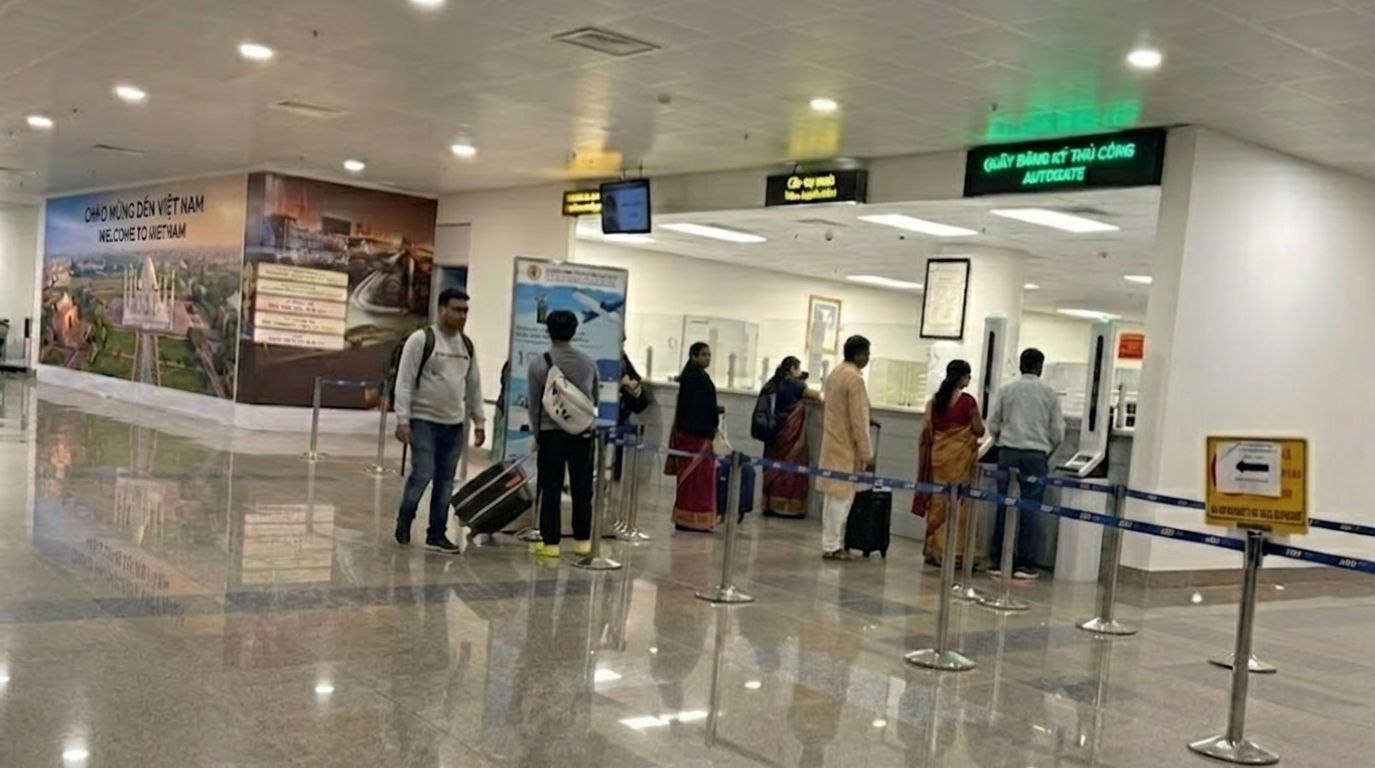
Read more: The Complete Vietnam E-Visa Guide 2026: Step-by-Step
2.2. Is Visa on Arrival for Indians still valid?
Vietnam visa on arrival for Indians requires a pre-approved visa letter arranged before travel, which must be presented upon arrival at the airport. This is not a walk-up service—you cannot simply arrive online and expect a visa stamp without prior approval.
VOA availability and process:
- Available only at select international airports: Noi Bai (Hanoi), Tan Son Nhat (Ho Chi Minh City), Da Nang, and Cam Ranh (Nha Trang)
- Visa on arrival is generally not suitable for travelers entering Vietnam via land borders or seaports
- Requires a two-step process
Step 1: Apply through a licensed guaranteeing agencies inside Vietnam to receive your visa approval letter (3-5 business days, $25-50 service fee)
Step 2: Upon arrival in Vietnam, travelers using the visa on arrival method must provide passport photos and confirmation of their flight details to complete the process at the immigration counter, plus pay a cash stamping fee ($25-50 USD)
Compared to the e-visa, VOA involves more airport waiting time (30-90 minutes versus dedicated e visa holders lanes) and additional costs. Some airlines and check-in agents in India are stricter and may ask to see either an approved e-visa or an official approval letter before allowing you to board.
3. Essential Vietnam visa for Indian citizens
Most rejections and airport problems for Indian travelers stem from simple document issues, not complex legal problems. Here’s what you need:
Passport Requirements:
- Indian passport holders must ensure their passport is valid for at least six months beyond their arrival date in Vietnam and have at least two blank pages
- No serious damage or missing pages
- Renew your passport in India if expiry is near
Application Information:
- Full legal name exactly as shown on passport data page
- Date and place of birth
- Passport number and expiry date
- Planned entry and exit date
- First intended accommodation in Vietnam
Photo Requirements:
- Taken within the last 6 months
- No heavy filters, neutral expression
- Clear white background
- Similar to photos used for Schengen or US visa applications
Business and Long-Stay Visas: When applying for a visa through a Vietnamese embassy or consulate, applicants typically need to submit completed application forms, proof of accommodation, travel plans, and sometimes evidence of sufficient funds.
For a business visa application at a Vietnamese embassy, applicants must specify the nature of the business to be conducted and provide details about the companies they will be contacting in Vietnam.
Important for Families: Each Indian child, including infants, needs their own valid passport and separate visa application. Children listed on parents’ passports are no longer acceptable under ICAO standards.
Read more: Vietnam Business Visa Requirements 2026
4. How to avoid the “Name Matching” rejection error?
One of the most common causes of e-visa rejection or airport delay for the Indian citizens is incorrect full name entry that doesn’t match the machine-readable zone (MRZ) on your passport.
Many Indian passports contain multiple given names and sometimes no clear family name, creating confusion when filling the “Family/Surname” vs “Given Name” fields on the Vietnam e-visa application form.
The solution: Copy your full name exactly as it appears in the MRZ (bottom two lines of your passport data page). Don’t add initials, titles, or rearrange the order.
Examples with typical Indian naming patterns:
- Passport MRZ shows: SINGH<<SACHIN<KUMAR
- Family/Surname: SINGH
- Given Name: SACHIN KUMAR
- Passport MRZ shows: RANI<<PRIYA
- Family/Surname: RANI
- Given Name: PRIYA
- Passport MRZ shows: KHAN<<MOHAMMED<IBRAHIM
- Family/Surname: KHAN
- Given Name: MOHAMMED IBRAHIM
All letters must match exactly. Even one spelling difference between your passport and new visa can cause boarding denials by airlines or issues with Vietnam immigration officers.
Vietnam Trails Travel checks name entries for Indian clients before submission as part of our premium visa support, significantly reducing the chance of name-related refusals.
5. Processing time and Visa fees for Indians
The processing time for a Vietnam e-visa typically takes between 5 to 30 working days, and it is recommended to apply at least a week before travel to avoid delays. During peak holiday seasons like Diwali, Christmas-New Year, or Indian summer breaks, processing time can extend to 10+ working days.
E-Visa Costs:
- Single entry (up to 90 days): ~$25 USD
- Multiple entry (up to 90 days): ~$50 USD
- Paid online, non-refundable even if rejected
Visa on Arrival Costs:
- Approval letter via agency: $25-50 USD
- Cash stamping fee at airport: $25-50 USD
- Total: approximately $50-100 USD
Embassy/Consulate Visa Costs:
- The embassy visa application process generally takes longer than applying for an e-visa, as it involves more paperwork and processing time
- Fees vary by visa type (tourist 30-90 days ~$50-100, business 1-12 months ~$100+)
- Requires in-person visit or courier to Vietnam Embassy in New Delhi or Consulate General in Mumbai
Always check the latest fee schedule before applying for a Vietnam visa, as categories can change with new government circulars. Keep a physical copy of your registration code and approved visa for reference.
Read more: Vietnam Visa Overstay Penalty Issue 2026: Fines, Blacklist, Solutions
6. Fast & guaranteed: Premium Vietnam Visa service for Indian citizens
Vietnam Trails Travel is a Vietnam-based tour operator specializing in arranging visas, airport services, and tailored travel itineraries for Indian travelers visiting Vietnam in 2026.
Our premium visa service includes:
- Pre-checking scanned passports and passport photo quality
- Submitting e-visa or approval letter applications on your behalf
- Daily status tracking with clear updates
- Handling corrections if any issues arise
Benefits for busy Indian professionals and families:
- Minimized rejection risk through expert document review
- Support handling name mismatches or date errors
- Clear communication about exactly which entry points and dates are approved
For urgent trips—whether last-minute business meetings in Ho Chi Minh or medical visits to major hospitals in Hanoi—we can arrange rush processing options where legally available.
Optional arrival services:
- Airport fast-track immigration in Hanoi, Ho Chi Minh City, and Da Nang
- Private transfers to hotels booked through Vietnam Trails Travel
Contact Vietnam Trails Travel directly via our website, email, or WhatsApp for personalized advice on the best visa option for your exact Indian departure city and travel dates.
Read more: Vietnam Fast Track Service & VIP Airport Meet & Greet
7. Frequently asked questions (FAQs)
7.1. Does holding a US, UK, Schengen, Canadian, or Australian visa give me a Vietnam visa exemption?
No. Indian passport holders with visas or PR from other countries still need to apply for a Vietnam visa or obtain vietnam visa through the standard process. There is no exemption based on third-country visas.
7.2. How early should I apply for a Vietnam e-visa from India?
Apply at least 10-15 days before your outbound flight from Delhi, Mumbai, Hyderabad, Kolkata, or other cities. During peak seasons, allow 2+ weeks to exit Vietnam and re-enter if needed.
7.3. Do I need a visa for airport layovers in Vietnam?
For same-ticket, airside transit without baggage reclaim, a visa may not be required. However, if you must clear immigration to collect luggage or change terminals, you need a visa. Always confirm with your airline before travel.
7.4. Can Vietnam tourist visa be extended inside Vietnam?
Extensions are possible through local agencies or sponsors, subject to Vietnam Immigration Department approval. Policies are fluid, so plan your initial visa duration carefully or contact us for guidance.
7.5. What if my e-visa application is rejected?
Check for errors in name spelling, photo quality, or passport validity. Correct the issues and re-apply, or contact a trusted Vietnam-based agency like Vietnam Trails Travel for detailed review before resubmission.
7.6. Where can I pay the stamping fee for VOA?
You pay the stamping fee in cash (usually USD) directly at the Vietnam immigration arrival counter at the airport.
8. Conclusion
Indian citizens almost always need a visa for Vietnam in 2026, with the 90-day e-visa being the simplest and most reliable option for most travelers. Apply early through the official Vietnam electronic visa portal, ensure your passport has 6-month validity with two blank pages, and match your name exactly to your passport’s MRZ format. Always print at least one hard copy of your approved e-visa PDF before leaving India.
Whether you choose e-visa, VOA, or an embassy visa depends on your itinerary—but Vietnam Trails Travel can analyze your specific plan and recommend the safest choice for Indian travelers.
Contact us for end-to-end trip planning across Vietnam, from visa support to customized tours in Hanoi, Ha Long Bay, Hoi An, Da Nang, Ho Chi Minh City, Mekong Delta, and Phu Quoc.
