
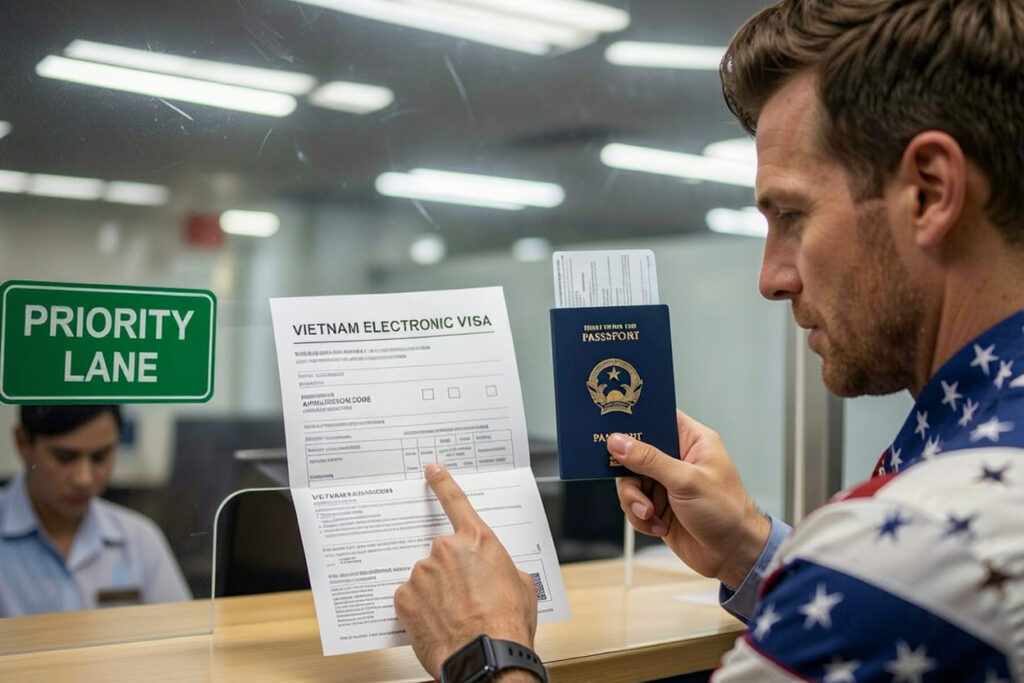
Planning a trip to Vietnam? The Vietnam e visa system has transformed how travelers enter this stunning Southeast Asian destination. This guide walks you through every step of the application process, from gathering documents to downloading your approved visa, so you can focus on planning your Ha Long Bay cruise instead of worrying about paperwork.
What is the Vietnam E-Visa (Electronic Visa)?
The Vietnam e-visa is an official electronic visa issued by the Vietnam Immigration Department, allowing foreign nationals to stay up to 90 days per entry. As of August 15, 2023, Vietnam’s e-visa is available to citizens of all countries and territories around the world, making it one of the most accessible visa systems in Southeast Asia.
This Vietnam visa permits entry for specific purposes:
- Tourism and sightseeing
- Business meetings and conferences
- Family visits
- Short-term study programs
To qualify for both e-visa and visa free entry, travelers must have a passport valid for at least six months beyond their intended date of entry.
The e-visa does not authorize paid employment or long-term work—those activities require separate work permits.
From 2026, the Vietnam e-Visa is valid for a maximum stay of 90 days and can be issued for single or multiple entries. The entire application process happens online through the official portal, requiring no embassy visits or passport mailing.
In addition to the e-visa, Vietnam also offers visa free entry for travelers from certain countries, typically for stays up to 45 days. This visa-free entry is distinct from the e-visa system and is based on nationality and diplomatic agreements. Vietnam’s visa exemption policy allows travelers from countries such as Russia, Japan, South Korea, and several European nations to enter Vietnam without a visa for short stays.
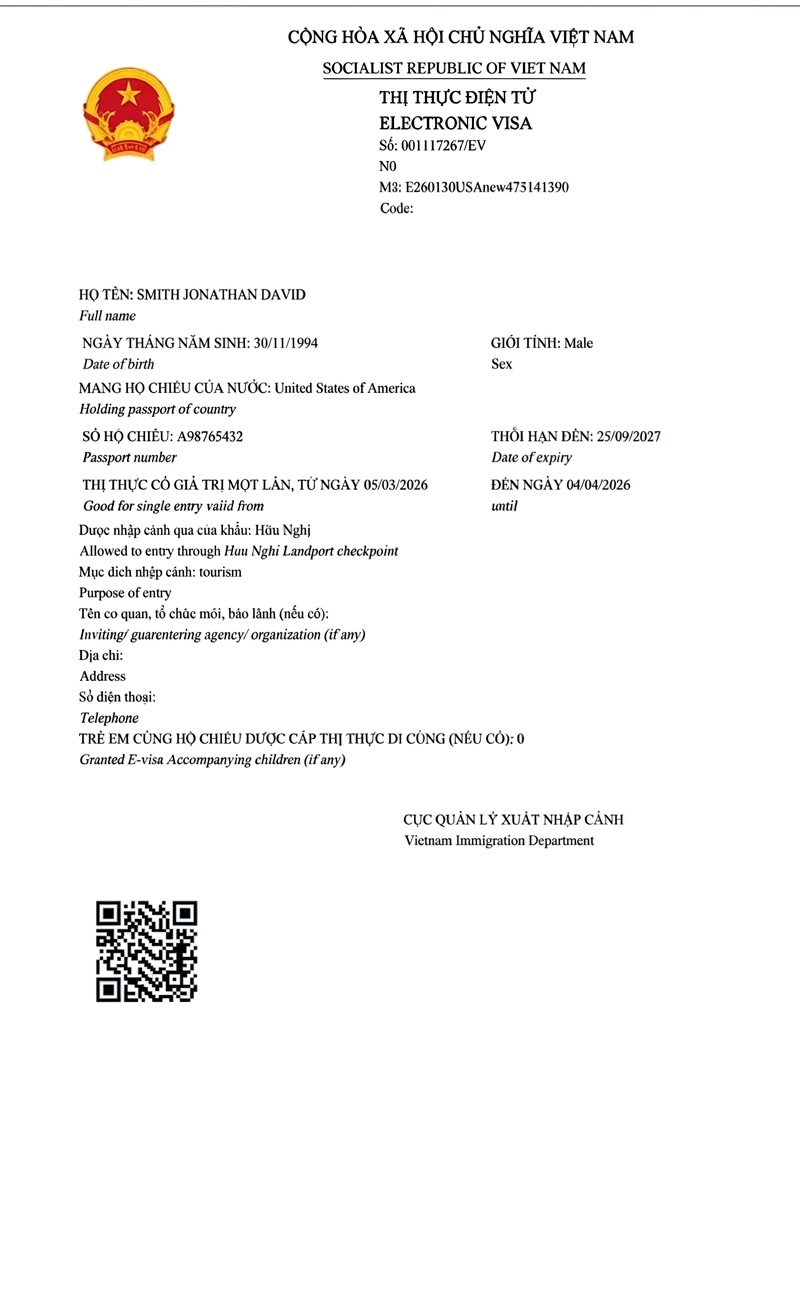
As of December 2, 2025, Vietnam has expanded the number of border gates that allow entry and exit via e-visa from 42 to 83, providing more options for travelers. To enter Vietnam, travelers can access 17 international airports, 16+ land borders, and several seaports. E-visas must be used at specific authorized international airports or land border checkpoints in Vietnam.
Note: The list of eligible entry gates may change. Always verify on the official portal before applying.
At Vietnam Trails Travel, we help travelers navigate these options, ensuring you select the correct visa type and avoid common application mistakes.
>>Read more: Vietnam Visa Travel Guide 2026
Essential Vietnam E-Visa Requirements to Prepare
Preparing correct documents before starting the online form is the easiest way to avoid delays or rejection. Missing items or poor-quality uploads cause the majority of vietnam visa application problems.
Passport requirements:
- A passport must be valid for at least 6 months beyond arrival with 02 blank pages
- Avoid damaged, heavily stamped, or water-marked passports
Digital portrait photo:
- A digital photo (4x6cm) with a white background and no glasses is required for the e-visa application
- Color photo taken within the last 6 months
- JPEG format under the size limit on evisa.gov.vn
- Applicant must look directly at the camera
Passport data page scan:
- Full-page scan showing the machine-readable zone (MRZ)
- High resolution with no glare, shadows, or cropped edges
- All text must match your written application exactly
Travel details needed:
- Planned arrival date
- Intended port of entry (airport, land border, or seaport)
- First accommodation address in Vietnam
Contact information:
- Working email address for receiving your registration code and approved visa
- Mobile phone number
- Double-check email spelling—typos cause irrecoverable issues
Payment method:
- International debit or credit card (Visa, Mastercard, JCB, or UnionPay)
- Must support USD transactions on the Vietnamese government payment gateway
- Payment of the e visa fee is a required step in the application process and must be completed online using an accepted payment method
Optional but recommended: Basic itinerary, return flight booking, and proof of funds. While not always required at upload, immigration authorities may request these on arrival.
Vietnam Trails Travel offers document pre-checks for travelers using our premium service, catching errors before submission.
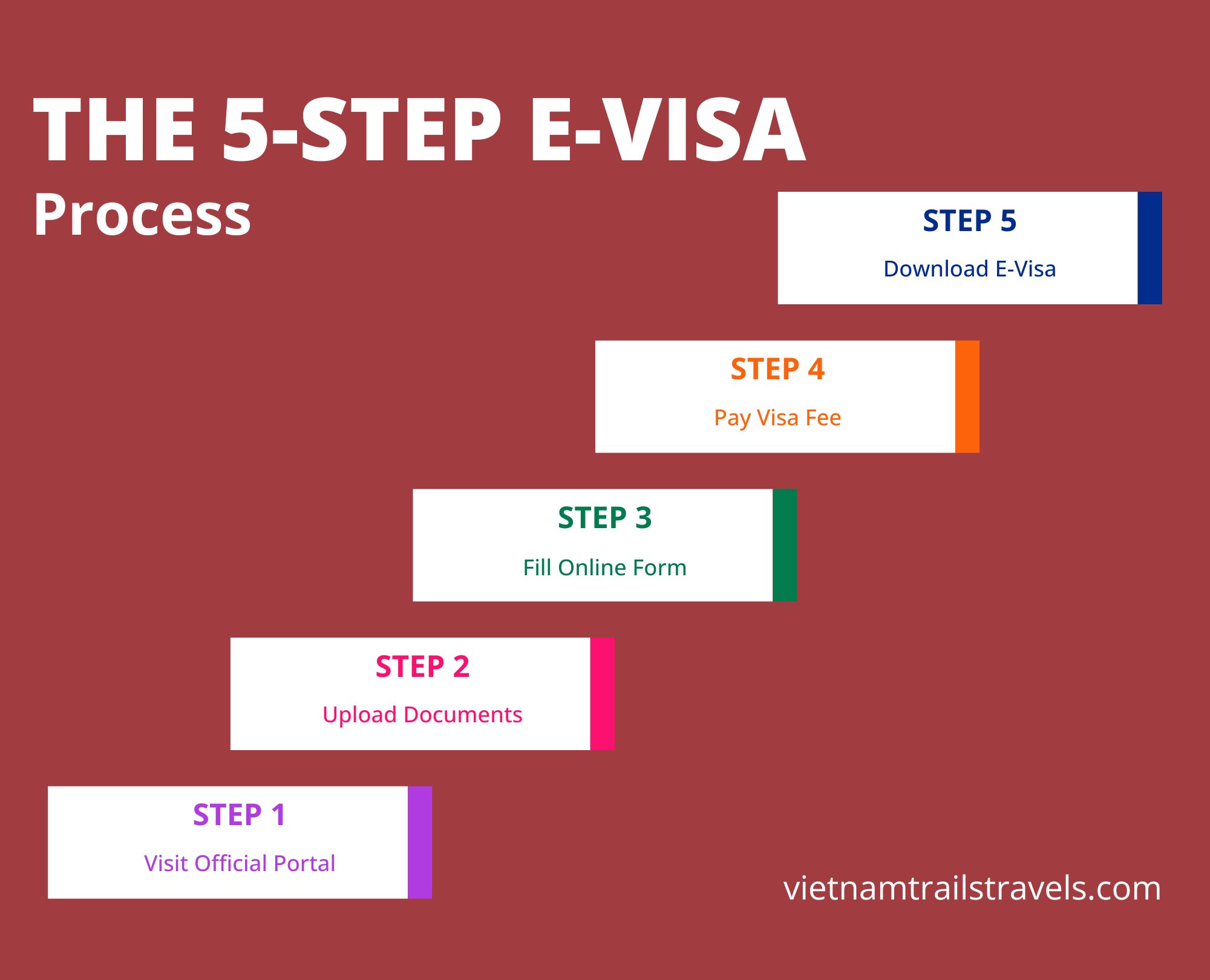
Step-by-Step: How to Apply on the Official E-Visa Website
To apply for a Vietnam e-visa, travelers must visit the official website of the Ministry of Public Security Immigration Department at https://evisa.gov.vn/ and complete the online application form. Use a laptop or desktop with stable internet to reduce form errors or failed payments.
The website interface offers Vietnamese and English options—select English if you’re not fluent in Vietnamese. There is no official urgent or express option on the government site; faster handling requires approved local agencies like Vietnam Trails Travel.
Step 1: Visit the Official Portal
Navigate to https://evisa.gov.vn (or the mirrored domain thithucdientu.gov.vn). Look for the government logo and secure HTTPS connection to confirm authenticity.
Warning: Avoid look-alike domains that mimic the official site. Scam websites charge inflated fees or steal passport information.
On the homepage, select “For foreigners” then “E-visa application.” Choose “Foreigner” when applying for yourself—not “Agency” or “Sponsor” options. Read the on-screen terms regarding the 90-day limit and 83 entry gates, then tick the confirmation box to proceed.
Step 2: Upload Documents
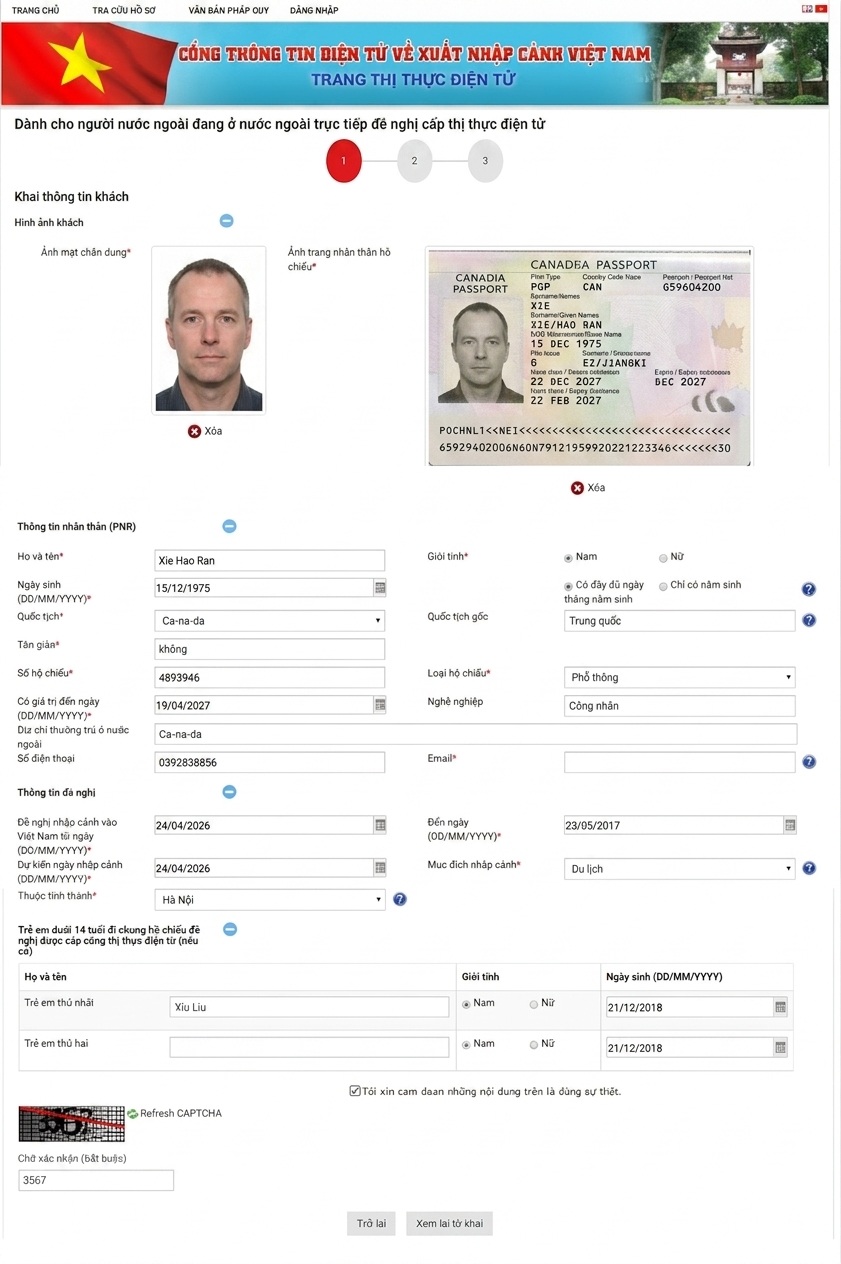
The first screen requests two file uploads:
| Document | Format | Max Size | Key Requirements |
|---|---|---|---|
| Passport data page | JPEG/PNG | 2 MB | Full page, MRZ visible, no fingers or clips |
| Portrait photo | JPEG/PNG | 2 MB | Color, white background, recent |
Applicants for a Vietnam e-visa must provide a scanned copy of their passport and a passport-sized photo that meets specific requirements, such as being clear and showing the applicant looking directly at the camera.
Click “Browse” or “Choose file” to select images from your device. Verify the preview—if the system displays a rotated or cropped image, go back, fix the file, and re-upload. Black-and-white or pixelated uploads frequently trigger automatic rejections.
Step 3: Fill in the Application Form
This section captures your passport details, travel plan, and stay information. Travelers must ensure that all information provided in the e-visa application is accurate, as any discrepancies can lead to delays or rejection of the visa application.
Personal information:
- Full name exactly as shown on passport MRZ line
- Gender, date of birth (DD/MM/YYYY format)
- Place of birth, nationality, residence country
Passport details:
- Passport type (usually “Ordinary passport”)
- Passport number—watch for confusing “O” with “0”
- Issue date, expiry date, issuing country
Travel details:
- Expected entry and exit dates (within 90 days)
- Single or multiple entry selection
- Port of entry and exit from dropdown lists
Travelers must enter Vietnam at the port of entry specified in their e-Visa application, and cannot change the port of entry after the e-Visa has been issued.
Accommodation: Enter your first planned address (hotel name and address or host details). Use confirmed lodging rather than placeholder addresses.
Purpose of entry: Select tourism, business, visit relative, or other allowed purposes. Never select “working” without proper work authorization.
Security and health questions: Answer honestly regarding past visa refusals, deportations, criminal convictions, or contagious diseases.
Review every field before clicking “Next”—mismatches with passport information cause 40-50% of reported errors. The information you provide will be used to generate your visa letter; any errors in the visa letter can affect the validity of your visa and your eligibility for a refund.
Step 4: Pay the Government Fee
After form submission, the system redirects to an approved payment gateway.
2026 Vietnam visa fees:
- An e-visa for a single entry into Vietnam costs USD 25
- A multiple-entry e-visa costs USD 50
The Vietnam e-visa application fee is non-refundable if the application is refused or contains incorrect details provided by the applicant. This applies regardless of the reason for rejection.
Accepted payment methods include international Visa, Mastercard, JCB, and UnionPay cards capable of USD transactions. Wait for the payment confirmation screen to fully load and screenshot the transaction receipt.
If payment fails, do not submit multiple duplicate applications immediately. Confirm no charge was taken before starting fresh.
Step 5: Get Your Registration Code
After successful submission and payment, the system generates a unique registration code—a mix of letters and numbers essential for tracking your application.
What to do with your code:
- Write it down in a secure location
- Save the confirmation email
- Use it to check visa status and download the approved PDF
The system displays an estimated processing time, typically 3-5 working days. However, actual times vary during high season. Avoid booking non-refundable flights or hotels until you receive your approved e-visa.
If granted, the e-visa must be printed to present to immigration upon arrival, preferably in color. Keep digital copies on your phone as backup.
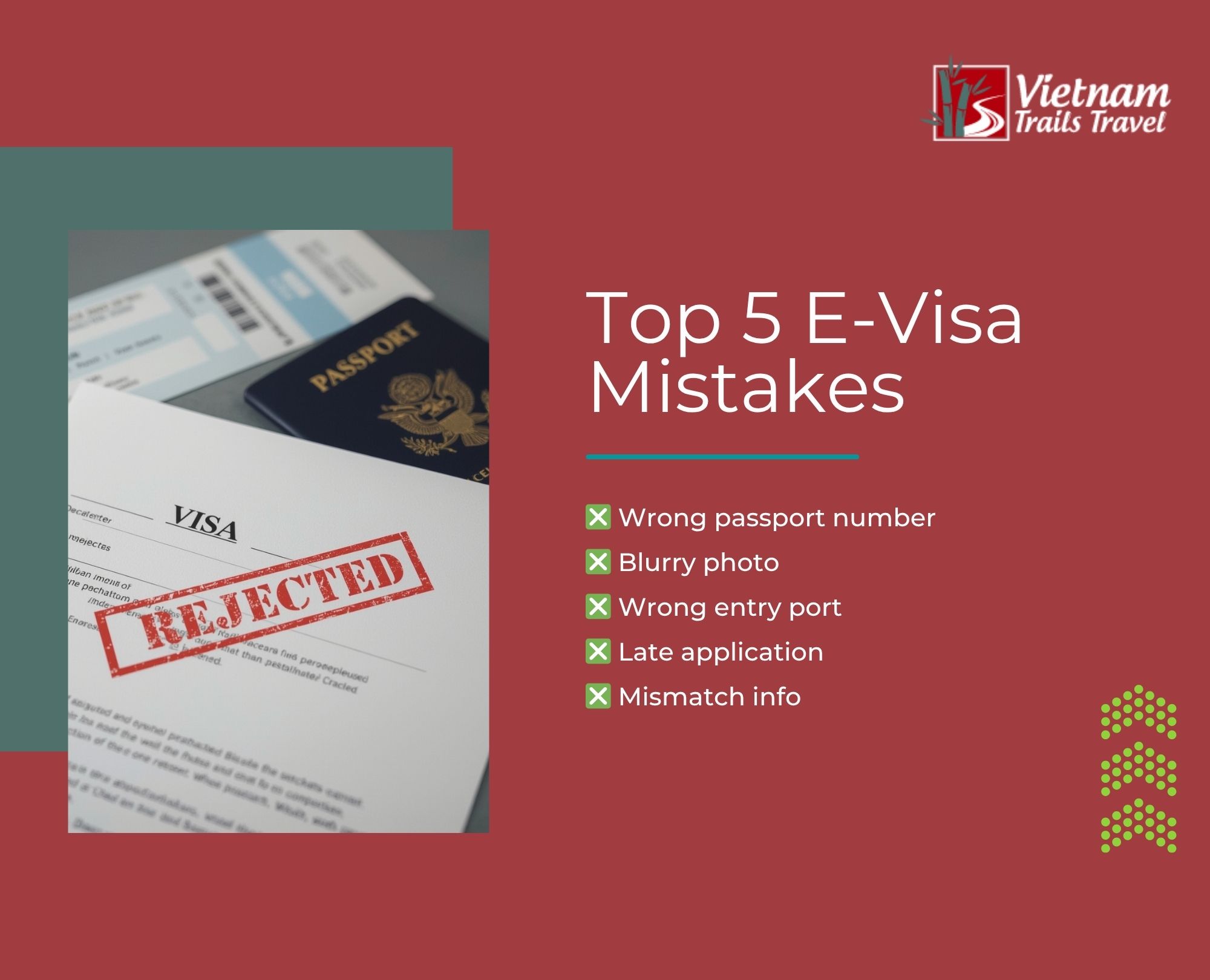
Top 5 E-Visa Rejection Mistakes (And How to Avoid Them)
Most Vietnam tourist visa refusals stem from avoidable errors, not traveler ineligibility. Data indicates 70-80% of rejections could be prevented with careful preparation.
Mistake 1 – Wrong passport number or personal data Swapping letters and numbers, using old passport details, or incorrect date formats trigger automatic flags. Copy details exactly as displayed on your passport’s MRZ line.
Mistake 2 – Poor-quality photos and scans Blurred images, strong shadows, reflections, or cropped MRZ codes cause delays. Use natural light, flat surfaces, and verify sharpness before upload.
Mistake 3 – Selecting the wrong port of entry Arriving at a different location than stated on your e-visa leads to boarding denial or immigration refusal. Plan flight information only after visa approval or keep your itinerary aligned.
Mistake 4 – Inconsistent travel purpose Stating “tourism” on the visa but telling immigration you plan to work creates problems. Choose the correct purpose and obtain appropriate documentation if needed.
Mistake 5 – Applying too late The Vietnam e-visa application process typically takes 3 to 5 working days for processing after submission and payment of the visa fee. Applications near Vietnamese public holidays (Tet, 30 April–1 May, 2 September) often take 7-10 days. Apply 2-3 weeks before departure.
Vietnam Trails Travel’s premium e visa application service includes manual checks for all these errors before submission.
Fast & Guaranteed: Premium Vietnam E-Visa Services & Pricing
While travelers can apply directly on the government site, many prefer expert assistance to save time, avoid rejections, and secure urgent approvals. Vietnam Trails Travel offers tiered support options.
Standard service includes:
- Document pre-check and validation
- Application completion on your behalf
- Status monitoring throughout processing
- Approved e-visa PDF delivered by email
Express and super-urgent options:
- 1-2 working day processing
- Same-day handling when legally possible
- Availability depends on nationality, arrival port, and immigration calendar
For travelers using the visa on arrival process, an approval letter from the Vietnamese Immigration Department or a sponsoring travel company is required before traveling, and this document must be presented upon arrival to obtain the visa stamp.
2026 service fees:
| Service Level | Processing Time | Service Fee (+ Gov Fee) |
|---|---|---|
| Standard | 3-5 working days | $25-40 USD |
| Express | 1-2 working days | $40-60 USD |
| Super-urgent | Same day | $60-100+ USD |
Vietnam visa fees typically range from USD 5 to USD 155, depending on the visa type, number of entries, and length of stay. Our service fees are separate from government fees and clearly itemized.
Benefits include dedicated visa consultants, WhatsApp/email support, help correcting minor errors, print reminders, and arrival guidance for first time visitors at Ho Chi Minh City, Da Nang, or land borders like Lao Cai.
>>Read more: Urgent Vietnam Visa 2026: Get Your E-Visa in 1-2 Hours
Processing Time & How to Check Your Vietnam E Visa Status
Normal Vietnam e visa processing time in 2026 runs 3-5 working days, excluding weekends and national holidays. Peak seasons (January-April, July-August, Tet holidays) extend processing to 7-10 working days.
To check your status:
- Visit the “Search E-visa” page on evisa.gov.vn
- Enter your registration code, email, and date of birth
- Click “Search”
Possible status messages:
| Status | Meaning | Action |
|---|---|---|
| In process | Application under review | Wait and check daily |
| Granted | Visa approved | Download and print PDF |
| Not found | Data entry error | Verify details, re-enter |
| Refused | Application denied | Correct errors, reapply |
The system does not always send email alerts. Check manually each day as your departure approaches. Download the approved e-visa, print at least one color copy, and save a digital backup.
Vietnam Trails Travel monitors status on behalf of clients and notifies them immediately upon approval.
Frequently Asked Questions (FAQs)
Who is eligible for a Vietnam e-visa in 2026? All nationalities are eligible since August 15, 2023. However, some travelers from countries not included in Vietnam’s visa exemption policy, such as India, the United States, and Australia, are required to obtain a visa prior to arrival through the e-visa system or embassy.
>>Read more: The Complete Guide Vietnam Visa for Indian Citizens (2026)
How long can I stay with an e-visa? Maximum 90 days per entry with single or multiple entry options. Overstays incur fines of 5-10 USD per day and affect future vietnamese visa applications.
Can I extend my Vietnam e-visa inside the country? Limited in-country extensions exist, often requiring licensed agencies or sponsors. Consult Vietnam Trails Travel before planning extended stays in Nha Trang, Phu Quoc, or Hai Phong.
What if my e-visa information is wrong after approval? Incorrect passport number, name, or dates usually require a new visa application. Minor spelling variations may sometimes be accepted, but correction beforehand is safer.
Can I work on a vietnam tourist visa? No. Paid work requires a proper work permit and corresponding visa types. The law explicitly prohibits employment on tourism e-visas.
Is a return ticket required? While not always checked, immigration authorities and airlines can request proof of onward travel. Book at least one outbound flight before arrival.
What happens if my e-visa is refused? Verify all passport details, correct any errors, and submit a fresh application. Fees remain non refundable. For unexplained refusals, contact Vietnam Trails Travel for case assessment.
Can families apply together? Each traveler, including children, must submit a separate form with individual passport information. Minors traveling with one parent should carry authorization from the absent parent.
Conclusion: Start Your E-Visa Application Today
The Vietnam visa online system offers the fastest route into Vietnam for most foreigners in 2026, providing up to 90 days with single or multiple entry flexibility. Success depends on maintaining valid passport requirements, uploading pristine scans and photos, filling forms accurately, and submitting early.
Ready to simplify your process? Vietnam Trails Travel offers document pre-checking, standard and urgent processing, and seamlessly combines visa support with tailor-made Vietnam itineraries covering Quang Ninh, Kon Tum, Quy Nhon, Cam Ranh, and beyond.
Start your Vietnam e-visa application now—then spend your energy planning Ha Long Bay cruises, Hanoi street food adventures, and Mekong Delta discoveries instead of wrestling with paperwork. Visit our visa services page or message our team on WhatsApp today.
