
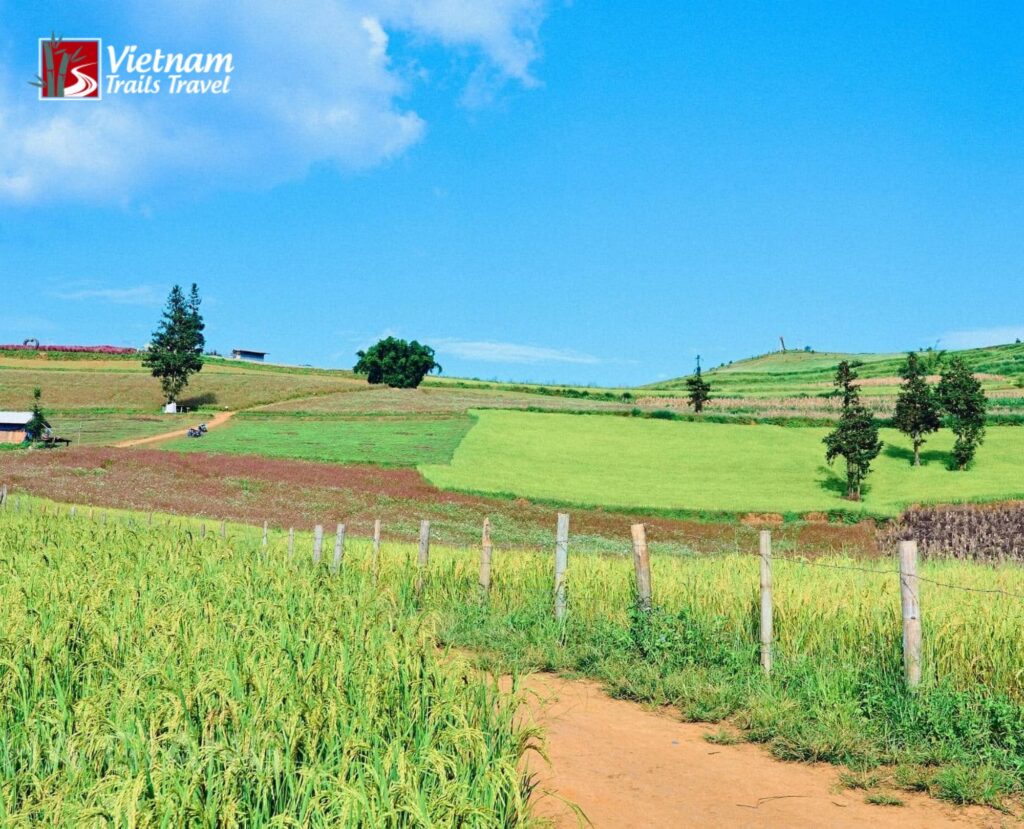
Suoi Thau Grassland, widely known as the Suoi Thau steppe in Ha Giang, is a high farming area of roughly 90 to 100 hectares at about 1,200 m above sea level, 5 km from Coc Pai town.
Since the July 2025 merger of provinces, it sits in Pa Vay Su commune, Tuyen Quang province. The most popular months are September to December, when ripe rice and pink tam giac mach flowers cover the slopes. A private car from Hanoi takes about seven to eight hours, and the flower gardens charge 20,000 to 40,000 VND per person.
The steppe is still farmland first. There is no visitor centre; there are few toilets and lodging is very limited, which is a large part of its rustic appeal. This guide covers the location, the scenery, the Mong families who farm it, each season, the main routes, entry costs and where to sleep.
1. Where the Suoi Thau Grassland is located
Until mid-2025, the steppe belonged to Xin Man District, Ha Giang province, close to the boundary with Lao Cai. On 1 July 2025, the old province merged into its southern neighbour, and the district level of local government was removed across the country.
Older articles and videos therefore still say Suoi Thau Ha Giang, while new signs, hotel listings and official records use Suoi Thau Tuyen Quang. Coc Pai, the former district seat, was combined with Nan Ma, Ban Ngo and Pa Vay Su into a single unit that kept the Pa Vay Su title.
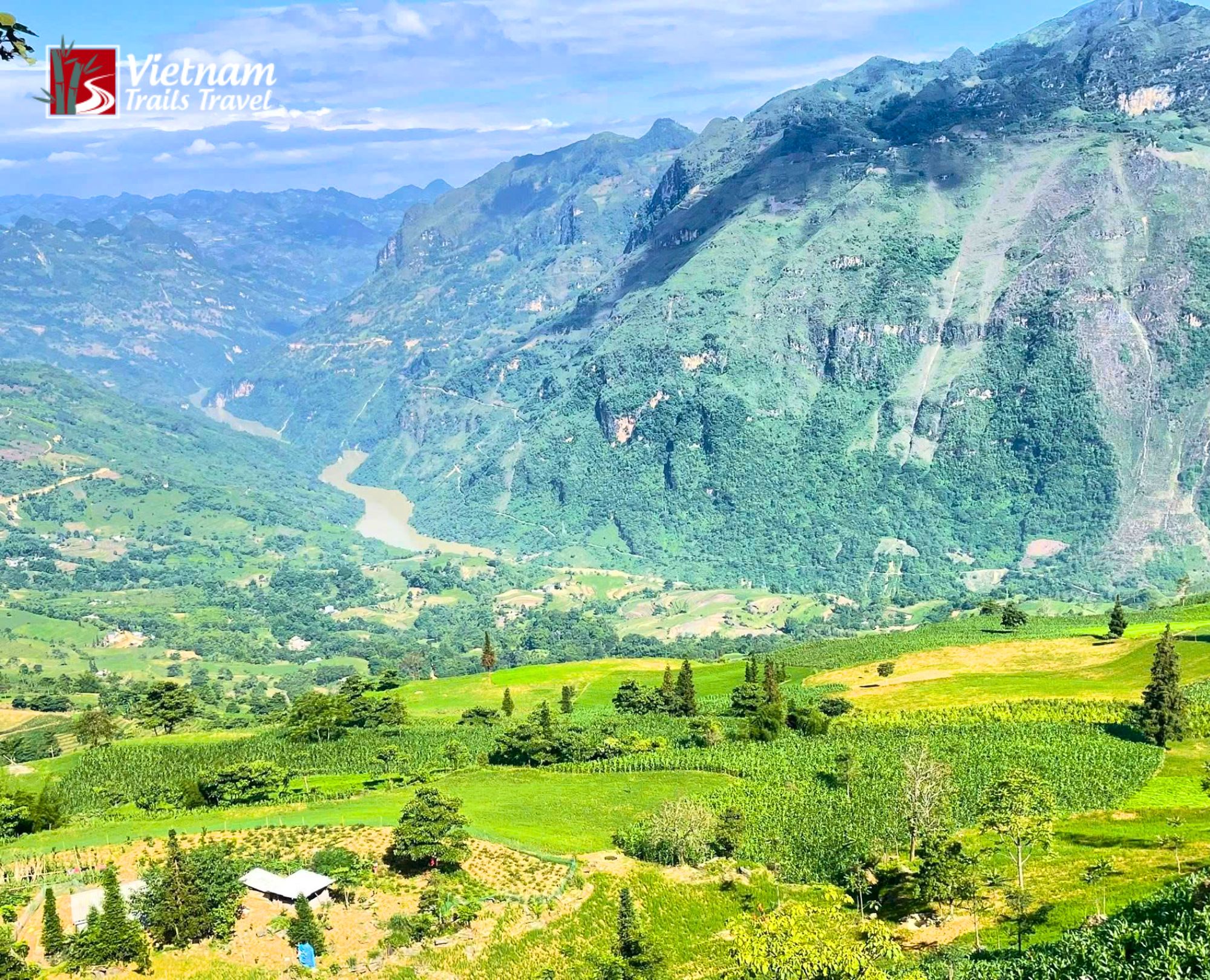
On the map, the steppe lies about 150 km west of Ha Giang city and about 35 km west of the Sunday market town across the provincial border. A narrow concrete climb of 5 to 6 km links it to the centre of Coc Pai.
From the top, the view takes in the valleys around Pa Vay Su, Chi Ca, Thu Ta and Coc Re, with orchards and green fields wrapping three sides of the high ground. In navigation apps, the Vietnamese spelling with tone marks gives the most reliable pin, because unaccented spellings can drop the marker in the wrong part of the valley.
2. Landscape and scenery
The Suoi Thau steppe is a vast steppe of rolling farmland and pasture rather than open wilderness. Tall rows of sa moc (Chinese fir) stand between plots of upland rice and corn, and small streams run off the higher ground to water the crops.
The mix of soft green slopes, dark conifers and low cloud is the reason the area is often called a little Switzerland or a miniature Europe. Vietnamese writers also describe it as poetic, and in the flower season the slopes do look like a painted canvas of pink, white and gold.
The wider setting is classic northern highland country. Rocky ridges rise on every side, and the view from the top is an endless run of immense, folded mountains. Early in the morning, cloud often fills the lower ground and leaves the high grassland standing above it like an island.
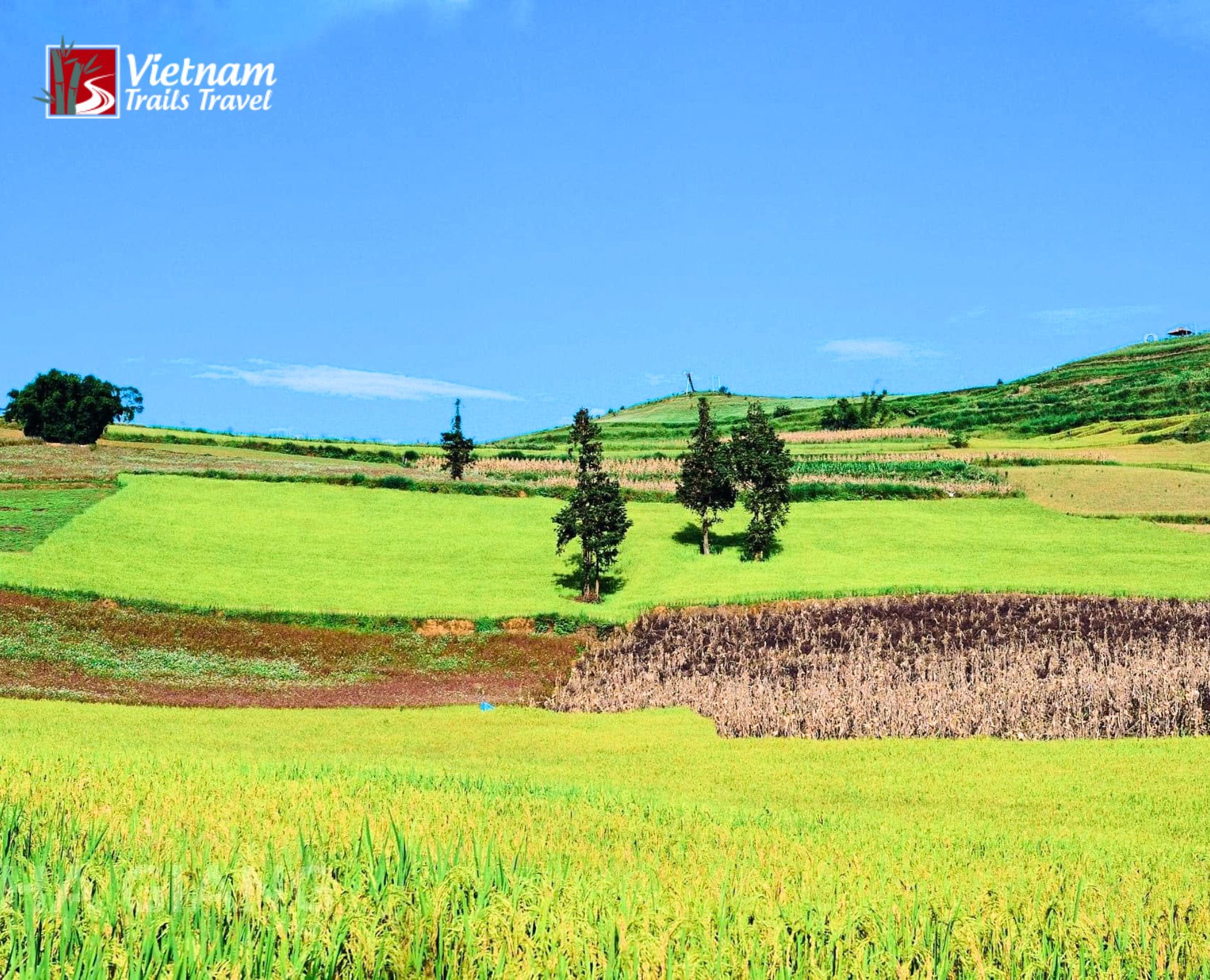
Most visitors come to admire the majestic beauty of this setting, yet the steppe also has a gentle side: fir shade, grazing land and the cool air that keeps walking pleasant even at midday. Late afternoon draws couples for romantic sunset photos along the fir rows.
What sets the area apart from flower spots elsewhere in the far north is how little has been built. There are no cable cars, no large hotels and no concrete viewing decks.
The colours come from crops, not landscaping, so the beauty of the steppe changes with the farming calendar from month to month. That pristine natural beauty, still lived in and farmed, is the main attraction, and it lasts only as long as people stay on paths and out of planted plots.
Read more: Hoang Su Phi Rice Terraces Ultimate Travel Guide 2027
3. The Mong people and local culture
Mong people make up most of the community on the steppe, and nearby valleys are also home to Dao and Pu Peo families. This ethnic and cultural mix is diverse for such a small area.
A typical Mong house has thick rammed-earth walls that stay warm in winter and cool in summer, a design still common across the far north. Many women wear their embroidered costume for everyday farm work, not only at festivals.
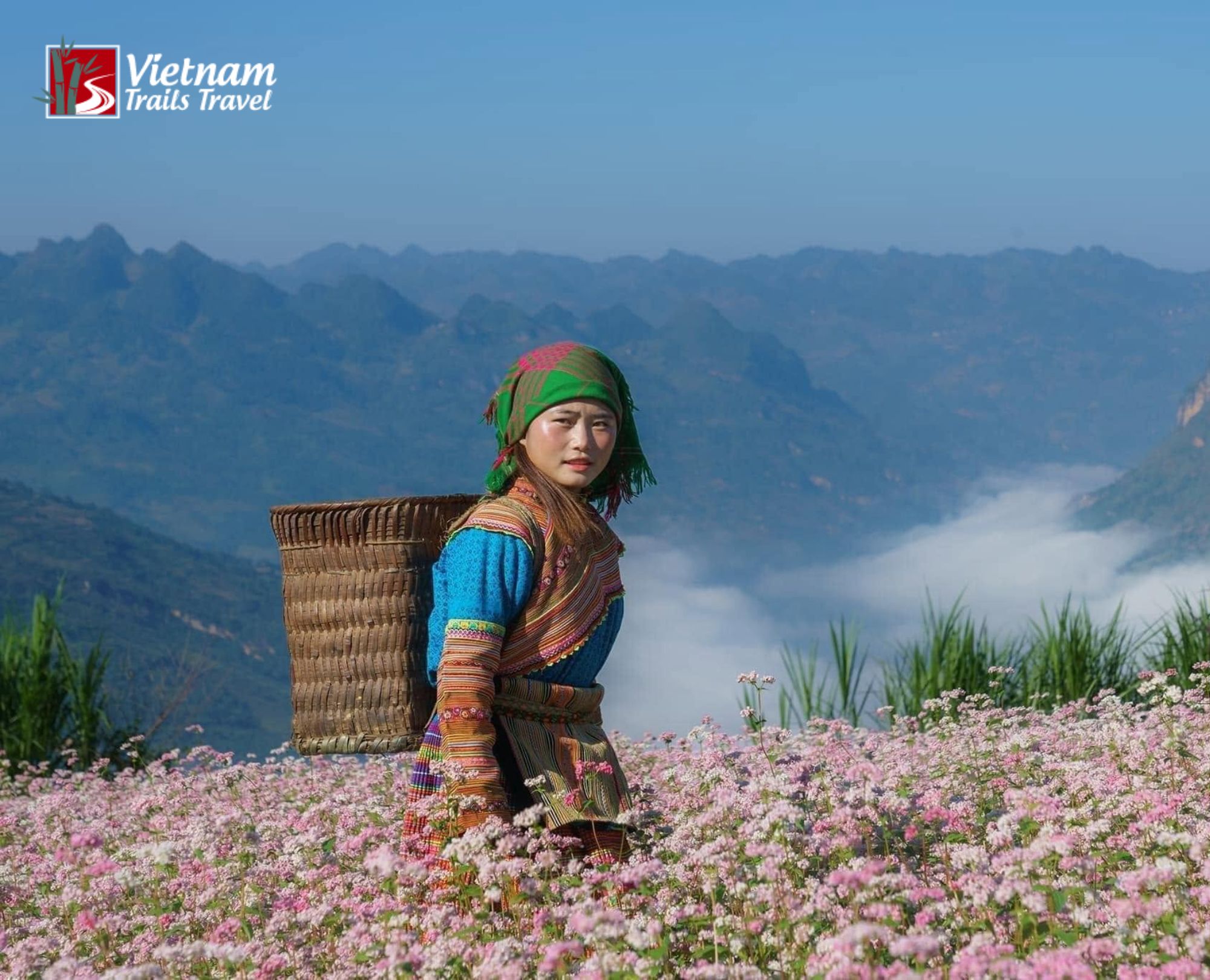
Daily life follows the crops. Families grow upland rice, corn and medicinal herbs, and in recent years many have planted pears, plums and flower beds to draw tourists after the main harvest.
These choices keep the cultural values of the area visible: this is a working landscape, and the local people in the fields are farmers first. A short greeting, a polite request before photos or a purchase of produce from a family goes much further than handing out cash, which can encourage children to ask for money.
4. Best time to visit Suoi Thau
The steppe looks different in every season, but the most rewarding period runs from September to December. Rice turns gold in September, and October to December is the Ha Giang buckwheat flower season, when pink and white flowers spread across the slopes. Spring and summer are quieter and greener, with fewer crowds and more rain.
4.1 Spring: January to April
Winter and early spring mornings at 1,200 m are cold, often below 10°C, and fog can linger until late morning. From late January, families grow mustard and canola, whose yellow flowers brighten the fields around the Lunar New Year. Plum and pear blossoms add white and pale pink along the village edges. Crowds stay light except during the Tet holiday.
4.2 Summer: May to August
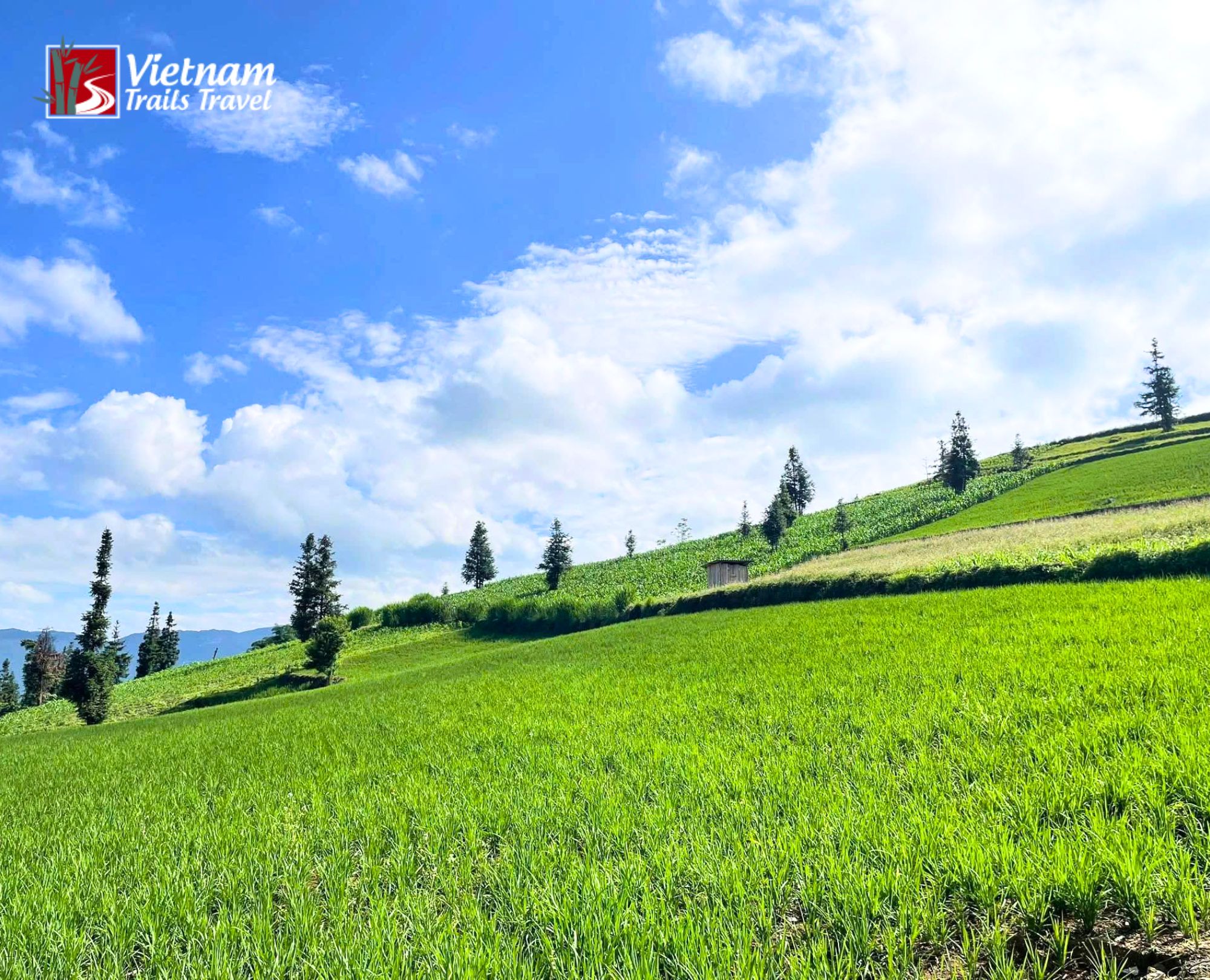
From May, young rice and corn turn the whole area lush and green. Temperatures at this height are comfortable compared with the lowlands, but July and August are the wettest months in the northern mountains, and heavy showers can make the final climb slippery. Anyone coming in this period should keep a spare half day in the plan.
4.3 Autumn harvest: September
Early autumn is harvest time. The terraced plots around the village turn gold through September and are usually cut before October, so the window is short and shifts with the weather. The first white flowers of the next crop often appear in the second half of the month, giving a mix of harvest colour and early flowers.
4.4 Suoi Thau buckwheat flowers: October to December
The flower season here tends to start earlier than at other spots in the far north. White flowers appear in early October, and the bloom deepens to pink and purple-red as nights get colder in November.
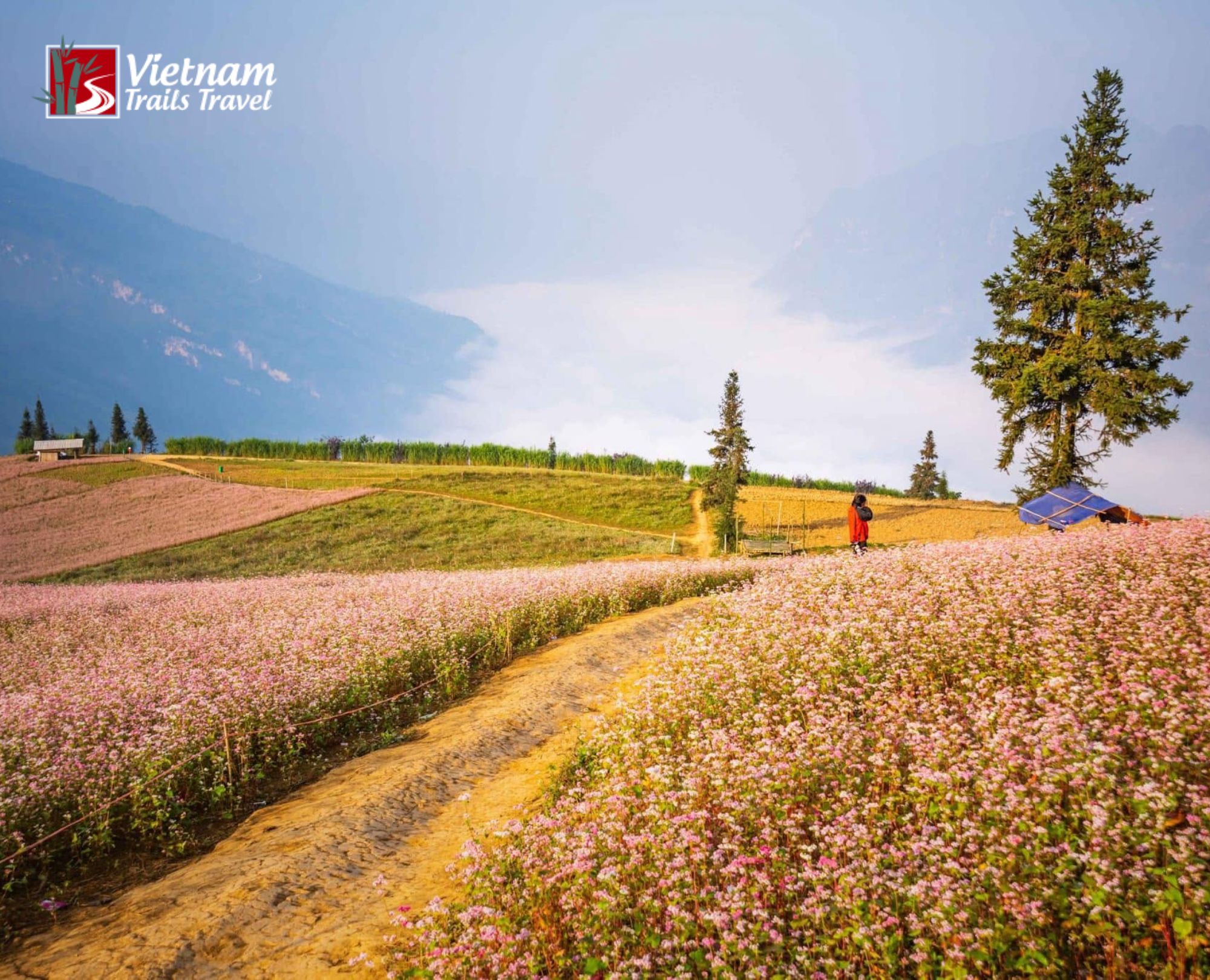
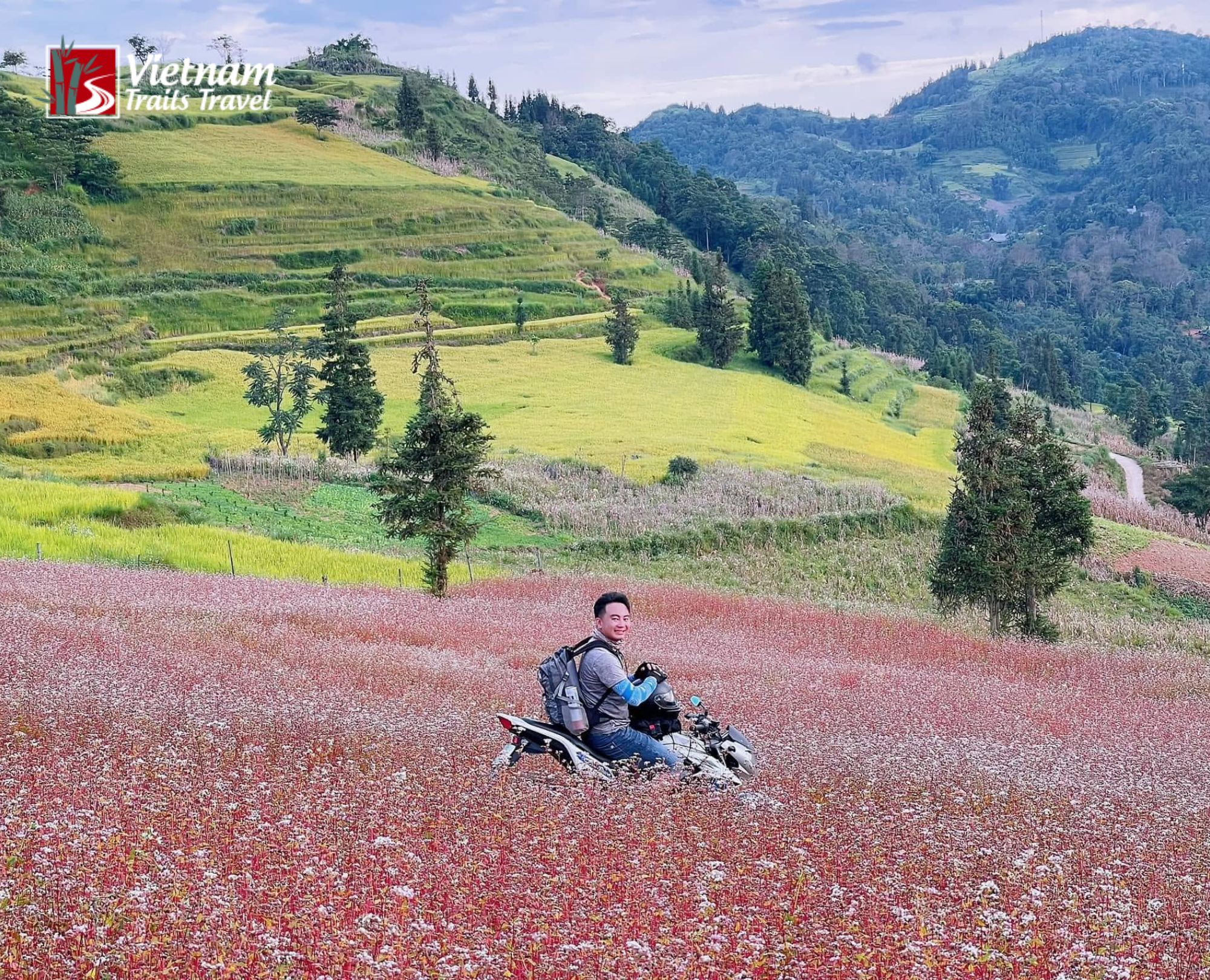
By mid-November, the buckwheat fields on the lower slopes are usually at their strongest colour, and cockscomb plots add deep red beside the fir rows. Families plant these beds for photos, and they are the plots that charge an entrance fee. Weekends in late October and November are the busiest, so a weekday trip or an arrival before 08:00 is recommended.
| Months | What you will see | Conditions |
|---|---|---|
| January to April | Yellow mustard and canola, plum and pear blossom | Cold, foggy mornings |
| May to August | Young rice and corn, green slopes | Warm, wettest in July and August |
| September | Golden rice, first white flowers | Warm, mostly dry |
| October to December | Pink and white tam giac mach, red cockscomb | Dry, clear, cold nights |
Read more: Ha Giang Travel Guide: Itinerary, Weather & Loop Tips
5. Tourism development and 2027 updates
The steppe has grown quickly from a little-known spot into a planned tourist destination. In January 2026, the Pa Vay Su local government and the provincial Department of Construction published a zoning plan for the steppe’s tourist area. Earlier planning set aside 146 ha around the village for agricultural tourism, with longer-term ideas that include camping, mountain biking and paragliding.
Local authorities have also widened access lanes and encouraged families to plant fruit trees and flowers after the harvest, so the slopes stay colourful for more of the year.
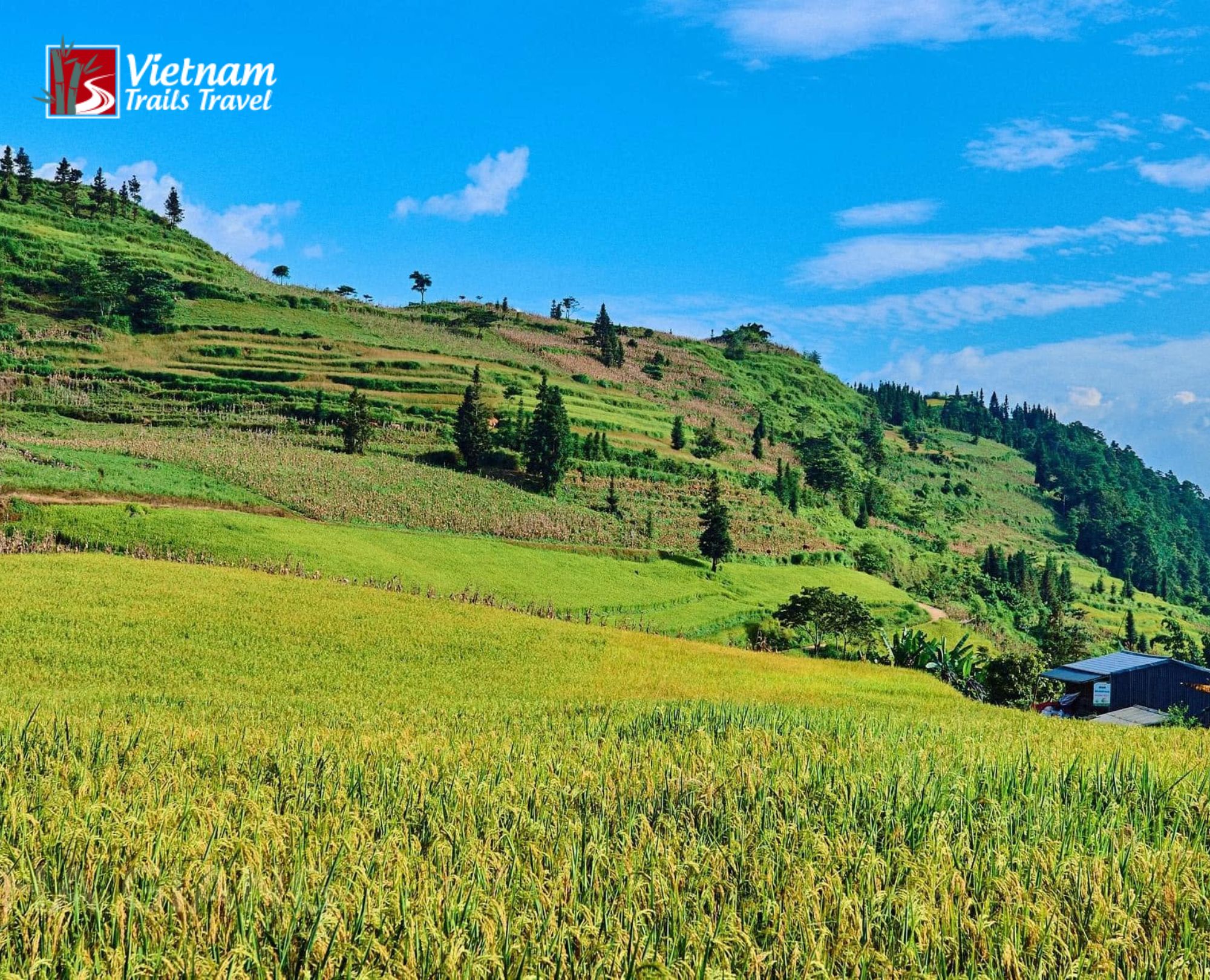
On 30 August 2026, the local youth union lined the main track with national flags ahead of National Day on 2 September. Photos of the flag-lined track between golden fields spread widely on Vietnamese social media within days.
For visitors, services remain basic for now. More homestays, parking areas and paid photo plots are likely to open over the next few seasons, so weekends in October and November will only get busier.
6. How to get to Suoi Thau Grassland
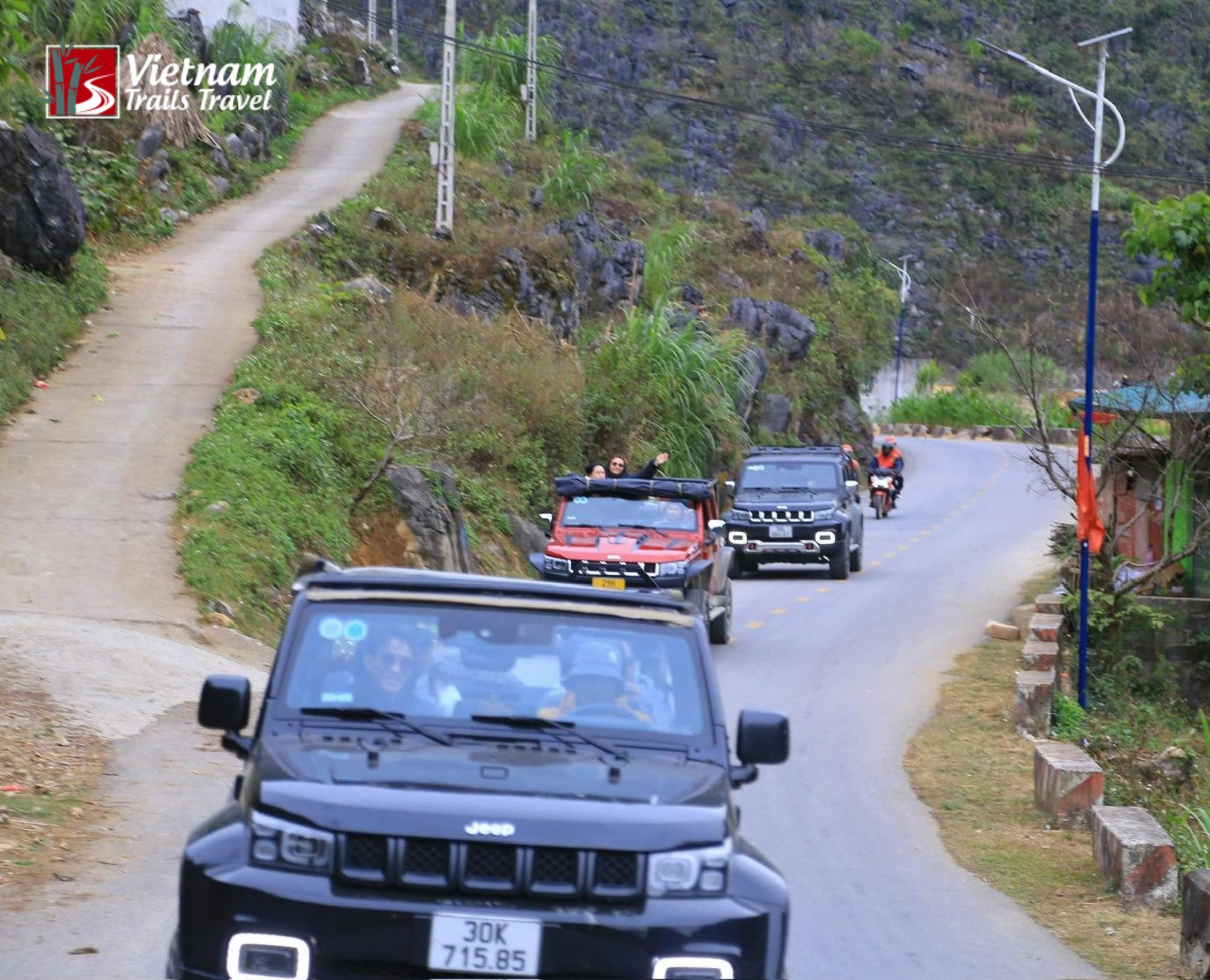
There are three practical ways in: a private car from Hanoi through the Sunday market town to the east, a long drive from Ha Giang city through Hoang Su Phi, or a sleeper bus or train followed by local transport. No public bus goes up to the steppe itself, and the last 5 to 6 km from Coc Pai is a narrow, winding climb with tight bends.
For most international guests, a private car with a driver who knows mountain roads is the safest choice. The classic Ha Giang Loop to Dong Van and Lung Cu runs far to the northeast, so the steppe works best as a separate trip.
6.1 Hanoi to Suoi Thau
The fastest option follows the CT05 expressway northwest along the Red River valley, then climbs into the hills to the market town 35 km east of the steppe. The full trip is about 330 km: around seven hours of driving, or eight with meal and photo stops.
Most private trips split the journey, with a first night in the market town and an early transfer to the steppe the next morning. For the return, a departure from Coc Pai after breakfast still reaches the capital by late afternoon.
6.2 Bac Ha to Suoi Thau
This is the shortest approach. The Sunday market town lies about 35 km east of the steppe, and the drive takes a little over an hour on a paved, winding route that is not overly steep.
Cars and vans can reach the village, but tracks to individual flower plots are narrow, so car passengers usually park and walk the last stretch. The market winds down by about 14:00, so a common plan is to see it in the morning, leave around 10:00 and arrive before noon. Guests on a sleeper coach should note that this town is the nearest stop with direct coaches to the capital.
6.3 From Ha Giang city
The city is about 150 km away, and this is the slowest option. The usual line heads south to the Tan Quang junction, then west through terraced valleys before dropping into the Coc Pai basin. Landslide repairs and roadworks can slow even short sections, so most tour operators treat it as a full day with stops, often with a night in Ban Phung on the way.
6.4 Riding to the steppe on two wheels
Bike rental in Coc Pai costs around 200,000 to 250,000 VND a day, and xe om (bike taxi) riders can be hired for the climb. The lower part of the final stretch has small loose stones that make wheels slide, and the upper part is concrete with tight hairpins.
After rain, the surface turns slick. Only experienced riders should take it on alone, and only in dry weather; first-timers are much safer riding pillion with a local rider.
7. Suoi Thau Grassland entrance fee
The open steppe, the main track and the viewpoints are free. Payment applies only to the flower plots that families plant and look after. Entry is usually about 20,000 VND (under USD 1) per person, and some photo plots charge 40,000 VND for adults and 20,000 VND for children during peak weeks.
Fees are paid in cash at a small gate or tent beside each plot. There are no card terminals, so small notes of 10,000 and 20,000 VND make payment easy, and some plots also offer shaded rest spots for visitors.
8. Where to stay near Suoi Thau Grassland
There is still no hotel on the steppe itself. Coc Pai, 5 to 6 km downhill, has a handful of simple homestays and family-run rooms and is the best base for sunrise. For an overnight stay close to the clouds, it is the most practical option.
The Sunday market town 35 km east has the widest choice of homestays and small hotels, with easy coach links and better food, including black chicken hotpot, fried stream fish and red hand-pulled pho.
Ban Phung village, on the western approach, is known for community homestays set above wide rice fields and suits guests coming over the mountains from that side. Rooms there are simple, and dinner is usually a shared family meal.
Read more: Meo Vac Sinkhole In Ha Giang: Location And Visit Guide
9. Practical tips for your trip
Weather changes fast at this altitude. Even on dry days, mornings and evenings are much colder than midday, so layers work better than one heavy coat, and a light rain jacket earns its place in every season. Shoes with good grip matter more than style, because tracks between plots turn muddy after even a short shower.
Mobile signal is usually fine around Coc Pai but weak in grassland dips, so offline maps are a useful fallback. Water, snacks and sunscreen should come up from town, since the village has few shops and toilets are scarce. The area is close to the national border, and passports should be carried at all times, even on a short day out.
For photos, two short trips work better than one long one. Mornings bring clouds over the valleys, while late afternoon gives soft side light on the fir rows; midday light in the dry season is flat and harsh.
A slow walk is also the best way to enjoy the fresh air and the quiet, and for many travelers the sunrise above the cloud is the most unforgettable part of the trip. Respect for paths, payment to plot owners and rubbish taken down to town all help the community see tourists as a benefit rather than a burden.
10. Plan your trip with Vietnam Trails Travels
A good trip here depends on timing: whether the rice is still standing, how far the flowers have opened and whether the final climb is dry. Vietnam Trails Travels arranges private transfers and tailor-made northern itineraries that include the steppe, with routing through the capital, the market town, Coc Pai or Ban Phung depending on the season and the time available.
Our team can advise on field conditions before dates are confirmed, suggest the right base for sunrise and combine the steppe with markets, terraced valleys and other stops in the far north.
Hotel pick-up, a flexible schedule and experienced mountain chauffeurs keep the journey smooth and safe from start to finish. Travel dates and group size can be sent through the contact form at vietnamtrailstravels.com, and the team will reply with a suggested itinerary and a clear quote.
