
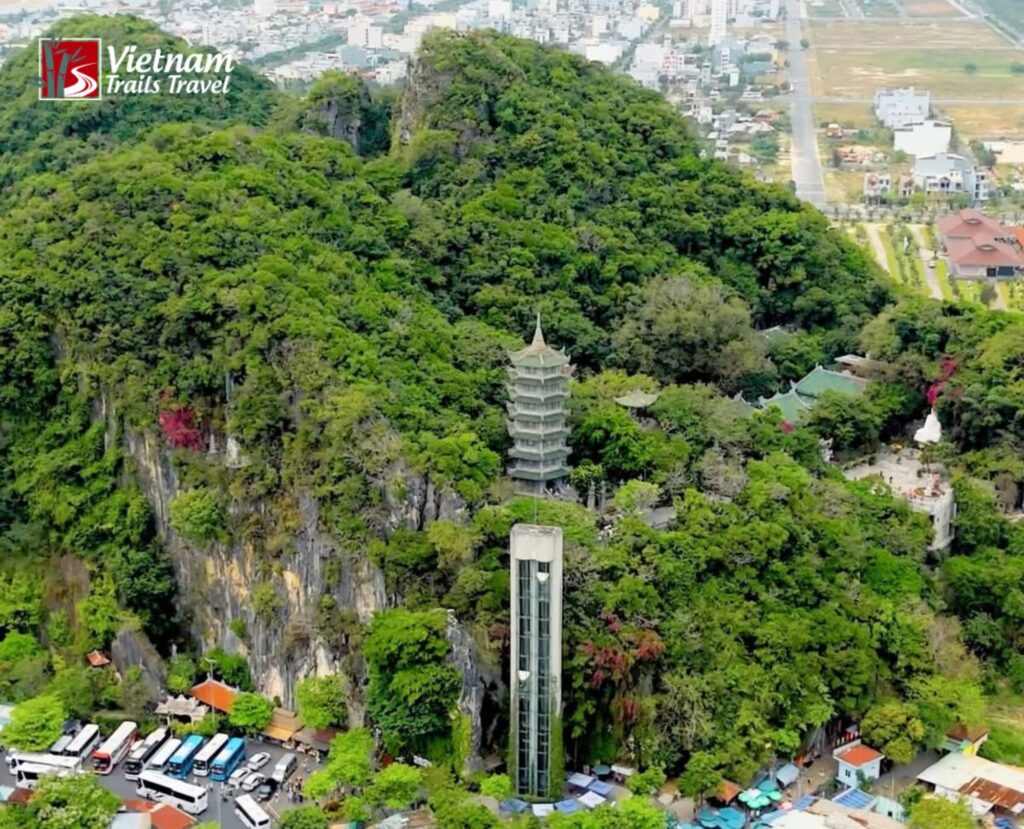
Marble Mountain (Ngu Hanh Son in Vietnamese) is a group of five limestone and marble hills about 8 km southeast of Da Nang city center, on the coast road to Hoi An. The site is open every day from 07:00 to 17:30.
The entrance fee for Thuy Son, the main hill, is 40,000 VND per adult, and the glass elevator costs 15,000 VND one way. Most visitors need two to three hours to see the caves, the pagodas and the viewpoints. This guide covers Marble Mountain’s history, the best caves and pagodas, ticket prices, transport from the city and Hoi An, and simple tips for your visit.
1. What is Marble Mountain?
Marble Mountain is a protected natural and religious site made up of five small hills, each named after a natural element. Visitors come for three things: Buddhist pagodas, large caves with shrines inside, and wide views of the coast.
1.1. Quick facts
The table below summarizes the key facts. All prices and hours come from the site’s management board and were confirmed by visitor reports in 2026.
| Item | Details |
|---|---|
| Vietnamese name | Ngu Hanh Son (Five Elements Mountains) |
| Address | 81 Huyen Tran Cong Chua Street, Da Nang |
| Distance | 8 km from the center, 20 km from the old port town |
| Opening hours | 07:00 to 17:30, every day |
| Main ticket | 40,000 VND per adult |
| Time needed | 2 to 3 hours |
| Heritage status | Special National Monument |
1.2. Where are the Marble Mountains?
The Marble Mountains are located between the Co Co River and Non Nuoc Beach, in the southeast part of the city. The drive from the Dragon Bridge takes 15 to 20 minutes. The old quarter of Hoi An is 20 km to the south, or about 30 minutes by car.
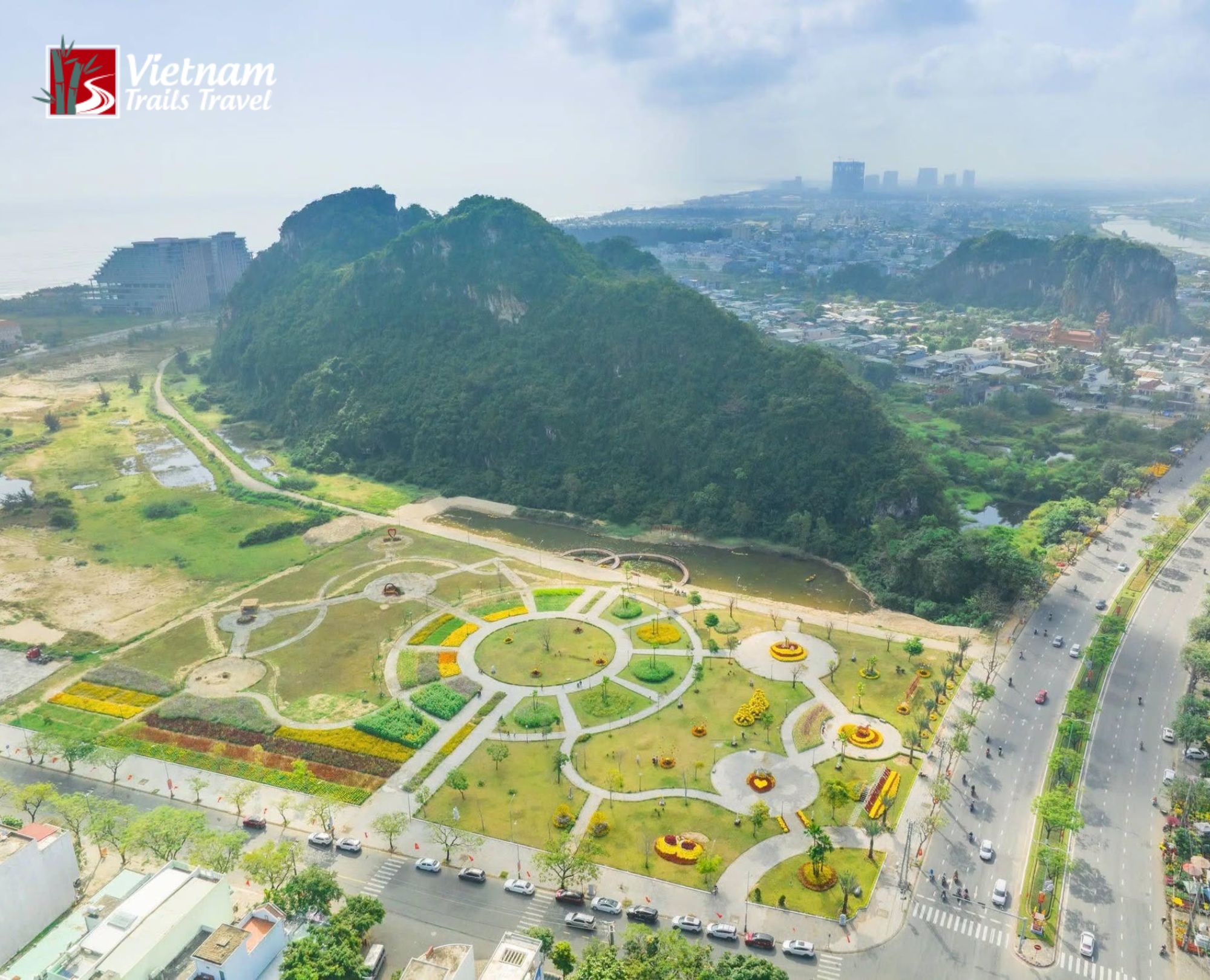
In July 2025, the former Quang Nam Province merged into Da Nang, so the hills and the old trading port are now in the same city. For travelers, the practical effect is small. The hills still sit halfway between the two towns, and many day trips plan a stop in Da Nang here.
1.3. Why is this attraction in Da Nang worth visiting?
The site is worth visiting because it combines nature, religion and history in one small, cheap place. On the main hill, visitors find old pagodas, shrines inside the rock, caves used in two wars and viewpoints over the sea. For these reasons, the site is one of Da Nang’s highlights and appears on almost every Vietnam travel plan for the region.
The cost is low. A full visit to the Marble Mountains, including the elevator and the separate underworld cave ticket, costs 75,000 VND per adult. For travelers on a budget, the Marble Mountains of Da Nang are one of the best-value half-day trips on the coast.
Read more: Danang Day Tour From Chan May Port
2. History of Marble Mountain
The site’s history covers three periods: Cham worship before the 15th century, royal support under the Nguyen Dynasty from 1802, and military use during the 20th century wars.
2.1. Where does the name come from?
The name comes from Emperor Minh Mang, who in 1825 named each hill after one of the five elements: Kim (metal), Thuy (water), Moc (wood), Hoa (fire) and Tho (earth). Before that, the Cham people saw the hills as holy. A Cham legend says a dragon laid an egg on the beach at Non Nuoc, a girl came out of the egg, and the broken shell became the five mountains you see today.
Foreign visitors later used the English name Marble Mountains because of the pale marble inside the rock. In fact, the hills are mostly limestone, with lines of marble that local workers have carved for hundreds of years.
2.2. What did the Nguyen kings build here?
The Nguyen kings repaired and expanded the pagodas on the main hill. Emperor Minh Mang visited several times, rebuilt Tam Thai Pagoda in 1825 and gave it royal status. Text carved during his reign is still visible on the rock walls near the caves. For this reason, many buildings on the hill share design details with the royal tombs in Hue.
Today the site holds Special National Monument status, the highest level of heritage protection in the country. The management board also runs the Quan The Am Festival every year, around the 19th day of the second lunar month.
2.3. How were the caves used in the Vietnam War?
During the war with the United States, the caves served as a hiding place and a field hospital for local fighters. From 1968, the biggest cave on the main hill was used as a hospital.
At the same time, the United States Marine Corps ran a helicopter base called Marble Mountain Air Facility on the flat land between the hills and the sea. Both sides operated within a few kilometers of each other, a fact that surprises many visitors during a walk through the caves in Marble Mountains.
3. The five hills
The five hills are Thuy Son, Kim Son, Moc Son, Hoa Son and Tho Son, but only Thuy Son has tickets, stairs and marked paths. Hoa Son has two tops, Duong Hoa Son and Am Hoa Son, so some guides say there are six mountains.
| Hill | English name | What to know |
|---|---|---|
| Thuy Son | Water Mountain | Tallest (about 106 m), main visitor area |
| Kim Son | Metal Mountain | Next to the Co Co River, home of the yearly festival |
| Moc Son | Wood Mountain | Rock that locals say looks like an old woman |
| Hoa Son | Fire Mountain | Two tops, on the west side |
| Tho Son | Earth Mountain | Lowest and longest hill |
When people plan to visit the Marble Mountains, they usually mean Thuy Son only. The other hills are quiet, and some parts are free, but the paths are rough and there are few signs. Most visitors see them from the viewpoints on the main hill.
4. What to see on Thuy Son
Thuy Son holds the main caves and temples, with five key sights: Linh Ung, Xa Loi Tower, Tam Thai, Huyen Khong Cave and two viewpoints at the top. All of them sit on one loop path that takes about two hours to walk.
4.1. Linh Ung Pagoda Marble Mountain and Xa Loi Tower
Linh Ung Pagoda is the first big building visitors reach after the elevator or the east stairs. The pagoda faces the sea on the east side of the hill, is more than 200 years old and was repaired several times by the Nguyen kings. Its carved gate, lotus ponds, bonsai trees and white Buddha statue make it the Marble Mountain pagoda that appears in most travel photos.
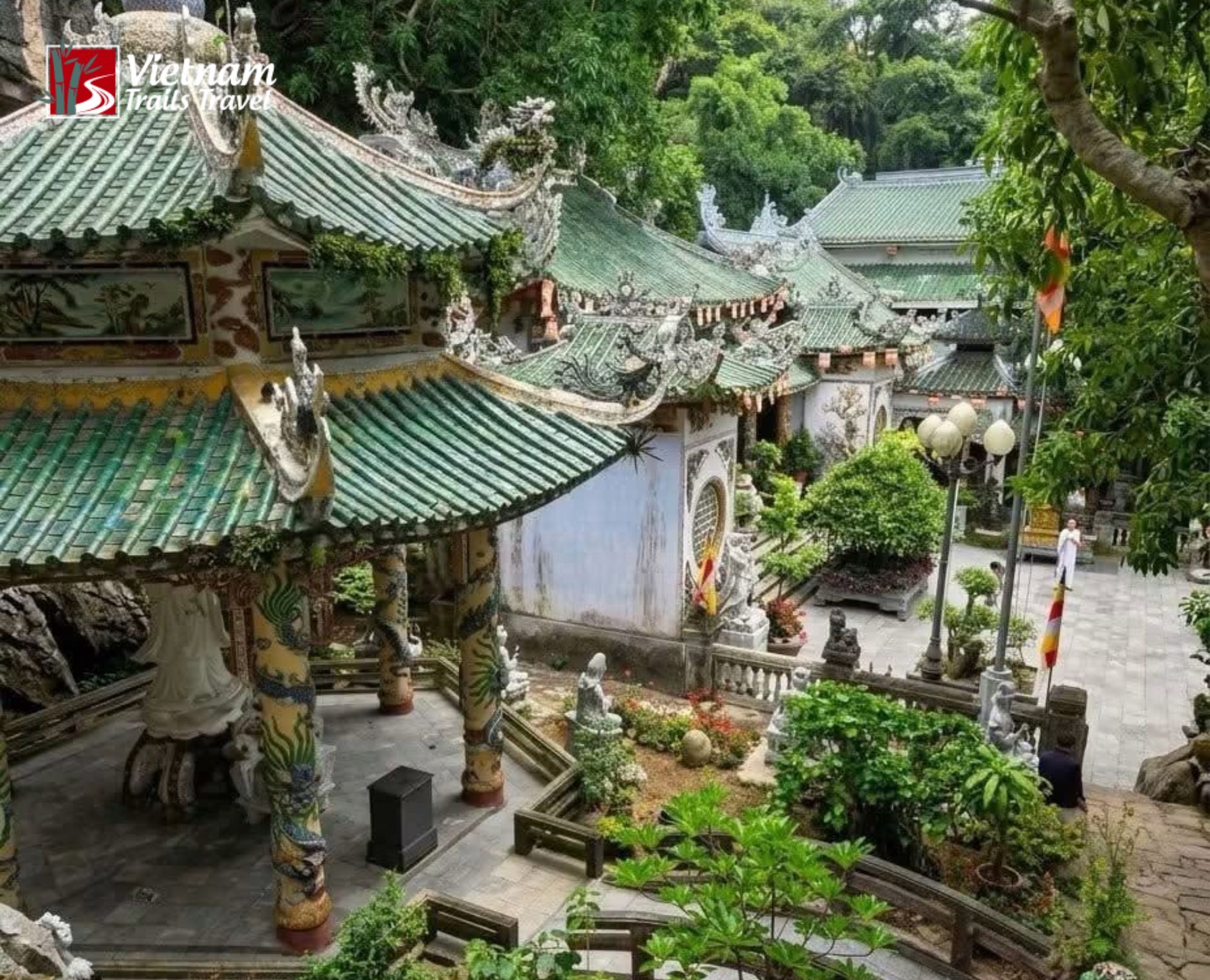
Xa Loi Tower stands next to the pagoda. The seven-floor tower was built in 1997, rises 28 meters and holds about 200 carved Buddha figures, according to the Vietnam National Authority of Tourism. The base of the tower gives a clear view over the coast and the hotels along the beach.
Linh Ung is the name of three pagodas in Da Nang, which often confuses visitors. The one on Son Tra Peninsula has a 67-meter Lady Buddha, the second is at Ba Na Hills, and the one on the marble hill is the oldest of the three. Travelers should ask their driver or tour company which Linh Ung they mean.
4.2. Tam Thai Pagoda
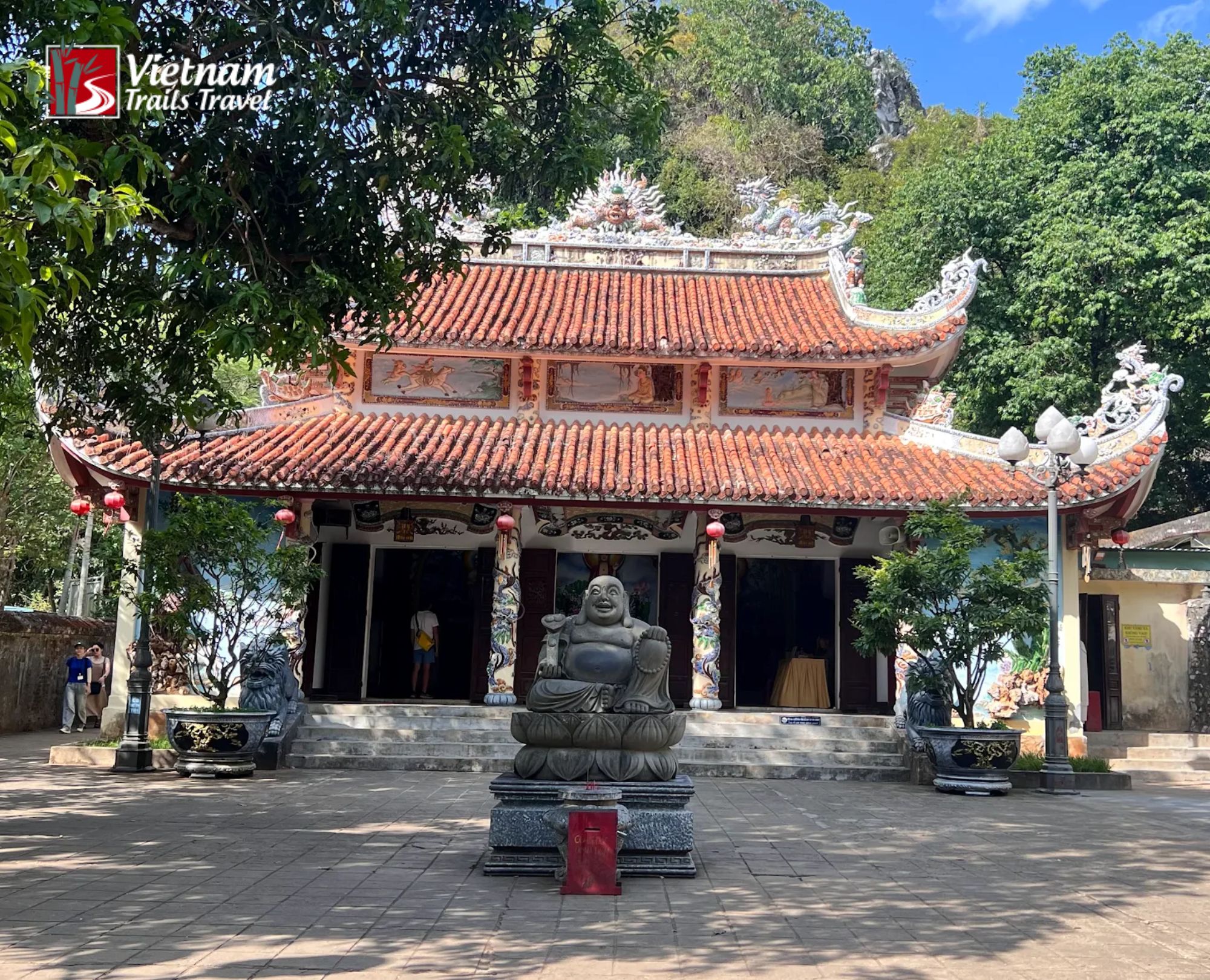
Tam Thai Pagoda is the oldest ancient pagoda on the hill, first built in the 17th century and rebuilt in 1825. The front gate has three doors. By tradition, monks use the middle door, men use the left door and women use the right door.
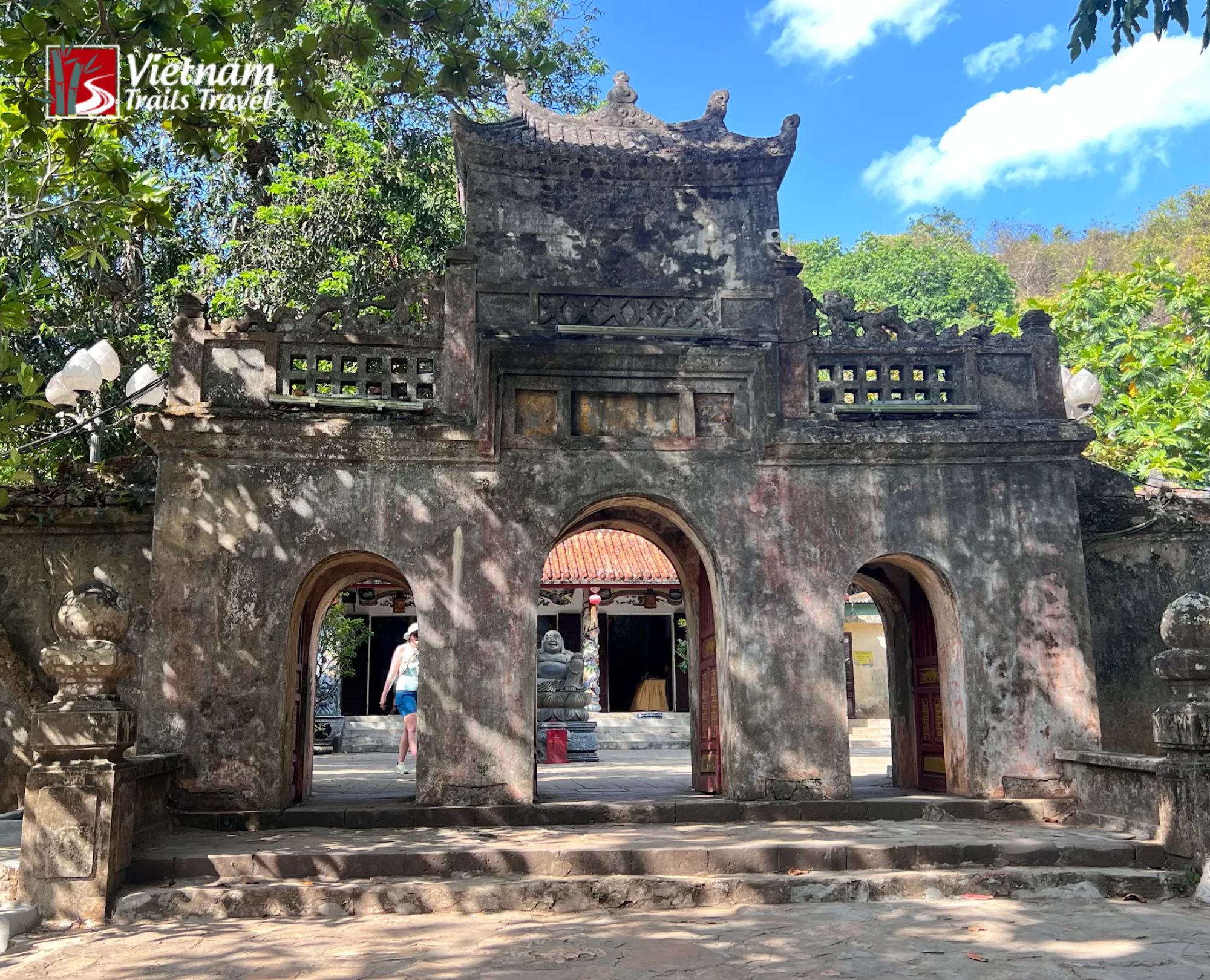
Tam Thai is quieter than Linh Ung, especially before 09:00. The tiled roofs and carved wooden panels are a good example of temple design from the royal period.
4.3. Huyen Khong Cave Marble Mountain
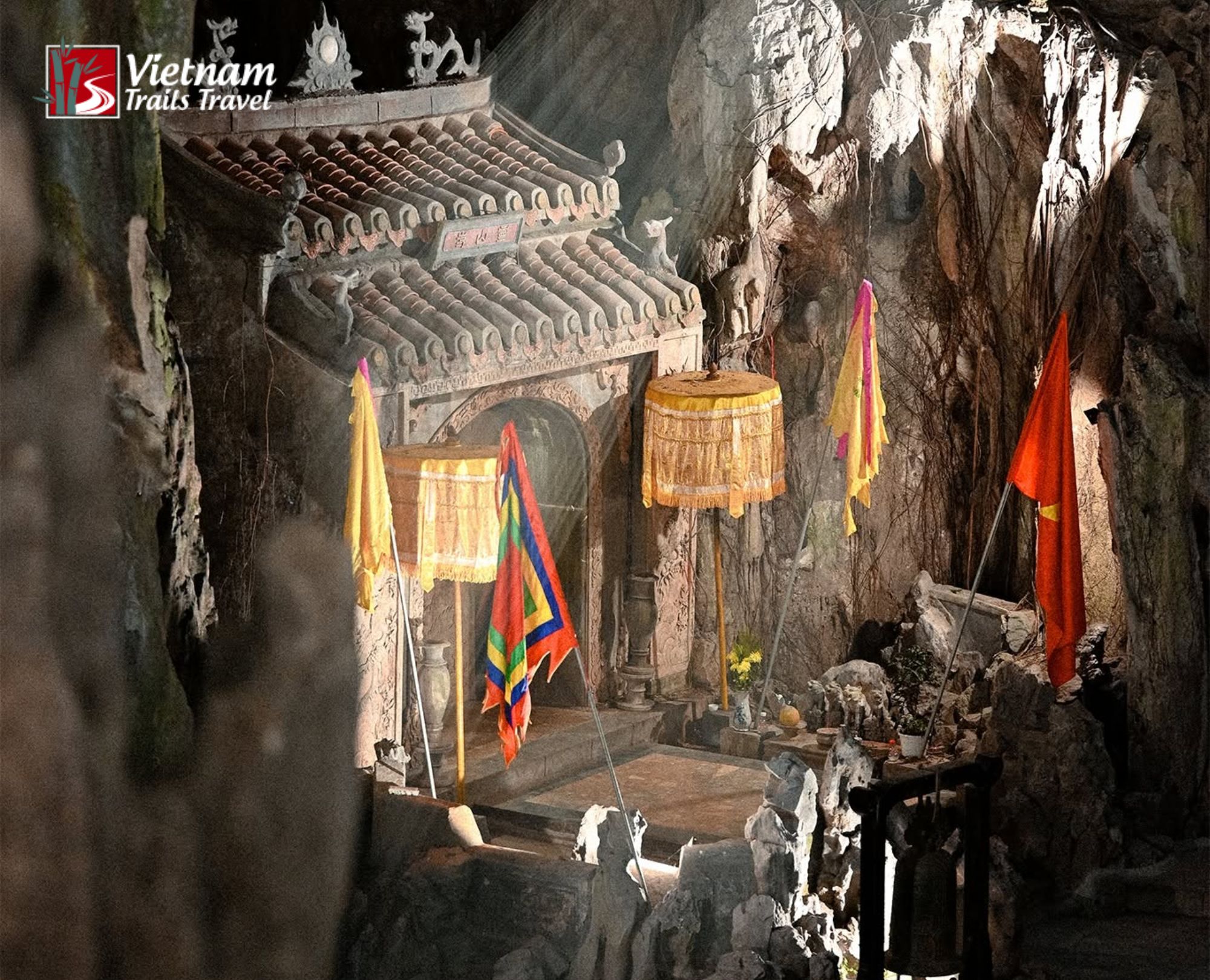
Huyen Khong Cave is the biggest and most famous Marble Mountain cave, with a large room and natural holes in the ceiling. Visitors enter through a stone gate with two guard figures and a short tunnel. Sunlight falls through the ceiling holes onto a Buddha carved into the rock, and the light is best from late morning to early afternoon.
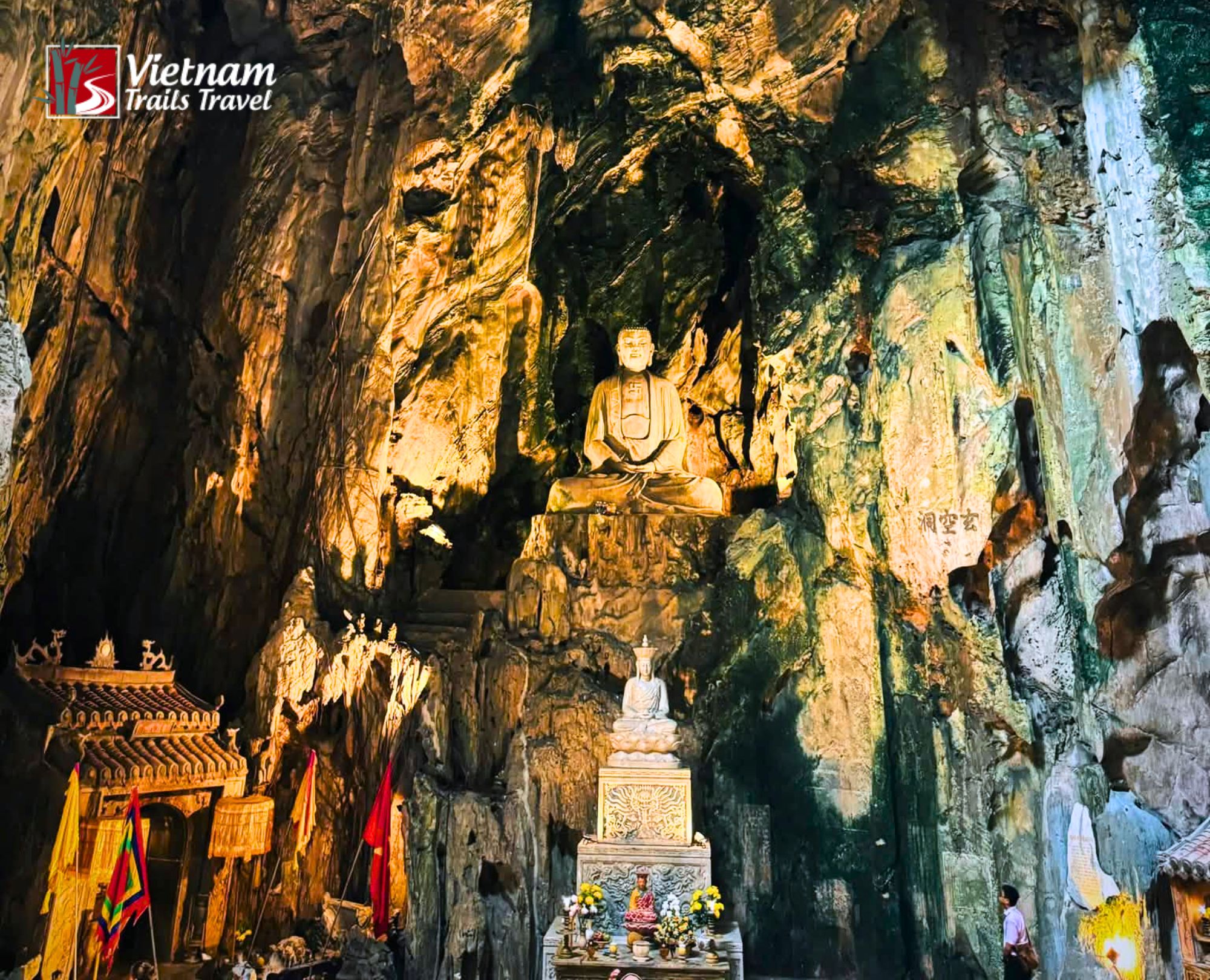
Small shrines stand along the walls, and writing from the Nguyen kings is carved near the entrance. The ground is uneven and wet in places, so shoes with good grip are important.
The cave was a secret base during the war with France and later a hospital for local fighters. For many visitors, the history of the site feels most real in this room.
4.4. Other caves on the hill
Four smaller ones are worth seeing: Hoa Nghiem, Van Thong, Tang Chon and Linh Nham. Hoa Nghiem Cave sits on the same path as Huyen Khong and holds a white stone figure of Quan The Am, the Goddess of Mercy. Van Thong Cave is a narrow passage that climbs toward the top of the hill, but the last part is steep and tight.
Tang Chon Cave has several small rooms joined by short tunnels, with marble statues and small altars inside. Linh Nham Cave is small and quiet, a good place to escape the crowds. Together, these caves and tunnels of marble give the hill its mystical marble feeling.
4.5. The two viewpoints
The two viewpoints at the top are Vong Giang Dai, facing the river, and Vong Hai Dai, facing the sea. Vong Giang Dai looks west over the Co Co River, the rice fields and the other hills. Vong Hai Dai looks east over the beach and the coastline up to Son Tra Peninsula, and on clear days the Cham Islands are visible.
These platforms show the beauty of the Marble Mountains best and give the widest view of Da Nang on the site. The paths are short but rocky, so families with children or older relatives need extra time.
Read more: Danang City Tour Full Day
5. Am Phu Cave
Am Phu Cave is a large cave at the foot of Thuy Son that shows the Buddhist idea of hell and needs a separate 20,000 VND ticket. “Am Phu” means “the underworld.” Inside, statues, lights and small bridges show how bad actions are punished after death, and the upper rooms show the way to heaven.
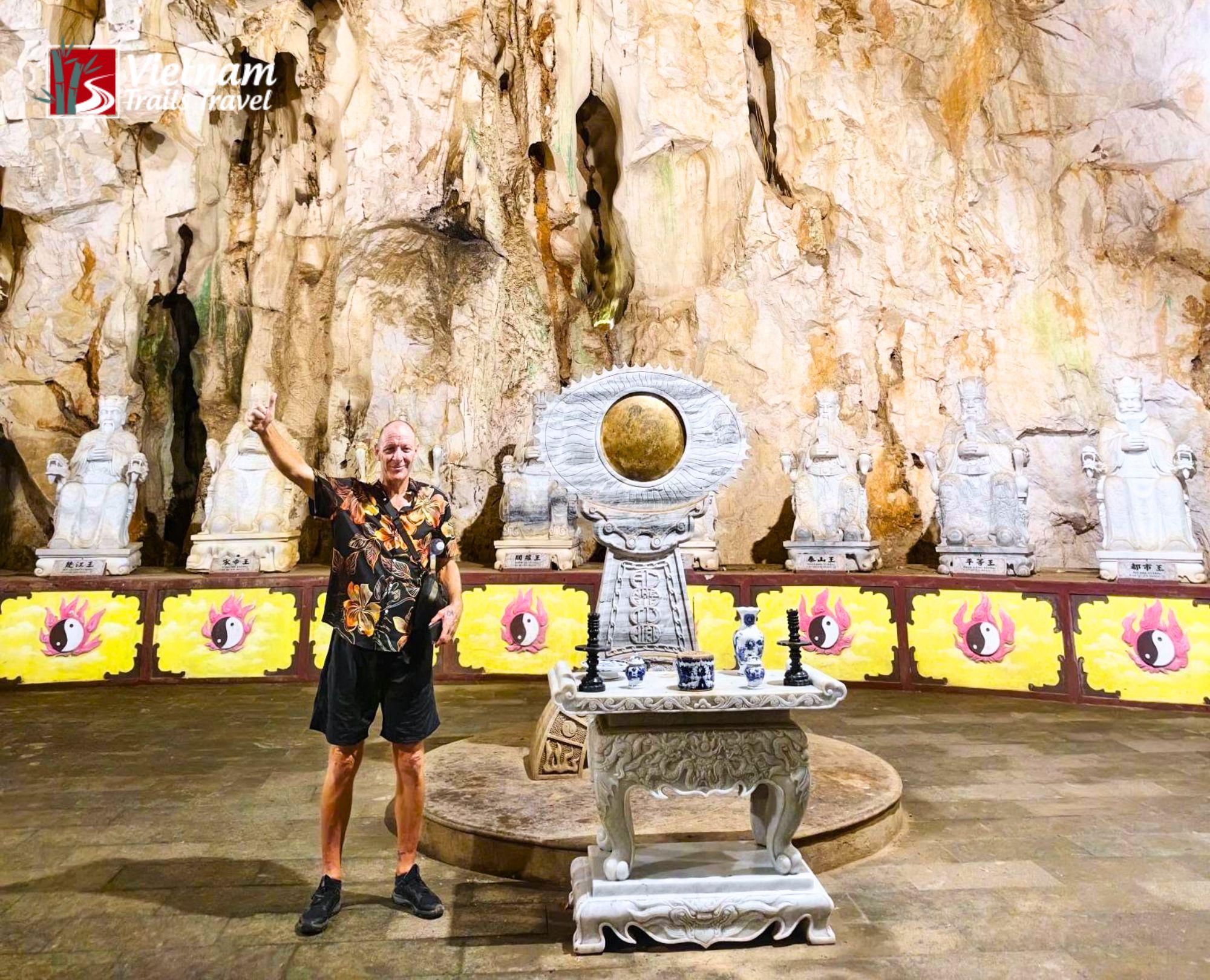
The site suits adults and older children, but some statues may scare small kids. Parts of the path are dark and slippery, and the steep stairs inside make it better to visit before climbing the main hill. A visit takes 30 to 45 minutes.
6. Marble Mountain ticket price and opening hours
6.1. How much is the Marble Mountain ticket price?
The Marble Mountain ticket price is 40,000 VND per adult for Thuy Son, 20,000 VND for Am Phu Cave and 15,000 VND per elevator ride. These prices come from the management board and have stayed the same for several years.
| Ticket | Adult | Student (with card) | Child under 6 |
|---|---|---|---|
| Thuy Son (main hill) | 40,000 VND | 10,000 VND | Free |
| Am Phu Cave | 20,000 VND | 7,000 VND | Free |
| Lift (one way) | 15,000 VND | 15,000 VND | 15,000 VND |
A return trip on the lift costs 30,000 VND. The stone carving village and the lower parts of the other hills are free. Prices can change during Tet and the Quan The Am Festival, so travelers should check with the management board or their tour company before the visit.
The full Marble Mountains ticket set (main hill, underworld cave and one lift ride) costs 75,000 VND per adult, or about 3 USD. A local guide can be hired at the ticket office for a small fee per group.
6.2. What are the Marble Mountain opening hours?
The Marble Mountain opening hours are 07:00 to 17:30 every day, including public holidays. Last entry is usually around 17:00. Visitors who arrive before 08:00 get cooler air and fewer tour groups on the paths.
6.3. Elevator or stairs: which is better?
The stairs suit fit travelers, and the lift suits families with small children or older people. The walk up takes about 15 minutes over more than 100 marble steps cut into the rock. Many travelers walk up and use the elevator to come down when their legs are tired and the stone is slippery.
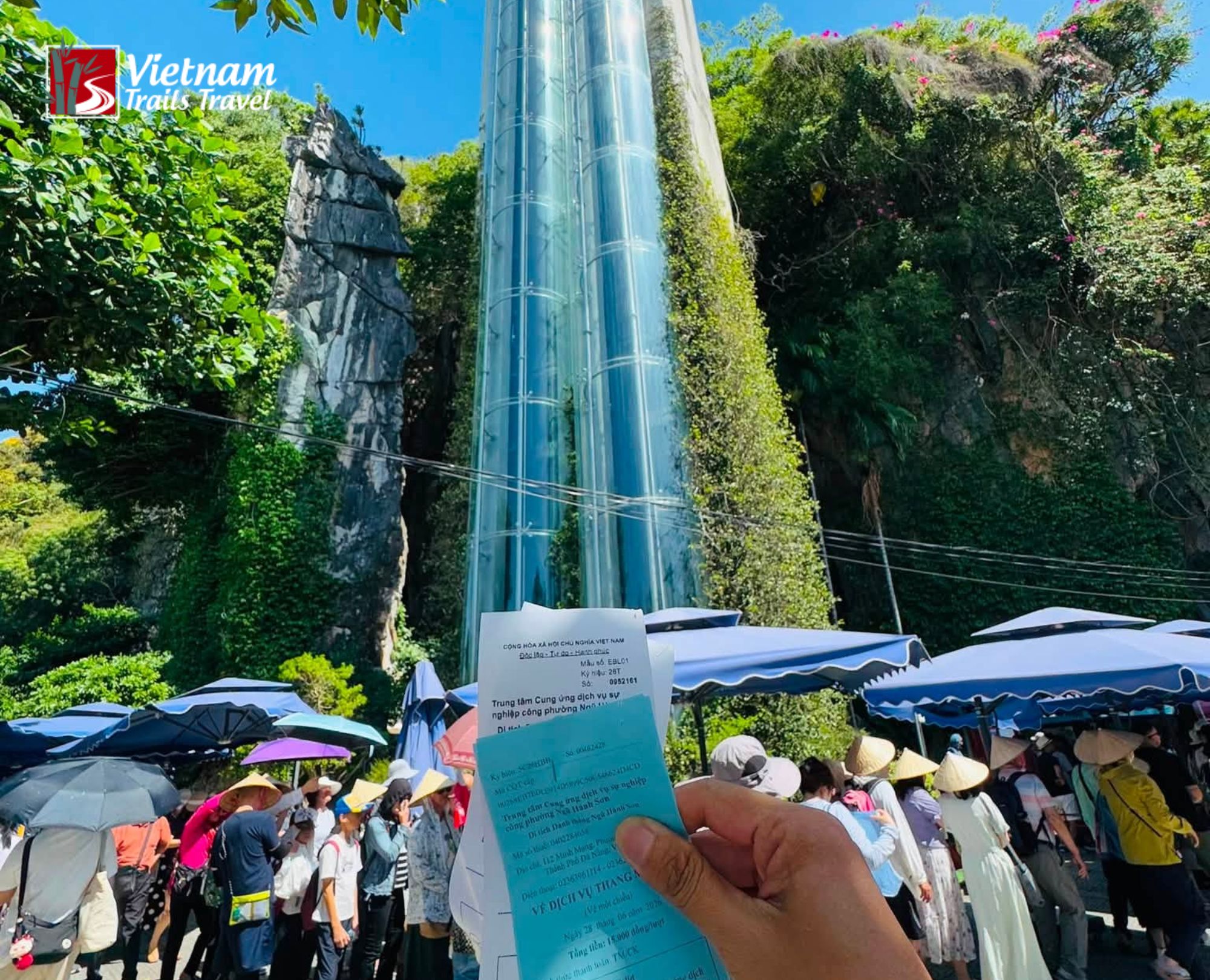
Families can take the elevator up and decide later whether to walk down. The lift only reaches the first level, and Huyen Khong and the viewpoints still require stairs. For this reason, the site is not suitable for wheelchair users.
7. How to get there
The easiest way to get there is by taxi, Grab or private car, which takes 15 to 20 minutes from the center and about 30 minutes from the old town.
| From | Distance | Time by car | Typical cost |
|---|---|---|---|
| Da Nang center | 8 km | 15 to 20 minutes | 120,000 to 180,000 VND by taxi |
| Hoi An | 20 km | About 30 minutes | Private car or tour |
| Da Nang Airport | About 10 km | About 20 minutes | Taxi or private car |
7.1. From the city center
The trip to reach the Marble Mountains from the center of Da Nang follows Vo Nguyen Giap or Truong Sa Street and takes 15 to 20 minutes. A taxi or Grab car costs about 120,000 to 180,000 VND one way. Motorbike rental costs about 100,000 to 150,000 VND per day and suits only riders with a valid license.
Car parks sit near both stair gates and the lift building. Drivers usually wait there during the visit, so the return trip is easy.
7.2. From Hoi An
The drive from Hoi An is about 20 km north along the coast road and takes around 30 minutes. Many travelers staying in the old town combine the hills with a beach afternoon or lunch in the city. A private car is the simplest option, because the driver waits while you explore the Marble Mountains.
7.3. Marble Mountain tours and private car hire
Marble Mountain tours come in three types: group tours, private guided tours and private car hire with a driver. Group tours often combine the hills with the old town or the Lady Buddha on Son Tra; they cost less but follow a fixed timetable.
Private guided tours let travelers set their own pace and include a guide who explains the history. Private car hire is the most flexible choice for families and small groups.

A common half-day route starts at a hotel outside Da Nang center or in town, stops at the hills, follows the beach road and ends in the ancient town of Hoi An. A small car or a seven-seat car with a driver fits this route well, because bags and water stay in the car. Cruise passengers on a shore trip often choose this option, since arriving back on time matters more than price.
A marble mountains tour from a good local company should include hotel pickup, parking fees and a clear drop-off time. Travelers should get written confirmation of whether entrance tickets and the lift fee are included, because some companies only price the car.
8. A simple three-hour plan
A three-hour visit starting at 07:30 covers every main sight before the tour buses arrive at around 09:30.
At 07:30, the first step is to buy tickets at the foot of the main hill and visit the underworld cave while it is cool and quiet. Around 08:15, the Gate 1 stairs or the lift lead to the upper terrace, where 20 minutes is enough for Linh Ung and Xa Loi Tower.
By 08:45, the path to Tam Thai is usually still quiet. The trail then passes Hoa Nghiem and reaches Huyen Khong at around 09:15. Sunlight reaches the Buddha later in the morning, so photographers can stay longer or return after the viewpoints.
At 09:45, the signs lead to Vong Giang Dai and Vong Hai Dai. The walk down starts at 10:15, by the Gate 2 stairs or by lift. The last half hour is free for the stone shops at the base of the marble hills nearby, and the car can leave at 10:45 or 11:00.
This plan leaves the afternoon free for a swim or a trip south. For most people, seeing the Marble Mountains in the morning is the easiest way to avoid long lines.
9. Best time to visit
The best time to visit is February to May, and the best time of day is 07:00 to 09:00. During these months, the weather is mild and rain is light. June to August is very hot, often above 35°C at midday, so an early start is important. September to December is the rainy season on the coast, with the heaviest rain and some storms in October and November. The caves stay open, but the steps become slippery and clouds can hide the view.
Late afternoon from 15:30 is also pleasant, although there is less time before closing. The busiest period is 09:30 to 14:00, when tour buses from both towns arrive.
Read more: Da Nang Travel Guide 2026
10. Non Nuoc Stone Carving Village
The village next to the hills is free to visit, and workers there have carved stone for hundreds of years. At the foot of the Marble Mountains lies Non Nuoc Stone Carving Village, along the road between the stair gates and the beach. The hills are now closed to quarrying, so the workshops bring marble and stone from other provinces.
Visitors can watch the work from the street. Workers cut each marble block by hand or with machines, then finish the small details with hand tools. The village is known for producing marble sculptures in every size, from small animals to large temple figures, including white marble figures for temples around the country.
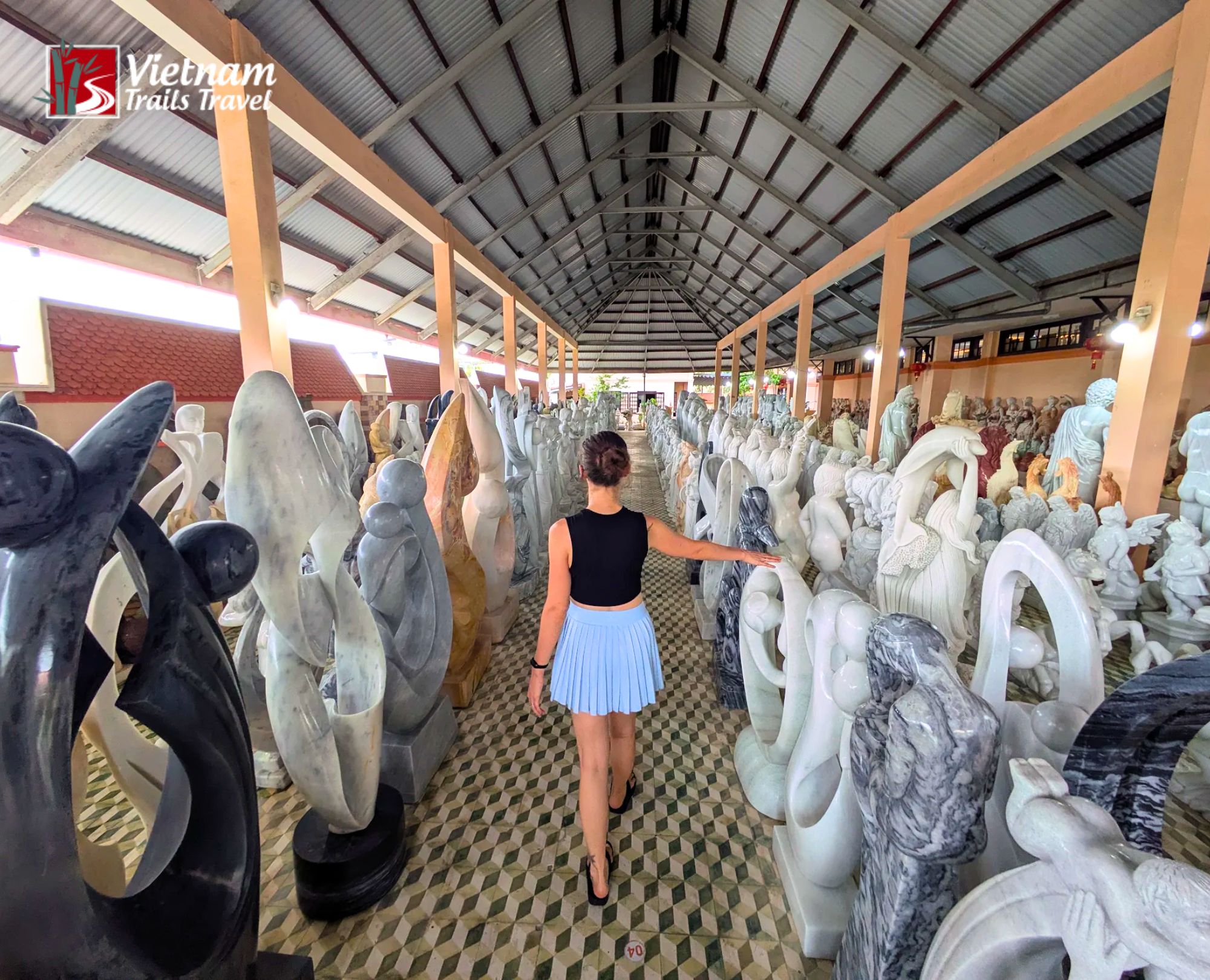
Prices vary a lot between shops and are rarely fixed, so comparing two or three shops before buying is a good idea. Big pieces can be shipped overseas, but the shop should confirm shipping cost, delivery time and insurance in writing. A small marble Buddha or animal is a lighter gift that fits in a suitcase.
11. Marble Mountain reviews
Marble Mountain reviews on major travel websites are mostly positive, with praise for the caves, the views and the low entrance fee. Many visitors call the huge Huyen Khong room one of the best parts of their time in Vietnam, especially those who arrived early.
The main complaints are midday heat, slippery steps after rain and pushy sellers in some stone shops. Marble Mountains reviews from families add that children enjoy the caves but need help on the steep stairs. An early start, good shoes and a relaxed attitude to shopping solve most of these problems, and the best experiences at Marble Mountains usually come from travelers who plan.
12. Tips for visiting Marble Mountains
The three most important tips are to wear shoes with grip, dress modestly and arrive early. The paths are uneven, some caves have wet floors and many stairs have no handrails, so sneakers or sports sandals are much safer than flip-flops.
The site is an active religious place, and local people still come to pray. Visitors should cover their shoulders and knees inside the pagodas and remove their hats before entering a shrine. Nobody should climb on statues or talk loudly. A light scarf is useful for anyone wearing shorts.
Water and snacks are sold on the hill but cost more than in town. A bottle of water, sunscreen and a phone light for the dark caves are enough. Toilets are available near the ticket gates and on the upper terrace.
13. Other destinations in Da Nang nearby
The best places to combine with the hills are the nearby beaches, Son Tra Peninsula and the old town to the south. Non Nuoc Beach is less than 1 km away and is ideal for a swim after the climb.
My Khe Beach is closer to downtown and has more restaurants and hotels. The Lady Buddha on Son Tra, 67 meters tall, makes a good second temple stop, and the Dragon Bridge and Han Market are easy to add. Together, these places show the beauty of Da Nang beyond the beach.

Hoi An Ancient Town is 30 minutes to the south, known for its lantern streets, tailor shops and riverside food. A trip that joins Da Nang and Hoi An with a stop at the hills is one of the easiest ways to see the best of central Vietnam in one day. The Hai Van Pass and the old capital of Hue are also within reach by road, which makes Da Nang a good base in the heart of central Vietnam.
14. Common questions
14.1. How long should I stay at the Marble Mountains in Da Nang?
Two to three hours is enough to see the main hill, the underworld cave and the main pagodas without rushing. The stone shops need another 30 to 60 minutes.
14.2. Is Marble Mountain worth it?
Yes, the site is worth it for most travelers. The site offers caves, pagodas, history and sea views in one small area, costs very little and fits easily into a day between the city and Hoi An. It is also one of the easiest ways to learn about Da Nang’s spiritual side in a few hours.
14.3. Can I visit without climbing stairs?
Only partly. The lift removes the first long climb, but the caves and viewpoints still have steps. Visitors who cannot climb much can still see Linh Ung and Xa Loi Tower from the upper terrace.
14.4. Do I need to buy tickets in advance?
No, tickets are sold at the gate on the day of the visit. Booking is only needed for tours or a private car.
