
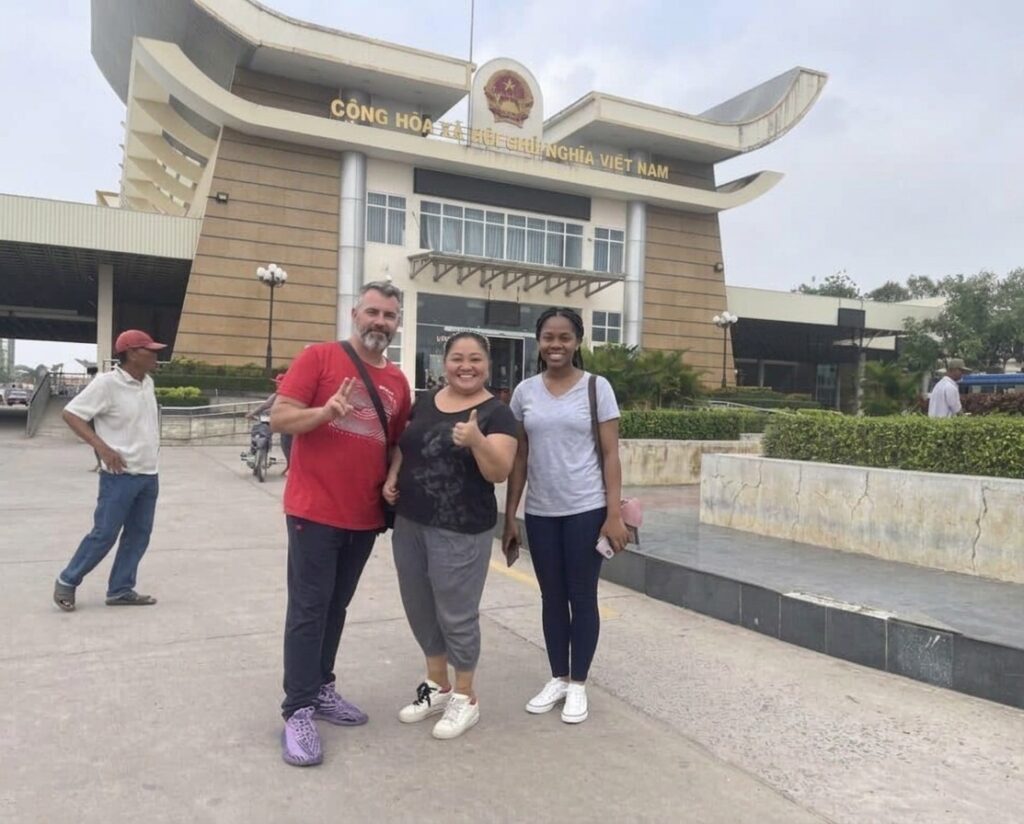
Planning to stay in Vietnam beyond your current visa validity period? For thousands of foreigners coming to Ho Chi Minh City each month, a border run to Moc Bai offers the fastest, most reliable way to reset their legal stay.
While this guide focuses on the 2026 Vietnam visa extension process via land border crossing, it’s also important to consider long-term options like the Temporary Residence Card (TRC). Obtaining a TRC allows expatriates to avoid frequent visa renewals, making long-term stay in Vietnam much more convenient.
1. What is a Vietnam visa run and why do you need it?
A visa run, also called a border run, is the practice of leaving Vietnam for a neighboring country and immediately returning to activate a new visa or reset your permitted stay. In 2026, this remains one of the most practical solutions for long-stay visitors who cannot extend visa options inside the country. Visa exemption allows citizens of certain countries to stay in Vietnam for up to 45 days without a visa, but this is not suitable for long-term residence.
The key differences between your options are straightforward:
Visa extension inside Vietnam: In 2026, renewing a Vietnam visa involves choosing between a visa extension (a stamp for a longer stay) or a visa renewal (a new visa sticker).
Visa extension adds time to your current visa (1-3 months for eligible types), is processed through the Vietnam immigration department, and fees range from 10-145 USD depending on extension duration. Visa extension allows foreigners to prolong their stay without leaving Vietnam, but is generally available for single entry only.
Visa renewal: Provides a new visa sticker and a new duration stamp in your passport. Visa renewal typically costs more than visa extension due to additional stamping and sticker fees, and can be issued for multiple entries depending on the visa type.
Border run via Moc Bai: Requires you to exit Vietnam, briefly enter Cambodia, and return on a new e visa
New e-visa from abroad: Apply online (25 USD), wait 3-5 days for approval, then enter Vietnam fresh. As of August 15, 2023, e-visas are available to citizens of all countries for up to 90 days with single or multiple entries.
For those seeking long-term residence, Vietnam offers several options for expats, including the Temporary Residence Card (TRC), work permit + TRC, investor visa, and marriage/dependent visa.
Starting July 1, 2026, Vietnam is introducing the UĐ1 visa for high-quality digital and special talent professionals, and the UĐ2 for their families, both valid for up to five years.
Why do digital nomads, retirees, and slow travelers still rely on visa runs? The answer lies in policy limitations. Tourist e-visas and single entry visas are ineligible for in-country extension per Vietnamese law under Law 47/2014/QH13. If your visa expires and you hold these common visa types, a border run becomes your only realistic option.
Important: You must leave Vietnam before your current Vietnam visa expires. Overstays trigger fines of 500,000-5,000,000 VND daily (roughly 20-200 USD) plus potential re-entry bans tracked in Vietnam’s integrated border management system.
Vietnam Trails Travel, based in Ho Chi Minh City, specializes in helping travelers organize safe, legal border runs with thorough preparation and professional assistance.
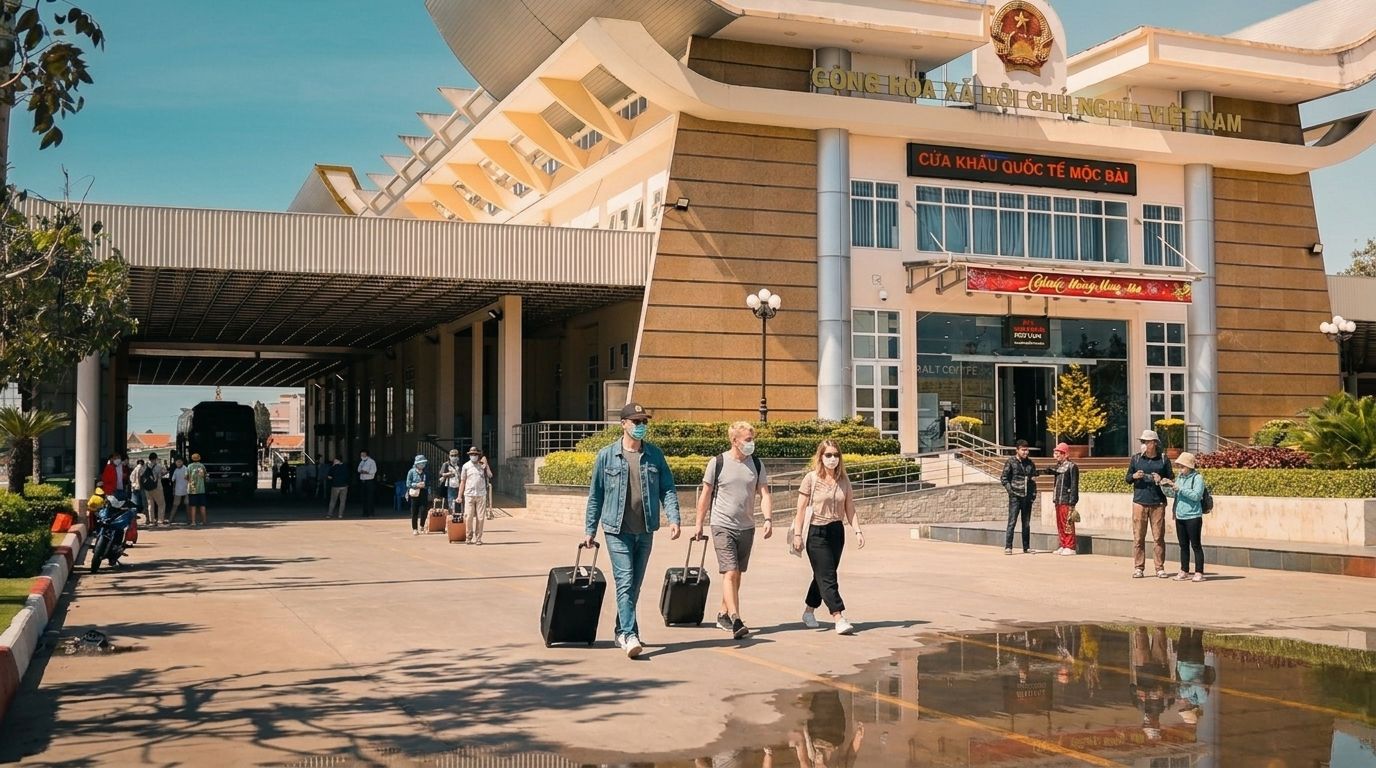
2. Why Moc Bai is the best border crossing from Ho Chi Minh City?
For anyone based in southern Vietnam, Moc Bai-Bavet stands as the most practical land border crossing for visa renewal purposes. Located approximately 70 km northwest of HCMC on National Highway 22 in Tay Ninh Province, it borders Cambodia’s Bavet town.
How Moc Bai compares to other border gates:
| Border Crossing | Distance from HCMC | Travel Time | Best For |
|---|---|---|---|
| Moc Bai-Bavet | 70 km | 2-3 hours | Southern Vietnam visitors |
| Ha Tien | 300+ km | 6+ hours | Phu Quoc travelers |
| Lao Bao | 500+ km | 8+ hours | Central Vietnam visitors |
Moc Bai handles 20,000-30,000 daily crossings and operates from 7 AM to 10 PM daily. The immigration office follows predictable procedures similar to airport protocols, making it ideal for tourists on e-visas, business visa holders on short trips and foreigners who cannot extend their visa in Vietnam through the local police or immigration office.
The Vietnam immigration office provides official services related to visas and immigration processes, and travelers can contact them for assistance with visa matters. Da Nang is another major city in Vietnam where visa extension and renewal services are available, serving as a key regional hub for immigration processes.
Downsides to note: Expect crowds on weekends and before major holidays like Tet or National Day, when queues can stretch to 2-3 hours. Facilities remain basic compared to airports.
3. Essential checklist: What to prepare before your border run (including a valid passport)
Careful planning prevents 90% of border refusals. Before your trip, verify you have all required documents ready.
3.1. Document checklist:
- Valid passport with 6+ months passport validity and at least 2 blank pages
- Printed Vietnam e-visa approval letter (A4 color copy) for re-entry
- Cambodia visa on arrival requirements met (passport photos 4x6cm, 30-40 USD cash)
- 100-200 USD in small bills plus 1-2 million VND
- Phone with offline e-visa PDF saved
- Proof of onward travel (digital flight booking)
3.2. 2026 e-visa basics for border runs:
Your e visa grants up to 90 days with single or multiple entries. Single entry holders must apply for a new visa before leaving for Moc Bai—you cannot re-enter on an expired single entry approval. Multiple entry holders can reset their stay without reapplying.
Start your border run 3-5 days before your visa sticker or e-visa expires. This buffers against unexpected delays.
Comfort tips: Bring 2L water, light snacks, SPF50+ sunscreen, and modest clothing (knee-covering attire eases scrutiny). Keep valuables in a neck wallet.
Vietnam Trails Travel offers pre-trip document review, send your passport scan and e-visa data to confirm eligibility before attempting the border run.
4. Step-by-Step Moc Bai border run guide
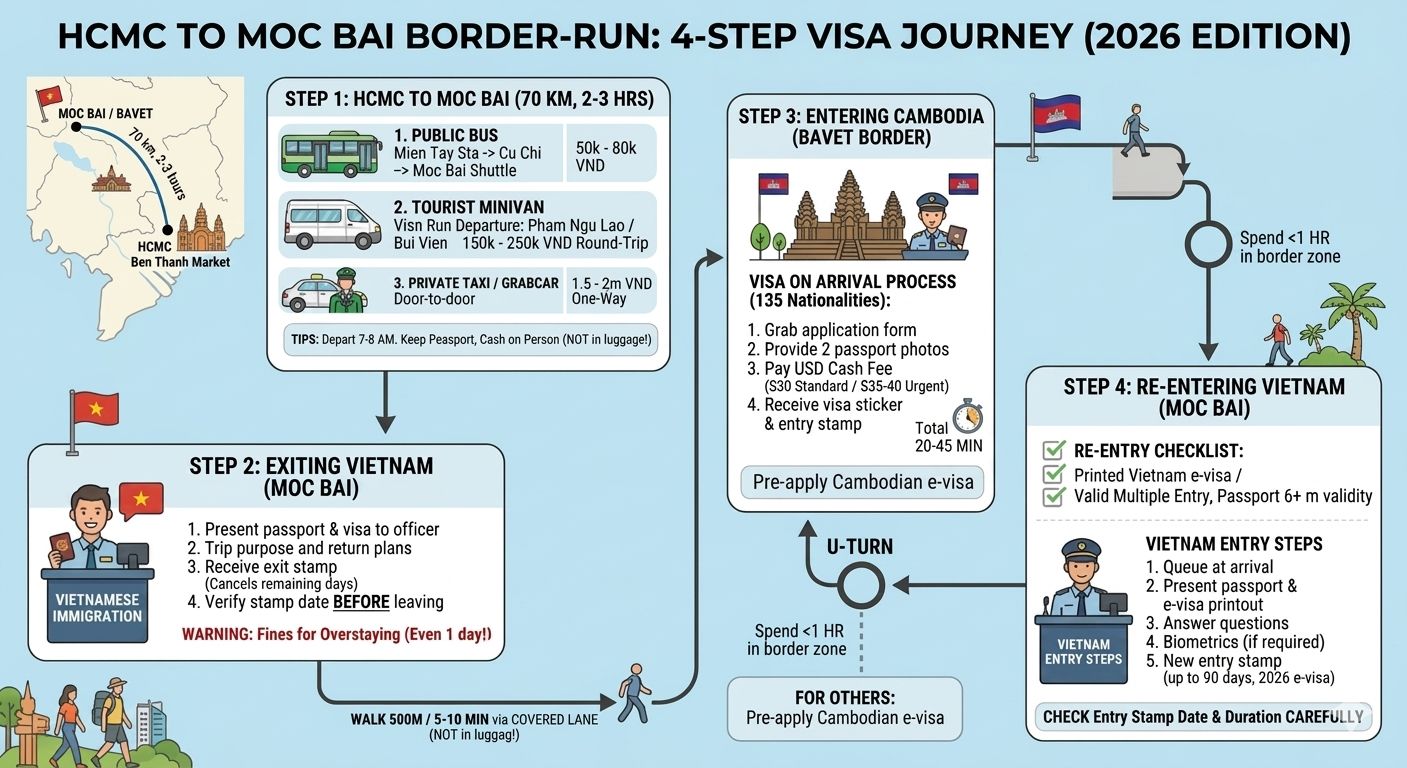
This section walks you through the complete journey from Ho Chi Minh City to Moc Bai, across to Cambodia (Bavet), and back to Vietnam in one day. It’s designed for independent travelers in 2026 who already have or will obtain the correct Vietnam e-visa for re-entry.
Expect a round trip of 6-8 hours depending on traffic, queues, and transport choice. Each step below follows chronological order with practical tips.
4.1. Step 1: Getting from HCMC to Moc Bai border
The 70 km journey takes 2-3 hours from central District 1, Ho Chi Minh City depending on traffic conditions.
Transport options in 2026:
- Public bus: Depart from Mien Tay Station toward Cu Chi, then change for Moc Bai shuttle (50,000-80,000 VND)
- Tourist minivan: Dedicated visa run departures from Pham Ngu Lao/Bui Vien area (150,000-250,000 VND round-trip, 7-8:30 AM)
- Private taxi/ Grab Car: Door-to-door service (1.5-2 million VND one-way)
Long-stay foreigners typically depart 7-8 AM to arrive at Moc Bai before lunch, avoiding afternoon queues. Keep your original passport, printed documents and cash on your person, never store them in luggage under the bus. Vietnam Trails Travel arranges door-to-door private transfers or small-group vans with English-speaking support.
4.2. Step 2: Exiting Vietnam
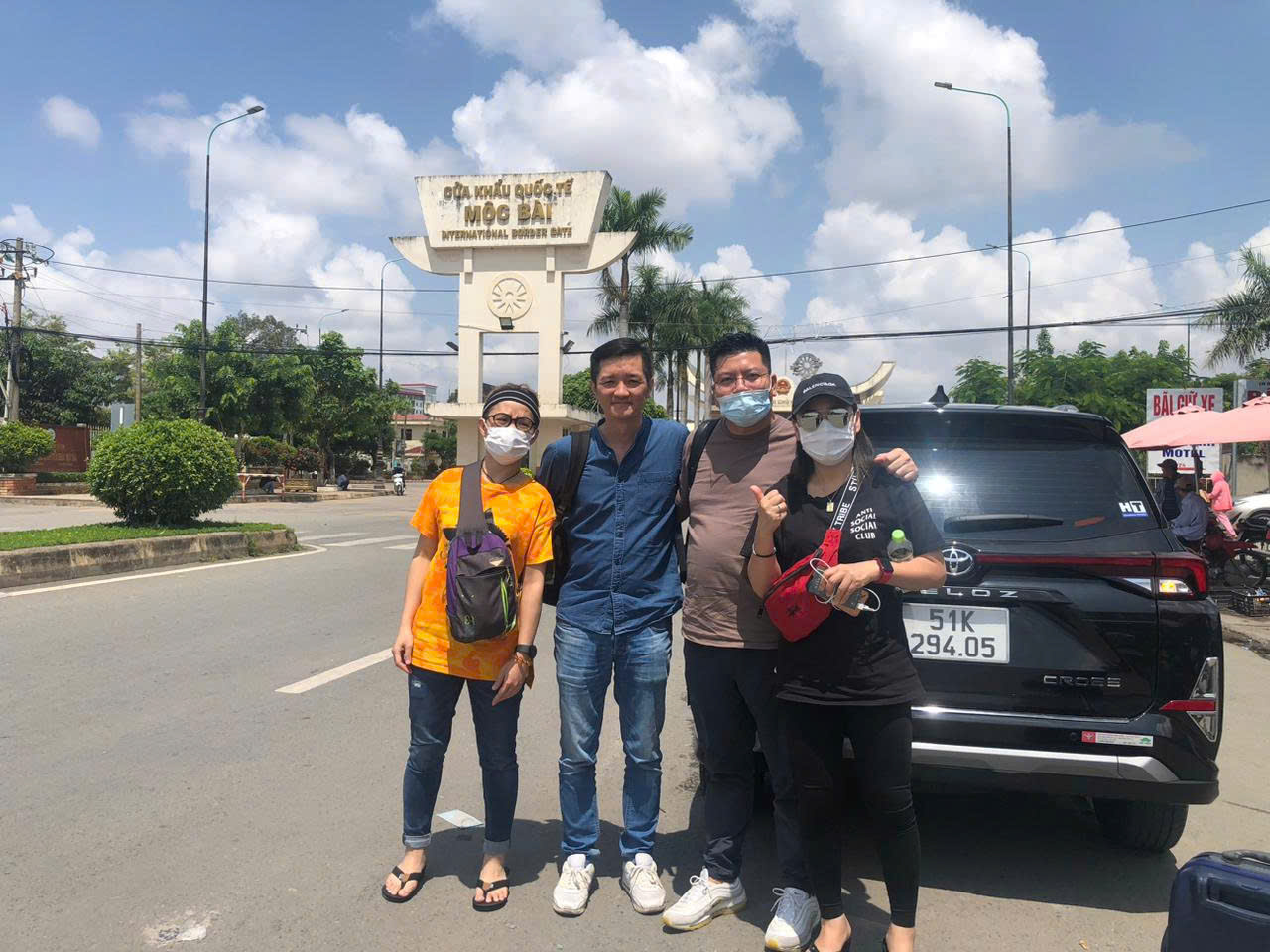
Upon arrival at Moc Bai, you’ll be dropped near the Vietnamese immigration building. Walk to the departure hall (left building) and queue at the departure line.
Vietnamese exit process:
- Present passport and current visa/e-visa to the officer
- Answer simple questions about trip purpose and return plans
- Receive exit stamp (cancels remaining days of your visa)
- Verify the stamp date is correct before leaving the counter
Officers have zero tolerance for overstays. Even 1 day past your validity period triggers immediate fines at the processing time of exit.
After exiting, walk along the signposted covered lane toward the Cambodian Bavet checkpoint, approximately 500m, taking 5-10 minutes.
4.3. Step 3: Entering Cambodia (Bavet Border)
Most nationalities (135 countries) can obtain a Cambodian visa on arrival at Bavet. Others including some Asian passport holders should pre-apply via the Cambodian e-visa portal.
Visa on arrival process:
- Grab an application form at the counter (or bring your own)
- Provide 2 passport photos (4x6cm)
- Pay the official fee in USD cash (30 USD standard, 35-40 USD urgent processing)
- Submit documents to Cambodian officers
- Receive visa sticker and entry stamp (total processing time: 20-45 minutes)
You technically enter Cambodia but typically spend less than an hour in the border zone before turning around. Keep your Cambodian entry stamp visible and retain all receipts—lost slips mean additional fees.
4.4. Step 4: The U-Turn and re-entering Vietnam
After entering Cambodia briefly, you’ll exit Cambodia and return to the Vietnam side, completing the “U-turn” that makes your border run effective.
Cambodian exit process:
- Find the departure counter
- Present passport with Cambodian visa and entry stamp
- Obtain exit stamp (2 minutes)
- Walk back toward Moc Bai (Vietnam) arrival building
Vietnam re-entry checklist:
- Printed Vietnam e-visa approval letter or valid multiple entry visa
- Passport with sufficient validity period (6+ months)
- Any supporting documents requested (rarely checked)
Vietnam entry steps:
- Queue at arrival immigration
- Present passport and e-visa printout
- Answer questions about length and purpose of stay in Vietnam
- Complete biometrics (fingerprints/photos) if required
- Receive new entry stamp with permitted stay (up to 90 days on 2026 e-visa)
Check your entry stamp carefully before leaving the counter. Verify the date and duration match your e-visa terms.
After clearing customs, exit the building, meet your bus or driver, and return to Ho Chi Minh City the same day.
5. Hassle-free Moc Bai visa run services & pricing table
Vietnam Trails Travel operates as a trusted local agency in Ho Chi Minh City specializing in Moc Bai border runs and visa extension service for 2026. Our packages eliminate the stress of navigating unfamiliar procedures alone.
5.1. Typical package inclusions:
- Round-trip transport from HCMC to Moc Bai
- Guidance at both Vietnamese and Cambodian borders
- Document pre-checks and form na5 assistance if needed
- English customer support throughout
5.2. 2026 Sample Pricing:
| Service | Price (USD) | Price (VND) | Notes |
|---|---|---|---|
| Shared minivan (4+ pax) | 25 | 700,000 | Most economical |
| Private car (2-3 pax) | 120 total | 3,200,000 | Door-to-door |
| Full-service assist + e-visa | 180 | 4,800,000 | Complete solution |
| Cambodia e-visa proxy | +20 | +550,000 | Add-on |
| Emergency same-day run | +50 | +1,400,000 | Premium rush |
Prices vary by season (Tet +30%), group size, and visa situation. The Vietnam visa extension cost can also vary depending on individual circumstances, so please contact Vietnam Trails Travel directly for precise information and an up-to-date quote before planning your border run.
The processing time for a visa extension in Vietnam typically takes 5 to 8 working days, and it is recommended to apply 7 to 10 days before your visa expires to avoid legal risks. Generally, the process for extending a Vietnam visa takes 5–7 working days and allows a 1-to-3-month extension or renewal without leaving the country.
6. Common border run mistakes to avoid
Many visa run problems are entirely preventable with correct information and careful planning.
6.1. Most frequent mistakes at Moc Bai:
- Arriving at the border without a valid new Vietnam e-visa (single entry holders)
- Traveling on or after the expiry date of your current visa
- Lacking sufficient passport validity (under 6 months) or blank pages (under 2)
- Bringing only digital e-visa copies instead of printed versions
- Carrying unpaid overstay fines from previous visits (database flagged)
6.2. Practical issues:
- Using unreliable buses that don’t wait long enough at the border
- Traveling with large luggage that slows down checks
- Forgetting USD cash for Cambodia visa on arrival
- Relying on outdated Facebook group advice instead of checking official updates
Vietnam Trails Travel helps clients avoid these mistakes through pre-trip document review and clear instructions—catching issues like insufficient pages (which cause 15% of DIY rejections) before you waste a trip.
7. Frequently Asked Questions (FAQs)
These FAQs cover the most common 2026 questions about Moc Bai border runs, visa renewals, and long-term residence options in Vietnam.
7.1. What is the difference between a tourist visa and work visas in Vietnam?
Tourist visas are for short-term visits and can be extended or renewed only a limited number of times, often requiring border runs. Work visas are issued for employment purposes, usually sponsored by a Vietnamese company, and can be extended for longer periods but require a valid work permit and supporting documents.
7.2. What are the requirements for a Vietnam business visa extension?
To extend a Vietnam business visa, you need to submit your original passport, current visa, Form NA5, temporary residence confirmation, and supporting documents from your sponsoring Vietnamese company, including a valid business license.
7.3. What is a work permit and how does it relate to a Temporary Residence Card (TRC)?
A work permit is required for foreigners to work legally in Vietnam. Once you have a work permit, you can apply for a TRC, which allows you to reside in Vietnam for up to two years. Both the work permit and TRC must be renewed before expiry to maintain legal status.
7.4. How does the Vietnamese government regulate visa policies?
The Vietnamese government oversees visa categories, has expanded e-visa options, adjusted visa exemption periods, and sets requirements for long-term residents, students, workers, and investors.
7.5. How does a TRC impact daily life for expats in Vietnam?
Holding a TRC simplifies administrative processes, enables longer stays, and makes it easier to integrate into Vietnamese society, improving daily life for expatriates.
7.6. How do I extend my Vietnam visa in 2026?
Submit Form NA5, your original passport, and proof of residence to the Immigration Department 7–10 days before your visa expires.
7.7. How long can I extend my visa for?
The extension duration depends on your current visa type and cannot exceed the validity of the original visa category.
7.8. Are there visa-free stays for European citizens?
Citizens of 12 European countries, including Belgium, Germany, and the UK, enjoy a 45-day visa-free stay in Vietnam until 2028.
7.9. What are the penalties for overstaying a visa in Vietnam?
Overstay penalties have increased and now range from VND 500,000 to VND 20,000,000 depending on the length of the overstay.
Read more: Vietnam Visa Overstay Penalty Issue 2026: Fines, Blacklist, Solutions
7.10. What is a Temporary Residence Card (TRC) and who is eligible?
A TRC allows foreigners to reside in Vietnam for six months to five years, depending on eligibility and sponsorship by a Vietnamese company, family member, or investment.
8. Conclusion
As of 2026, Moc Bai remains the most practical and efficient border crossing for renewing your stay in Vietnam from Ho Chi Minh City. Whether you’re a digital nomad maxing out 90-day e-visas or a retiree navigating extension process barriers, the same-day border run delivers reliable results.
The key to success: plan ahead, secure the correct Vietnam e-visa for re-entry, bring all required documents (including your valid passport with adequate pages), and allow enough time for travel and border queues.
Consider professional assistance from Vietnam Trails Travel to reduce risk, save time, and ensure your visa run complies with current Vietnamese and Cambodian regulations.
Contact us today for a customized Moc Bai border run plan or advice on whether visa extension, border run, or a different visa types solution works best for your 2026 extended stay in Vietnam.
