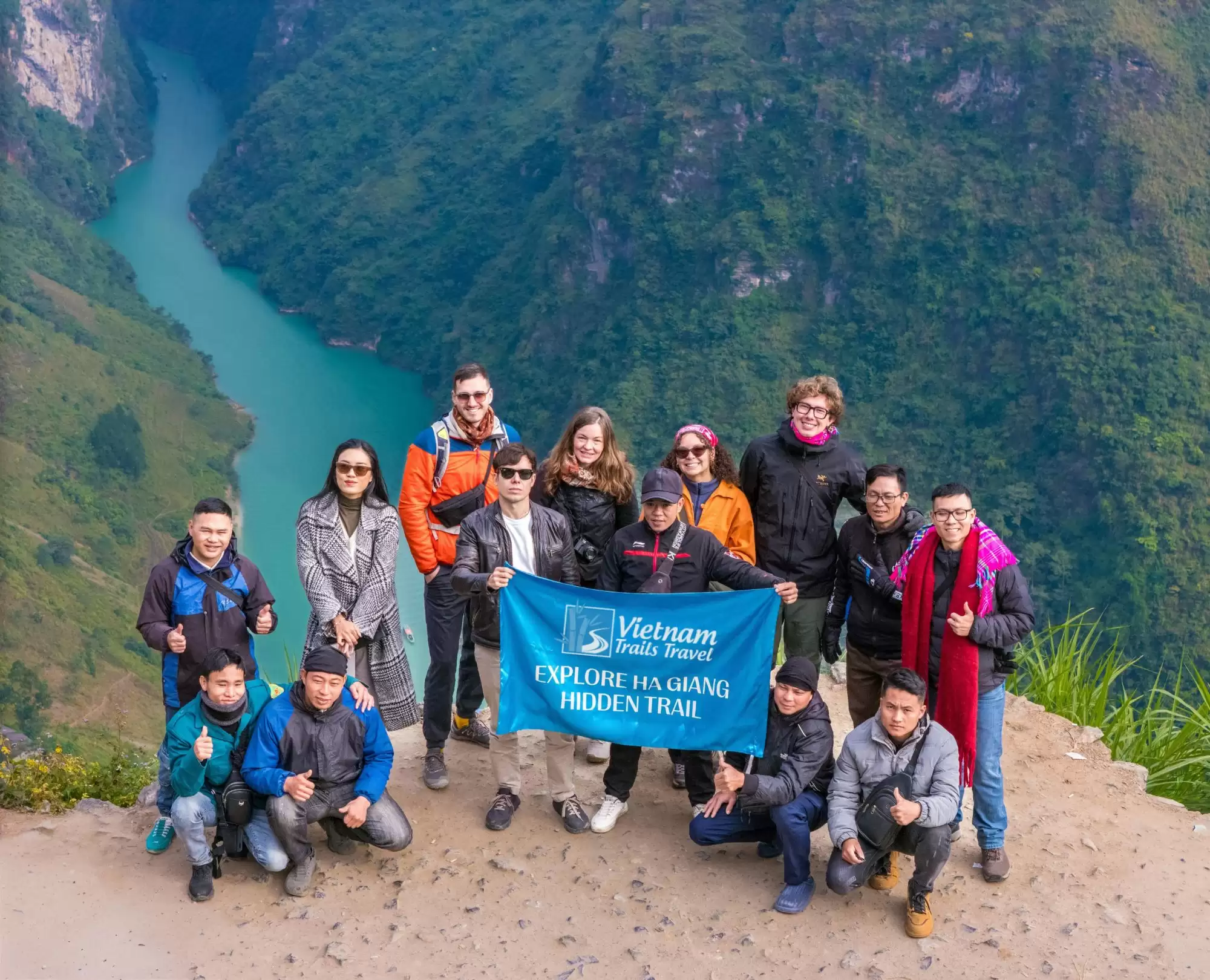
Ha Giang is a land of nature, culture, and history. It boasts not only breathtaking terraced rice fields, pristine pink and white buckwheat flower fields, and winding mountain passes, but also numerous scenic spots, historical relics, and a diverse and unique highland culture.
Many tourists eagerly anticipate one day backpacking to this mountainous region. To make your trip even more fulfilling, Vietnam Trails Travels has compiled and filtered a wealth of travel experiences from visitors, revealing essential tips for traveling to Ha Giang that you should keep in mind to avoid regrettable mistakes.
The Ha Giang Loop is a scenic 350–370 km (220-mile) route through Vietnam’s northernmost province, winding through the UNESCO-recognized Dong Van Karst Plateau Geopark. Starting and ending in Ha Giang City, this legendary route takes you through some of the most majestic mountain landscapes in Southeast Asia.
I. Quick Guide to the Path
Route: Ha Giang City to Quan Ba, then to Yen Minh, Dong Van, Meo Vac, Du Gia, and back to Ha Giang.
On this tour, you will experience the following:
Ma Pi Leng Pass is located on National Highway 4C, in the communes of Pai Lung and Pa Vi, Meo Vac district, Tuyen Quang province (formerly Ha Giang Province). This is a strategic route connecting Dong Van town and Meo Vac on the Dong Van Karst Plateau.

Approximately 20 km long, the pass winds around limestone cliffs at an altitude of 1,200 to 1,600 meters above sea level, creating a rugged yet majestic landscape.
- Located in Lung Cu commune, Dong Van district, Ha Giang province, the Lung Cu flag tower is known as the “roof of the northernmost point of the Fatherland.” It is not only a famous tourist destination but also holds immense historical and cultural value for the region.
- The Dong Van Karst Plateau Geopark encompasses four mountainous districts in northern Ha Giang province: Quan Ba, Yen Minh, Dong Van, and Meo Vac. Since 2010, the Dong Van Karst Plateau has been recognized by UNESCO as Vietnam’s first Global Geopark.
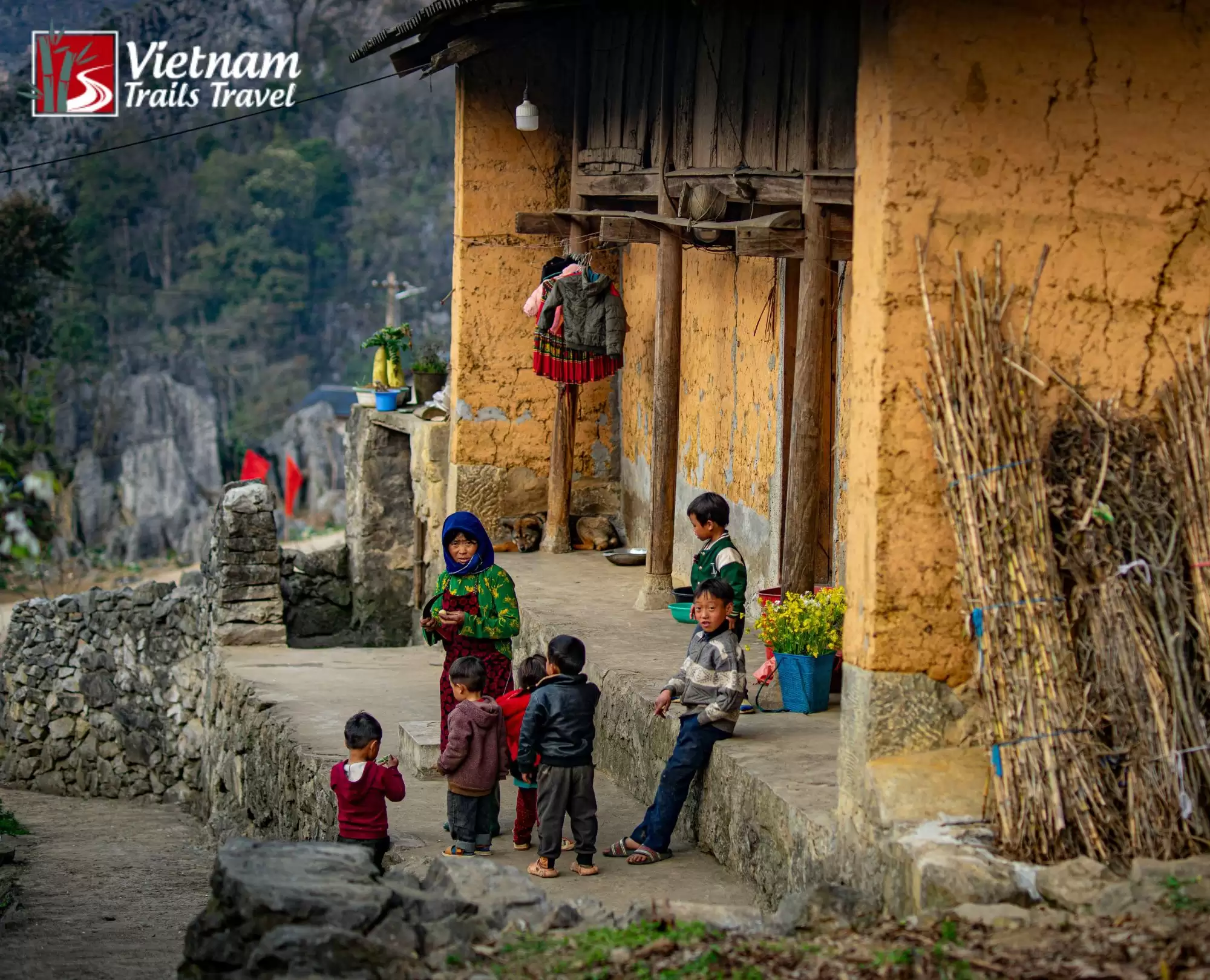
- Traditional ethnic minority villages are home to the H’mong, Dao, Tay, and other lively communities.
- Stunning mountain passes include the Quan Ba Heaven Gate, Tham Ma Pass, and the well-known “Ma Pi Leng Skywalk.”
II. Why is the Ha Giang Loop so special?
The Ha Giang Loop is still mostly unaltered and original, in contrast to Vietnam’s more popular tourist spots (Ha Long Bay, Sapa). You are seeing a place where 19 ethnic minority groups continue to lead traditional lives, where terraced rice fields are still farmed by hand, and where the beauty is so striking that it seems unreal.
2.1. The Stunning Landscape
This isn’t an exaggeration from a travel brochure. One of the most picturesque road journeys in the world is the Ha Giang tour with a driver. You’ll travel through:
- Limestone karst towers rising sharply like a dragon’s fangs
- Cascading rice terraces glowing with a golden hue at harvest time
- Abyssal canyons with winding rivers carving through their depths
- Mist-shrouded mountain passes where you traverse through the clouds.
- Remote hamlets clinging to steep slopes that seem to challenge the laws of physics
2.2. Genuine Cultural Immersion
You will have opportunities to live in a village like a local, nestled in the slope, which is home to some minor ethnic groups, like the Red Dao, Hmong, and Tay. You are not experiencing it through a television; you learn about the traditions and cultures, sharing the foods like a family, watching them make traditional handicrafts, listening to the time-honored ethnic folklore, and joining in heritage dances.
2.3. Exploration Off the Beaten Path
While destinations like Ha Long Bay attract tens of thousands of people every day, the Ha Giang Loop in Vietnam remains blissfully unknown. Yes, it’s becoming more popular, but you’ll still find yourself on mountain roads with nothing but eagles and clouds for company. This is the ultimate northern Vietnam trip adventure.
2.4. The Adventure That Has Everyone Talking
In any Vietnam travel forum, Ha Giang Loop stories dominate. There’s a reason why people frequently describe it as the highlight of their whole Vietnam vacation. It’s difficult enough to feel like a success, comfy enough to be approachable, and stunning enough to fill your camera roll with unforgettable photos.
Read more:Top Vietnam Tourist Attractions 2026
III. Best Time to travel to Ha Giang Loop
3.1. Spring (March – May) – Highly Recommend
- Weather: 15–28°C (59–82°F)
- Conditions: moderate temperatures with sporadic light rain
- Scenery: Vibrant flowers and verdant surroundings
Pros:
- Temperatures suitable for riding
- Not as many people as in the fall
- March blooming of peaches and plums
- The season for planting rice has begun (gorgeous green terraces).
Cons:
- It might rain.
- Not the season of golden rice terraces
Ideal for: Photographers who enjoy taking pictures of lush landscapes and avoid crowds during busy times of the year
3.2. Summer (June – August)
- Weather: 25–35°C (77–95°F)
- Conditions: Frequent afternoon thunderstorms, heat, and humidity
- Scenery: verdant and lush, yet frequently overcast
Pros:
- It’s all really green.
- Waterfalls are at their peak.
- Fewer tourists (those on a tight budget prefer lower prices)
- Excellent for swimming at Du Gia Waterfall
Cons:
- There could be a lot of rain, especially in July and August.
- Some areas have muddy roadways.
- Risk of landslides (rare but conceivable)
- Warm and muggy
- Clouds and fog can obstruct views.
Ideal for: Low-cost tourists, lovers of waterfalls, and people who don’t mind rain
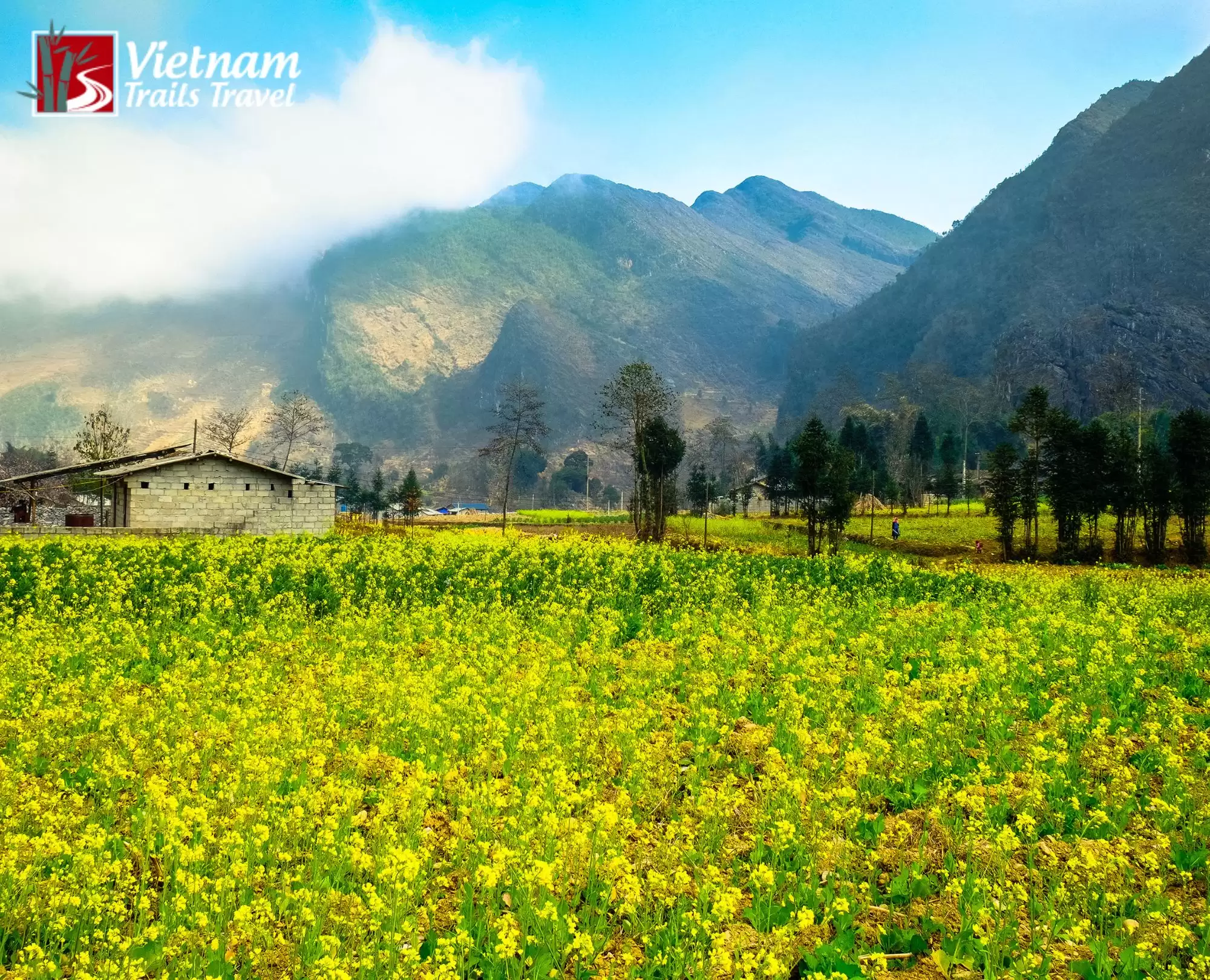
3.3. Fall (September – November)
- Weather: 18-28°C (64-82°F).
- Conditions: Clear, dry skies, ideal cycling weather.
- Scenery: Golden Rice Terraces and Buckwheat Flowers.
Pros
- Ha Giang is at its most breathtaking during peak season, which makes sense.
- Terraces of golden rice (late September to early October)
- Hillsides bloom pink or purple during the buckwheat flower season, which runs from late October to November.
- The best images are taken under crystal-clear skies.
- Ideal temperatures
- Village harvest celebrations
Cons:
- Most crowded (make reservations two to three weeks in advance).
- A little bit more expensive
- Popular opinions can be hectic.
Ideal for: photographers, first-timers seeking the “classic” Ha Giang experience, and anyone hoping for consistently excellent weather.
3.4. Winter (December – February)
- Weather: 5–20°C (41–68°F), with nighttime lows of 0°C
- Conditions: Extremely dry and cold, with sporadic mist
- Scenery: Desolate but striking, foggy mountains
Pros:
- Fewer people (you’ll have the roads to yourself)
- Enigmatic foggy mornings
- The lowest costs
- Less humidity and clear air
- A distinct view of the terrain
Cons:
- COLD, particularly in the morning and at night
- Wear layers of warm clothing!
- Less vibrant (no golden rice or flowers)
- Certain homestays are less cozy (basic heating).
- Views may be obscured by morning fog.
Ideal for: Travelers on a tight budget, people who detest crowds, and photographers seeking dramatic or melancholy photos.
Read more:Travel Guide Hanoi Old Quarter 2026
IV. How to get to Ha Giang Loop?
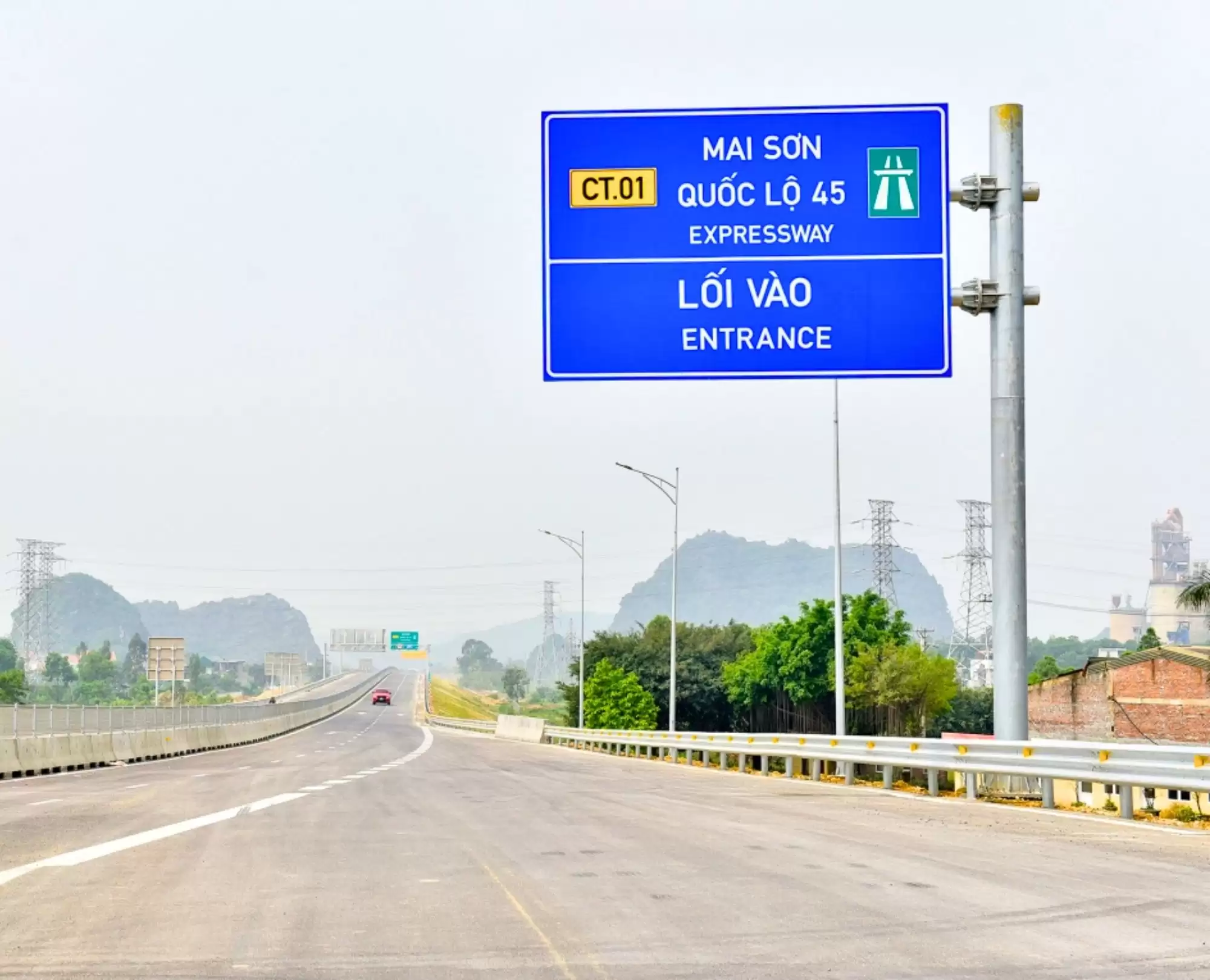
The distance from Ha Giang to Hanoi is approximately 300 kilometers. There is no airport and no rail station, so the only option is by car or bike.
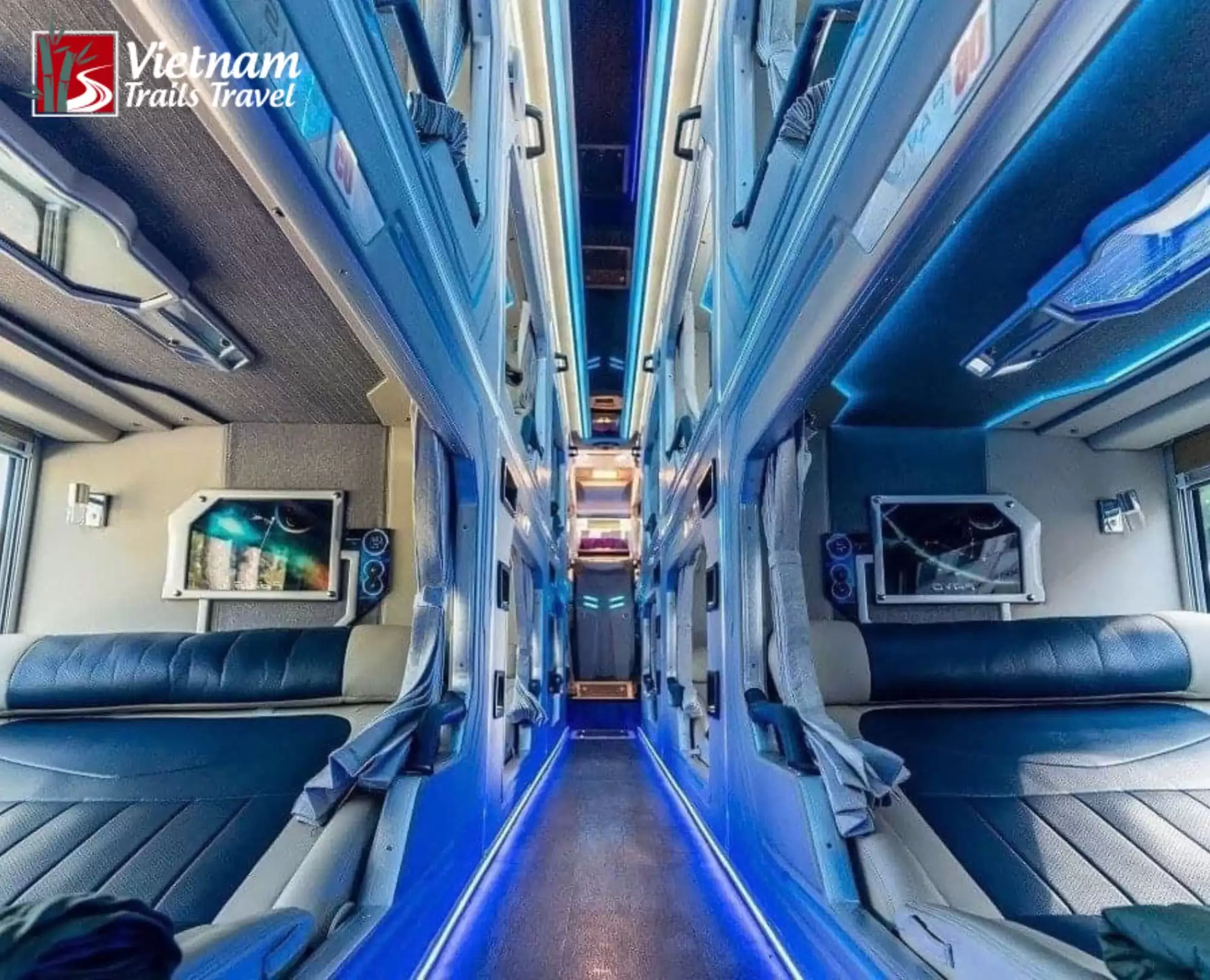
Option 1: Sleeping bus to Ha Giang
- Time:5 to 7 hours
- Cost: $10–14 USD, depending on the kind of bus
- Arrival: 3 PM to 4 AM; departure: typically 7 AM to 9 PM
Types of Buses Available:
VIP Bus for Sleeping ($14)
- Beds that recline (not bunks)
- More room
- Fewer travelers
- Cleaner
Option 2: Adventure Ha Giang Loop Tour by car (Highly Recommend)
- Duration: 2 days 1 night, 3 days 2 nights, 4 days 3 nights,…
- Cost: $175 USD – $229 USD
- Departure: Daily
Type of vehicles:
Private car from Hanoi to Ha Giang: Sedan 4-seat, SUV 7-seat, Van 16-seat, Bus 29-seat, Bus 45-seat or luxury limousine.
Pros:
- Pick up and drop-off at where you require.
- Friendly driver and professional tour guide
- Energetic tour guide, sociable and outgoing, with extensive knowledge of history and geography.
Cons:
- More expensive
- Traveling on a fixed route
Ideal for: Couples, Families with little child, luxurious tourists

Option 3: Self-Drive Motorbike Tour of Ha Giang Loop
What it is: You ride your own semi-automatic or manual motorcycle with a group of self-driving individuals and follow the planned schedule while renting a tour guide.
Conditions:
- A valid motorcycle license from the nation of origin The Vienna Convention of 1968 established the International Driving Permit (IDP).
- CRITICAL UPDATE 2025: The Ha Giang Loop now frequently has police roadblocks. Riding without a license can result in fines of 6-7 million VND ($240-280 USD). More significantly, if you are not properly licensed, your travel insurance might not cover incidents.
For whom it is intended:
- Skilled riders with the appropriate licenses
- Those who desire total freedom
- Adventurers who don’t mind taking risks
Pros:
- Complete independence (stop anywhere, anytime)
- The least expensive alternative ($130–160 for four days)
- More daring
- Able to make diversions
Cons:
- Risky if inexperienced (accidents frequently occur)
- Miss the local guides’ cultural insights
- Navigating can be challenging.
- You manage every emergency.
- High danger of penalties without a license
- Complications with insurance
- Total cost: $130–160 (gas, lodging, food, and bike rental).
V. Conclusion
Embarking on the Ha Giang Loop is more than just a road trip; it is a profound journey into the heart of Vietnam’s rugged northern frontier. Whether you choose the adrenaline of a self-drive motorbike tour or the comfort of a private car, the key to a successful adventure lies in respecting the local culture and preparing for the winding terrain.
By following these essential travel tips and choosing the right season for your vibes, you’ll ensure that your trip to Ha Giang is filled with breathtaking photos and unforgettable memories rather than avoidable mistakes. Are you ready to conquer the “final frontier” of Vietnam?