
Chau Doc Travel Guide 2026 — Ultimate Guide to Chau Doc, Vietnam
Quick overview: Chau Doc and the Mekong Delta
Chau Doc (Vietnamese: Châu Đốc) sits at the edge of the Mekong Delta (Vietnamese: Đồng bằng sông Cửu Long) in Southern Vietnam (Vietnamese: Miền Nam Việt Nam), about 240 km from Ho Chi Minh City and 125 km from Can Tho — a riverside market town where life moves with the tides.
If you’re arriving in Vietnam (Vietnamese: Việt Nam) for the first time, Chau Doc offers a softer pace than Ho Chi Minh City (Vietnamese: Thành phố Hồ Chí Minh) and a close look at delta living.
Locals here run boats, farms and small shops along branching canals; in the morning you’ll hear engines and market calls as fishermen bring in the day’s catch. For travelers wanting a mix of culture and calm, Chau Doc, Vietnam is a smart stop on any Mekong (Vietnamese: Mê Kông) route — its floating markets and Sam Mountain (Vietnamese: Núi Sam) temples give a real feel for life on the river.
Many people describe this place as being at the heart of the Mekong for its role in trade and cross-border connections with Cambodia (Vietnamese: Campuchia).
Best time to visit Chau Doc
If you want calmer mornings on the river, plan your trip between November and April — that’s the best time to visit Chau Doc for drier weather and cooler nights. During these months the skies are clearer across the Mekong Delta and boat trips to the floating market feel more comfortable.
For travelers who like photos and easy walking between temples and the quay, this time to visit Chau Doc is the most predictable.
The floating season runs mainly in the rainy months, roughly May to October, when higher water opens more channels and makes the seasonal floating market more active.
If your aim is to see boats tied close to village houses and markets spread across the water, consider timing your visit during the early wet season, when water levels rise but storms are not yet frequent. Be ready for occasional heavy showers and bring waterproof layers.
If you’re balancing crowds and weather, late November or early December often hits a sweet spot: pleasant temperatures, lively markets, and fewer people than peak travel months in Vietnam.
Local festivals on Sam Mountain and temple events happen at different times of year, so check dates if you want to match a cultural activity.
No matter when you travel, adapt your plans to river conditions—boat schedules can change with water levels. Packing a light rain jacket, sun protection, and mosquito repellent will keep your days flexible.
With a little timing and the right gear, Chau Doc shows a different side of the Mekong Delta in each season.
How to get to Chau Doc (from Ho Chi Minh City & Cambodia)
To get to Chau Doc from Ho Chi Minh City, most travelers choose an express bus or private transfer. Buses leave Mien Tay Bus Station (Vietnamese: Bến xe Miền Tây) and An Suong (Vietnamese: Bến xe An Sương) stations overnight or early morning; the ride takes about 6–7 hrs depending on traffic.
If you prefer comfort and speed, book a private car or shared transfer — drive to Chau Doc takes roughly 5–6 hrs on a good day.
For a faster option by air, fly into Can Tho (Vietnamese: Cần Thơ) (air travel) and then take a 2–3 hour car ride west toward the Mekong Delta; this shortens road time and gives you more daylight on arrival.
Crossing from Cambodia to Vietnam is straightforward for people coming from Phnom Penh. There are daily shuttle buses and private cars that run Phnom Penh–Chau Doc, with a border crossing at Prek Chak/Ha Tien or at the Chau Doc international checkpoint depending on route.
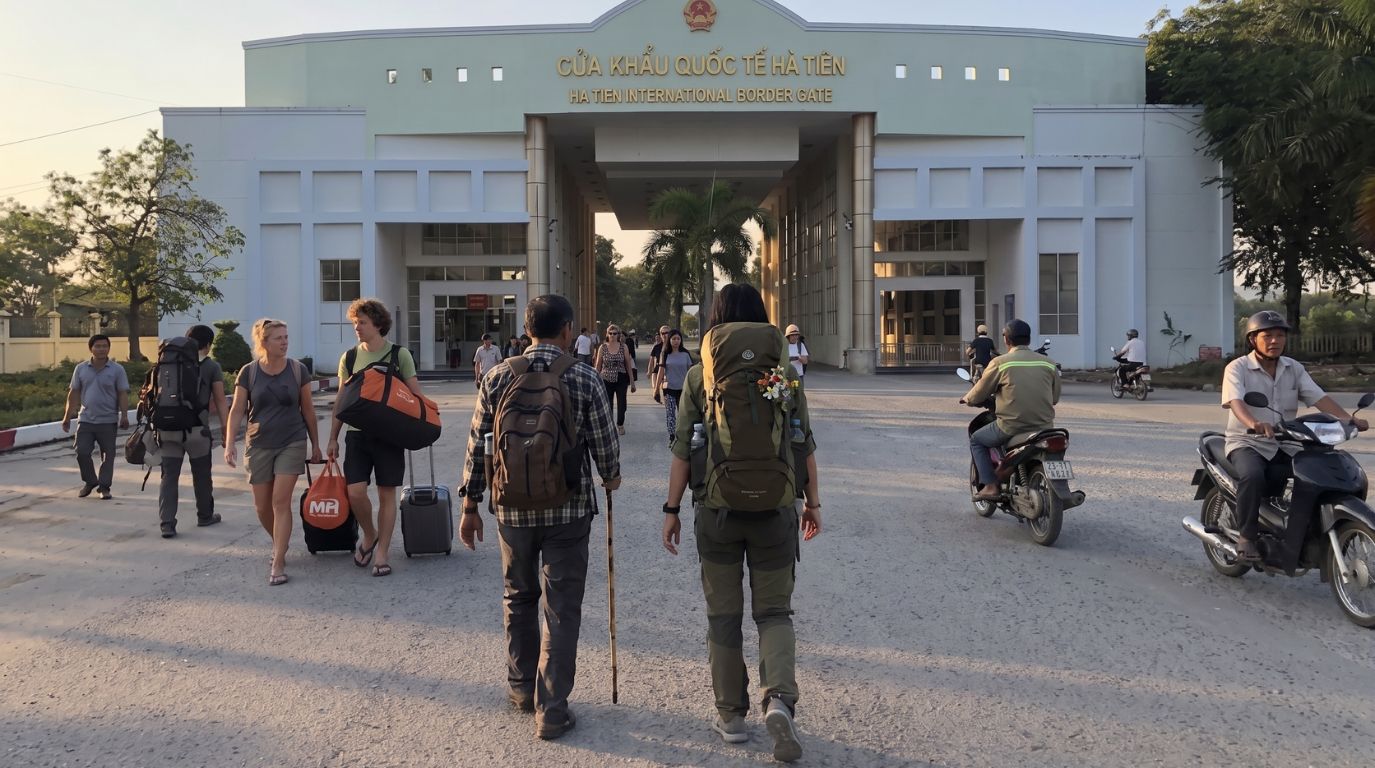
Some travelers do the river option: take a speedboat from Chau Doc to Phnom Penh like Hang Chau tourist (Vietnamese: Hãng tàu Hàng Châu) — a scenic link that connects Cambodia to Vietnam by water. Always check visa requirements before you travel when going from Cambodia to Vietnam, and confirm opening hours at the border.
Read more: Vietnam Visa Travel Guide 2026
If you plan to drive to Chau Doc yourself, roads are mostly two-lane and well signposted, but expect slower sections and occasional checkpoints. Renting a car with a driver is common and removes local hassles.
Once you reach the Chau Doc city center, many hotels sit close to the quay so you can step off the road and onto the river quickly.
Whichever way you choose to get to Chau Doc, factor in river timetables for boat tours and the seasonal changes that affect crossings.
Booking transfers in advance for peak months will save time and keep your arrival smooth.
Where to stay: Hotels, homestays and Victoria options?
When you plan where to stay in Chau Doc, think about whether you want river views or a neighborhood near the market. If you prefer comfortable service and colonial-style rooms, the Victoria Chau Doc hotel and the Victoria Núi Sam Lodge (Vietnamese: Victoria Núi Sam Lodge) are reliable choices — both sit close to the quay and make it easy to join morning boat trips.
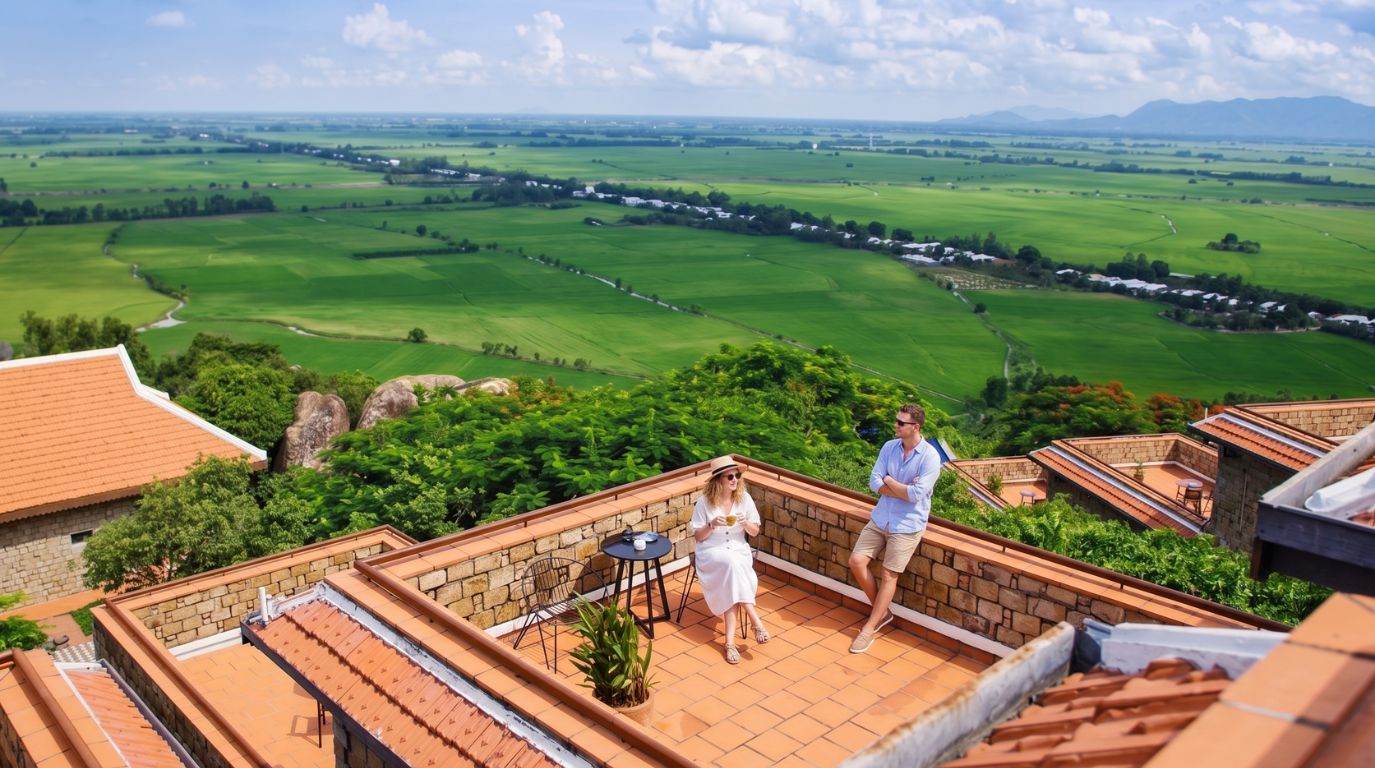
Travelers who choose Victoria options often like the balance of quiet rooms and quick access to the main attractions on Sam Mountain and the river.
For a more local feel, book a Chau Doc homestay. Homestay in Chau Doc lets you eat family-style meals, learn about fishing and rice farming routines, and wake to the sound of boats.
Hosts are used to travelers and can suggest the best time to see the floating market or arrange a boat to Tra Su forest (Vietnamese: Rừng tràm Trà Sư). Many homestays are within a few kilometers of the Chau Doc city center, so you can reach the lively quay and markets without long transfers.
Budget hotels around the market offer basic rooms with fans or air conditioning and often include breakfast. Mid-range hotels near the riverfront give decent comfort and easy walking access to temples and tours.
If you want to stay in a quieter area, pick a place on the road up toward Sam Mountain — it’s peaceful and still close to attractions.
Book ahead during the high season and festival dates, and ask whether the property can help with boat bookings or pick-ups from Ho Chi Minh City.
Whether you want a family-run homestay or a polished stay in Chau Doc, Mekong Delta offers options that fit different travel styles and make getting on the water simple for your days here.
Top tourist attractions in Chau Doc
Sam mountain
When you arrive in Chau Doc, Sam Mountain is one of the top attractions you’ll notice from a distance — a low ridge that shapes local life and ritual. Climb or drive up for early-morning views, then visit the cluster of temples that ring the summit.
Ba Chua Xu temple (Vietnamese: Miếu Bà Chúa Xứ) draws many Vietnamese pilgrims who come to give thanks; the scent of incense and the steady flow of offerings create a strong local atmosphere you’ll find hard to forget.
Tay An pagoda
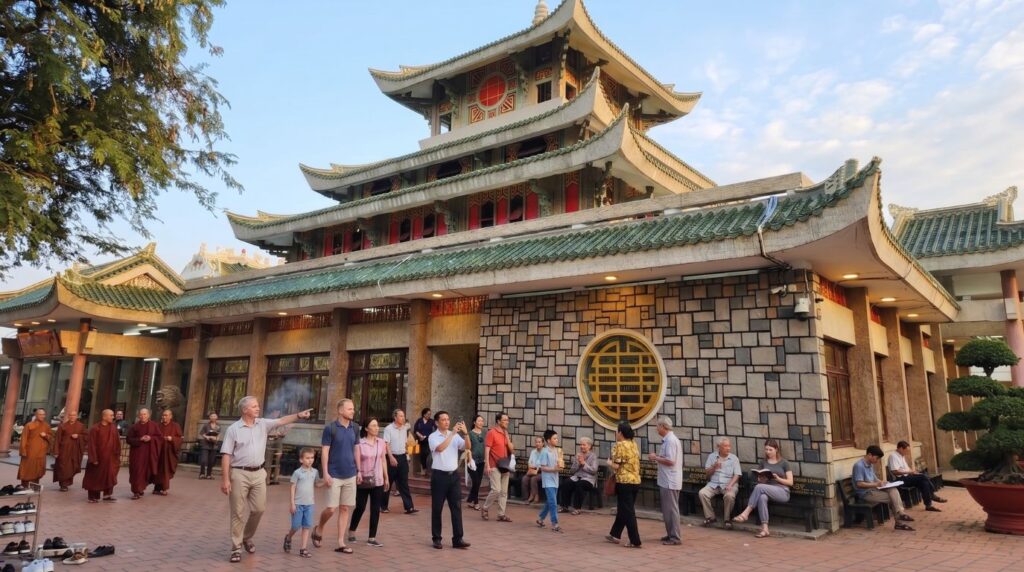
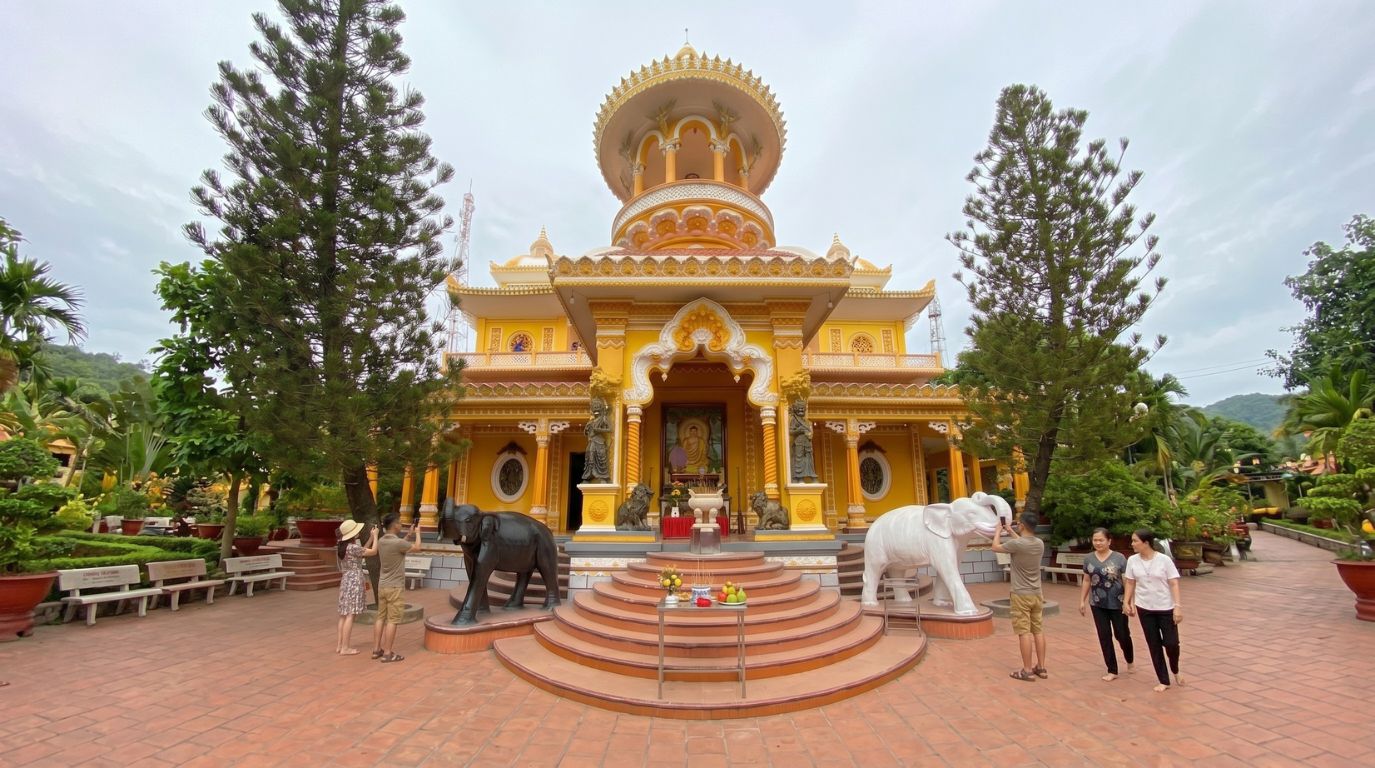
Near the foot of Sam, Tay An pagoda (Vietnamese: Chùa Tây An) stands out for its layered roofs and peaceful courtyards. Spend time here to see monks at prayer and to learn about regional practices that link the Mekong Delta’s river culture with faith sites.
Don’t miss Hang pagoda (Vietnamese: Chùa Hang) tucked into limestone slopes — its caves and Buddha statues offer a quieter place to reflect away from the quay.
Tra Su Cajuput Forest
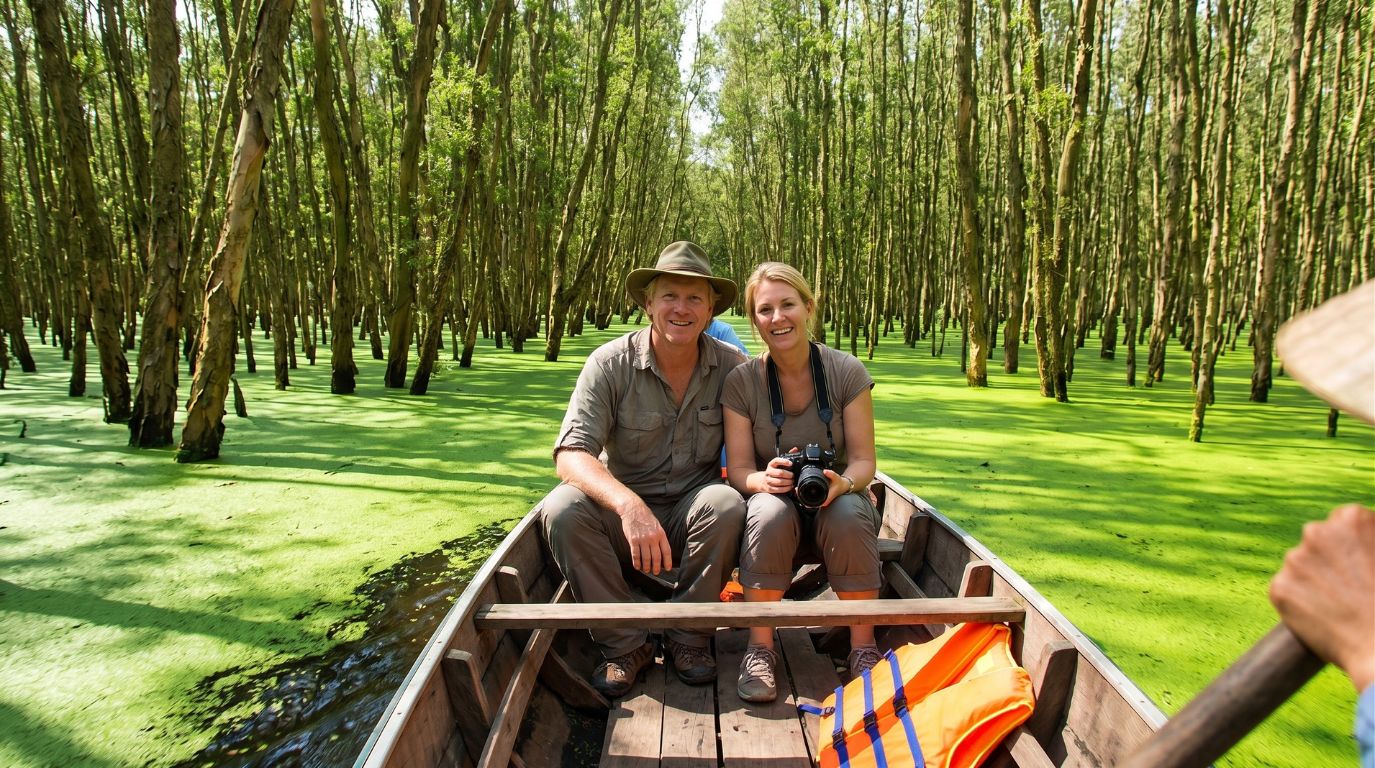
Tra Su Cajuput Forest is a must-see near Chau Doc for quiet waterways shaded by tall cajuput trees. Boat eco tours glide through flooded trails where you’ll spot birds and water plants up close.
In the heart of the reserve, raised boardwalks and observation towers give scenic views of the flooded forest and mirror-like channels. Plan a morning visit to catch wildlife when it’s most active and bring a hat and binoculars.
Tra Su Forest’s calm canals and green canopy make a peaceful half-day trip from Chau Doc.
Ba Chua Xu Temple
Ba Chua Xu holds deep meaning for many local people—she’s a protective figure tied to harvests and river safety, and worship here blends folk beliefs with Buddhist practice. Arrive early to hear prayers and see offerings: flowers, incense, and woven goods.
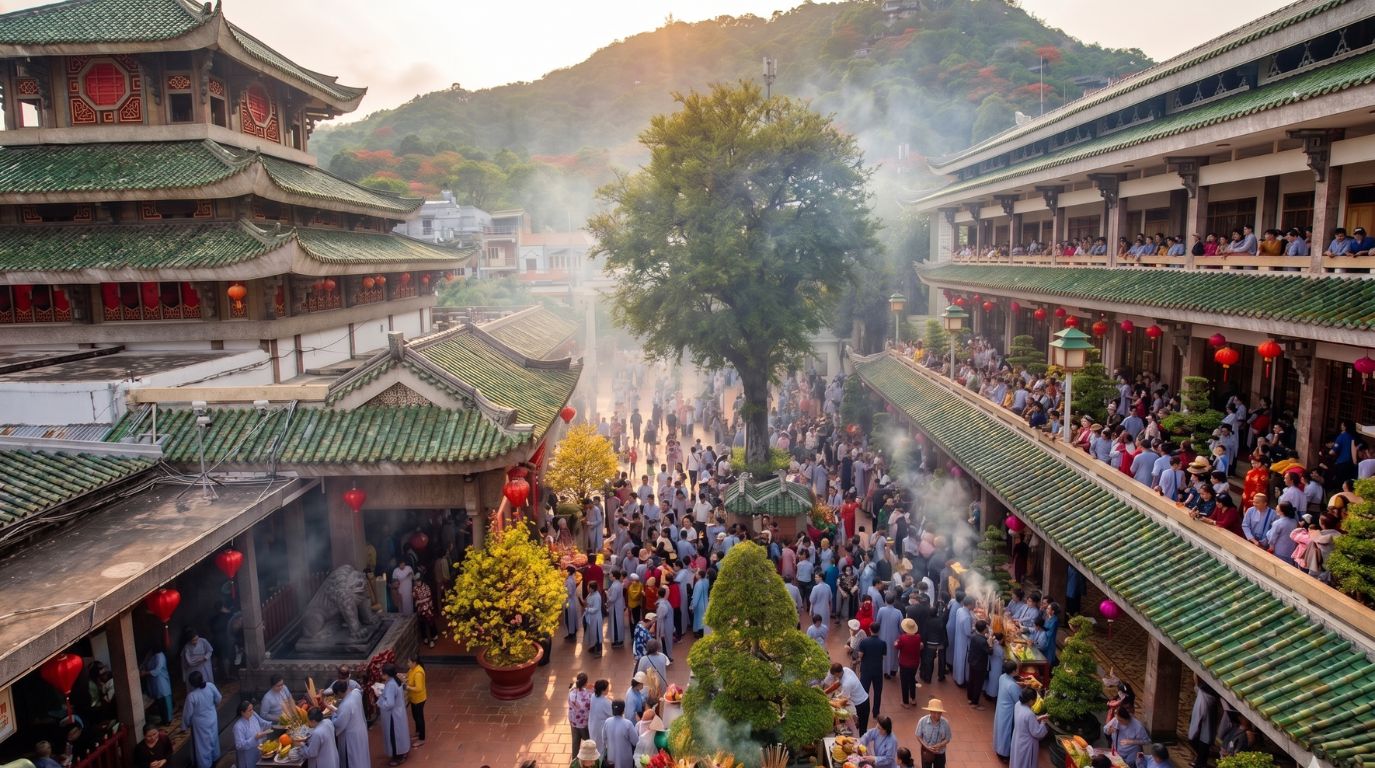
For etiquette, dress modestly, remove shoes when required, and speak quietly near altars. Offerings are welcome but follow local practice—observe before you join in. Photograph respectfully, avoid blocking worshippers, and ask a monk or attendant if you’re unsure about rituals. A calm visit shows respect and helps you understand local faith rhythms.
Cham Village
Cham Village near Chau Doc preserves a small Islamic community with public mosques and daily prayers that shape village rhythms. When you visit, you’ll see traditional weaving workshops where women produce ikat textiles and scarves using hand-dyed threads and simple looms.
Talk with artisans to learn about motifs and techniques—many are happy to show the process and sell small pieces. Dress respectfully at religious sites, remove shoes in mosques, and ask before photographing people. A short visit offers insight into a Vietnamese Muslim culture and local craft traditions that link faith, family life, and skilled handwork.
Chau Doc market
Start early and head to the Chau Doc market (Vietnamese: Chợ Châu Đốc) where morning stalls sell fish, herbs and grilled snacks. From the quay you can join a boat to the Chau Doc floating market (Vietnamese: Chợ nổi Châu Đốc) — boats trade produce, household goods and breakfast bowls on the water.
Drift past the floating village (Vietnamese: Làng bè nổi) and watch families selling from sampans; photo chances are around every bend. Back on shore, the lively Chau Doc market buzzes with bargaining and street food.
Talk with sellers and your boat driver to learn which canals have the best market activity that day.
Many of the top attractions sit within a short ride of the Chau Doc city center, so you can plan a half-day that combines Sam Mountain, Ba Chua Xu, and Tay An. Boats and taxis run frequently, and hotels can arrange early pickups so you catch cooler light on the slopes.
For travelers who like photos, the temple compounds and stairways up Sam give strong framing without long hikes. These sites show how faith, history, and river life meet in Chau Doc, Vietnam — a calm, human side of the Mekong Delta that many travelers remember long after they leave.
Food & local flavors: Chau Doc specialties
In Chau Doc, food shapes the day. Start your morning with a bowl of hu tieu (Vietnamese: hủ tiếu) or pho (Vietnamese: phở) at a riverside stall—fresh noodles, clear broth and herbs that show how Vietnamese cooking uses local produce.
For something specific to this town, look for the cake of Chau Doc — palm sugar honeycomb cake (Vietnamese: Bánh bò thốt nốt), a rice-based sweet often sold near the market and perfect with coffee. Traders and boat drivers commonly recommend small stalls where families cook recipes passed down locally.
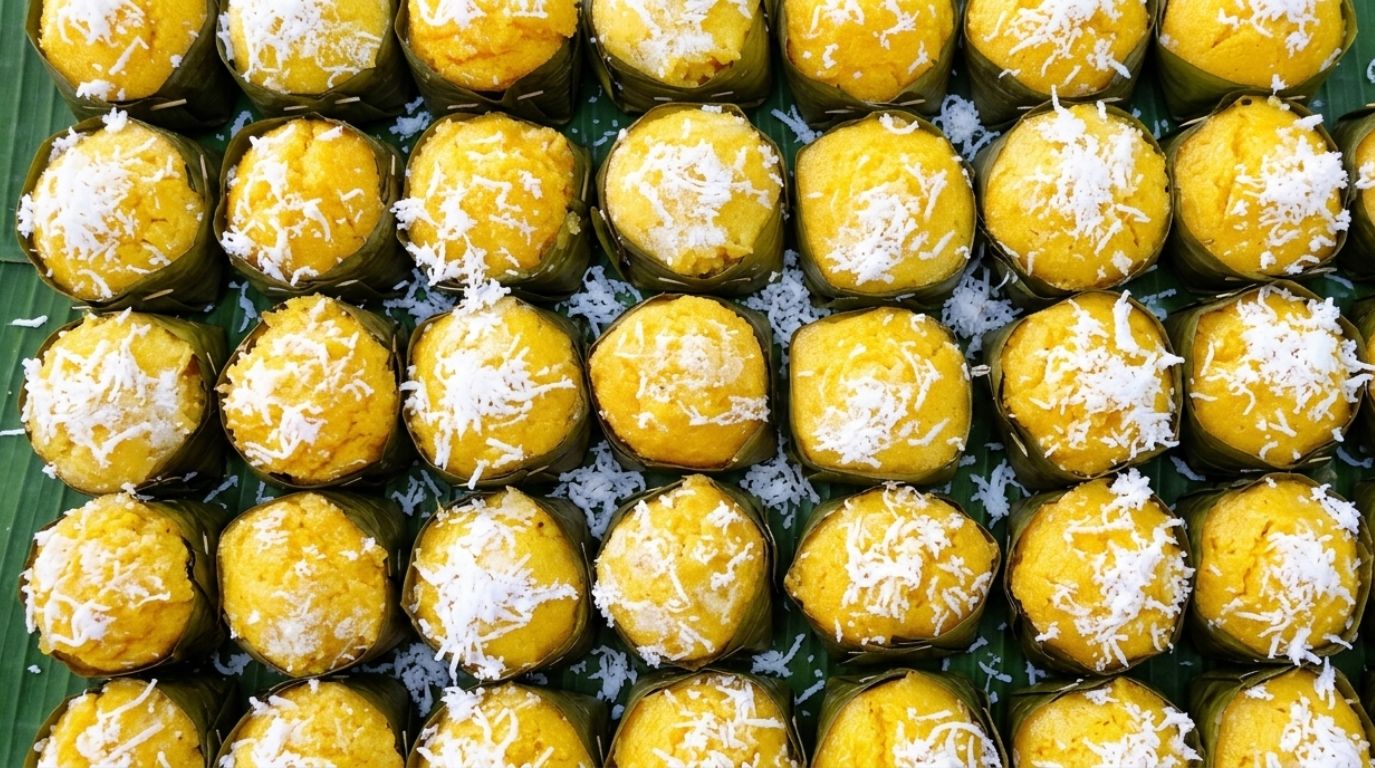
Chau Doc fish sauce (Vietnamese: Mắm Châu Đốc) is a local product worth tasting and taking home; it’s saltier and more aromatic than versions you may find elsewhere in Vietnam. Ask at the quay markets for a small bottle from a family maker so you can try it in a home-cooked meal or drizzle it over grilled fish.
Street food around the Chau Doc market serves grilled river fish, fried spring rolls, and bánh xèo-style pancakes (Vietnamese: bánh xèo) filled with shrimp or local greens—simple, fast, and made with ingredients from nearby farms and canals.
If you’re staying in a chau doc homestay, dinner is often a group affair: rice, stews, and seasonal vegetables served family-style. Hosts might offer a boat trip to catch fish before cooking, giving you direct experience of where your meal began.
For sweet treats, try sticky rice with tropical fruit or the local cake mentioned above.
To eat like a local, follow the crowd at busy stalls, ask your hotel or homestay host for the best spots, and be ready for early breakfasts and late-light dinners by the river.
Trying things to do in Chau related to food—market tours, short cooking sessions, or a tasting walk—adds texture to your stay and connects taste to place in the Mekong Delta.
Best itineraries: 24 hours, 48 hours and 3–4 days in Chau Doc
1 Day Chau Doc Itinerary
Start at dawn with a boat to the Chau Doc floating market for breakfast on the water—watch traders sell produce and bowls of noodle soup. Return to the quay and walk the Chau Doc market to sample local snacks like Bun Ca Chau Doc.
Midday, head to the base of Sam Mountain to visit Ba Chua Xu temple and Tay An pagoda; take time to climb a short trail for river views. Finish with an evening riverside meal and a stroll through the lively market area.
2 Days 1 Night in Chau Doc (overnight itinerary 2 days)
Day 1: Arrive mid-morning and drop luggage near the Chau Doc city center. Spend the morning at the floating village, then eat lunch at a market stall. In the afternoon, check into a chau doc homestay or riverside hotel and visit Hang pagoda before sunset. Day 1 ends with a relaxed dinner and local music if available.
Day 2: Early start to Tra Su cajuput forest for a guided eco tour—birdwatching and shaded canals are highlights. Return in the afternoon for last-minute shopping and a final walk along the quay before departure. This short plan balances exploring Chau Doc with moments to relax and meet locals.
Chau Doc + Can Tho + Phnom Penh Route
If you have more days, link Chau Doc with Can Tho and Phnom Penh for a broader Mekong Delta experience. From Chau Doc you can take a speedboat or bus toward Cambodia, or drive to Can Tho (about 2–3 hrs) to join river tours and the large Cai Rang floating market.
From Can Tho, continue north by road or arrange a boat link toward Phnom Penh via border crossings—confirm schedules and entry rules in advance. This route mixes temple visits, market life, and cross-border travel so you can see the best places to visit across southern Vietnam and into Cambodia while managing travel time and days in Chau Doc.
Practical tips: safety, visas, health and tourist info
As a traveler heading to Chau Doc, keep basic precautions front of mind. Check visa rules before you leave—requirements vary by nationality and can change, so confirm entry rules for Vietnam and any single-entry vs. multiple-entry limits.
Carry a printed copy of your passport page and visa stamp, plus digital backups.
Health: review recommended vaccinations for Vietnam and pack a small first-aid kit. Bring mosquito repellent and consider anti-malarial advice if you plan extended time in rural delta areas.
Drink bottled or boiled water, avoid ice from uncertain sources, and eat street food where turnover is high to reduce risk of stomach upsets.
Safety: river travel is central here, so wear life jackets on boats and check that your operator maintains safety gear. Roads around the Mekong Delta can be narrow; if you drive to Chau Doc, hire a local driver or ensure your rental includes insurance.
Keep an eye on personal belongings in crowded zones like Chau Doc market and when boarding boats.
Money and services: ATMs are in the town center, but cash is useful for small purchases, market stalls, and tips.
Pharmacies in Chau Doc stock basic medications; for serious needs, medical facilities in Can Tho or Ho Chi Minh City have more services. Travel insurance that covers medical evacuation is wise.
Local rules and culture: dress modestly at temples and pagodas, remove shoes where required, and follow simple etiquette during ceremonies. Ask before photographing people in sacred spaces.
If you plan to cross from Cambodia to Vietnam, confirm border hours and visa-on-arrival details ahead of time.
Planning: book transfers and boat tours in advance during peak months, and check schedules for seasonal changes in river levels that affect the floating market.
These practical steps will make travel to Chau Doc smoother and let you focus on the sights, food, and local rhythms of the Mekong Delta in 2026.
