
Hue Travel Guide 2026: Best Things to Do, Food & Travel Tips
There many beautiful places in Vietnam (Vietnamese: Việt Nam), but Hue (Vietnamese: Huế) gives a different feeling the moment you arrive. The pace is slower, the streets feel calmer, and life moves quietly along the Perfume River (Vietnamese: Sông Hương).
While cities like Ho Chi Minh City (Vietnamese: Thành phố Hồ Chí Minh) are energetic and modern, Hue still carries the atmosphere of old imperial Vietnam in everyday life. Early morning coffee shops open beside moss-covered walls, incense drifts through temples, and dragon boats move slowly across the river before sunset.
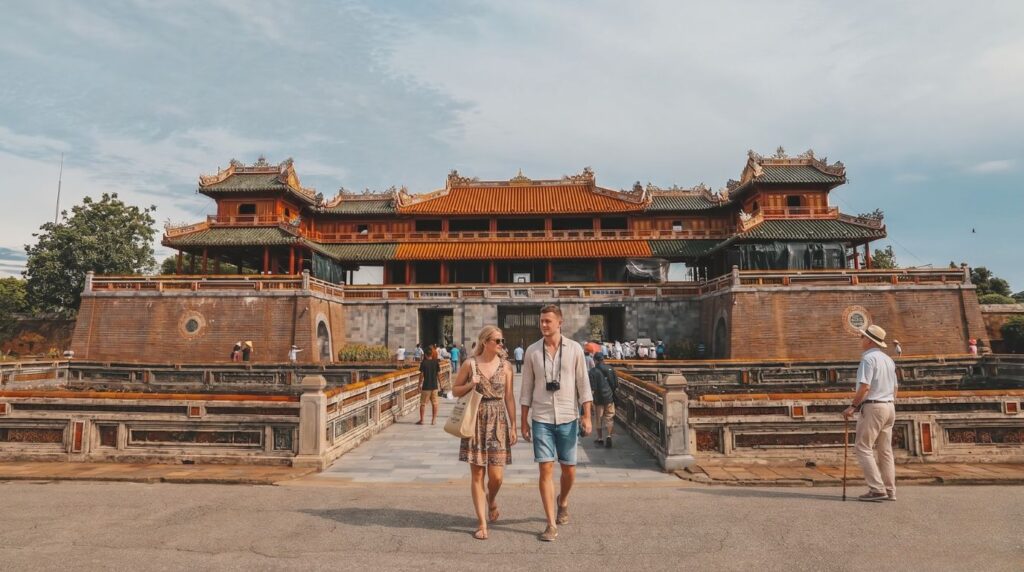
Hue was once the capital city of Vietnam under the Nguyen Dynasty (Vietnamese: Triều Nguyễn), and you can still feel that history everywhere. Ancient gates, royal tombs, faded yellow walls, and traditional Vietnamese gardens remind you that this part of central Vietnam (Vietnamese: Miền Trung Việt Nam) was once the political and cultural heart of the country.
Unlike some crowded tourist destinations, Hue does not try too hard to entertain you. That quiet character is exactly why Hue is worth visiting for travelers looking for a deeper connection with Vietnamese culture and historical sightseeing.
The beauty of Hue is not only inside the Imperial City (Vietnamese: Đại Nội). It also lives along the banks of the Perfume River, where local families gather in the evening, students ride bicycles home, and small food stalls begin preparing dinner.
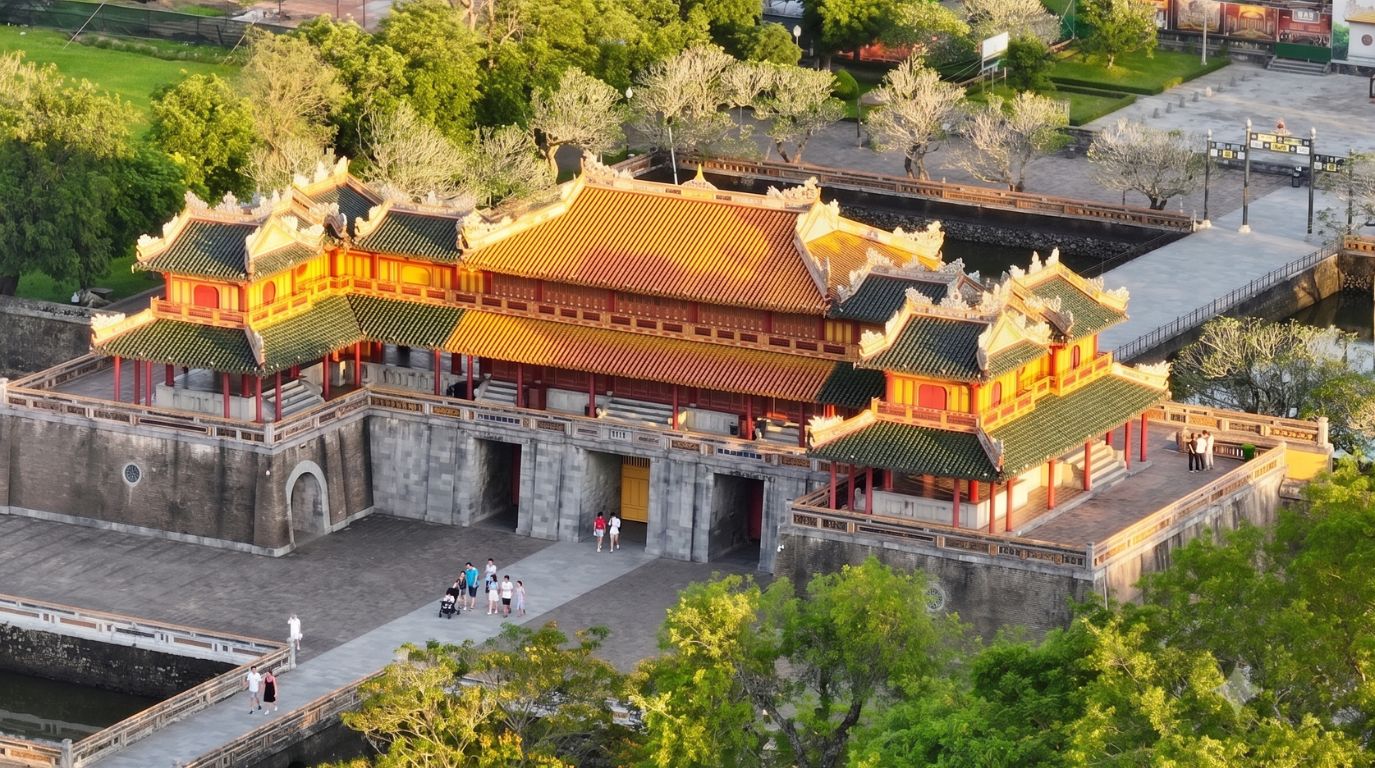
One of the most memorable experiences in Hue is simply walking beside the river around sunset and watching the city lights slowly reflect on the water. It feels softer and more personal than many other places in Vietnam.
Hue travel guide 2026 also gives you a better understanding of how different regions of Vietnam feel from one another. Northern cities, southern cities, and central Vietnam each have their own personality, but Hue is often remembered for its balance between history, spirituality, food, and daily local life.
For many travelers, Hue is not the loudest destination in Vietnam — but it becomes one of the most unforgettable.
Best time to visit Hue
The best time to visit Hue is from January to April, when the weather is generally cooler, drier, and more comfortable for exploring the city on foot. During these months, travelers can enjoy clearer skies, softer sunlight, and more pleasant temperatures while visiting the Imperial City, royal tombs, and riverside areas along the Perfume River.
This period is often considered the ideal Hue time to visit for photography, walking tours, and outdoor sightseeing. From May to August, Hue becomes hotter and more humid, especially around midday.
However, this season still attracts many travelers because the skies are usually bright and rain is less frequent. If you travel to Hue during summer, it is better to start sightseeing early in the morning and avoid long outdoor walks during the hottest afternoon hours.
Riverside cafés, shaded temples, and slower evening activities become much more enjoyable after sunset. The rainy season in central Vietnam normally begins around September and can continue into December.
Heavy rain and occasional flooding sometimes affect travel plans during this period, especially for outdoor attractions and boat rides. At the same time, Hue also feels more atmospheric during rainy months, with misty river views, quiet streets, and cooler temperatures creating a very different mood compared to the dry season.
For many travelers, the best time coming to Hue depends on the type of experience they want. Travelers focused on photography, historical sightseeing, and outdoor exploration usually prefer the dry months between January and April.
Travelers looking for fewer crowds and a slower local atmosphere may still enjoy Hue during the rainy season, especially if they prefer cafés, local food experiences, and cultural activities over full-day sightseeing tours. Overall, when planning your Vietnam itinerary, allowing at least two days in Hue gives a much more relaxed experience regardless of the season.
The city is best enjoyed slowly rather than rushing between attractions.
Top attractions in Hue you should not miss
The top thing to do in Hue are deeply connected to the imperial history of central Vietnam. Unlike beach destinations or modern cities, Hue attractions focus more on culture, royal architecture, religion, and the slower rhythm of local life.
For first-time travelers planning a Vietnam travel route, Hue offers one of the strongest historical experiences in the country, especially for anyone interested in the Nguyen Dynasty and the final imperial period of Vietnamese history. The most important landmark is the Imperial City, often called the Imperial City of Hue.
This massive complex once served as the political and ceremonial center of the Nguyen Dynasty, when Hue became the imperial capital of Vietnam. Inside the old fortress walls, travelers can explore ancient temples, royal halls, courtyards, gates, and restored palaces connected to the emperors who ruled Vietnam for more than a century.
Although sections of the imperial area were heavily damaged during the Vietnam War, restoration projects have helped preserve many of the most significant structures. Walking through the Imperial City early in the morning gives a much calmer experience before larger tour buses arrive from nearby cities in Vietnam.
Beyond the citadel, the royal tombs in Hue are among the most impressive historical sites in the country. The famous Tomb of Tu Duc (Vietnamese: Lăng Tự Đức) is known for its peaceful gardens, pine trees, lakes, and traditional Vietnamese architecture.
In contrast, Khai Dinh Tomb (Vietnamese: Lăng Khải Định) feels darker, more dramatic, and heavily influenced by European design elements mixed with imperial Vietnamese decoration. Visiting both sites on the same day helps travelers better understand the different personalities of the Nguyen emperors and the changing history of Vietnam during the colonial period.
Another essential stop is Thien Mu Pagoda (Vietnamese: Chùa Thiên Mụ), located along the Perfume River. The pagoda has become one of the defining symbols of Hue, especially with its seven-story tower overlooking the water.
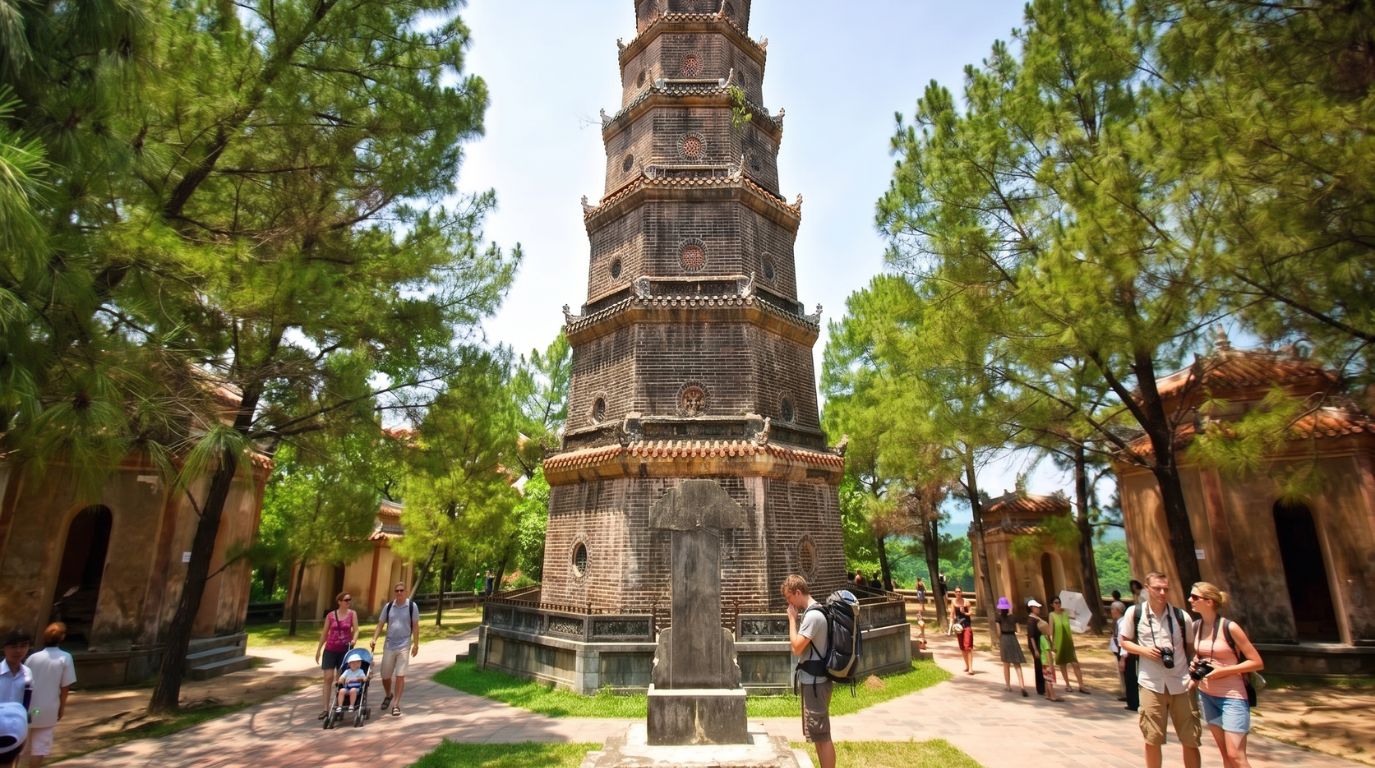
The atmosphere around the Perfume River feels especially local in the late afternoon, when students gather by the riverside parks, fishermen return home, and small cafés begin filling with local families.
Many travelers combine Thien Mu Pagoda with a dragon boat ride along the Perfume River for a slower and more scenic way to experience the city. Before leaving Hue, spending time at Dong Ba Market (Vietnamese: Chợ Đông Ba) gives a different perspective on the city beyond the imperial monuments.
While the royal sites reflect the historic side of Hue, Dong Ba Market shows everyday local life through food stalls, traditional ingredients, fresh seafood, textiles, and small family businesses that have operated here for generations. It is also one of the best places to experience authentic central Vietnamese flavors after exploring the historic attractions nearby.
Area comparison: Where to stay in Hue
Choosing where to stay in Hue can completely change your travel experience. The city is divided naturally by the Perfume River, and each side offers a very different atmosphere.
One side feels deeply historical and connected to the imperial past, while the other side reflects the more modern rhythm of daily life in central Vietnam. For first-time travelers, understanding the differences between these neighborhoods helps avoid booking a hotel in the wrong area for your travel style.
North side of the Perfume River
The north side of the Perfume River is the historical heart of Hue and the best area for travelers who want to stay close to the old imperial atmosphere. This side is home to the Imperial City, old citadel walls, traditional Vietnamese houses, local temples, and quieter residential streets.
Walking around this part of Hue early in the morning feels very different from larger cities in Vietnam. You will often see local markets opening slowly, elderly residents practicing tai chi near lakes, and food vendors preparing breakfast beside ancient walls covered with moss.
Staying on the northern side of the river is ideal for travelers who care more about culture, photography, and historical experiences than nightlife or modern shopping centers. Boutique hotels and smaller homestays are more common here, especially near the Hue Citadel area.
The atmosphere becomes especially peaceful at night after most day tours leave the imperial zone. One advantage of this area is easier access to the major historical attractions in Hue, including the Imperial City, local pagodas, and some traditional garden houses connected to the Nguyen Dynasty period. However, transportation and restaurant options are slightly more limited compared to the southern side of the city.
South of the Perfume River and modern Hue
The southern side of the Perfume River represents the more modern part of Hue city and is usually the most practical place for first-time travelers to stay.
This area has wider streets, larger hotels, rooftop cafés, shopping areas, international restaurants, and easier transportation connections for travelers arriving from Da Nang (Vietnamese: Đà Nẵng), Hoi An (Vietnamese: Hội An), or Ho Chi Minh City.
Most mid-range and upscale hotels are located on the southern side of the river, especially near walking streets and riverside roads. Travelers looking for convenience, nightlife, and easy access to tours usually prefer this side because many restaurants, cafés, bars, and travel agencies are concentrated here.
The riverfront area also becomes lively in the evening, with local families, students, and street food stalls creating a more energetic atmosphere than the quieter northern districts.
Another advantage of staying south of the Perfume River is the easier connection to attractions outside the city center, including the royal tombs, Thanh Toan Bridge (Vietnamese: Cầu Ngói Thanh Toàn), and day trips toward the Hai Van Pass (Vietnamese: Đèo Hải Vân).
For travelers visiting Hue for only one or two nights, this side usually offers the best balance between comfort, transportation, food, and hotel variety. In general, travelers who want history, local atmosphere, and slower mornings often prefer the north side of the river, while travelers looking for convenience, modern hotels, and easier logistics usually choose the southern side of Hue.
How to travel to Hue from Da Nang, Hanoi, and Saigon
Getting to Hue is relatively simple because the city sits in the center of major travel routes across Vietnam. Most first-time travelers arrive from Da Nang, Hanoi (Vietnamese: Hà Nội), or Ho Chi Minh City depending on their Vietnam itinerary.
From Da Nang
Traveling to Hue from Da Nang is one of the easiest and most scenic routes in central Vietnam. The Da Nang to Hue by train journey is famous for its coastal views near Hai Van Pass.
Many travelers consider this one of the most beautiful train rides in Vietnam. Traveling to Hue from Da Nang by taxi or private car is another popular option because drivers can stop at Lang Co Beach (Vietnamese: Biển Lăng Cô), Lap An Lagoon (Vietnamese: Đầm Lập An), and scenic mountain viewpoints along the route.
Getting to Hue from Da Nang by bus is usually the cheapest transportation option. Limousine vans and sleeper buses operate throughout the day with hotel pickup services available in tourist districts.
For travelers looking for more adventure, many people rent bikes or motorbikes and ride independently across Hai Van Pass toward Hue.
From Hanoi
Most travelers coming from Hanoi choose between domestic flights and sleeper trains. Flying from Hanoi to Hue is the fastest and most convenient option, especially for travelers with shorter itineraries in Vietnam.
Direct flights normally take a little over one hour. Hanoi to Hue by train remains popular for travelers wanting a slower and more traditional Vietnam travel experience.
Overnight sleeper cabins help save hotel costs while allowing travelers to wake up directly in central Vietnam the next morning. After arriving at Phu Bai Airport (Vietnamese: Sân bay Phú Bài), travelers can easily reach Hue city by taxi, private transfer, or airport shuttle buses.
From Saigon
For travelers starting in Southern Vietnam (Vietnamese: Miền Nam Việt Nam), flying is usually the easiest way to reach Hue. Direct flights from Ho Chi Minh City to Hue operate daily and normally take around 1 hour and 20 minutes.
Ho Chi Minh to Hue by train is another option for travelers wanting to experience a longer cross-country journey through Vietnam. Although the railway trip is much longer than flying, it allows travelers to see changing landscapes between south and central Vietnam.
Long-distance buses are available between Saigon (Vietnamese: Sài Gòn) and Hue, but most first-time travelers usually prefer flights because they save significant travel time.
Best place to stay in Hue for food, walking, and comfort
For most first-time travelers, the best place to stay in Hue is usually on the southern side of the river, especially near the walking streets and riverside café areas. This part of modern Hue gives you the easiest balance between comfort, transportation, local food, and access to the city’s major attractions.
Hotels, restaurants, coffee shops, spas, and convenience stores are all located within the city center, making daily travel much easier if you only have a short itinerary in central Vietnam. One of the biggest advantages of staying south of the Perfume River is walkability.
In the evening, many travelers enjoy simply walking along the riverside parks, crossing the bridges between both sides of the river, or stopping at small Vietnamese cafés with views of the water. Compared to larger cities in Vietnam, Hue feels calmer and less stressful for walking, especially at night when the traffic becomes quieter.
The atmosphere around the southern side of the river is relaxed enough for long evening walks while still offering plenty of food and hotel choices nearby. Travelers focused on local cuisine will also find this area convenient because many of the best places to eat in Hue are concentrated near the modern city center.
Local restaurants serving bun bo Hue, grilled seafood, bánh khoái, and traditional central Vietnamese dishes are easy to reach on foot or by short taxi rides. Night markets, local beer spots, and riverside cafés also create a more social atmosphere compared to the quieter residential neighborhoods near the citadel.
For travelers looking for comfort without losing the local atmosphere, Senna Hue Hotel is often considered one of the stronger mid-to upscale hotel options in Hue. Its location gives easy access to both the imperial attractions and the modern food areas, making it a practical place to stay in Hue for first-time travelers.
Several boutique hotels along the side of the Perfume River also offer peaceful garden settings while remaining close to restaurants and transportation hubs. If your priority is historical atmosphere and quiet mornings, the northern side of the river near the Hue Citadel may feel more authentic.
However, for travelers who want comfort, food variety and riverside walking, the southern side of the river remains the most practical area to stay in Hue.
Accommodation: Best hotels and areas to stay in Hue
Finding the right accommodation in Hue depends mostly on your travel style and budget. For most first-time travelers, the best area to stay in Hue is the modern central city area on the southern side of the Perfume River.
This district gives easy access to restaurants, cafés, riverside walking streets, local markets, and transportation while still remaining close to the major imperial attractions. Travelers looking for affordable comfort can easily find a good Hue hotel 3* or a local Hue homestay within the city center.
Many smaller hotels and family-run properties offer clean rooms, helpful local advice, and walkable access to food streets without the high prices seen in larger cities in Vietnam. This area is especially convenient for travelers who want to explore Hue on foot during the evening.
For more comfort and riverside views, several Hue hotel 4* properties are located near the riverfront roads and central walking districts. These hotels usually offer larger rooms, swimming pools, breakfast buffets, and better transport support for day trips around central Vietnam.
Staying near the river also creates a quieter atmosphere compared to busier traffic areas deeper inside Hue city. Travelers searching for luxury accommodation can also find excellent Hue hotel 5* options near the riverside and modern commercial districts.
One of the more popular mid-to upscale choices is Senna Hue Hotel, known for combining comfortable facilities with a convenient location close to both the Imperial City and local food areas. Overall, the best place to stay in Hue is usually somewhere between the Perfume River and the central walking streets, where you can enjoy local food, easy transportation, and a calmer atmosphere after a full day exploring the imperial landmarks.
Money exchange in Hue
Managing cash in Hue is usually straightforward for most international travelers, especially around the city center and riverside districts. While Vietnam has become more digital in recent years, cash is still widely used in many smaller restaurants, local cafés, traditional shops, and street food areas.
For first-time travelers in Vietnam, carrying a mix of cash and cards is still the safest approach. The easiest places to money exchange safely in Hue are local banks, airport exchange counters, and licensed gold shops within the central tourist areas.
Banks generally provide more stable exchange rates and better security compared to small unofficial currency booths. Around the market areas and main streets near the Perfume River, travelers can also find several ATMs accepting international cards such as Visa and Mastercard.
However, ATM withdrawal fees can vary depending on the bank, so checking limits before withdrawing larger amounts is recommended. Card payments are becoming more common in hotels, modern cafés, and upscale restaurants, but many smaller businesses still prefer cash.
This is especially true at the local market in Hue, traditional food stalls, family-run coffee shops, and smaller souvenir stores. If you plan to take a local day tour, boat trip, or motorbike ride around the city, keeping smaller Vietnamese đồng notes with you makes payments much easier.
One useful travel tip for Hue is avoiding carrying very large bills when buying street food or shopping at local markets. Smaller vendors often struggle to provide change during busy hours.
Keeping smaller cash denominations is more practical for daily spending and also helps speed up transactions when exploring busy food areas around the city.
Practical tips before a 2-day Hue itinerary
Before starting a 2 day Hue itinerary, it helps to understand that Hue is not a city designed for rushing between attractions. Many travelers underestimate how relaxing the atmosphere feels once they arrive in Hue city, especially compared to faster-moving destinations in Vietnam.
Planning too many stops in a short time often makes the experience feel tiring instead of enjoyable. One of the most useful travel tips for Hue is staying somewhere within the city center near the Perfume River.
This location makes it much easier to move between restaurants, cafés, the Imperial City, and evening walking areas without spending too much time in traffic. Most major attractions are relatively close together, but the weather in central Vietnam can become very hot during midday, especially between late spring and early autumn.
Starting early in the morning usually gives a much better experience for photography and walking tours. If you only have two days in Hue, avoid trying to visit every royal tomb in one afternoon.
Many travelers enjoy the city more when they combine historical sites with slower local experiences such as riverside cafés, street food stops, or quiet evening walks around the old districts. Hue is one of the few cities in Vietnam where slowing down often becomes the best part of the trip.
Comfortable walking shoes, sunscreen, and small cash notes are also helpful during your Hue itinerary, especially when exploring markets, temples, and smaller food areas within the city.
Rain showers can appear unexpectedly during certain months, so carrying a light rain jacket or umbrella is also recommended when exploring Hue for a full day outdoors.
