Tet Nguyen Dan (Lunar New Year) is the biggest festival of the Vietnamese people, carrying profound humanistic and historical significance. It’s a time for family members to gather around a traditional feast to bid farewell to the old year and welcome the new. So, where did Tet originate? What are the customs of Tet? Let’s explore this in the article below!
I. What is the Lunar New Year?
Lunar New Year (also known as Chinese New Year) is the most important and meaningful holiday for the Vietnamese people, taking place on the 1st day of the 1st lunar month. This also marks the transition between the old year and the new year.
If read correctly, this holiday should be called “Tet Nguyen Dan” (Lunar New Year’s Day). The original meaning of the word “Tet” is “Tiet” (festival), while according to the Sino-Vietnamese transliteration, “Nguyen” means beginning, and “Dan” means early morning.
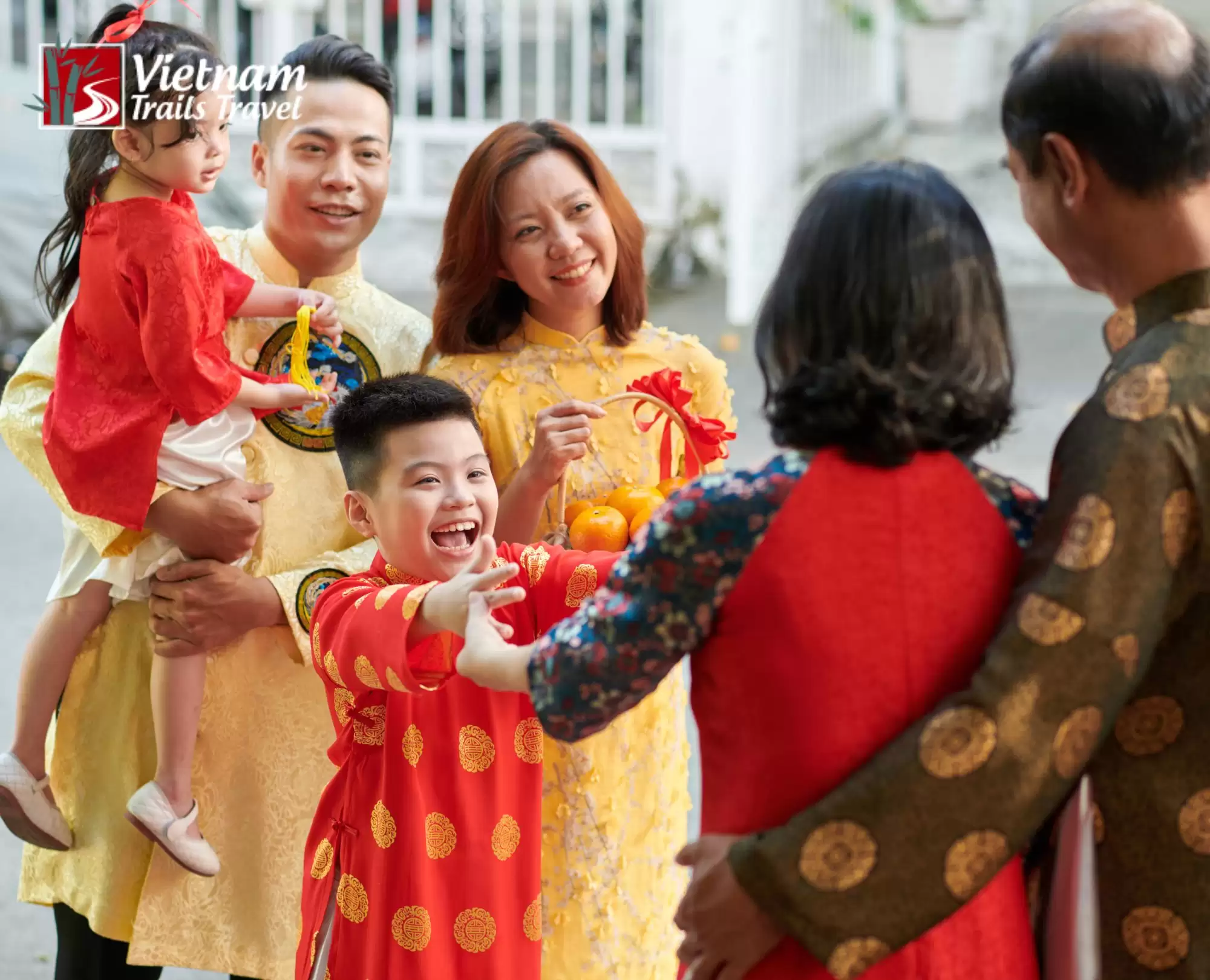
For Vietnamese people, Tet (Lunar New Year) is considered an indispensable “spiritual nourishment” at the end of the year. No matter where they are, everyone wants to return to their family and ancestors, gathering around a pot of banh chung (traditional rice cake) on New Year’s Eve.
Furthermore, the traditional Tet also embodies profound humanistic values in Vietnam’s ancient agricultural civilization, fostering national unity, strengthening family bonds, and connecting people with nature.
Read More:Saigon Best time to visit
II. How to calculate the timing of the Lunar New Year
Lunar New Year is celebrated on the first day of the lunar year. Due to the rule of adding an extra month every three leap years, the Lunar New Year occurs about 1 to 2 months later than the Gregorian New Year.
The Lunar New Year usually takes place from January 21st to February 19th in the Gregorian calendar. However, with 2025 being a leap year in the lunar calendar, Lunar New Year 2026 will come later than last year, around 1 month later (from February 12th 2026 to February 24th 2026)
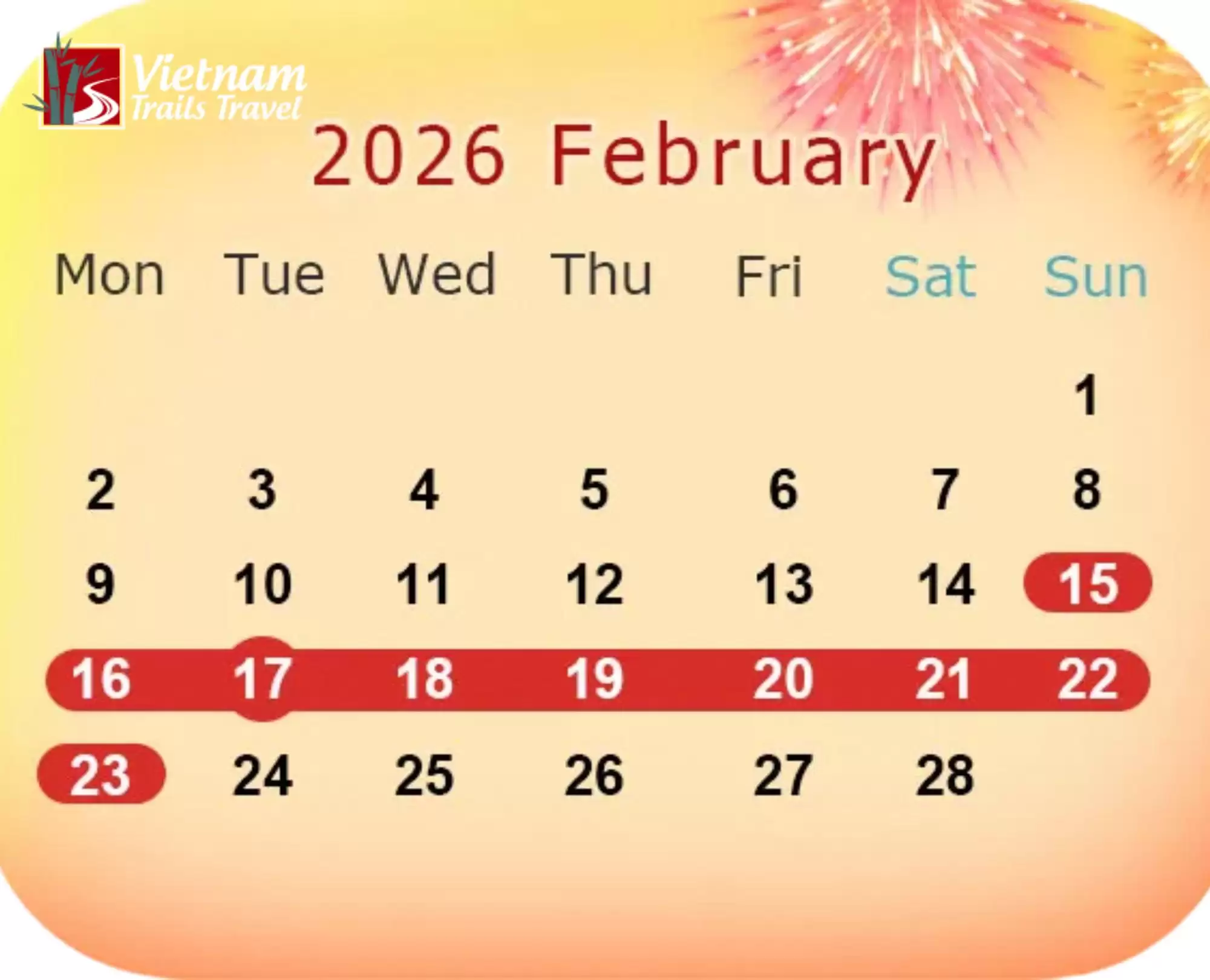
In Vietnam, this holiday typically lasts from the 23rd day of the 12th lunar month to the 7th day of the first lunar month. People begin preparing for Tet (the lunar new year) during the last 7 days of the old year and then relax and enjoy it during the first 7 days of the new year. According to ancient tradition, this period is also when farmers are idle, before starting the new planting season, so they are very excited and enthusiastic, making up for the hard work of the past year.
III. The origins of the Lunar New Year
The origin of Tet Nguyen Dan (Lunar New Year) remains a subject of debate. Many sources suggest it originated in China and was introduced to Vietnam during the 1000 years of Chinese rule. However, according to the historical folk tale “Banh Chung and Banh Day”, Tet Nguyen Dan existed during the time of King Hung, before the Chinese occupation.
Furthermore, in the “Book of Rites,” Confucius wrote, “I do not know what Tet is; I have heard it is the name of a great festival of the barbarians, who dance like madmen, drink wine, and feast on those days.” Thus, it can be seen that Tet Nguyen Dan has its origins in Vietnam.
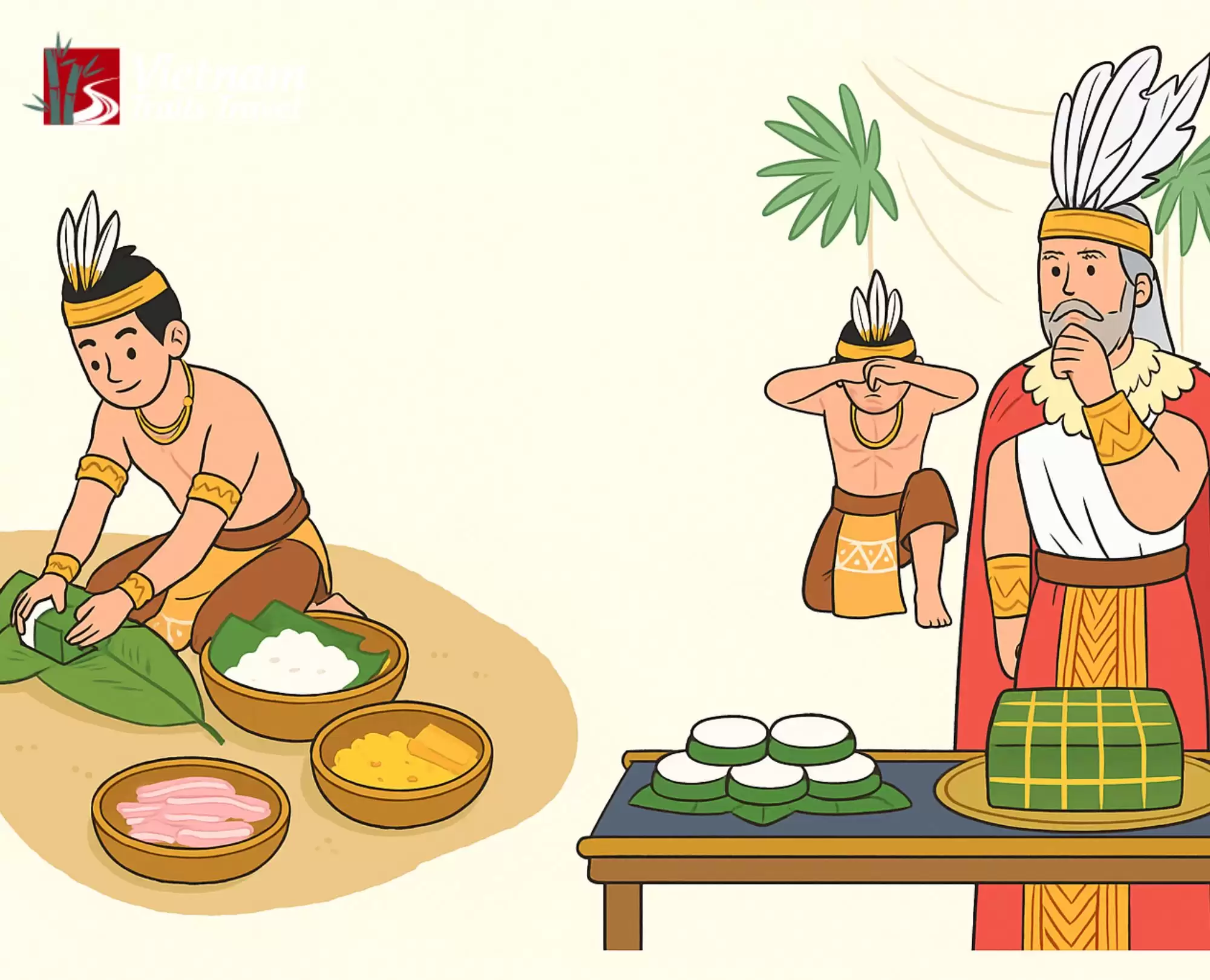
However, regardless of its origin, Tet remains the most important holiday of the year for the people of Vietnam and China. Each country has its own customs, identity, and characteristics, reflecting the national cultural spirit.
Read More:All Things You Need To Know About Festivals and Public Holidays in Vietnam
IV. The significance of the traditional Lunar New Year in Vietnam
1. Lunar New Year is the time when heaven and earth meet.
For the Vietnamese people, Tet Nguyen Dan (Lunar New Year) is not only the transition between the old and new years but also a convergence of heaven and earth, humanity, and deities. According to Eastern philosophy, “Tet” (Lunar New Year) is formed from “Tiet” (weather), following the cycle of the universe, revolving through the four seasons: Spring, Summer, Autumn, and Winter.
Furthermore, in a time when the country relied on an agricultural civilization, farmers viewed Tet as a time to commemorate deities such as the Earth God, the Rain God, the Sun God, and the Thunder God, who were believed to bring bountiful harvests and prosperity.
2. Lunar New Year is an occasion for descendants to show their respect and reverence to their ancestors.
Tet Nguyen Dan (Lunar New Year) is also an occasion for descendants to show respect to their ancestors, visit graves, and pray to the deceased. Typically, on the evening of the 30th day of the lunar month or just before midnight, every family will light incense to invite their ancestors to celebrate Tet, blessing their descendants with favorable fortune and prosperity in the new year.
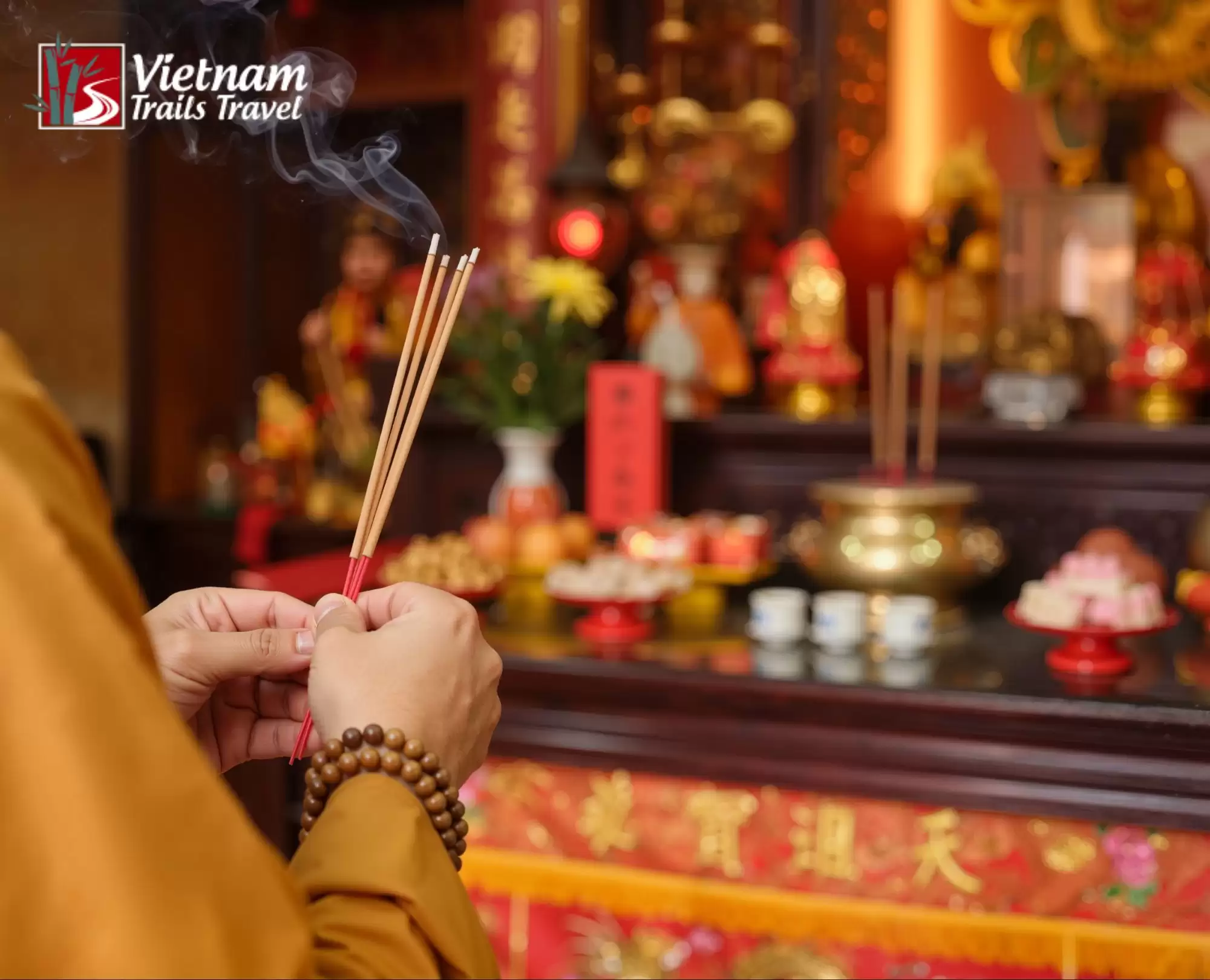
The altar during Tet is also specially decorated, with a plate of five fruits, a traditional feast, and the fragrant smoke of incense.
3. Lunar New Year is a time to welcome positive fortune.
Tet Nguyen Dan (Lunar New Year) symbolizes the beginning of a new year. It is also a time to dispel the misfortunes of the old year and welcome favorable fortune for the new year. Therefore, during the traditional Tet holiday, people often have the custom of going to temples to pray for blessings and favorable luck.
Furthermore, Tet brings beneficial fortune and helps people “renew” their spirits. From the last days of the year, people clean and decorate their homes to welcome spring.
Everyone is excited, dressed in new clothes. All the worries of the old year seem to vanish, making way for a new year filled with positive luck, optimism, and faith in life.
Read More:All Things You Need To Know About Tet Holiday, Vietnam
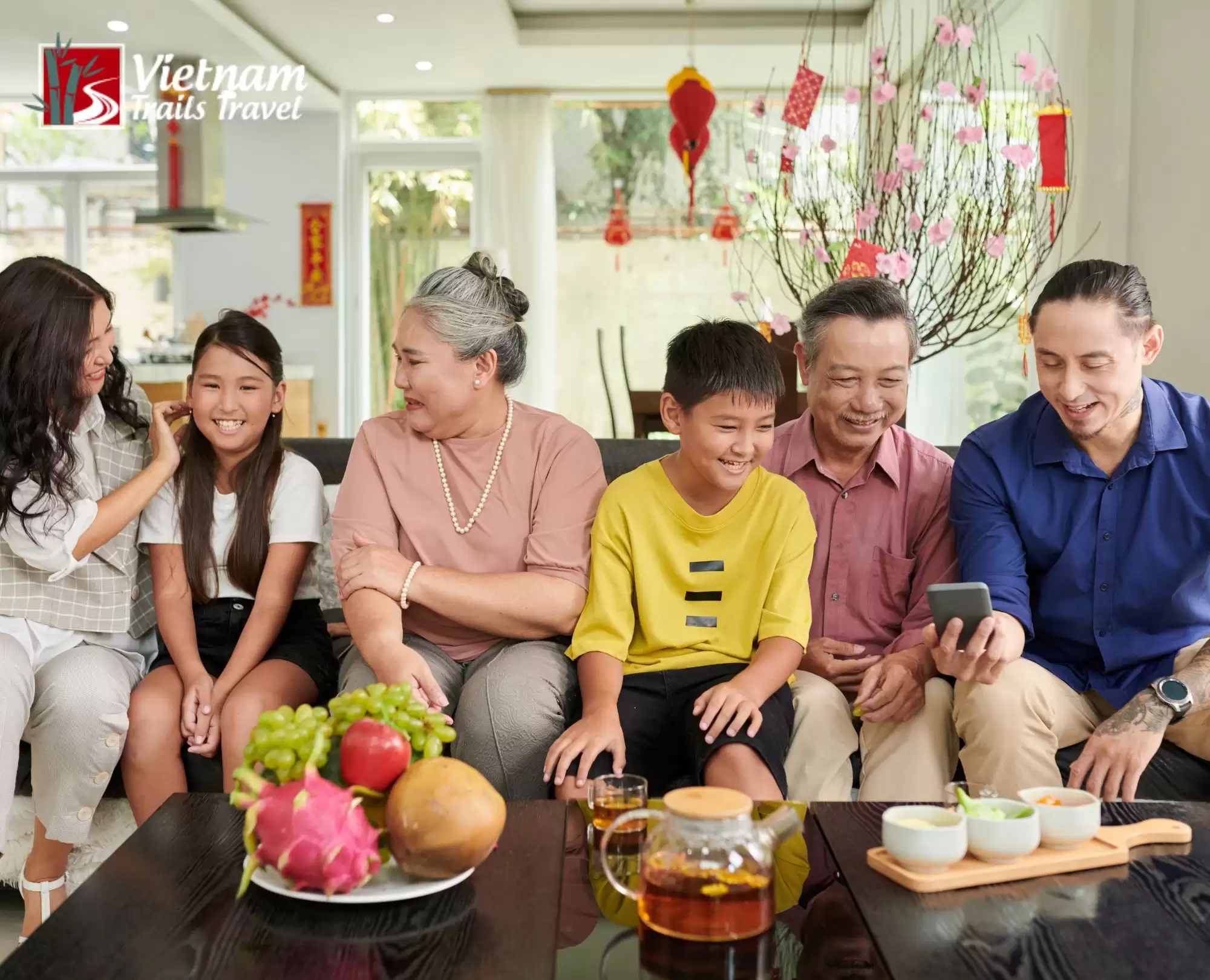
4. Lunar New Year is a time for family reunions
During the traditional Lunar New Year, family members gather together, reuniting after a year of hard work. For those who live far from home, this is also an opportunity to return to their loved ones, sharing a warm fire and a pot of green sticky rice cakes.
5. Lunar New Year is an occasion to celebrate a new age
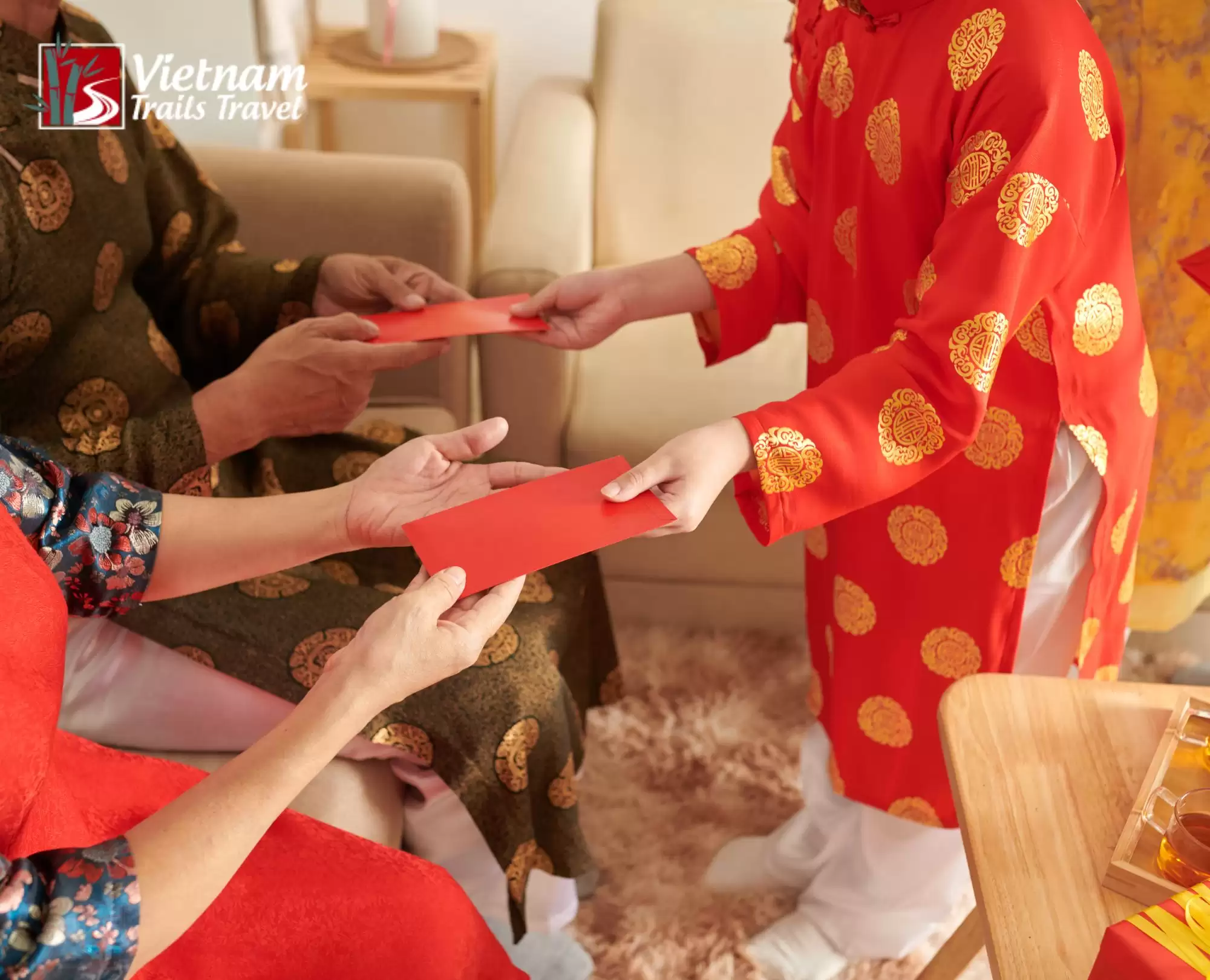
Finally, Lunar New Year is considered a birthday celebration for everyone, a time to wish each other a prosperous new year. Adults give lucky money (li xi) to wish children to be well-behaved and grow up quickly and to wish the good elderly health and a happy family reunion with their children and grandchildren.
V. Traditional Tet (Lunar New Year) customs in Vietnam
1. Customs of worshipping the Kitchen God and the Stove God
From ancient times to the present day, Vietnamese people have traditionally worshipped the Kitchen Gods (Ông Công and Ông Táo) at the end of the year. They clean their kitchens thoroughly, prepare a feast including fruits and savory dishes, burn paper money, and release carp to bid farewell to the Kitchen Gods as they return to the Jade Emperor. These deities will report the family’s affairs of the past year to the Jade Emperor.
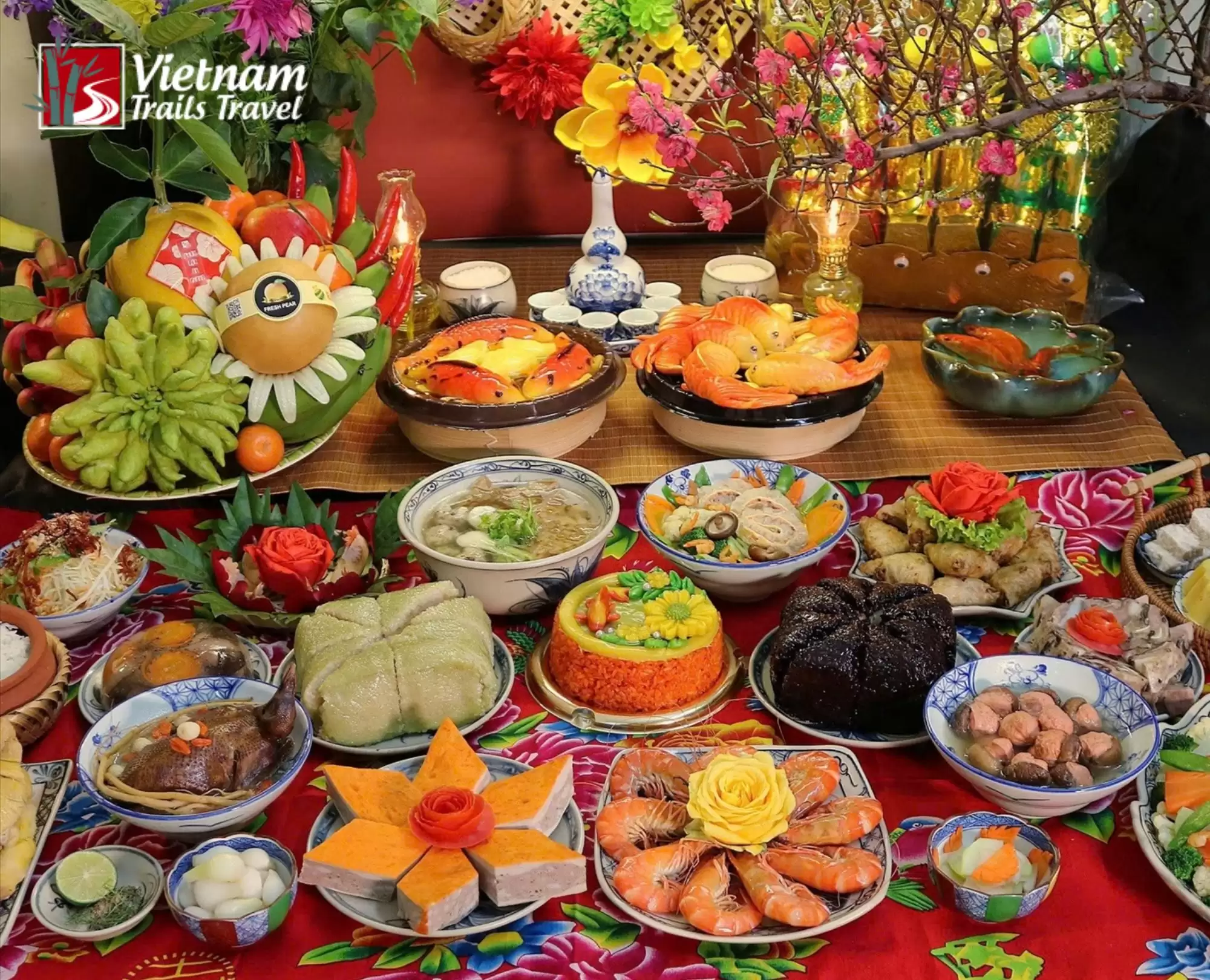
2. The custom of making banh chung and banh tet (traditional Vietnamese rice cakes).
Every Lunar New Year, every household buys banana leaves, bamboo tubes, new sticky rice, mung beans, and pork to make banh chung and banh tet (traditional Vietnamese rice cakes). These traditional cakes are offered to the ancestral altar and are an indispensable dish on the feast table for the Vietnamese New Year.
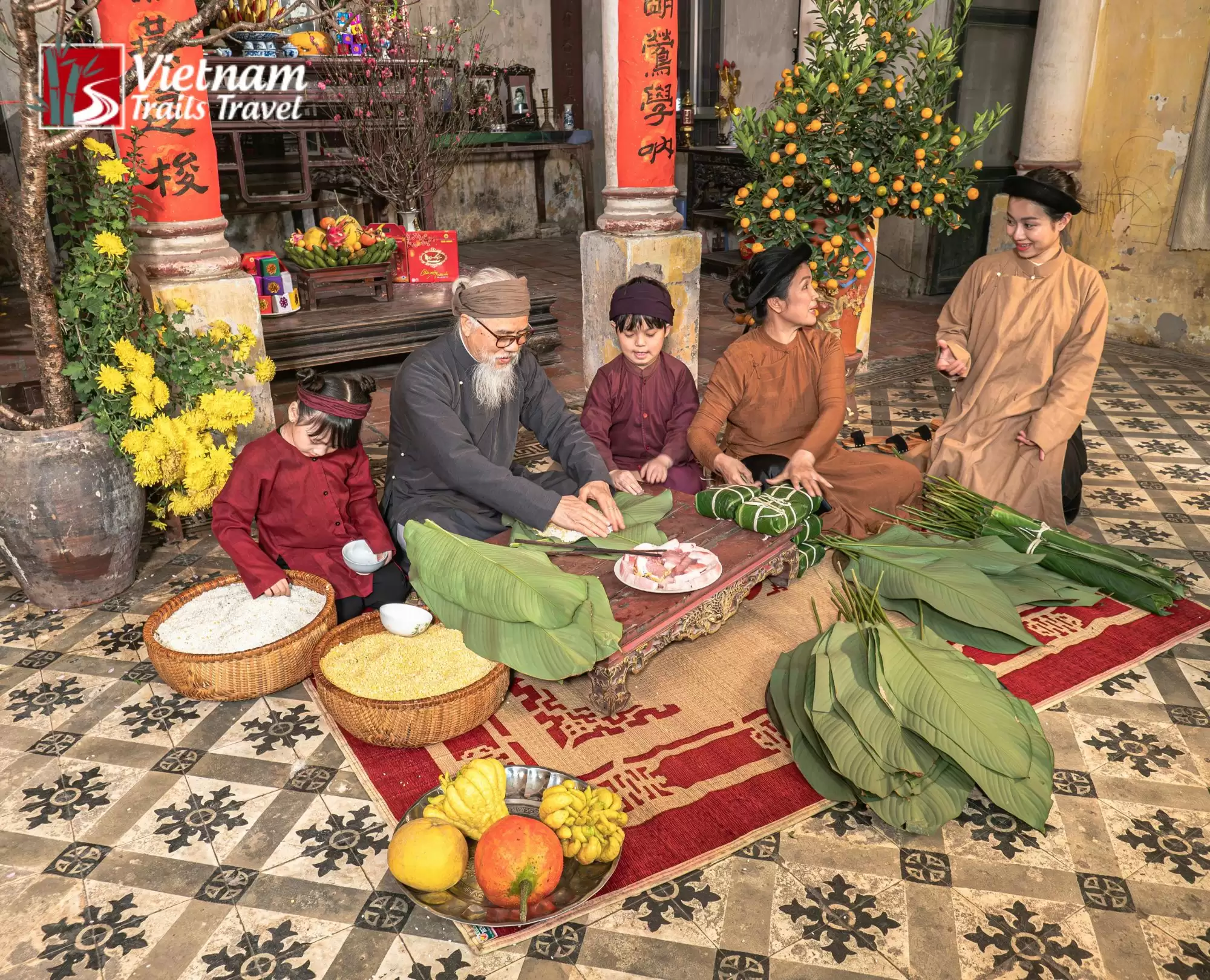
Even today, in some rural villages, people still maintain the tradition of wrapping bánh chưng (traditional Vietnamese rice cakes) together and gathering around the fire while waiting for them to cook. This is a beautiful and heartwarming image of Tet (Vietnamese New Year), preserved in the memories of many generations.
3. The custom of displaying a tray of five fruits
The five-fruit offering is a token of respect and gratitude from descendants to their ancestors, expressing their appreciation for those who have passed away. Each region has its own way of arranging the five-fruit offering and selecting different fruits.
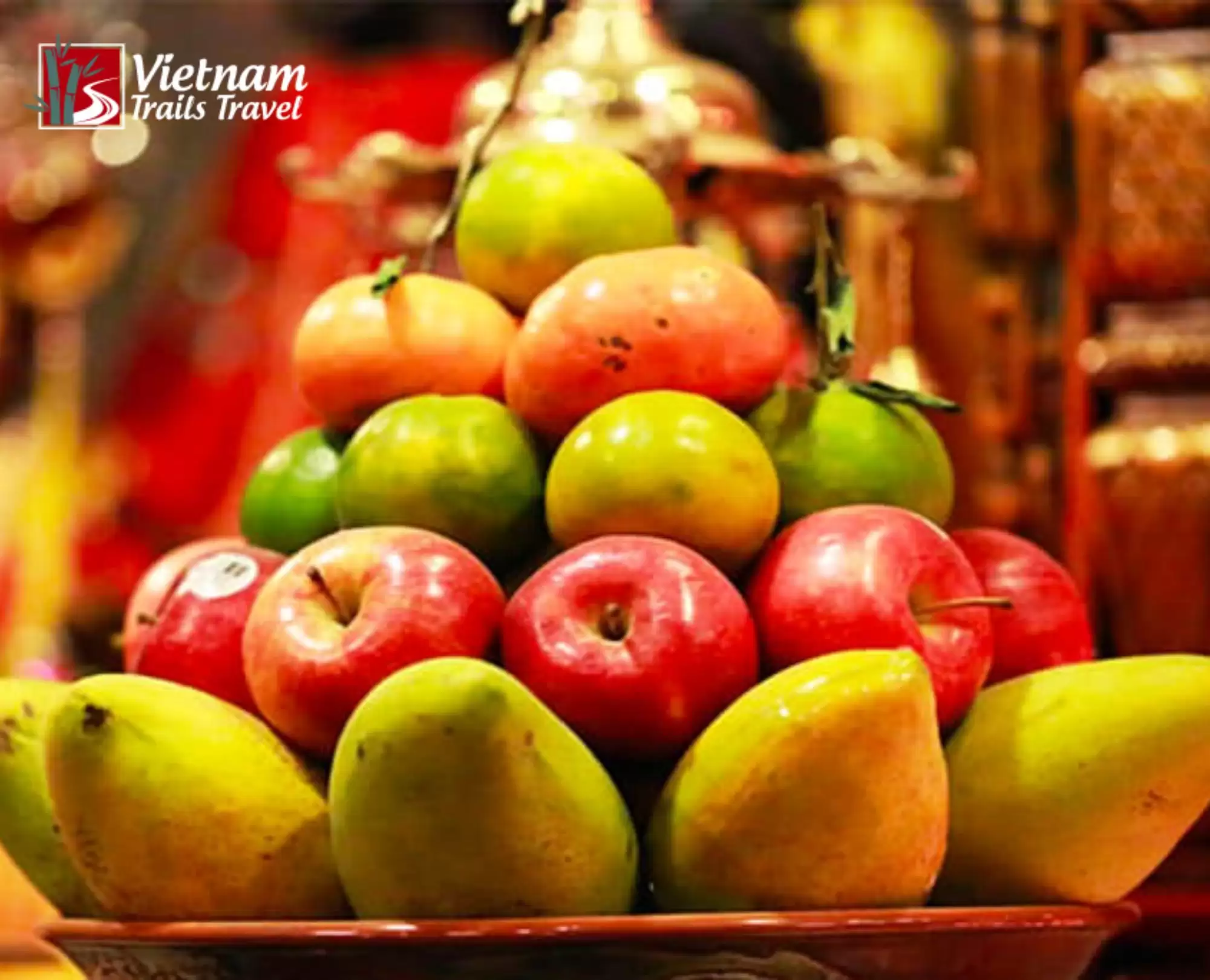
In Northern Vietnam, bananas are a must-have, while in Southern Vietnam, five fruits are often displayed according to the saying “wishing for coconuts, mangoes, and figs.” However, they all carry the meaning of wishing for peace and prosperity in the new year.
4. The custom of visiting and tending to ancestral graves
Before the start of the new year, descendants will gather and visit the graves of their grandparents and ancestors. Everyone will clean the gravesites together and light incense to show respect to the deceased.
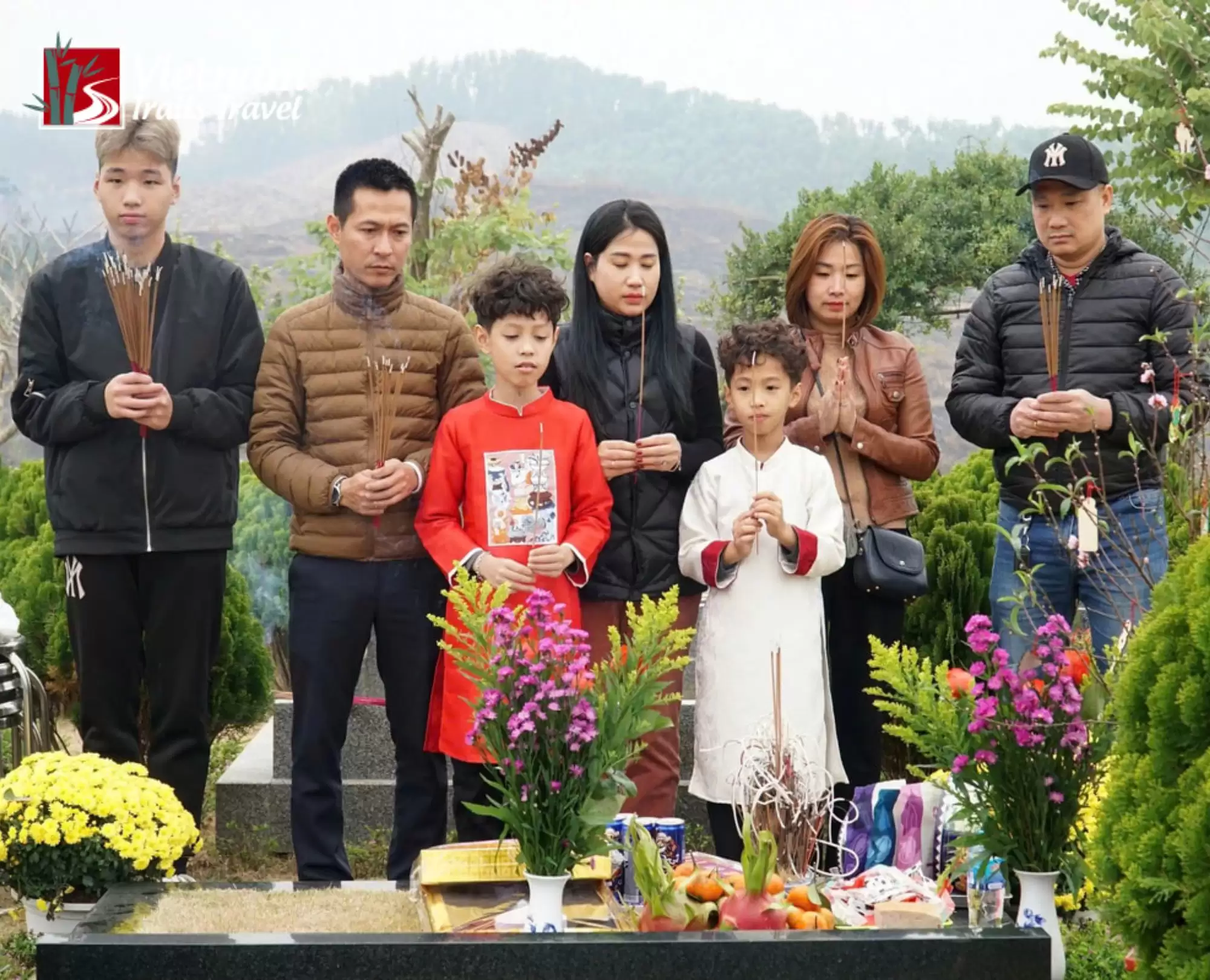
At the same time, this custom is also to invite grandparents to celebrate Tet (Lunar New Year) with the family, blessing their descendants with good fortune, health, and prosperity in the new year.
5. Customs of offering sacrifices at the end of the year and welcoming the New Year
The year-end offering ceremony is an indispensable custom during the traditional Vietnamese Lunar New Year. This important ritual is performed on the 30th day of the lunar month, usually at the moment of midnight, to bid farewell to the old year.
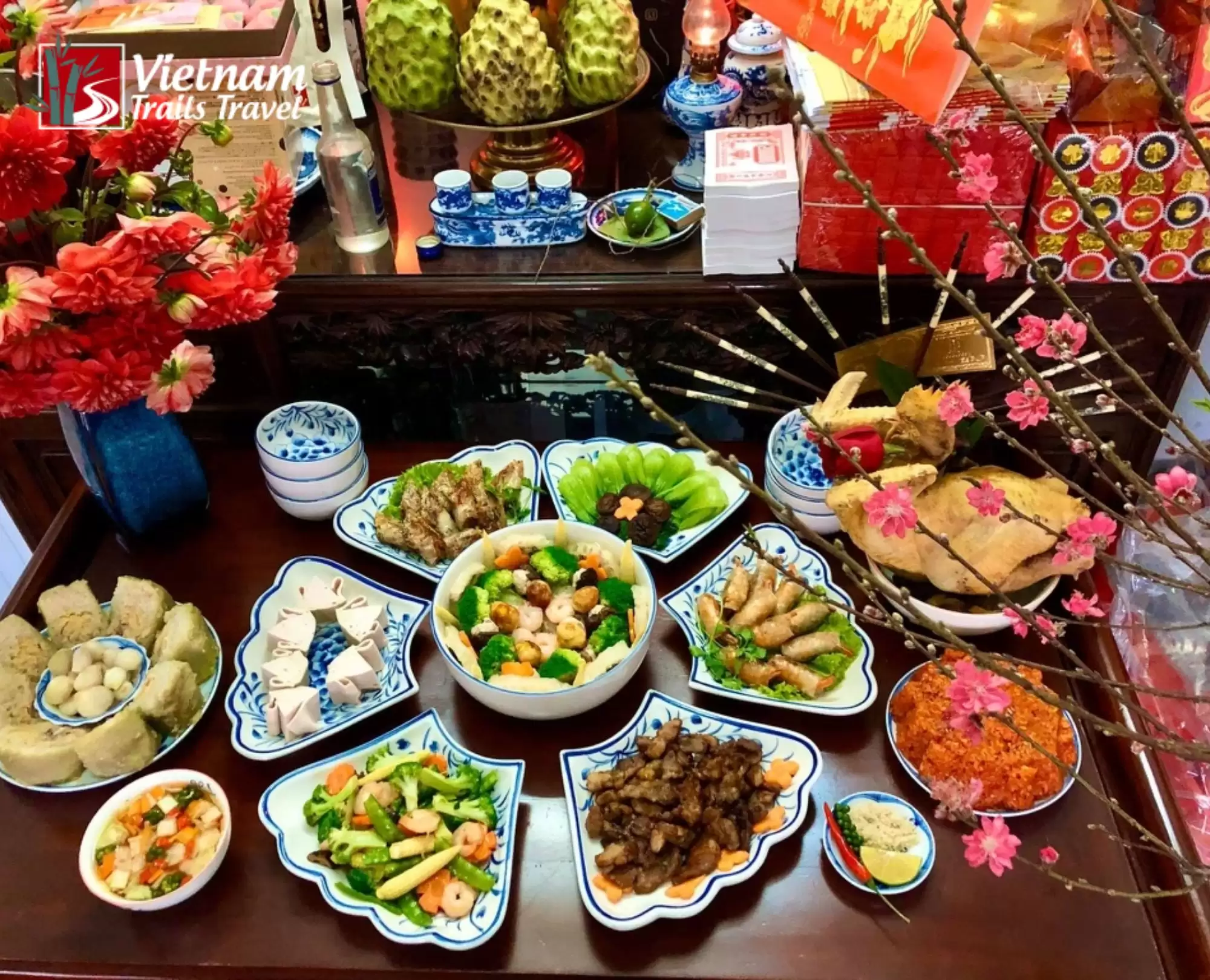
According to ancient beliefs, the family will prepare a feast of savory dishes and fruits to report to their ancestors and deities and to pray for a more prosperous and peaceful new year.
6. The custom of first-footing (visiting someone’s house on New Year’s Day)
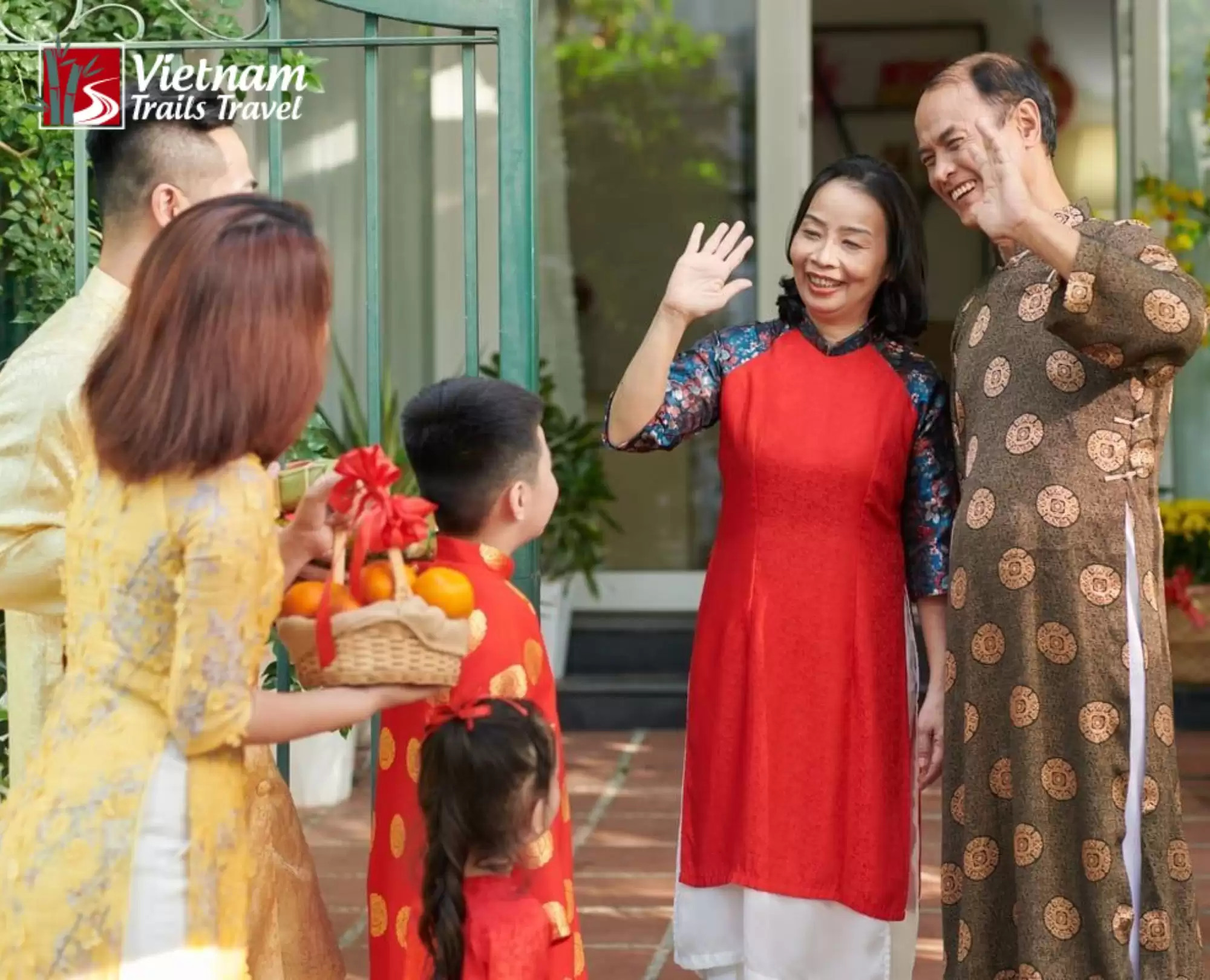
First-footing is an indispensable Tet (Lunar New Year) tradition. Immediately after midnight, the first person to enter the house is considered the first visitor of the year. If their age and zodiac sign are compatible with the homeowner, it is believed to bring good fortune, a year of smooth sailing, and prosperity.
7. Customs of wishing Happy New Year and giving lucky money
During the Lunar New Year, people exchange good wishes , hoping for a successful and prosperous new year. Children and grandchildren extend New Year’s greetings to their grandparents and parents to show filial piety.
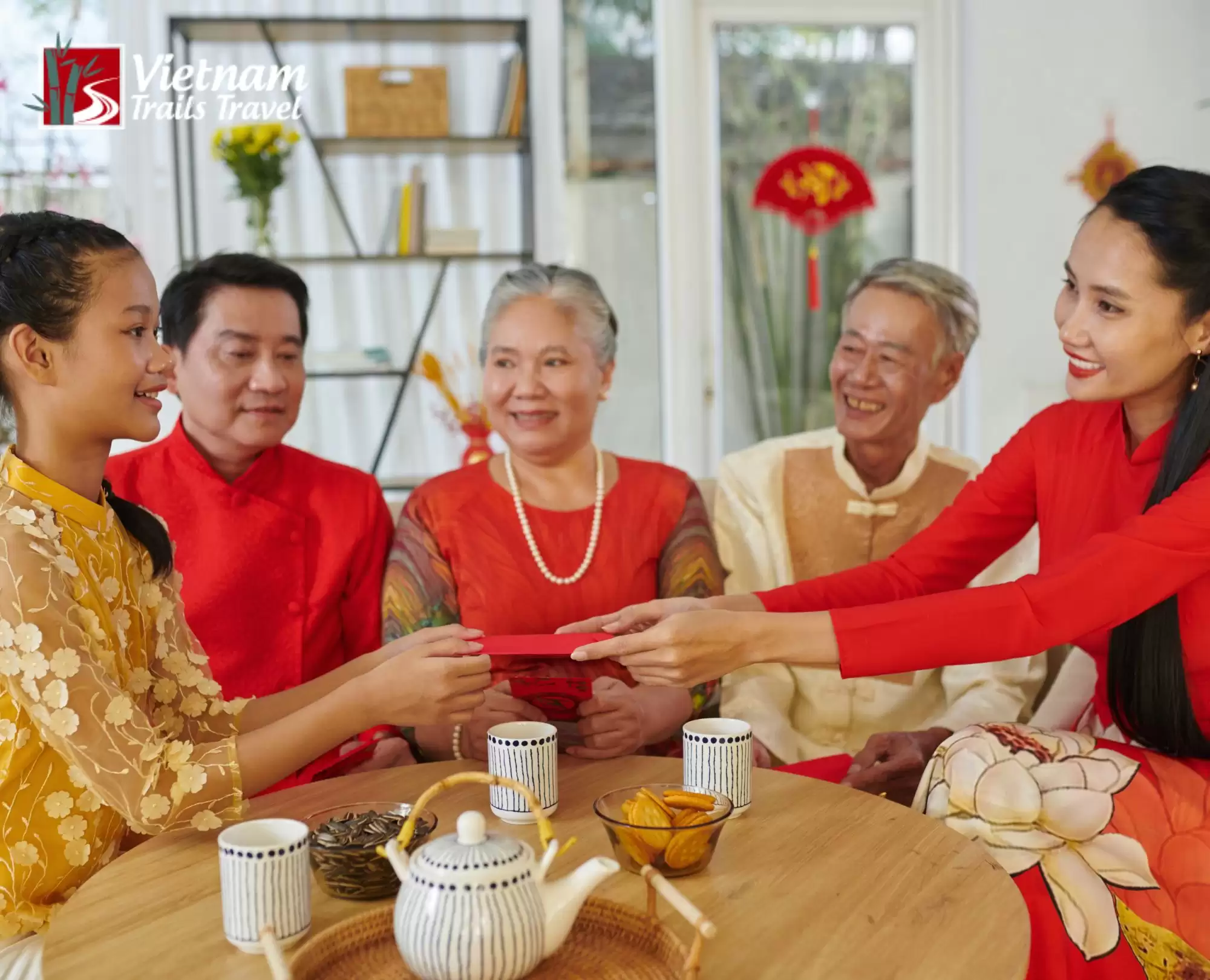
Afterwards, adults also offer New Year’s gifts (lucky money) to children, wishing them a new year filled with excellent behavior, optimal health, and academic success. Giving lucky money during Tet (Vietnamese New Year) is a unique custom, reflecting the beauty of Vietnamese culture from ancient times to the present day.
Through the generations, the Lunar New Year remains the most sacred and cherished festival in Vietnam. It is far more than just a transition between years; it is a time for family reunions, spiritual renewal, and a profound celebration of ancestral roots. As we embrace the traditional customs of Tet Nguyen Dan, we carry forward the beautiful humanistic values that define the Vietnamese cultural identity.