
Planning a trip to Vietnam in 2026? US citizens traveling to Vietnam need a visa, which can be obtained through the official eVisa portal. This guide covers everything American travelers need to know about visa requirements, application steps, processing times, and what to expect at arrival.
Do US Passport Holders Need a Visa to Enter Vietnam?
Almost all US travelers must obtain a visa before entering Vietnam in 2026. US citizens cannot enter Vietnam visa-free; a visa is mandatory. Vietnam does not allow visa exemptions for ordinary US passport holders, unlike citizens of 13 countries enjoying unilateral visa exemption—such as Republic of Korea (South Korea) and Malaysia—who can stay for up to 45 days.
Note: As of August 15, 2023, Vietnam has extended the stay duration for citizens of these 13 visa-exempt countries from 15 days to 45 days, regardless of passport type and entry purpose.
The only narrow exception applies to Phu Quoc island. Travelers arriving in Phu Quoc do not require a visa for stays of up to 30 days if they arrive and depart directly from Phu Quoc by air or sea and have proof of onward travel. This exception does not extend to travelers visiting mainland Vietnam.
The electronic visa system is now the primary option for US tourists and business travelers, having largely replaced the old “visa on arrival” model. Vietnam Trails Travel can review your situation—length of stay, number of entries, and travel route—to confirm whether an e visa, consular visa, or another option suits your needs.
Key rules for Americans:
-
Valid US passport required (at least 6 months validity beyond entry date)
-
Minimum one blank visa page
-
Printed or digital copy of approved e visa
-
No visa exemption available for US passport holders
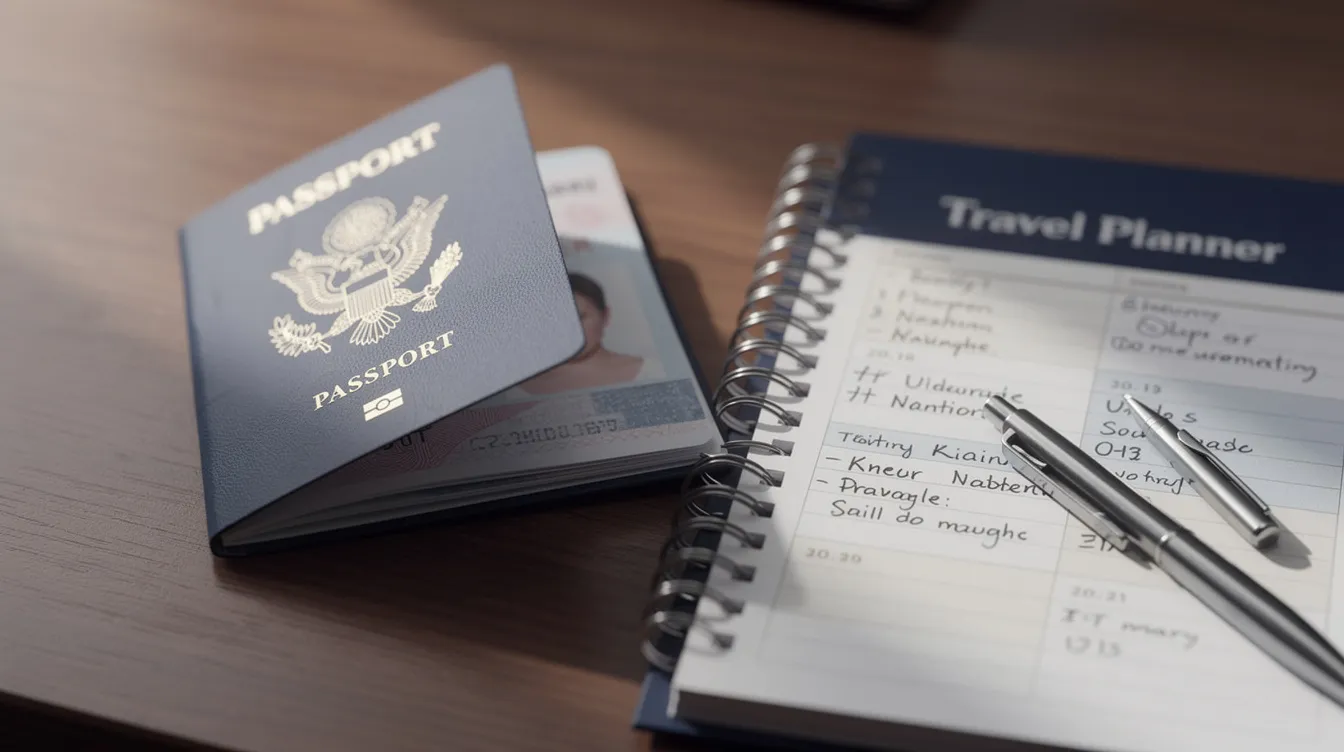
Essential Vietnam Visa Requirements for US Citizens
Requirements for the eVisa include a passport valid for at least six months, a digital photo, and a scanned biographical page of the passport. Applicants must ensure all documents are submitted according to these visa requirements to prevent delays or refusal at the border.
Passport requirements:
-
US passport valid at least 6 months from your planned entry date
-
At least 1–2 blank pages (excluding endorsement pages)
-
Undamaged and machine-readable
Document and data requirements:
-
Recent color passport-style photograph (white or light background, no glasses)
-
Photographs submitted with visa applications should be in a specific format, typically 4×6 cm
-
Clear scan of passport data page (JPEG or PDF)
-
Confirmed travel dates and entry/exit points
-
Accommodation address for your first night
Travel proof that may be requested:
-
Return or onward ticket
-
Proof of sufficient funds for your stay
-
Basic travel itinerary
Travel insurance is not legally mandatory but strongly recommended. Vietnam Trails Travel suggests coverage for medical care and emergency evacuation, especially for extended trips.
U.S. citizens must have a valid passport and a visa (or pre-approval for a visa on arrival) to enter Vietnam, with the passport needing to be valid for at least six months beyond the planned stay and having at least one blank visa page.
Special cases: Dual US-Vietnamese nationals, US citizens born in Vietnam, and long-term workers or students should contact the nearest Vietnamese embassy or Vietnamese consulate for tailored visa types. For work permits or special visa categories, the Ministry of Labor – Invalids and Social Affairs or the Ministry of Foreign Affairs may be the relevant authority. Dual nationals or those with Vietnamese heritage may need to request guidance or specific documentation from the embassy or consulate. Children or dual nationals may be required to present a valid Vietnamese passport for certain entry or exit scenarios.
Types of Vietnam E-Visas Available for Americans
Vietnam now grants e-visas for citizens of all countries and territories, allowing a stay of up to 90 days with multiple entries, effective from August 15, 2023. The Vietnamese Immigration Department issues e-visas to foreigners through an online application process, which can be completed from outside Vietnam.
A Vietnamese visa is required for most foreigners entering Vietnam, and there are several types available, including electronic visas (E-visas) and visa on arrival. Travelers can apply for a Vietnamese visa through Vietnamese Embassies or Consulates, or online via the Government of Vietnam’s electronic visa (E-visa) interface. E-visas can be applied for online and are available to citizens of all countries, allowing entry through 13 international airports, 16 land border gates, and 13 sea border gates where allowed foreigners enter Vietnam.
E-visas are suitable for:
-
Tourism and family visits
-
Casual business meetings
-
Short-term business activities
E-visas are NOT valid for:
-
Long-term employment (requires work permit and work visas)
-
Formal studies
-
Permanent residence
Visa on Arrival (VOA) requires a pre-approval letter from an authorized agency before departure, making the e-visa process more straightforward for most travelers.
30-Day vs. 90-Day Tourist E-Visas
Vietnam grants e-visas for a maximum stay of 90 days, valid for single or multiple entries. Americans can choose between stays of up to 30 days or up to 90 days per entry.
30-day tourist visa suits:
-
Standard vacations (1–3 weeks)
-
Short business trips
-
Single-country itineraries limited to Vietnam
90-day visa suits:
-
Slow travel across multiple regions
-
Remote work from Vietnam (where legally permitted)
-
Extended family visits
-
Longer business projects
Overstaying even one day can result in fines and possible future entry issues. Choose a duration that comfortably covers your stay and add buffer days for unexpected delays. Some 90-day stays may attract additional scrutiny from vietnamese authorities, so ensure your travel purpose and accommodation details are clear and consistent.
Single-Entry vs. Multiple-Entry Visas
Single-entry e visa: Valid for one entry and exit only. Once you exit Vietnam, the visa is consumed and cannot be reused.
Multiple entry e visa: Allows US travelers to enter and exit Vietnam multiple times within the validity period (up to 90 days). Ideal for regional travel to Cambodia, Laos, Thailand, or Singapore.
Example itineraries requiring multiple entry:
-
Flying into Ho Chi Minh City, overland to Cambodia, returning to Vietnam
-
Basing in Ha Noi while visiting Laos or Thailand
-
Business trips with meetings in multiple countries
Typical government fees:
-
Single-entry: approximately USD 25
-
Multiple entry: approximately USD 50
Airlines verify whether your visa type matches your planned route—especially if you have onward flights back through Vietnam after visiting another country. Check your itinerary carefully before selecting visa type.
Processing Times and Government Fees
E-visa applications are usually processed within three to five working days after the Vietnam Immigration Department receives the completed application and fee. However, processing is not guaranteed, and the e visa fee is non-refundable even if the application is refused. To submit your application and check your visa status, always use the official Vietnamese government e-visa website for the most accurate and up-to-date information.
Processing timelines:
-
Standard approval: 3–5 working days
-
Apply at least 2–3 weeks before departure
-
Vietnamese holidays (especially Tet) can extend processing significantly
The embassy visa application process may take 5–10 working days depending on the visa type if you choose the consular route instead.
Expected 2026 fee levels:
-
Single-entry e visa: approximately USD 25
-
Multiple entry e visa: approximately USD 50
All payments to the official portal are made online via the vietnamese government payment system and are non-refundable—even if provided information was incorrect or your trip is cancelled. Express processing may be available through licensed agencies like Vietnam Trails Travel, which can monitor your visa applications and assist with corrections.
Public holidays in both Vietnam and the US affect processing time. Last-minute applications submitted within 7 days of travel carry significant risk for US travelers with fixed flights.
Step-by-Step: How to Apply Online
The online e visa process is straightforward and can be completed from home. Vietnam Trails Travel can complete every step on your behalf if you prefer a hands-off approach.

Self-application process:
-
Prepare documents: Gather your passport scan (JPEG or PDF) and recent digital photo meeting 4×6 cm specifications
-
Access the official portal: Visit the vietnam electronic visa portal (evisa.gov.vn)
-
Enter personal data: Fill in details exactly as they appear in your passport—full name, date of birth, passport number
-
Select travel details: Choose entry/exit points from the 42 designated international checkpoints
-
Choose visa type: Single or multiple entry, 30 or 90 days
-
Upload files: Submit your photo and passport scan
-
Pay the fee: A valid email address and a credit/debit card are required for eVisa payment
Critical accuracy points:
-
Passport number, full name, date of birth, entry date, and port of entry must match exactly
-
Minor errors can cause denial of boarding or refusal at the border
Tracking your application:
-
Use your registration code or confirmation link to check progress
-
Approval arrives via email with downloadable PDF
E-Visas must be printed and presented upon arrival, as digital copies on phones are often not accepted. Save a digital backup on your phone or cloud storage as well.
Common US traveler mistakes:
-
Mixing up month/day in date format (US uses M/D/Y; Vietnam uses D/M/Y)
-
Entering middle names incorrectly
-
Choosing wrong airport or land border
-
Using old or unclear photos
Cross-check everything before submitting payment.
Stress-Free Travel: Register for Full-Package Visa Service for US Citizens
Vietnam Trails Travel operates as a Vietnam-based specialist helping US travelers handle the entire visa process from start to finish. Our services reduce errors and last-minute problems that can derail your trip.
Full-package service includes:
-
Eligibility verification for your specific situation
-
Advice on selecting correct visa type and length
-
Complete application form submission
-
Document upload management
-
Application status monitoring until approval
Optional add-ons:
-
Airport fast-track support at Ha Noi (Noi Bai), Ho Chi Minh City (Tan Son Nhat), and Da Nang international airports
-
Private airport transfers
-
Tailored tour planning aligned with visa validity dates
Key benefits for Americans:
-
Faster problem resolution
-
Expert review of details before submission
-
Guidance on tricky questions (occupation, purpose of visit)
-
Reminders about entry rules and stay limits
While Vietnam Trails Travel manages the process, visa issuance remains the decision of the immigration department. No agency can guarantee approval, but proper preparation significantly reduces risk.
Contact Vietnam Trails Travel for further information or a personalized quote if you’re short on time, uncomfortable with online forms, or planning complex multi-entry itineraries.
What to Expect Upon Arrival at Vietnam Airports
US travelers typically arrive through Noi Bai International Airport (Ha Noi), Tan Son Nhat International Airport (Ho Chi Minh City), or Da Nang International Airport. As of April 2026, a digital arrival card is required for entry into Vietnam—all foreign nationals must submit personal and travel information through the official Pre-arrival Portal before arriving.

Arrival sequence:
-
Disembark and follow “Immigration/Passport Control” signs
-
Join the foreign passport line at immigration checkpoints
-
Present documents: passport, printed e visa, and arrival card confirmation
-
Verification: The vietnamese immigration office verifies your e visa in the system
-
Entry stamp: Officer stamps your passport
E visa holders no longer need a separate “visa on arrival” counter or visa sticker. The border officer simply checks the system and stamps your passport.
Be prepared to answer:
-
Length and purpose of stay
-
Accommodation address
-
Return/onward flight details
Keep hotel confirmation and flight information accessible in your hand luggage.
Baggage and customs:
-
Collect luggage at designated carousels
-
Pass through customs (red channel if declaring items, green if not)
-
Typical checks for restricted items, currency limits (USD 5,000 declaration threshold)
Practical tips:
-
Keep printed e visa in hand luggage
-
Ensure phone battery is charged to show digital documents
-
Consider purchasing a local SIM or eSIM for immediate connectivity
Frequently Asked Questions by US Travelers (FAQs)
This section addresses the most common visa questions from American clients of Vietnam Trails Travel.
Can I change my travel dates after e visa approval?
Once approved, entry dates cannot be easily changed. If your plans shift, you must apply for a new visa with corrected dates and pay a new e visa fee. The original visa becomes invalid.
Can I extend my e visa while in Vietnam?
E-visas typically cannot be extended within Vietnam. Most US travelers must exit Vietnam and apply for a new visa to continue their stay. Contact local authorities or an agency for current extension options.
What if I lose my passport after getting an e visa?
If your passport is lost or replaced, contact the US Embassy Hanoi or Consulate General in Ho Chi Minh City for a replacement passport. Your original e visa becomes invalid since it’s linked to your old passport number. You must apply for a new visa using your replacement passport and may need to visit a police station to file a report.
Do children need separate visas?
Yes, minors require their own valid visa. Each child needs their own passport and separate e visa application. When one parent travels alone with a child, a notarized consent letter from the non-traveling parent is recommended to comply with local laws and prevent delays.
Can I work or volunteer on a tourist visa?
Under vietnamese law, tourist e-visas do not permit formal employment or long-term volunteer work. Foreign employees require a proper work permit and corresponding work visas for legal employment. Violations can result in fines, deportation, and future entry bans.
Conclusion
In 2026, Vietnam remains highly accessible for US citizens through the streamlined e visa system. Proper planning—choosing the correct visa type and applying early—ensures smooth entry.
Key takeaways:
-
US citizens always need a valid visa (with narrow Phu Quoc exception)
-
Ensure passport validity and accurate application data
-
Calculate stay length and entries carefully based on your itinerary

Vietnam Trails Travel offers personalized visa guidance, full-application handling, and trip planning support tailored to American travelers. Contact us for a stress-free experience.
With the right visa and preparation, arriving in Vietnam is seamless—leaving you free to explore the country’s rich culture, incredible food, and stunning landscapes from your first day.
